Burning Desire For FIRE

Financially Independent, Retired Early(ish) at 57.

Page 75 of 78

The story of how Frogdancer Jones won her freedom.

In 1996, my then- husband and I bought an ugly little 1950s weatherboard in a quiet suburb near the bay. We had 4 sons: a nearly 5-year-old about to start school the next year; a 3 and a 2-year-old and the baby of 3 weeks.

This house had one lounge, one bathroom, one toilet but 4 bedrooms. We figured that as time went on we could extend. We had a deposit of 40K. The mortgage was 96K.

A year later we divorced and I had to buy him out. The court set the figure at 18K so I went to the Commonwealth Bank to refinance. The bank knocked me back, saying that they’d refinance me LESS than my current mortgage, (which I was making the payments on every month like clockwork.) I couldn’t believe it. I’d lose the house. Where would the boys and I go? I went home and cried for three days.

Then I got angry.

I rang Dad and asked him to come over and look after the kids. Then I dressed in what little ‘office’ attire I had left after 7 years at home with the boys and I marched back into the offices of the bank. I was very clear about my future prospects, my unblemished banking record and the fact that although I was a single mother with 4 children, that didn’t automatically mean that I was a no-hoper loser.

The mortgage rose to 115K. I paid out my husband and the boys and I settled into our new life as a single-parent household. I decided to stay at home with them, primarily to give them the stability that a divorce had taken away from them, but also because the childcare fees for 4 children would eat up any wage I brought home. I cleaned houses to get a little extra cash when Mum could look after the boys, but basically, we lived on the smell of an oily rag.

The next few years were very hand to mouth. There were child-support dramas that saw some very tough times, but I knew that as long as I could make it through until Evan began school, then I could make the whole thing work.

When Evan started prep, I began teaching again, first as a CRT/Emergency teacher and then I got a 9-month full-time teaching contract at my local high school, the same year that my oldest, Tom, started there in year 7. This school was the reason I’d chosen the area way back when we bought, as it had an excellent reputation as one of the top 4 non-selective government schools in Melbourne. Nothing but the best for my boys!

I had security for 9 months with this contract. Our car was falling to bits so I bought a three-year-old Ford Station Wagon, which made the mortgage rise by another 15k. I vowed to have the mortgage down below pre-car levels by the time the contract ran out. I did.

I kept getting contract after contract at the school. Meanwhile, I cleverly fixed the mortgage rate for 5 years, only then to see interest rates plummet. D’OH! Not what the plan was supposed to be! Still, I consoled myself with the fact that at least I knew how much my payments were, and if it wasn’t for the Commonwealth, I wouldn’t even HAVE a mortgage. I kept on.

When the school offered me a permanent position, I knew that now we were safe. I took the boys on a holiday to Bali, ( then Thailand the next year because we had so much fun), and I started renovating. My plan at first was to pay off the house and then save for a new bathroom and kitchen- but then I thought it’d be better to get it done while they were all still living with me and we could all get the benefit.

Ironically, this time when I went back to the bank to talk refinancing, they offered to lend me 260K. I laughed, remembering how just a few short years before I was deemed to be a Bad Risk. I didn’t want to spend that much money, because I still had my over-arching dream to be debt-free.

So the mortgage rose to $199,995.
There was no way I was going over the 200K level!!
DSCN0231

I got rid of the ugly asbestos cladding that looked like bricks made of chocolate icing. We had ducted heating and evaporative cooling put in, along with a new kitchen, bathroom and a continuous gas hot water service so we could have our showers the exact temperatures that we liked – and we weren’t constantly heating up a tank of hot water and paying for it. And a fence:
DSCN0252
Since then, I chipped away at the mortgage, enjoying each time it fell another 10K’s worth. At first, it was slow, but then momentum started to build up. It became like a game, seeing what else I could shave off our expenses to get the total down more and more, month after month. I chose not to do a lot of things on my way towards freedom, but one choice that I decided to do made a huge difference.

In 2012 I went to a Thermomix demonstration held by a blogging friend from my personal blog and I bought one. I loved the machine and it started me thinking…

Three weeks later I became a consultant. Nowadays we’d call this a ‘side hustle’ but this was way before anyone was coining that phrase. I knew that I needed to make more money and my Etsy shop selling knitted hats just wasn’t cutting it.

From memory, my mortgage was hovering around the 100- 90K Mark.

In 2012 I worked full-time as a teacher and did thermomix on the side. I earned a free trip to Hong Kong for a week, which I was rapt about. Being able to travel was one of the sacrifices I’d chosen to make to get rid of the mortgage.

In 2013 I swapped my mortgage to UBank. At the time it was 77K. The lower interest rate made a HUGE difference. The principal started melting away before my eyes. I redoubled my efforts and started hurling every dollar I could at it.
My house had a leaky spot in the guttering. It needed painting. My curtains were so dated it was embarrassing. It needed awnings out the front. But I kept patting her, saying, “Don’t worry, hold it together. Let me pay you off, save for Europe in 2015 and then I’ll look after you.”

In 2013 I invested more time in Thermomix, going part-time with teaching by dropping a day and 17K in wages to take on a Group Leader position where I was managing a team of consultants. I was scared to drop my wage, but if I wanted the job in Thermomix I had to attend fortnightly meetings on Friday mornings. I gave it a go, thinking that if I was able to double what I was losing, then I’d be happy.

I did that. I also earned another free trip, this time to Sun City in South Africa. Who would have ever dreamed that an ordinary single mother of 4 would be able to see African wildlife IN AFRICA, let alone walk through the bush behind real adult lions and cuddle lion cubs? Life was beginning to brim over with possibilities…

December 19th 2013, I was lying in bed first thing in the morning. It was the last day of the school year. I pulled up my UBank statement on my iPad and couldn’t help but notice that my savings were $10 more than my mortgage.

The mortgage was $12, 330.

It was more than flesh and blood could stand. I paid it all across. I had no emergency fund, no holiday savings, no nothing.
But I had my freedom. It only took 17 years.
DSCN0664_2

Advertising – North Korean Style (2): Where a picture says a thousand words.

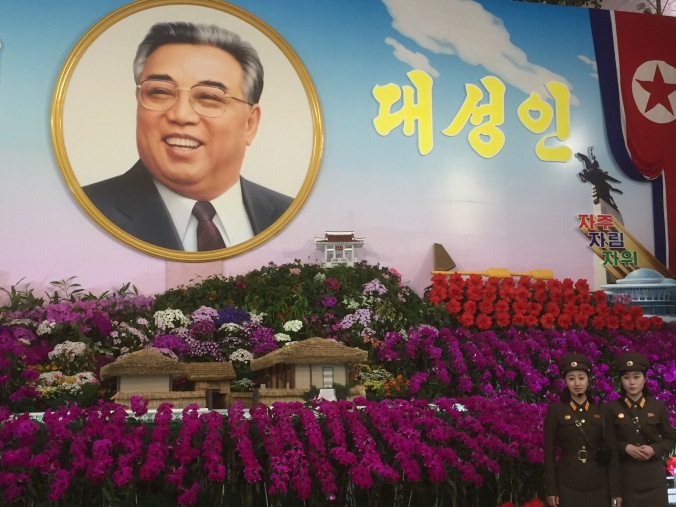
Remember this guy? The golden Kim Il Sung? He was where I left the discussion last time.

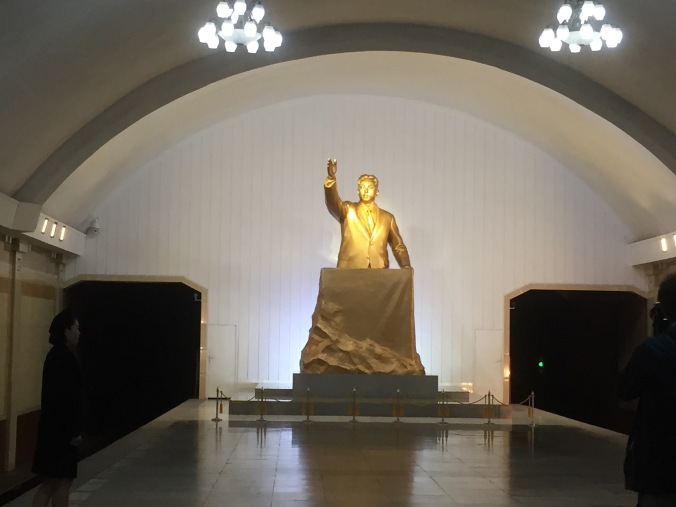
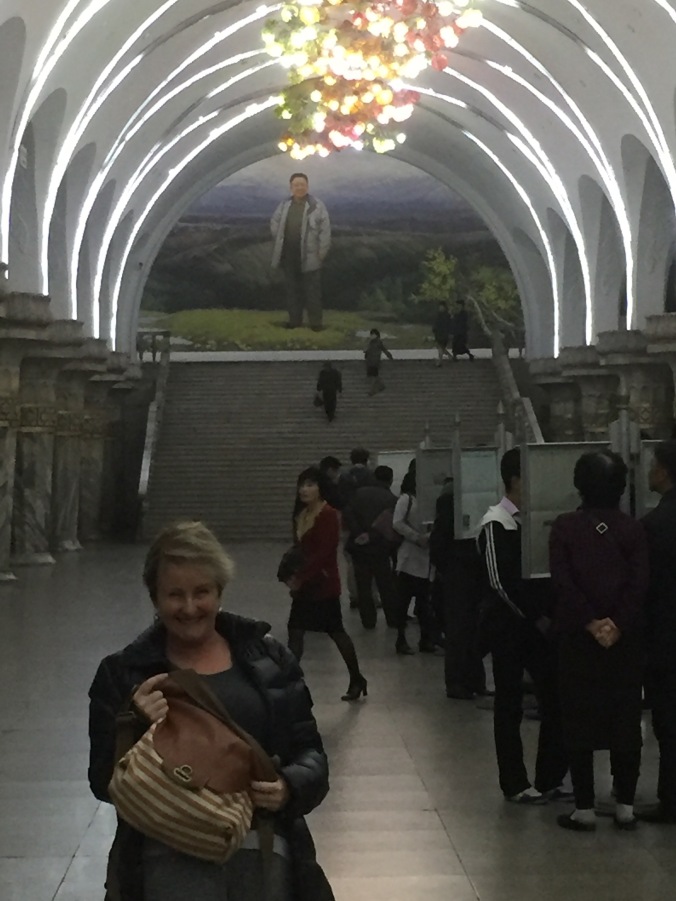
He is on one of the 3 decorated stations in the Pyongyang metro that we visited, larger than life and twice as golden. I want you to keep him in mind when we revisit the metro later in this post.  He isn’t the only item in the station I want to show you.

Last time we were talking about how The DPRK regime has clearly observed the power of advertising in the capitalist West and has used some of the tricks that work so well in the West, to instead endear themselves and their government to the North Korean population. Pictures and other visuals were a key component in gaining and then holding power.

As I’ve written about elsewhere, when Kim Il Sung came back to North Korea after WWII, North Korea had around 2.5 million illiterate people. Not surprisingly, there was a huge push for education. In 1946 the first University was built and in 1953 compulsory primary schooling was introduced. In the meantime, it makes sense that painting, murals and other visual arts would be crucial in gaining the largely illiterate population’s support for the new government and its programs.

This reliance on visual aids is still heavily used to this day.

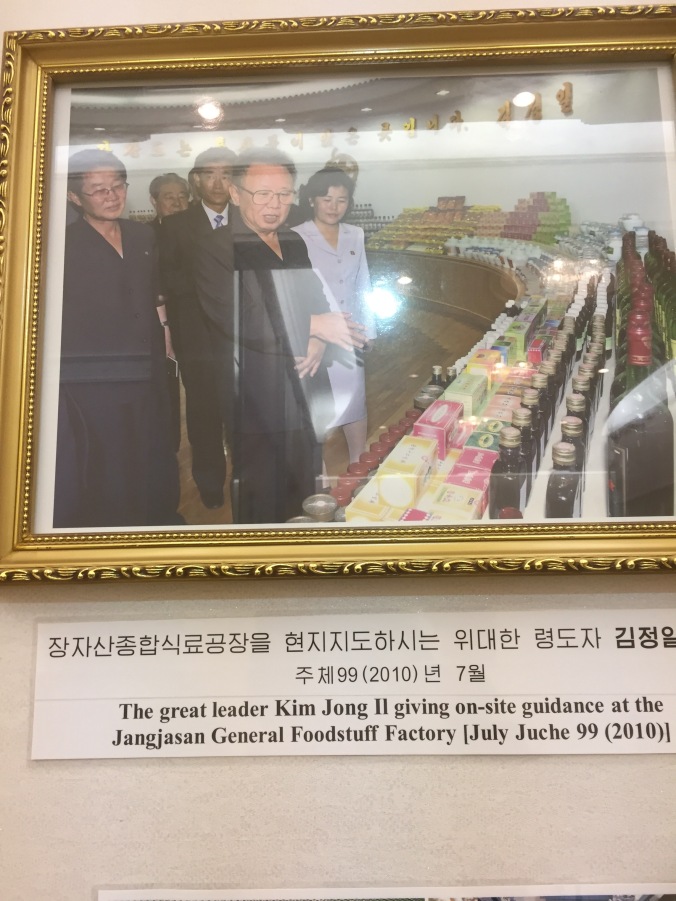
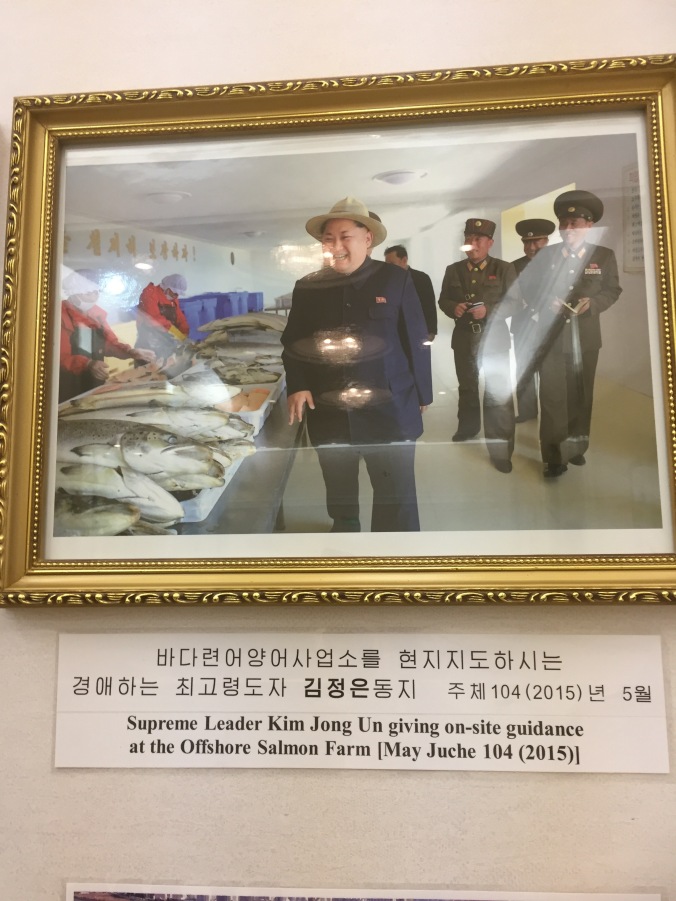
These two photographs (with the helpful English subtitles) were in the foyer of the 6-star hotel that we stayed in when we went into the country. Whenever any of the leaders visited a factory, school, mine or farm, photographers were clearly on hand to document the visit, with the photos and captions proudly displayed for evermore.

Do you notice the phrasing of the captions? It was always the same – the leaders were not just touring and observing… they were always giving “on-site guidance” because their knowledge is deeper and more intuitive than anyone else’s.

Notice too, how Kim Jong Un is smiling and others around are laughing. By all accounts, he’s a very funny man and when we were in North Korea we saw many photos of him looking like he was full of warmth and good cheer. But in the West, it’s rare we see any photos of him cracking a grin.

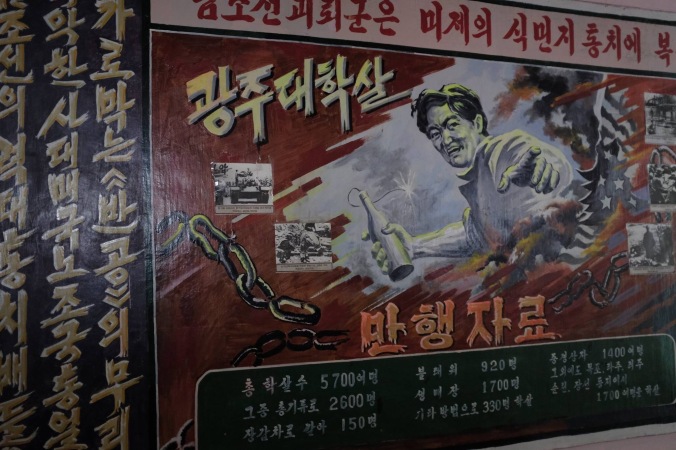
Photos aren’t the only images that are used. In every foyer, whether it be a school, a hotel or a public building, there are massive paintings of at least one of the older 2 leaders. This one was in the foyer of the primary school in Pyongsong that we toured. Kim Il Sung is surrounded by happy children, Kim Jong Il is over to the side looking adoringly at his father, while the children are in an idyllic place, with more children rushing to join them. They are shown literally hanging off the two leaders, as metaphors for the Korean people as a whole, being supported and uplifted by these two Great Men.

See the bouquet of flowers at the foot of the painting? They were fresh flowers, and I’d bet my bottom dollar that there’s a fresh bouquet brought there every day, probably by the families of the students. If I was running the school I’d have the flowers brought on a roster, with each family’s child/ren having the honour of bowing and laying the flowers down in front of the portrait. Nothing like teaching them young!

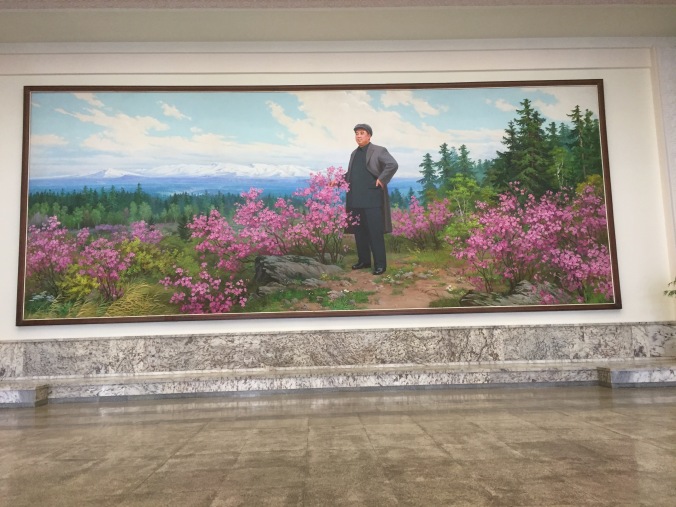
This portrait of Kim Il Sung is in the foyer of the Grand People’s Study House, which was built to honour him on his 70th birthday. It was probably one of the biggest paintings we saw and I regret that I didn’t have a person in the frame to show you how large it is.

Mt Paektu in the distance, which is the most sacred mountain in the Korean peninsula for both North and South Koreans, the pine forest behind him with its positive ions and the blossoms of the foliage with its renewal and growth after the hard times of winter. Everywhere the North Koreans go, they see paintings like this all around them. They are steeped in the mystique of Kim Il Sung, in particular.

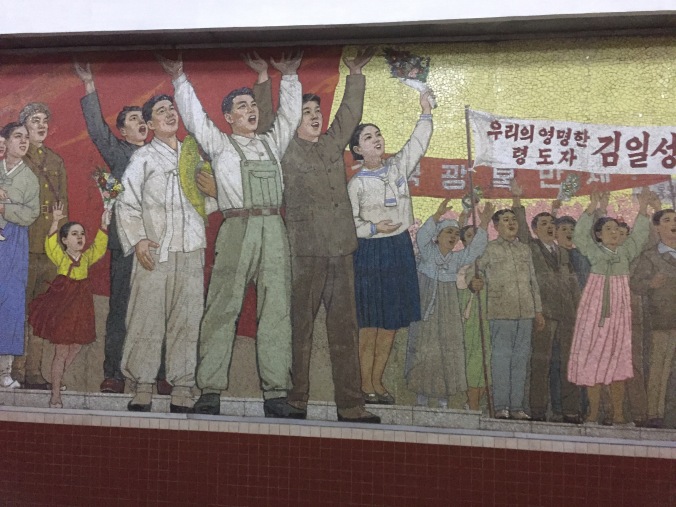
And here we are down in the metro again. This is at the very end of Puhung Station. See the shine? This isn’t a painting – it’s a mosaic made up of very tiny tiles, entitled ‘The Great Leader Kim Il-Sung Among Workers’. This is one of many mosaics that decorate the walls of these stations. They are all incredibly nationalistic in style, usually with political images of the leaders and the workers, but sometimes with views of Pyongyang itself and of vistas showcasing Korea’s natural beauty.

Actually, when you walk up to get a closer view, you can’t help but notice that Kim Il Sung’s face has far more detail than the others’ faces.

These mosaics run the whole length of the stations. They must have taken ages to plan and complete.

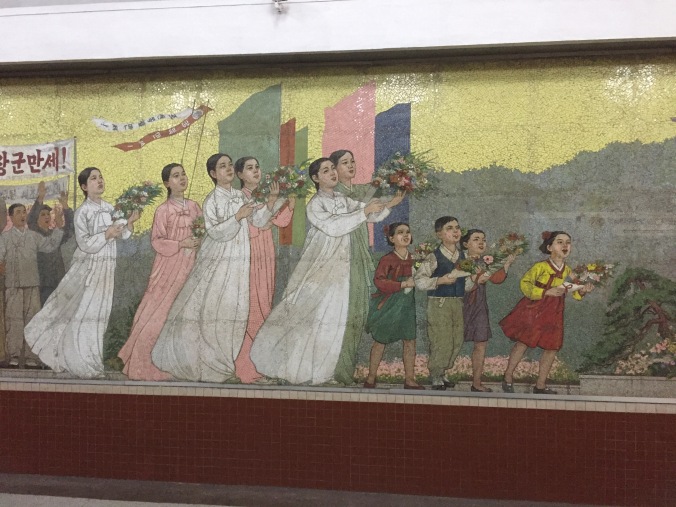
The next two photos are portions of the mosaics that run either side to the big gold statue of Kim Il Sung that is at the beginning of this post. Running for at least 30 feet alongside both platforms, these mosaics feature workers and citizens from all walks of life joyously celebrating the glory that is Kim Il Sung.

There’d be at least a hundred different figures all facing the statue, with their flags, signs and ecstatic expressions showing just how incredible their leader is. No matter where a commuter looks, there’s the evidence of how fortunate and blessed he or she is.

I’m sure by now you recognise the mountain behind Kim Jong Il! He’s standing in the worker’s parka that he wore in public in winter for the last decade or so of his life. Underneath that, he’s wearing the khaki uniform that again, he always wore in public to show that he was always working for the people and so didn’t have the time or the inclination to waste on dressing in expensive suits. (Sadly, in private it was another story. But the North Korean people haven’t an inkling of it.)

The lights in this station are meant to look like fireworks, celebrating all that he has done for and sacrificed for the country. Notice the newspapers in frames so the commuters can see what’s going on? When the people left and we were the only ones on the platform, we asked Mr Kim, one of our guides, what things were being reported on. The big news of the day was that it was the 30th anniversary of Kim Jong Il being appointed the head of some committee or other. Later on that day we saw women dancing in their national costumes in celebration of this.

The man has been dead since 2011! But still, they dance.

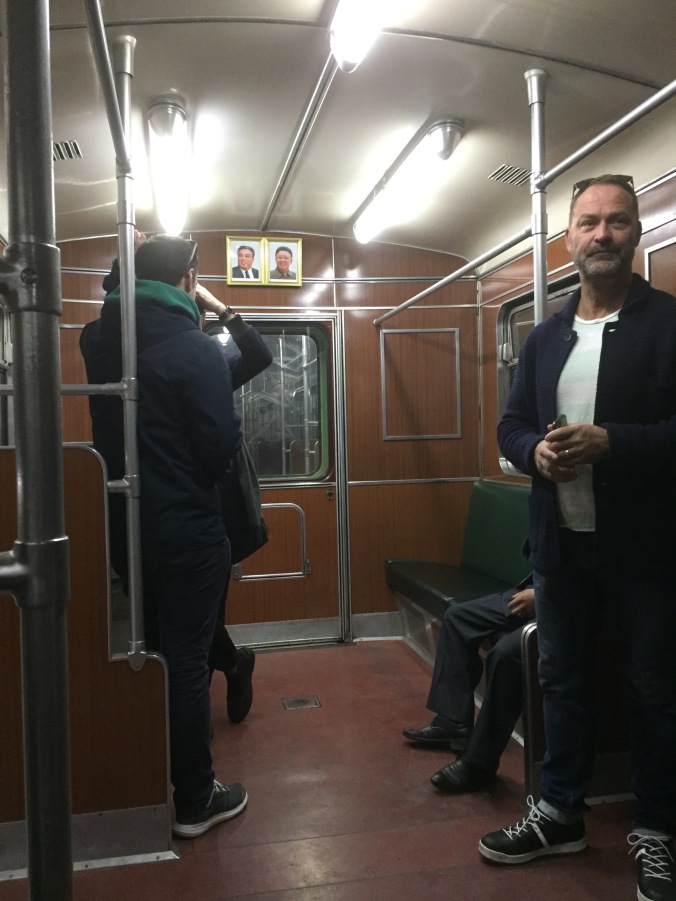
But BY FAR the most important images are these two. Every single house has them. Every single classroom, office, business, restaurant, factory … even, to my surprise, every single train carriage. No matter where a North Korean goes, these two faces are above them. These are the only shots used, so they are as familiar as the back of your own hand.

Every house is expected to have these hung up in the main living area. They are to be kept clean and dusted, and woe betide you if one gets broken. We were only in the DPRK for 10 days and even in that short space of time, we saw these faces so often that they became utterly familiar.

“Ah, there’s our mates!” we’d say as we walked under them. How much more powerful must it be if you were born under these faces and literally grew up under them all your life?

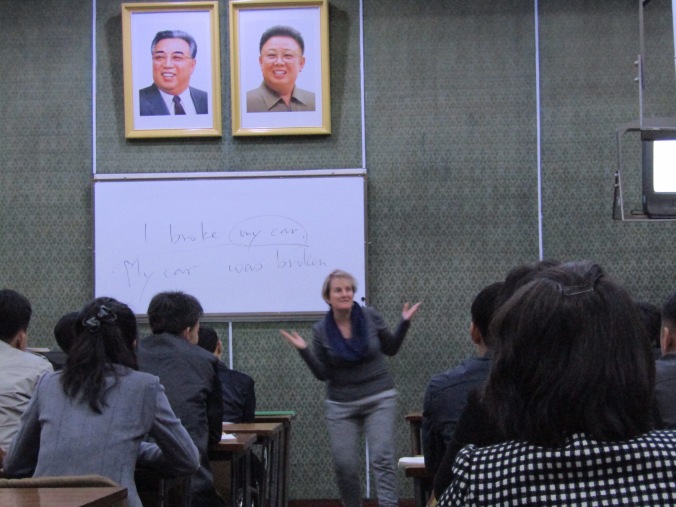
Here they are in the English classroom that I taught in at the Grand People’s Study House. They’re almost as big as me!

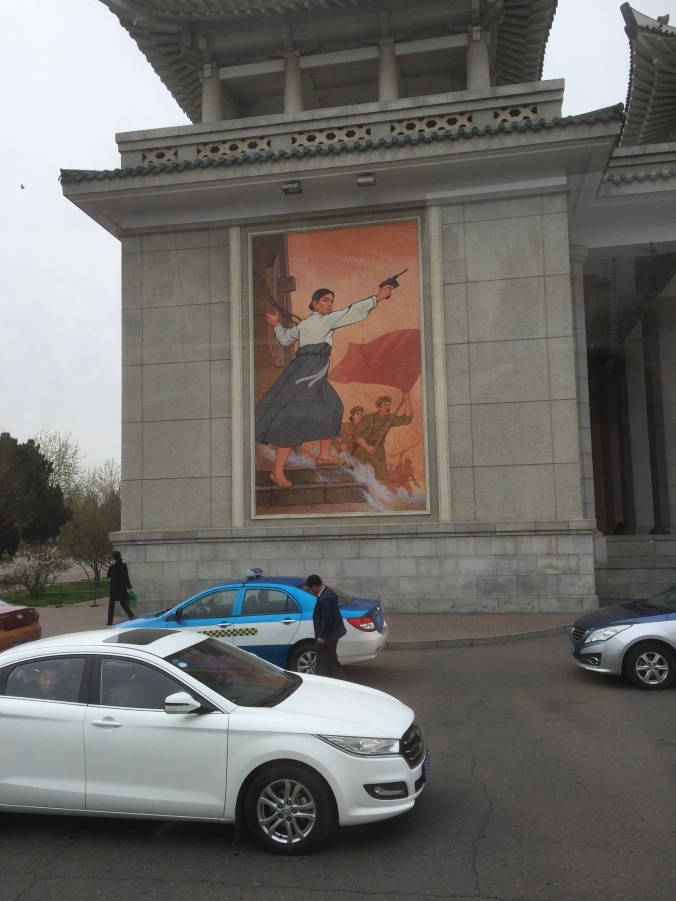
One morning towards the end of our tour, we went for a walk around central Pyongyang. By this stage, I had become very blasé about the pictures and signs, but I liked this one. It’s rare to see a woman featured at the forefront of a battle scene. This was one of a series of images on the side of the State Theatre.

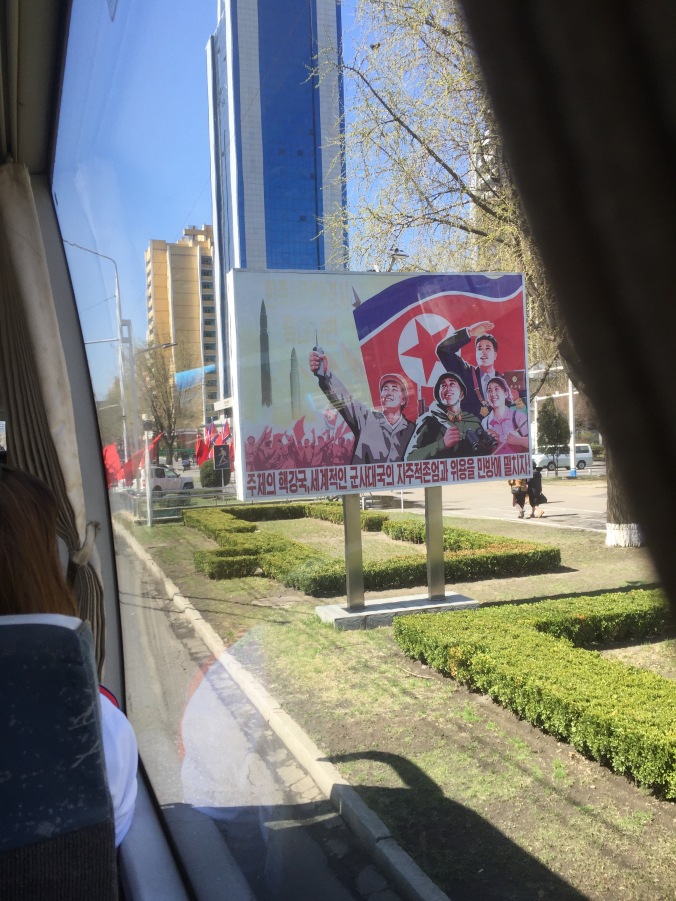
Dotted in and around Pyongyang and other cities were billboards like these. They were everywhere, usually with cheering, victorious soldiers, but I particularly liked this one with the nuclear missiles flying up above the cheering population. I don’t know what the words below mean.

Every time you walk down the street, you are surrounded by images like this, or of the national flag.

Speaking of which, here it is.

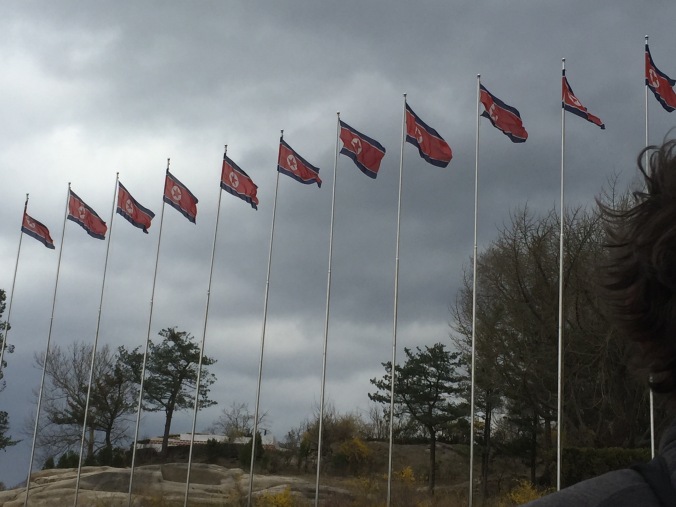
It’s a clever design, with strong colours, (ironically the same red white and blue of the hated American Aggressors… and our flag too, come to think of it!), and it looks very effective when you see a whole heap of them in a line or grouped together on a street corner. The red star in the centre is placed everywhere. We noticed it a lot at the DMZ.

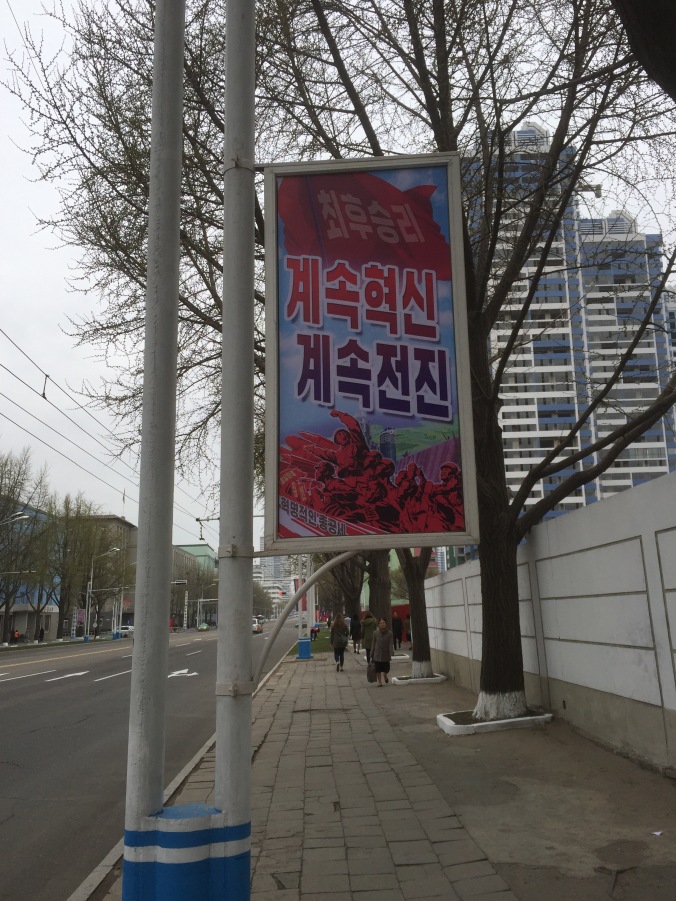
On our walk through Pyongyang, I decided to ask Un Ha, our other North Korean guide, what a couple of the signs were saying.  I couldn’t quite remember the exact wording, but I’ve got it down in my book as being something about the constant fight for reunification with South Korea and how they will never give up.

Aha! Another sign! I asked Un Ha what it was saying.

“We promise to uphold the leadership of Marshal Kim Jong Un with the utmost loyalty.”

It makes you wonder.

Here is a population being groomed to adore their government above all else, while we’re being groomed to believe that KFC is finger-lickin’ good, that Red Bull gives you wings, and that maybe she’s born with it – or maybe it’s Maybelline.

There’s more I want to show you. Advertising is incredibly powerful.


How boredom spawned a side hustle.

The life of a teacher can sometimes be tedious, infuriating, hilarious or action-packed. One thing that makes it an amazing job is that the holidays are great (heh heh), but also that every day is different. The kids make me laugh every single day, and of course, when you’re working with people there’s always something that makes a day stand out. Sometimes it’s the kids themselves, or sometimes it’s because you get to participate in excursions or activities in other subjects that you normally don’t get to see.

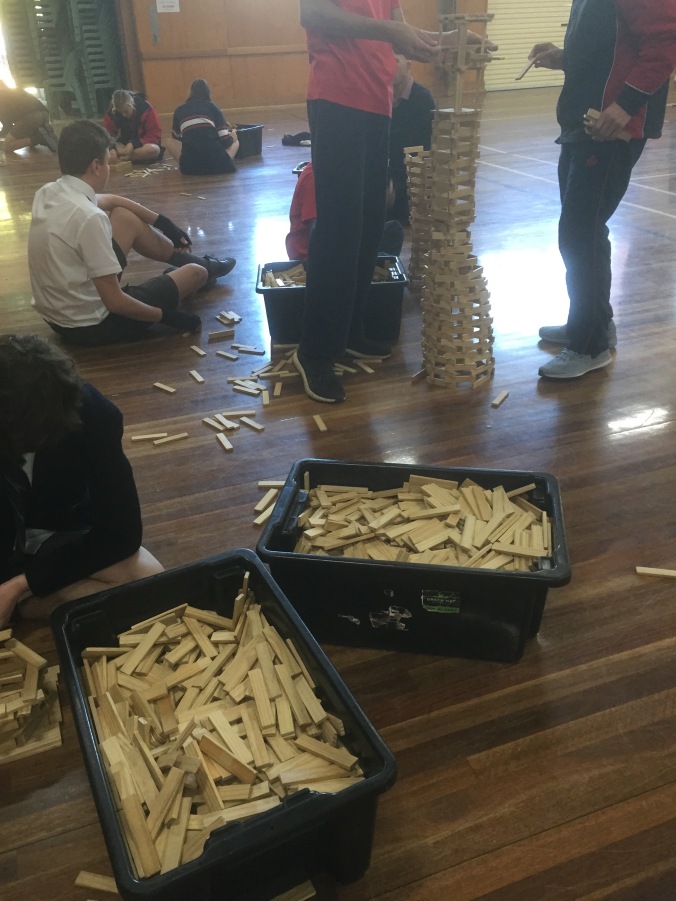
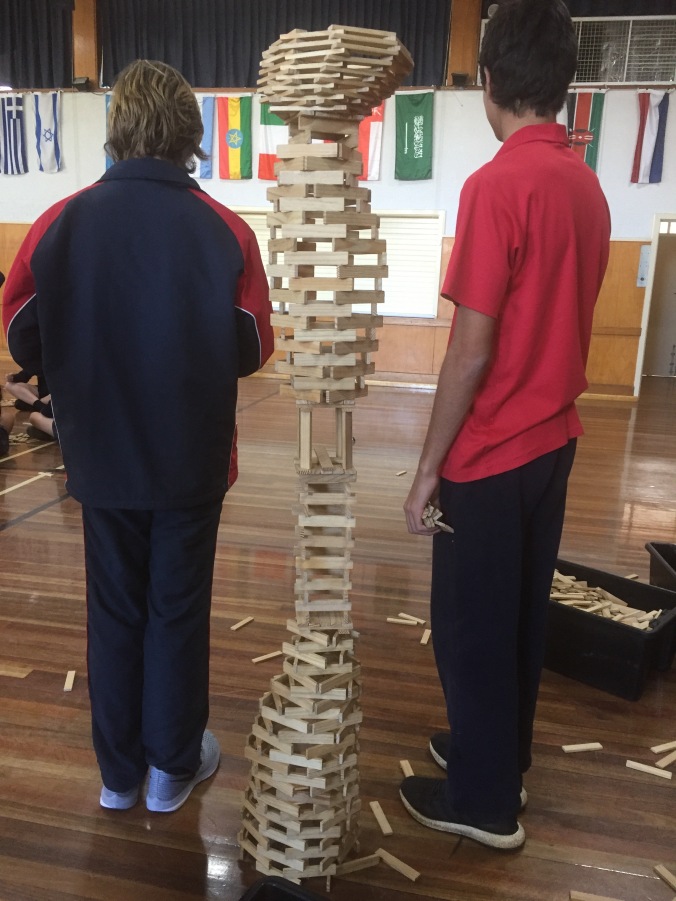
This PLANKS incursion was one of them.

Last week the year 9s had a double period in the hall working with these mini planks. I was there with one of my 9 classes for the first period when they were introducing the whole activity.

The guy running it told the story of how he and his mate started the business.

They were working as labourers for a builder and one afternoon they were demolishing a house. It was raining and they had to down tools while waiting for the rain to stop. They were ripping up floorboards before the rain hit, so to pass the time they cut up some boards into smaller pieces and had a competition as to who could build the tallest structure.

That was the germ of the idea for their business.

If a group of grown men could let a couple of hours slip by while they were engrossed in this, how much would schoolkids like it?

I have to hand it to them – most people would have had a fun afternoon, then thrown the makeshift planks into a fire and forgotten all about it. But these guys felt they were onto something.

They experimented with different lengths and thicknesses of wood, whether they worked better with curved or straight corners and then tested their concept out on primary, secondary and tertiary students to see if there was a specific demographic that they needed to avoid.

Turns out that there isn’t – every age like stacking up blocks and seeing how high they can go and how creatively they can balance them.

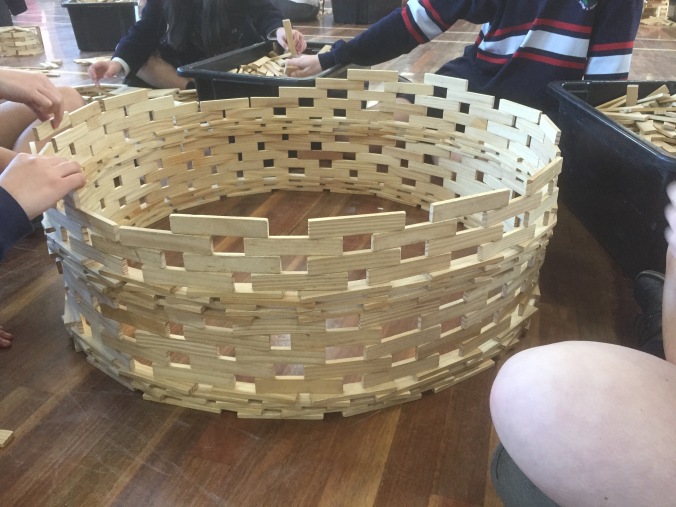
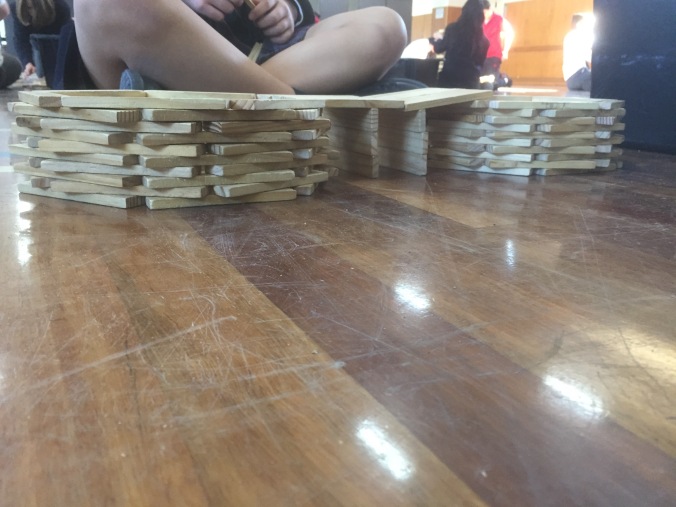
The company has been coming to the school for at least 3 years, I’d say, with this idea. The kids loved it, especially the boys who sometimes have trouble sitting still in class. These two boys are a couple of kids I had last year who were a little… shall we say ‘rambunctious’?… but look at what they managed to put together!

This activity also suits the more methodical kids who like to create things. These 3 boys are very quiet and painstaking in their English work. They combined forces to build this beautiful-looking structure.

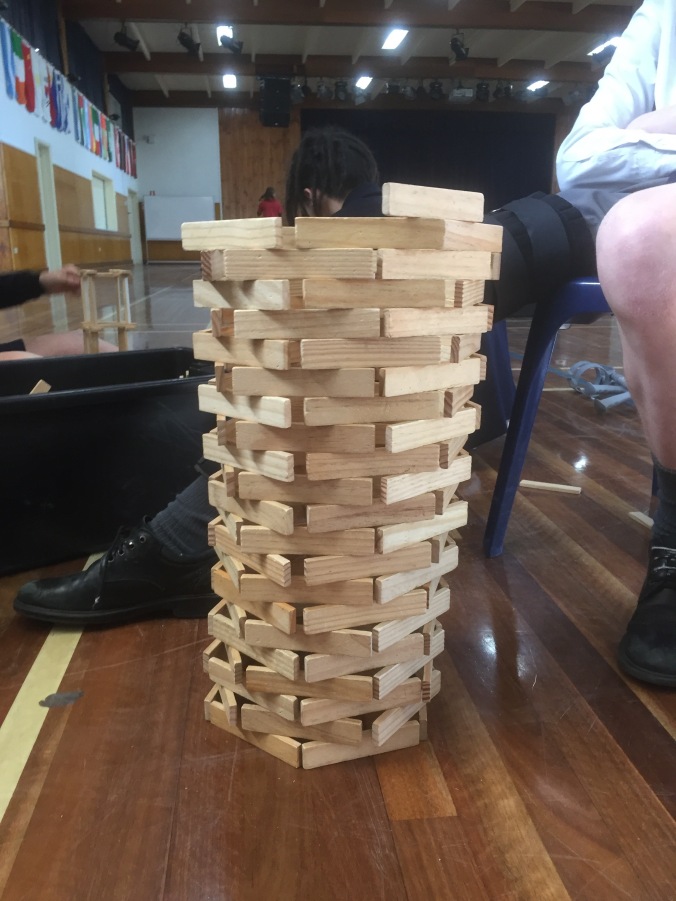
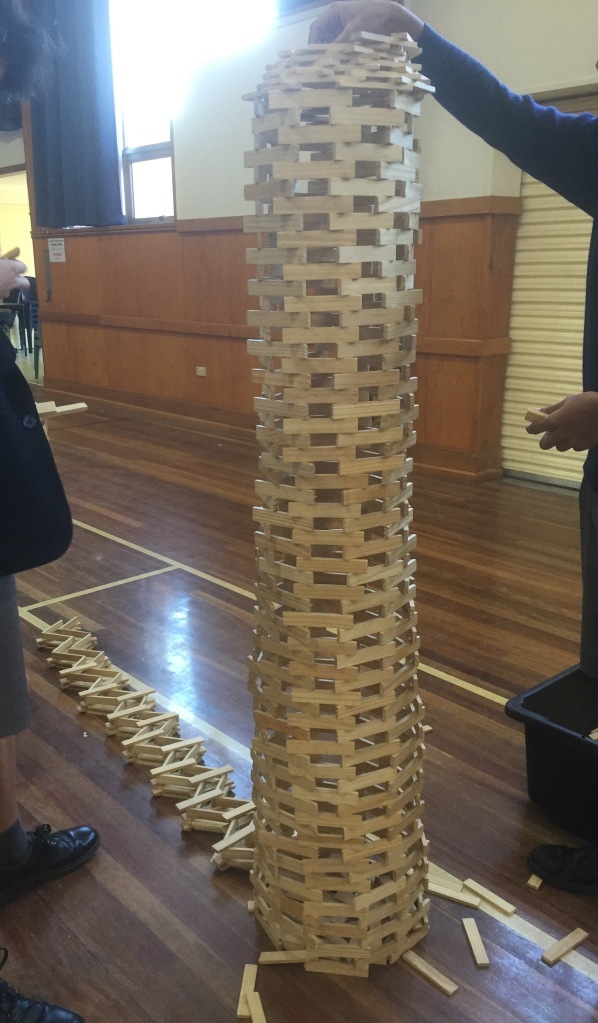
At the end of the period I had to leave. Before I left I snapped this shot.  I was really impressed with how tall they’d managed to get it. Apparently, it ended up being way taller than they were and they needed chairs to continue to build it up.

The kids loved it. The noise of chattering and the crashing of blocks was LOUD. They were also really respectful of the structures that other students had put together that were intricate and large, stepping carefully around them and making sure that they didn’t accidentally knock anything over.

I really loved how such a simple idea that began as a way to stave off boredom on a rainy afternoon has ended up as a business that challenges kids, gets them to think creatively and to work together as a team. Not every side-hustle has to be a MLM, a blog or an Uber-gig. These guys were able to take a simple idea, look outside the box and have turned it into a year-round earner. Imagine how many schools they can take this to in Melbourne alone? Let alone kindergartens, child-care centres and old people’s homes?

I love a successful side-hustle!

Advertising – North Korean style (1): Where leaders are larger than life.

A little while ago I was sitting at home on the couch,  a dog either side of me and one balanced on my lap with my laptop, reading blogs before going to work. It was about 6AM, still dark and pretty chilly, and I was filled with impotent anguish about having to grab my things and leave for work in the next 20 minutes to catch my train.

Be that as it may, that morning, as I was working my way down the list of blogs in my feed reader, I saw there was one by The Escape Artist. Ever since I heard Barney on the Choose FI podcast, I’ve been reading his blog. Turns out on this particular morning he’d written about advertising. If you haven’t already read it, go ahead. I’ll wait.

Barney wrote about the power of advertising. I loved his post, but one thing struck me. It’s all too easy to read about the hold that advertising has on us, particularly when we’re galloping along on the road to FI/RE, being frugal, getting out of debt and investing the surplus money we have kicking around.

“Oh yes, advertising is evil but it doesn’t affect me!” we say as we prepare our home-made dinner and settle into a night at home with a board game or book or Netflix binge.

But this is all slightly smug. How do we know how deeply or not we’re affected when we’re already neck-deep in a society that’s awash with consumerism? Is there any way to tell how advertising affects us when we’ve been bombarded with “Buy this!” “Subscribe to that!” since we were in our cradles?

There might be a way.

What if you were able to visit another society where consumer advertising was not and never has been a ‘thing’? That’s a huge point of difference right there. But instead of being indoctrinated into the joys of buying the latest fad, these people have been immersed in the advertising of a totally different kind of commodity.

Enter North Korea. Absolutely no consumer advertising whatsoever. Not so much as a single billboard about a single product. Instead, there’s advertising of a very different sort: the constant stream of adulation about the leaders and the regime who run the country.

The beauty of this trip for me was that because it’s indoctrination of a totally different sort to the one that we’re used to, it sticks out. We can observe how it’s being done and we can’t help but notice the effect it has on the population. Some of the methods they use are very obvious; others are more subtle, but they all tie together in an intricate jigsaw that holds the population in thrall. Probably like consumer advertising does with us.

The people of North Korea have absolutely no access to the internet. Their intranet has around 6 websites and they’re all run by the Government. Their tv is filled with patriotic songs, marches and military films of missiles going up and tanks being paraded around. Their ‘news’ programs are chock-full of absurd statistics of how well the country is doing in every conceivable way, under the wise and loving leadership of Marshal Kim Jong Un. Anyone coming into the country have their bags searched in case anyone tries to bring in literature such as travel books, newspapers and bibles.

I’ll be writing in the next few posts about how the government of North Korea has harnessed the power of advertising and has used it to sell itself to the people. This will take several posts to cover, as I want to look at a few different ways that they’ve manipulated sights, sounds and messages to convincingly sell their brand to the population. Just as advertisers work their psychological games out here in the West.

But first, a little background:

For around 150 years, up until WWII ended, North and South Korea was all one country under the control of Japan. The Japanese treatment of the Koreans was very harsh, to say the least. Korea was looked on as a resource to be exploited, with both its natural resources (such as gold, timber and fishing) and its people, being taken full advantage of.

Kim Il Sung was the first leader to take control after the Japanese were booted out after WWII and the Korean peninsula was divided arbitrarily into North and South by the Americans. He was a soldier in the USSR army during the war and the Russians put him into power in Korea when a leader was needed, but the North Koreans firmly believe that he was a freedom fighter against the Japanese and this was what caused the Japanese to leave Korea. They aren’t told about Hiroshima and Nagasaki. So Kim Il Sung was and will always be the saviour of the Korean people.

This belief is fostered in many ways. The use of statues is one that is used extensively throughout the country.

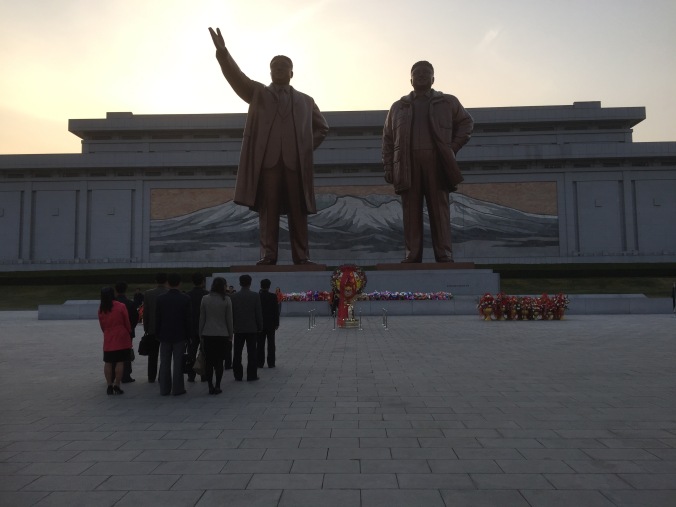
This photo is a place in the middle of Pyongyang which we reached as the sun was starting to go down. The people of North Korea love their current leader, but they absolutely revere the two leaders that have gone before him, particularly his grandfather, Kim Il Sung, (the one on the left.) Visitors to this site are encouraged to buy flowers, which they then lay at the feet of the Leaders, then you go back to your group and you all bow in unison. Then you quietly leave to make way for the next group.

The symbolism is obvious.

The whole area is laid out on a grand scale, with enough space for a few hundred people to gather. There is silence, enabling contemplation of the leaders and all that they’ve done for society. Their statues tower above us. There is a picture of Mt Paektu behind them, which is the most sacred of all the mountains in Korea, and where the second leader, Kim Jong Il, is said to have been born. (He wasn’t – he was actually born in Russia but the North Koreans don’t know that…)


It’s the custom for wedding parties to come and pay their respects to the Leaders on their happy day, which of course fosters closer links to the Leaders as they are tied into memories of important milestones in each person’s life. This group arrived as we were leaving. It is unthinkable not to visit the Leaders on a day such as this. Naturally, there are places like this in every town and city in the DPRK, so people can come and pay their respects; and to be seen to be coming and paying their respects, which is almost as important.

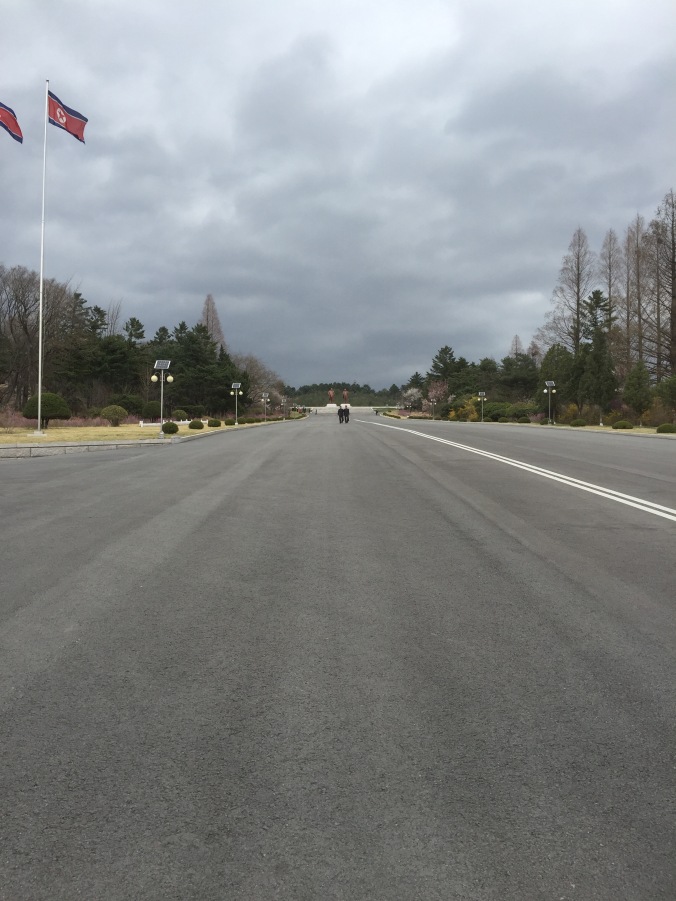
These statues were in a regional city that we went to for lunch after we visited the DMZ. It was a dull day and yet the bronze figures shone in the little light that was around.

Here is the way leading up to them. The two figures are set high above the city, with solar panels attached to the lights that illuminate them at night. Power blackouts are a frequent occurrence in the DPRK, but these statues will never be in darkness. The leaders will always be there, shining a constant light over the whole city as they gaze benignly down over all.

Again, the symbolism is obvious.

This is the ‘old town’, one of the few cities in North Korea that wasn’t flattened by the US bombing in the Korean War. This view is less than 2 minutes walk from the statues in the photo above. Compare the feeling of space and tranquillity around the statues compared to the cramped conditions here. Elsewhere in the town there are apartment blocks that date from after the Korean war, but these of course also have people living together in close quarters.

So much space, serenity, landscaping and light surrounding the images of the Leaders enlarges their importance in the minds of the population. It’s an effective piece of the jigsaw.

It’s not just in the towns. The pervasive cult of personality pops up everywhere. This is a statue located on a co-operative farm midway between the capital city of Pyongyang and the coast. This statue is huge, but it’s not anywhere near a large population base – it’s out in the middle of the countryside. The story behind this statue made my blood boil, but it also clearly illustrates the importance that the regime places on “advertising” itself to the people.

For around 30 years after the Korean war,  North Korea outstripped South Korea in terms of quality of life. Then came the collapse of the Soviet Union. Suddenly, there was no more food, machinery, fuel and financial help coming from a superpower to prop up Kim Il Sung’s grossly inefficient methods of running agriculture and industry. Within a couple of years, North Korea was plunged into a famine that lasted from 1994 – 1998 called ‘The Arduous March’. It’s difficult to know for certain just how many people starved to death during this time, due to the secretive nature of the government and the fact that many death certificates listed differing causes of death, but estimates range from 2 – 3.5 million. In a country with a population the same size as Australia, (25 million), that’s a significant proportion.

This particular co-op farm, growing mainly green vegetables and grains, had been visited a couple of times by Kim Il Sung during the 1980’s. The farmers asked him if they could put up a statue to celebrate the honour of his visits and he refused them, saying that it was unnecessary and that they were already doing important work.

Three years after he died, his son (Kim Jong Il) suggested that now was the time to build it and so here it is. The farm is so proud of it and it depicts actual people who were working there when Kim Il Sung came to visit. This story is all very nice and cosy…

… except if you’ve done your homework and you know that in 1997 famine was laying waste to millions of people in North Korea who were literally starving to death. People were eating grass, bark and anything they could to survive, particularly in the north of the country, far away from the major cities.

Meanwhile, here’s Kim Jong Il, in the middle of all this, telling a FARM to give up land and resources to erect a monument to his father. I don’t know that I could find a clearer story to illustrate just how important these symbols are to a government committed to portraying itself as the saviour of the Korean people. See how Kim Il Song cared about the farmers gathered, (dare I say… “worshipfully”) around him?

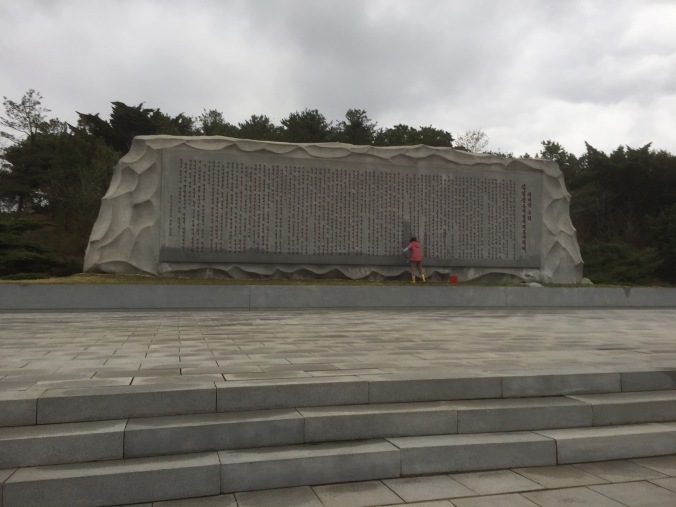
In the car park of the farm was this massive stone document, giving what I think are the words of one of the speeches Kim Il Sung gave when he came to the farm. It’s not just images of the Leaders that loom metaphorically and physically over the people, it’s their words as well.

The woman cleaning it wasn’t there purely to make it spick and span for our benefit – any images of the leaders and their words are expected to be kept immaculately clean at all times, as a mark of respect. Still, I’m sure she would’ve preferred to have been finished before a bus-load of tourists pulled up…

In a country with no billboards, video screens and magazine ads about anything other than how fortunate they are to have had such caring, capable and almost god-like leaders, it’s easy to see how huge monuments like these are an integral part of selling the sizzle. The people are told from infancy that their leaders are giants among men and are larger than life – and so how fitting it is for the population to see them literally depicted as such.

I’ll leave you with this photo taken in a station in the Pyongyang metro. Imagine seeing this every morning and evening on your commute…


No health insurance? No (financial) worries, mate!

Although the rest of the world is catching up, I think it goes without saying that there’s still a clear majority of Americans writing blogs and podcasts in the FI/RE world. Hence, there’s a lot of angst in a lot of posts about the ongoing costs of healthcare. The rest of us shrug, feel thankful we’re not in the US and scroll on past. However, I had an experience a few days ago which made me think about how my experience might have differed if I was in the US, which then led me to think about a couple of my sons’ experiences with the Australian health system when we were uninsured. Our wallets would have been hit by these things, in at least one case catastrophically, which led me to think… why not write about how people in most first-world countries deal with unexpected health issues? After all, we’re in the majority!

Here’s my first son’s experience. A couple of years ago when he was 23 he rang me at around 8 or 9 in the morning, saying that he was feeling really odd. His stomach was hurting, more on the right side than the left and he was feeling woozy and a bit “off”. While I was talking to him I googled his symptoms and we went through them. He had some of the symptoms of appendicitis, though not all of them.

I remembered a service called “Nurse Online” or something like that, where you ring a nurse and have a chat with them. I got Tom23 to give them a ring and then call me back. When he rang, he said that she’d suggested that we go to Emergency, as it sounded as if it could possibly be his appendix and they could check him out. So off we went to Monash hospital, just down the road.

When we got there it was relatively calm, with few people waiting. Being the mother of boys, I’d been there a few times before when they’d managed to hurt themselves after hours when our regular doctor wasn’t at work and it was always busy. It seems that early on a Sunday is a good time to go.  Anyway, it wasn’t long before we were in front of a doctor. He poked and prodded Tom23, then said that it looked as if it was the early stages of appendicitis. He said we could go home and see if the symptoms quietened down, but personally, he recommended that Tom23 go straight in and have the operation that day.

One thing to know: we didn’t have Hospital Insurance. In Australia, you can elect to have Hospital and/or Extras insurance (or neither.) In my case as a single mother with 4 boys and usually pretty minimal child support, for years I’d gone for just the extras cover. I had 3 sets of braces and 2 sets of glasses to cover, as well as assorted chiro, physio and other bits and bobs that my ex-husband wouldn’t pay for, so I couldn’t afford to get extras cover AND hospital cover. It really wasn’t an issue, because  I knew we’d all be ok. If anything awful happened to us health-wise, such as an accident or cancer, we’d be looked after in the public system. Anything else that was a chronic condition that we’d need to go on a waiting list for, we didn’t have. The odds were that we wouldn’t develop anything while we were all young. We’ve always been as healthy as horses, so the probabilities were that we’d never need it. So I put my dollars towards the extras that the boys needed. It just made sense. (Nowadays, with the boys as adults, I’ve flipped that, so if Old Lady Frogdancer develops a condition that needs to go on a waiting list for hospital treatment, she’ll bypass that and go on through.)

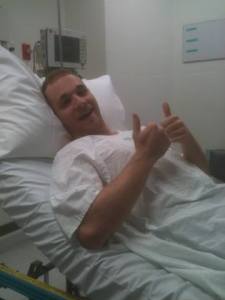
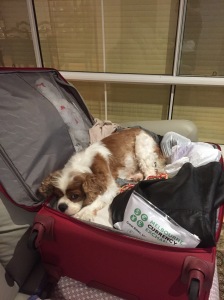
So Tom23 had no hospital insurance. He went in as a public patient and had the operation that same day. The picture at the top of this post is him pre-surgery. A day or two later he was home, with a bill for antibiotics and painkillers that totalled $60. That was all he had to pay. As a uni student with very little money available after paying for books and rent, this was a godsend. Now, fast forward two years later, he’s an accountant paying taxes. Some of those taxes are now contributing to other people’s health costs.

Now to my experience.

Last Tuesday I rolled over in my sleep at 4AM and felt a lump in my breast. Trust me, even if you’re dead asleep, that’ll catch your attention! Sleep was instantly gone and so Dr Google and I were getting to know some facts.

I booked a doctor’s appointment for late that day. My Doctor bulk-bills, so there’s no charge for an appointment. By the time I made it in to see him the lump was huge and there was a big red rash on the breast. It didn’t look to me like cancer, or to the doctor, but you can’t be too careful with lumps like this, so he loaded me up with a dynamite-strength course of antibiotics and a referral for mammograms and an ultrasound.

I rang around and booked an appointment for the following Tuesday, to give the antibiotics a chance to work. When Tuesday rolled around and I faced the receptionist, she asked if I was on a Government health-care card or on any sort of Government benefit. If I had been, the cost of the tests would have been free. However, my days of living on the sole-parents’ pension, (as it was called then) have been over for 16 happy years, so I had to pay the gap between what they charge and what Medicare provides. I gave her my Medicare card, she popped my number in and $160 was reimbursed back into my account.

I’m ok with paying $90 for 6 separate mammograms and a half hour ultrasound. If there was any bad news, I know that I’d be whisked into hospital straight away for free to have an operation. They tend to move quickly when cancer is involved. Thankfully, it appears that all is well.

One of my other sons suffered terribly from depression when he was in his teens. It went on for a few years and at his lowest point, he was hospitalised in a teenage psych ward for a total of 6 weeks. All up, I paid maybe a couple of hundred dollars for his medication. After that, he had psychiatric and psychological counselling for a further two years or so until he got a handle on it and learned to cope. After his first stint in the ward, I didn’t have to pay a penny for the counselling, just for his “happy pills”. I can’t tell you how thankful I was for our health-care system in Australia while this was going on. I was almost at the point of finally paying my house off… if I had to sell or borrow against the house to ensure that my child got the health-care he so desperately needed I would’ve done it… but I’m so grateful that I didn’t have to. That house was the bedrock of our physical and financial security. And what if I didn’t have any assets to sell? If he wasn’t given the care that he received, I’m very sure that he wouldn’t still be with us. He was pretty sick.

YEARS ago, back when most of the kids were still too young for school, they were playing a ‘running around the house’ game and a door was slammed onto David4’s hand. His thumb tip was squashed flat and sideways. He had microsurgery the next day (for free) and now, 20 years later, David24 is a pianist and is studying music at Uni.

**

I don’t know all the ins and outs of how our system works. There have been only 3 times where our family has had to use the system in the last few years and the boys’ health needs were far more dramatic than my own, so I haven’t needed to examine the system in all its glory. I know that our taxes are higher than in the US and I’m positive that this helps pay for Medicare. And you know? I’m totally ok with that.

Everyone gets sick. Everyone has health problems at some stage. Our healthcare system means that everyone puts in while they’re able, then they withdraw from it when they need to. Everyone who is able contributes, while those who are in need get looked after. It also means that when ill-health does strike, we don’t feel financial fear and delay getting treatment, hoping that it’ll go away. People may still put off going to the doctor, but it’s not from fear of bankruptcy!

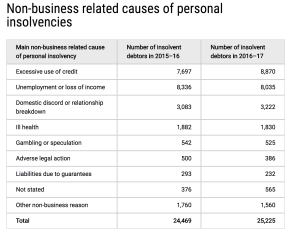
It’s not a perfect system by any means. But it’s hard enough being sick – I mentioned bankruptcy in the last paragraph for good reason. This link to an article details the top 10 reasons people go bankrupt in the US – a whopping 62% of bankruptcies are because of medical expenses.

The following is a table taken from an Australian Government page about the causes of personal insolvency in Australia.

If I was your typical FI blogger, I’d be wading knee-deep into the numbers right now. I’d be throwing stats and percentages and drawing up my own google doc or excel spreadsheet to show you something-or-other. I’d be googling how much health insurance costs in the US as opposed to Australia and Europe. But I’m not going to, mainly because I’m petrified of numerals. Besides, if you’re curious I’m sure Google comes to your computer too. But you can see the difference between the two systems. My experience a few days ago simply made me reflect upon how different my finances would be if I’d been born into another first-world country that runs healthcare differently.

And I’m very grateful that I won the lottery of birth and was born here. 🙂


North Korea trip.

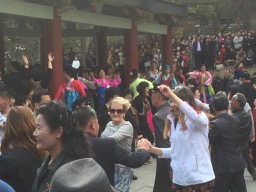
Here’s a shot for those who believe that tourists in North Korea are kept in a little bubble and that everyone we interact with are actors. That’s an awful lot of actors to hire, just to fool 12 tourists!! There I am, dancing with the locals with my sunglasses on, looking cool. It was so much fun.

I’ve left this site pretty much to itself, but I’ve been blogging about the trip on the other blog. I really want to get this done, so this site has a few tumbleweeds in it at present. I’ll be back!

Day 2 – Beijing.

Day 3: Beijing, Dandong and Pyongyang, North Korea.

Day 4: The Pyongyang Marathon

Day 4, continued. Pyongyang

Day 5 – Pyongyang – The Subway

Day 5, Pyongyang continued. The Victorious Fatherland Liberation War Museum.

Day 5, continued. Monument of the Party Foundation and the Juche Tower.

Day 5, continued. Grand People’s Study House, parks and the Mansudae Grand Monument.

Edited to add: It’s now July 5. I’ve ‘only’ got 5 days to go on the trip. Sifting through those photos takes a lot of time. Once I’ve knocked North Kore on the head, I’ll be back here.


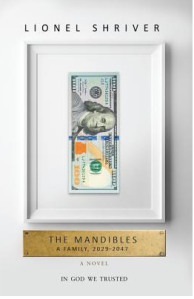
Lessons from Literature 6: The Mandibles: A Family 2029 – 2047.

The Mandibles: A Family 2029 – 2047 by Lionel Shriver is one of the novels I was reading when I was away in North Korea and China. Kind of ironic, really, because it deals with what happens when the US government runs out of money to service their trillions of dollars worth of loans and defaults. Guess which country rises up to take advantage of the situation?

This is a relatively slow-moving but gripping read. We see through the eyes of one reasonably privileged family what happens as their society gradually unravels at the seams. Shriver has clearly done her homework on how financial markets work and the implications and consequences when things start to turn pear-shaped. Most of us in the FI/RE community have started to scrape together a working knowledge of how the financial world works – you’ll find this novel VERY interesting indeed.

I loved it. I found it scary as hell, though the little titbits she puts in about other countries are very clever, particularly what happens to Australia and Japan. I think I gave it a 5-star review on Goodreads. It’s been a while since I’ve read it but I still think of some of the things that happened, while so many other novels I’ve read have drifted away into oblivion.

I’m back!

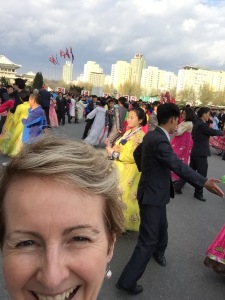
I’ve decided to blog about my trip on my personal blog, so I’ll post a link at the bottom of any posts I do here so that people who want to read about China and North Korea can do so. The photo above was taken at the Massed Dancing in the centre of Pyongyang,  just before I put my phone in my pocket and joined in. So much fun!

So far I’ve done one post and it took me 3 hours, so I’m guessing they won’t be coming at breakneck speed, especially considering that I have to wade through 3,200 photos and videos to choose the best ones to share. Don’t believe the stories that you can’t take photos in North Korea!

Here is the first post. 

We did Beijing first and last, with the DPRK as the meat in the sandwich. It was an amazing trip and I hope you’ll join me to see the photos and read about what we experienced. Travelling in North Korea and participating in the Pyongyang marathon is incredibly interesting  – lots of fun with an occasional dollop of “OMG – crazy!” to remind you that you’re definitely not in Kansas anymore.

To all those who voted for my post in the Rockstar Finance competition – it won!!!! Thank you so much for your support – it was very exciting to see my little blogpost reach the top of the mountain.


I never thought I’d be flying into THIS country…

PLEASE vote for my blog post in the Rockstar Rumble Grand Final. YES!!! My blog post about showing my boys about compounding interest and superannuation has beaten 126 other bloggers to reach the final round. I’m so excited – it’s the first Grand Final I’ve ever been in. I won’t know the results of the competition for another 3 weeks, because I’m going to a place with absolutely no internet, but don’t let that stop you voting! Please leap across and vote for mine, the keyword is “Mistake’.  – I’d really love to take it out.   🙂

Rockstar Rumble Grand Final Voting.


It’s been a struggle to reach FI, I won’t lie and pretend otherwise. Actually, it’s only on paper that FI looks as if it’s just about been reached – emotionally I still don’t feel it, so I keep jumping on that early morning train and heading into work each weekday. But what I will concede is that I certainly have more ready cash floating around at the end of the month than I used to have – and that means that I can finally have the freedom to travel.

Three years ago I took a term of Long Service Leave and went on a 9 week trip to the UK and Europe. This was the trip I’d been waiting my whole life to take and I denied myself very little! I bought so many souvenirs that I had to send a large box back to Australia via post because there’s no way I would’ve been able to get all of that baggage into my suitcase. It was a dream holiday and I’ll probably never have its like again.

Fast forward three years and tomorrow I’m off again! The brilliant thing about financial freedom is that when an opportunity opens up, you’re able to take advantage of it.  A woman I work with has a son who takes tours into North Korea. She went on a tour with him last year and I thought she was mad. Who in their right mind would take a trip into a country like that?  Talk about risky as!!?? She must have been insane!

Then she arrived back safely. She had a group of us around after school and she showed us the 600 photos she had on her phone. Clearly, the things we hear about not being able to take photos isn’t true. She told us that it was just like going back to the 1960’s and that she’d never felt so safe anywhere in the world. This piqued my interest. It’s certainly nothing like the conventional things we hear about the country. When she said, “Frogdancer, if you ever want to go, I’d be happy to go back again”, I started to think about it. It’s an opportunity to see a country that very few people get to see. I have no doubt it’ll open up to the world, just as China has, but for now, it’s a bit of a mystery. I said yes.

My friend wanted to go back in April, to take part in the Pyongyang marathon. She and her husband are doing a 10km run. Anyone who knows me in real life knows that exercise isn’t my strong suit, so I’m WALKING the 3km section. I figure it’ll be a good way to see the city.

Here is the tour I’ll be going on.

Let’s be honest: it’s a slightly scary place to be going to. We have had to sign a declaration saying that we’ll stick with our guides and won’t go wandering off. The tour conditions are very much like the ones tourists in China had to adhere to 20 odd years ago. When we get back to our hotels after dinner, we’re not allowed to leave, though we can wander the grounds. This rule apparently leads to many nights in the hotel bar, with lots of drinking and banter. Shouldn’t be too hard for a group of Aussies to keep up! I’ll have to switch from Shiraz to rice wine for the duration.

The hardest thing so far, for me, was the fact that there’s no ATM access to cash in either country. This means that I had to estimate how much money I’ll be likely to spend, then buy it all before I leave to take with me. How on earth do I know how much I’ll need?!? This has resulted in a sensible trip to buy money, where I had a responsible allocation of Euros and Chinese Yuan. Since then I’ve had 2 panicked trips back, where I was sure I needed more. I’m probably taking far more cash than I need, but I figure that it’s better to have too much than not enough. I’d better not get mugged though!

This will definitely be different to any other holiday I’m likely to ever take. This is a tour where we’re basically put in front of various things and given the party line. To counter this, I’ve been reading up on Twentieth Century Nth Korean history, both military and political; personal accounts and interviews from people who’ve escaped, and I’ve been watching every documentary I can lay my hands on. Scared myself silly a few times, to be honest. But I wanted to know the other side of the story while I was listening to them. Seems the sensible thing to do. And I always like to do the sensible thing…

So please vote for my post in the Rockstar Rumble. It’s been a hard-fought battle all the way through and I really want to win. This competition’s been going for weeks! I’m proud of my post and the idea I had to educate my boys and I’d love to be able to see it through till the end.

And there’ll be no more posts until I arrive home on April 21.  It’ll be interesting to see the comparisons between our dreams of FI/RE and how people live in a vastly different society. I have a feeling I’ll be very glad to get back home.


Freedom beckons…

Oh thank goodness! Term 1 finishes today, (oh happy day!), and I marked the last essay from my year 9 class yesterday. I’ve cleared the decks of all the corrections and I can leave for my overseas holiday with nothing at work to mop up before I go. I’m taking an extra week so it’ll be 3 glorious weeks of freedom before I come back. Whoopee!

As I’m writing this, I’m sitting in the school’s lecture theatre watching two year 12 kids trying to learn to waltz. It’s part of a dream sequence in the play we’re putting on – ‘Jasper Jones’. It’s the first rehearsal of this scene and they’re stressing about stepping and counting and turning. The boy playing Charlie looks a little like an adolescent giraffe, all arms, legs and elbows, while our ‘Eliza’ has a look of fierce determination on her face as another student counts, “Step 2, 3… turn 2, 3…  step 2, 3…”

Learning a new skill is always hard at the start, but I know that by the time May 2nd, 3rd and 4th come along, they’ll be floating, seemingly effortlessly, around the stage.

As I was watching them I was thinking about writing something for this blog and it occurred to me that learning how to get control of your finances is a bit like learning how to dance. At first it all seems really hard. You step on your partner’s toes, you misstep, then start to move smoothly, then stumble again…

Once you have control of your budget and you become debt-free, it’s all smooth sailing. Then you realise you have to learn about investing. You discover the world of FI/RE and all of a sudden it’s like learning the tango. It’s a whole new dance. All those scary numerals!  The new terms and acronyms! Argh! What’s an ETF? A CAGR? ROI, IPO and a REIT? Why are they important and why should I care?

I’m sure some people take to this like a duck to water, but personally, I found it hard. I’ve spent a lifetime actively avoiding anything to do with Mathematics and there are far too many numerals involved with investing for me to be comfortable with it. As it is, it’s taken me around 5 years to become what I’d call a moderately educated investor. Anything too spreadsheet-y and I still mentally run screaming for the hills, but I’ve reached the stage where I’m now gritting my teeth and slowly chipping away at it.

By the end of the rehearsal ‘Charlie’ and ‘Eliza’ were waltzing around the stage in each other’s arms, still stumbling occasionally but for most of the time, they were in step with each other and in time to Doris Day’s singing. I smiled as I looked at them and at the other student who was still counting time, “Step, two three; Step, two three!”

It’s a work in progress but I know we’ll all get there in the end.


« Older posts Newer posts »