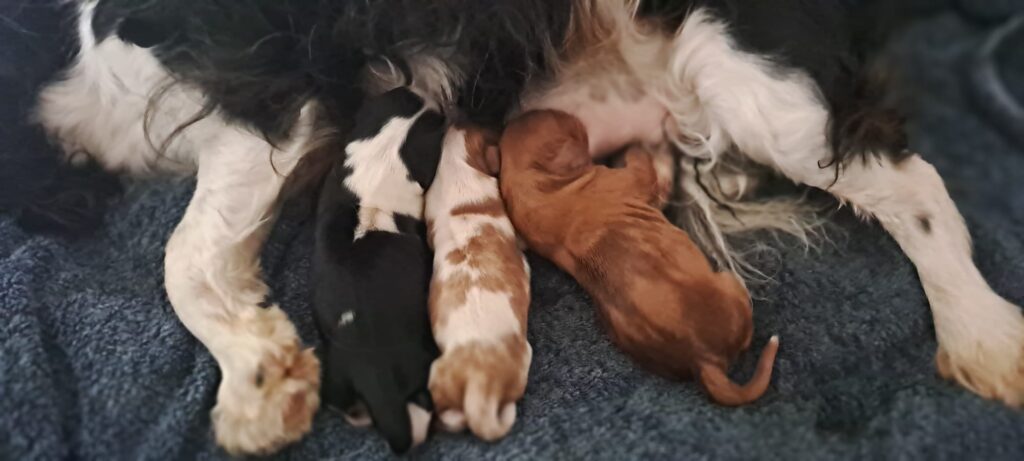
Just after breakfast, which I ate with my (thankfully) dry boots from washing, I got a WhatsApp from Hazel’s breeder. Hazel’s mum has had another litter, and one of them is a ruby! Of course, I snapped her up immediately.
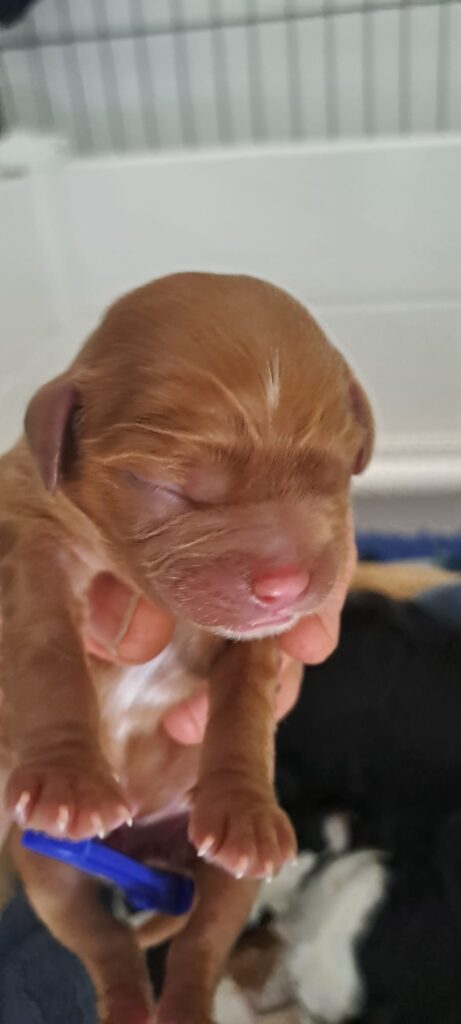
Her name will be Ivy. I’m very excited!
Now, back to Nepal.
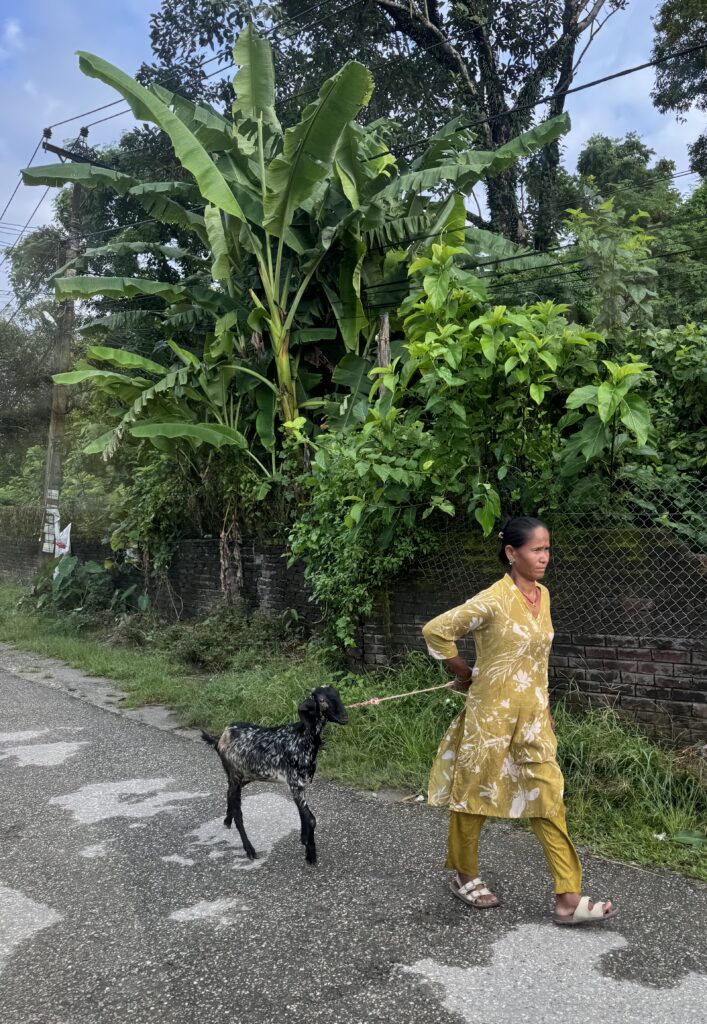
On our way to our canoe ride, we saw this lady walking her goat. As you do.
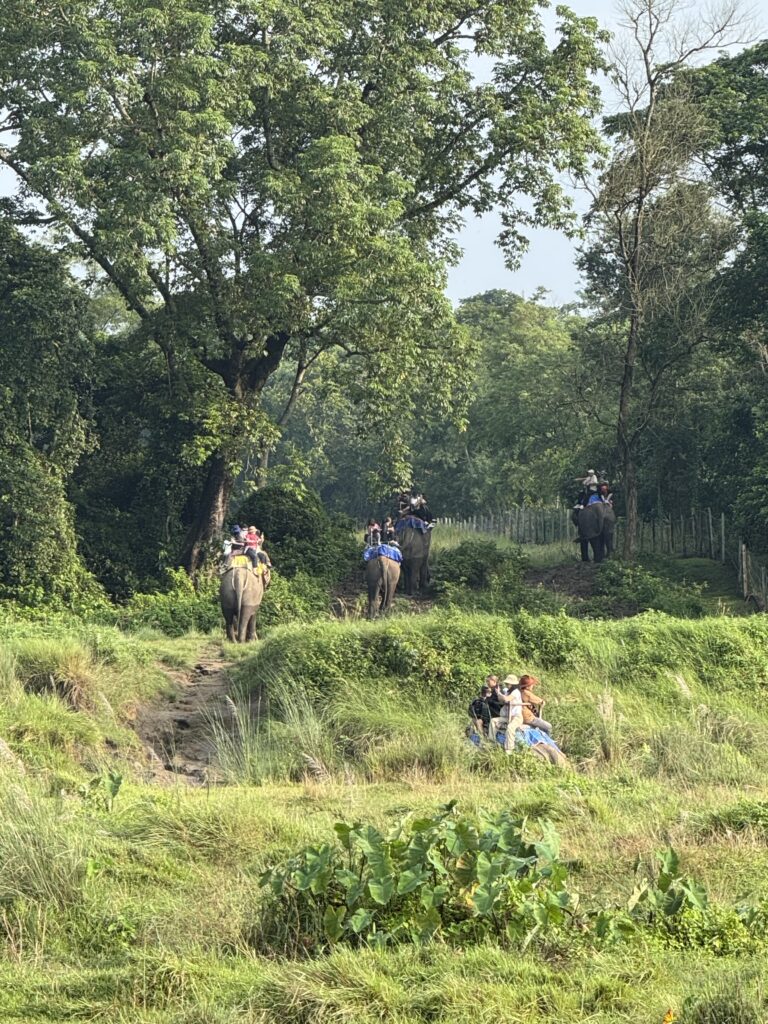
As we drove in, we saw an elephant grab a sack from the ground and nonchalantly toss it up to the man on his back. It looked very funny.
They have elephant rides here for the Chinese tourists, apparently. They seemed very popular.
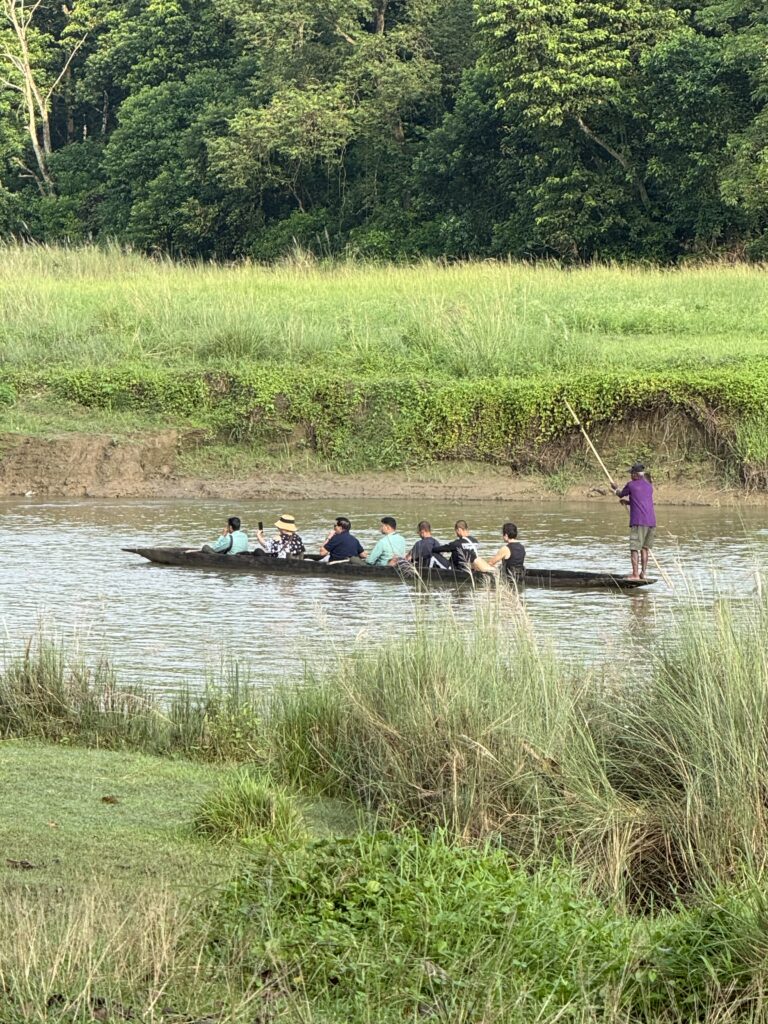
We were going birdwatching and animal spotting in a dugout canoe.
There are crocodiles here. By the time about 12 of us got in, the boat was very low in the water…
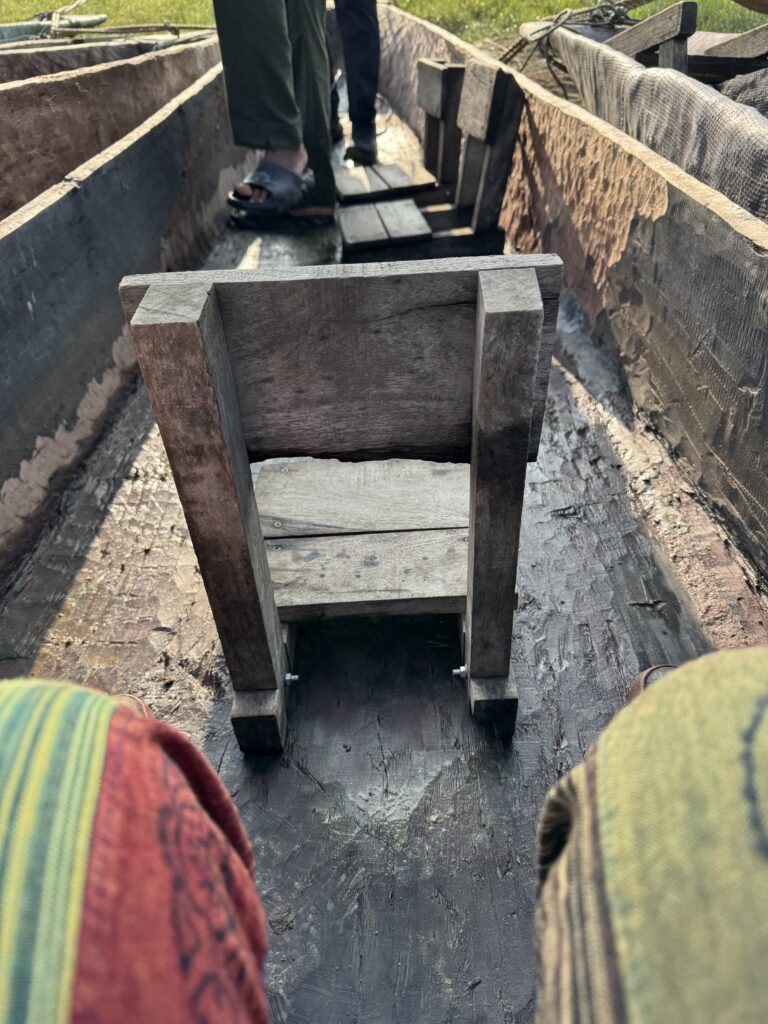
The seats are best described as rudimentary. And extremely low to the ground.
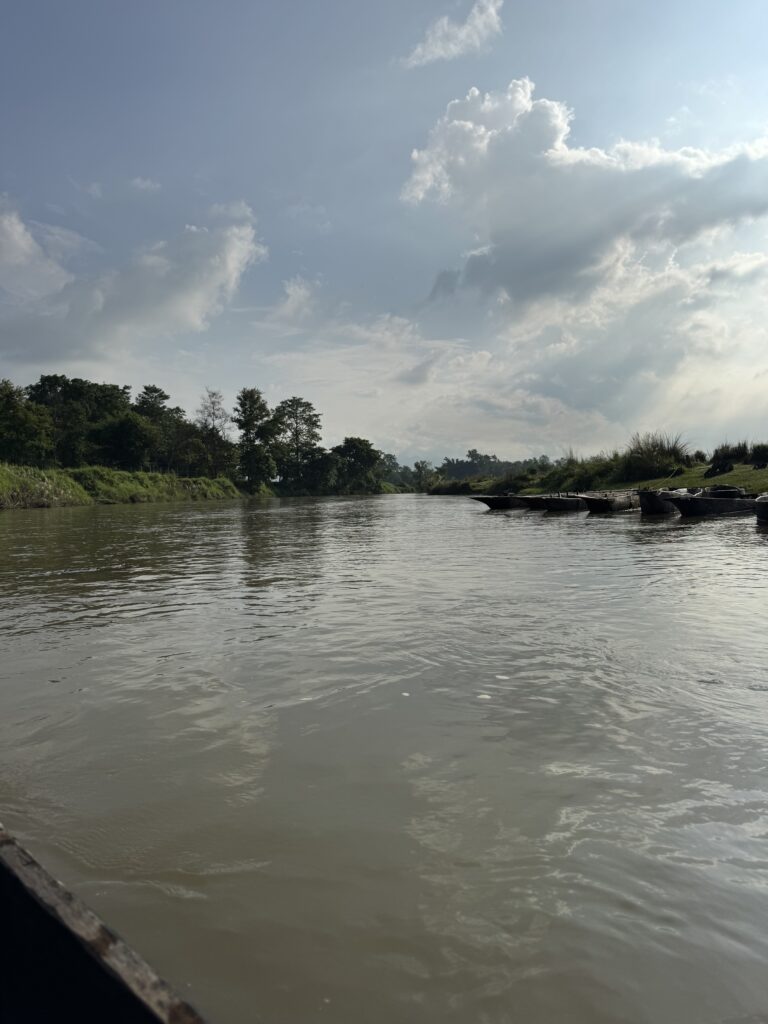
It was a beautiful morning, but even at 8:30, the humidity was climbing.
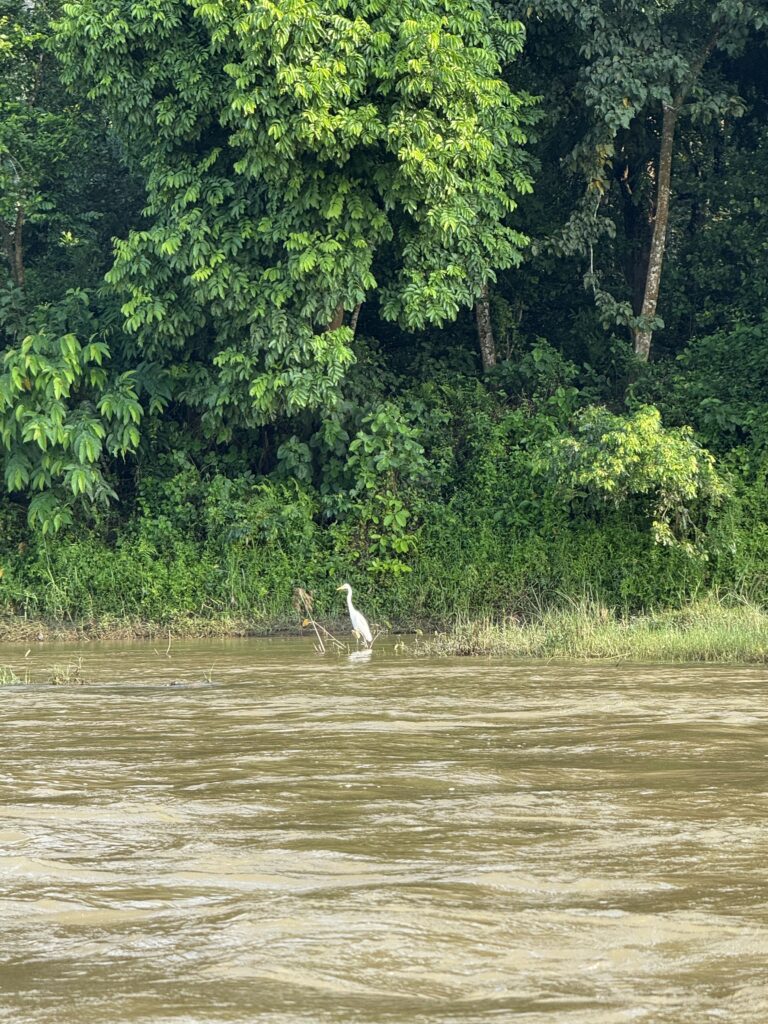
We saw quite a few things, but I won’t repeat them. Egrets, of course. They’re everywhere. Just out of shot was a crocodile, not even bothering to try and eat it. Remember how in Arnhem Land the guide said that egrets are the only things crocodiles won’t eat?
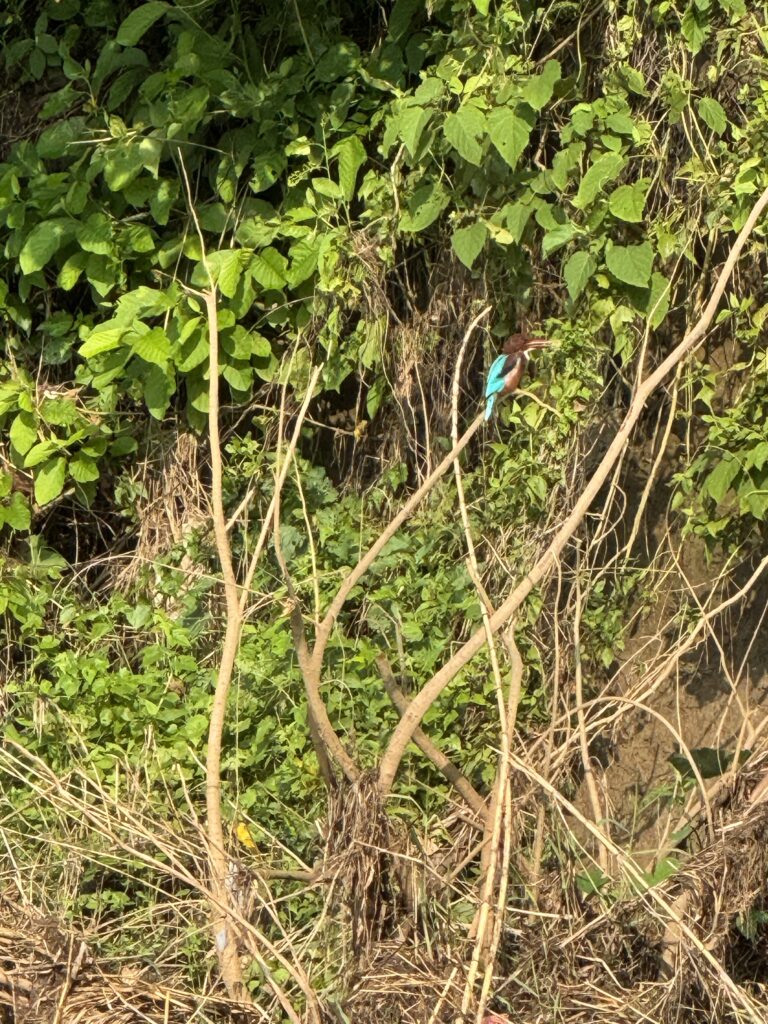
We saw quite a few kingfishers. They’re such a satisfying bird to see, all chunky and colourful.
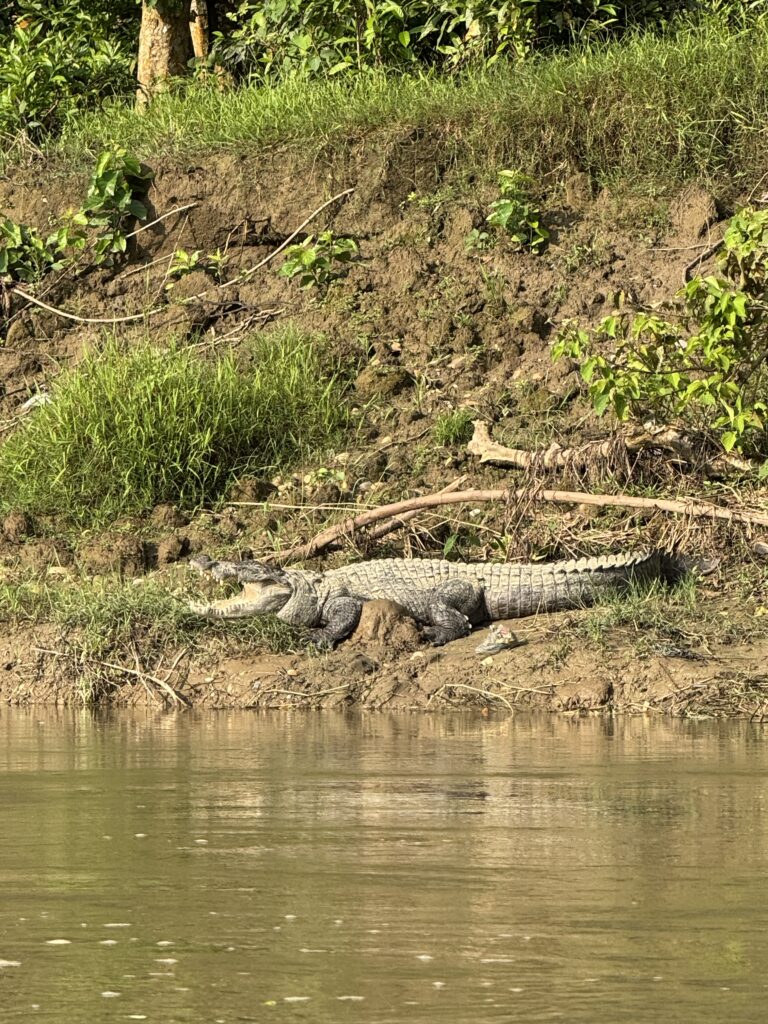
Lots of crocs.
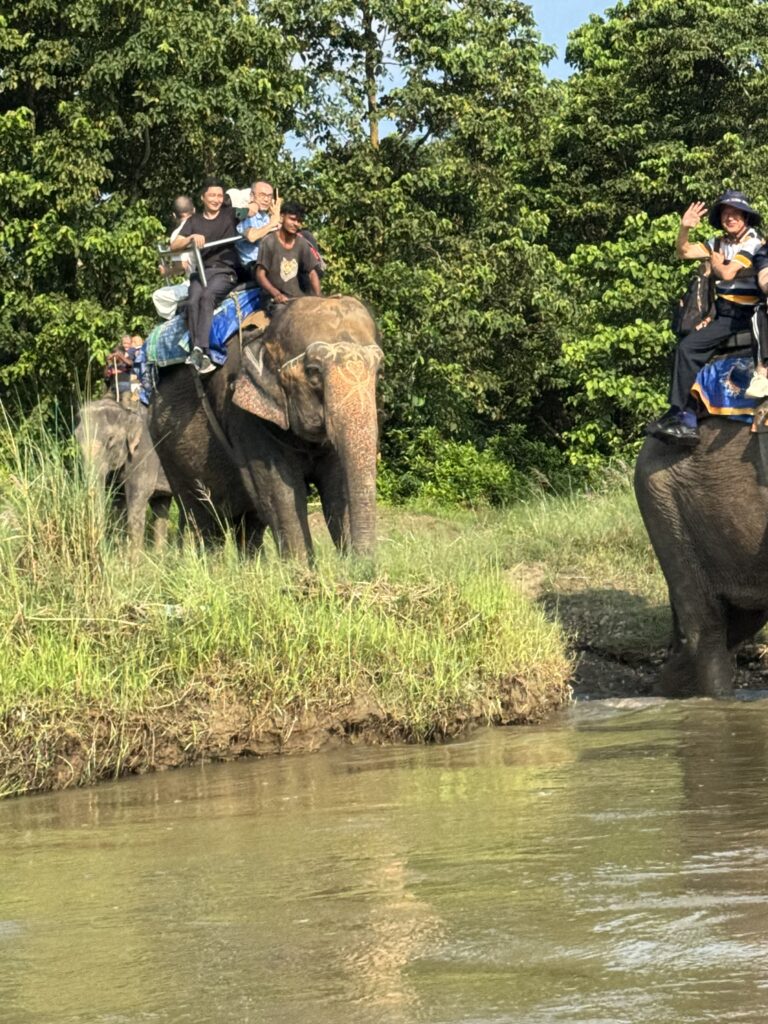
A few Chinese tourists in their native habitat.
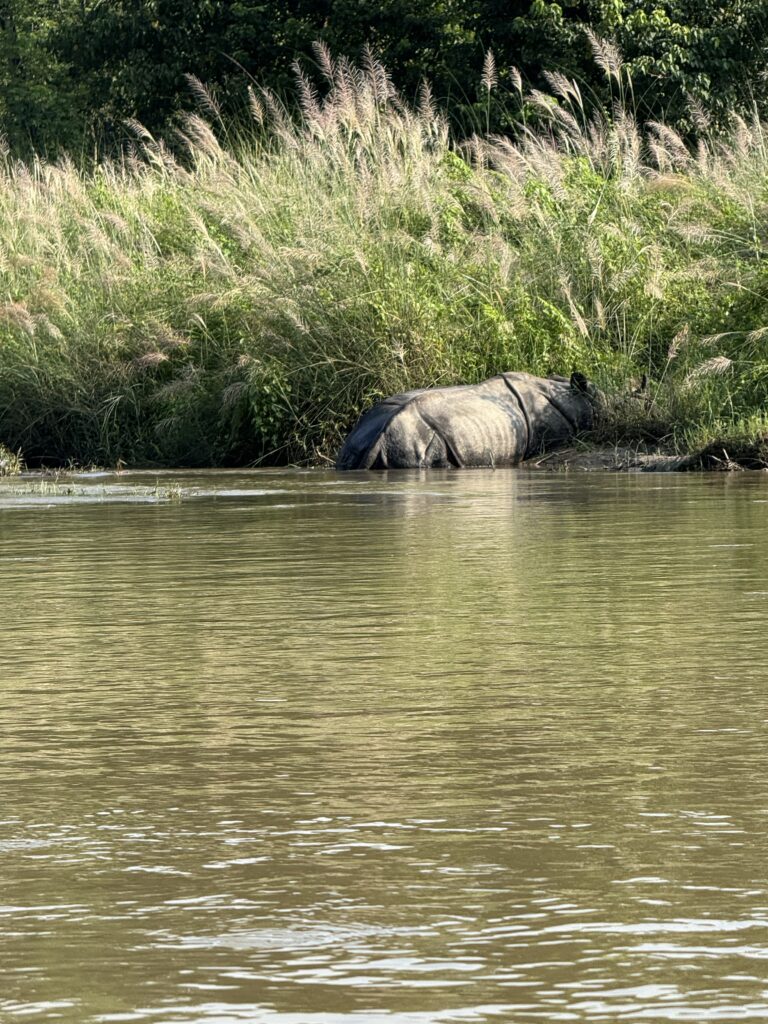
And then, big excitement. Another rhino. The guides immediately told us to be quiet as we drifted past.
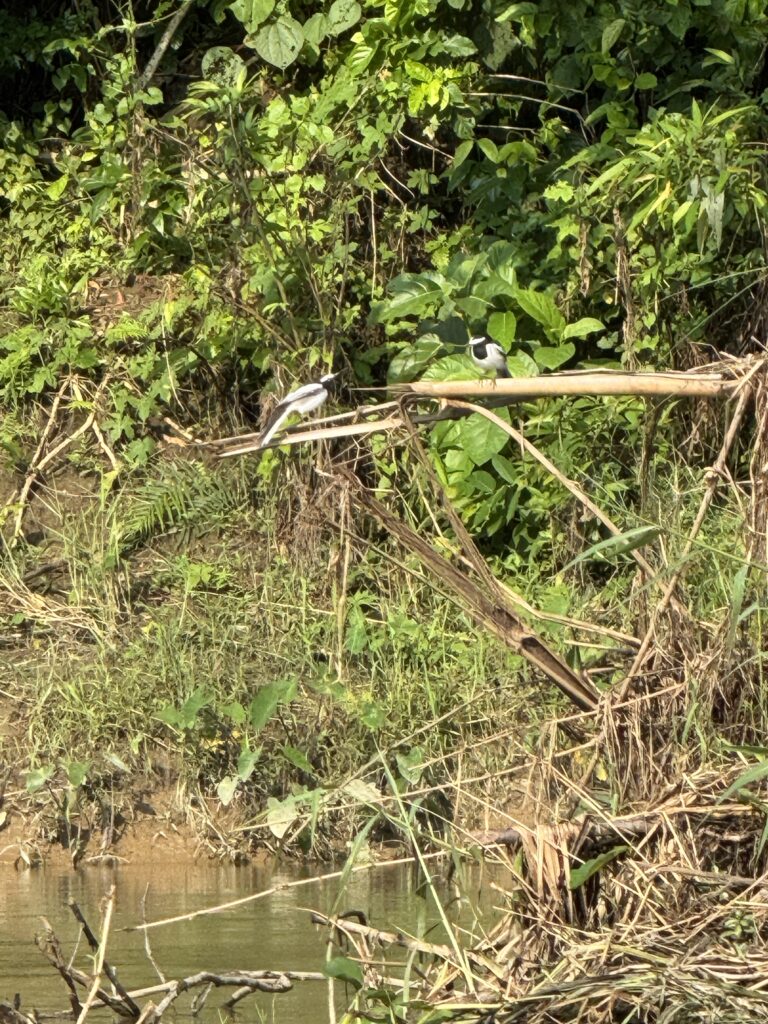
White-browed wagtails.
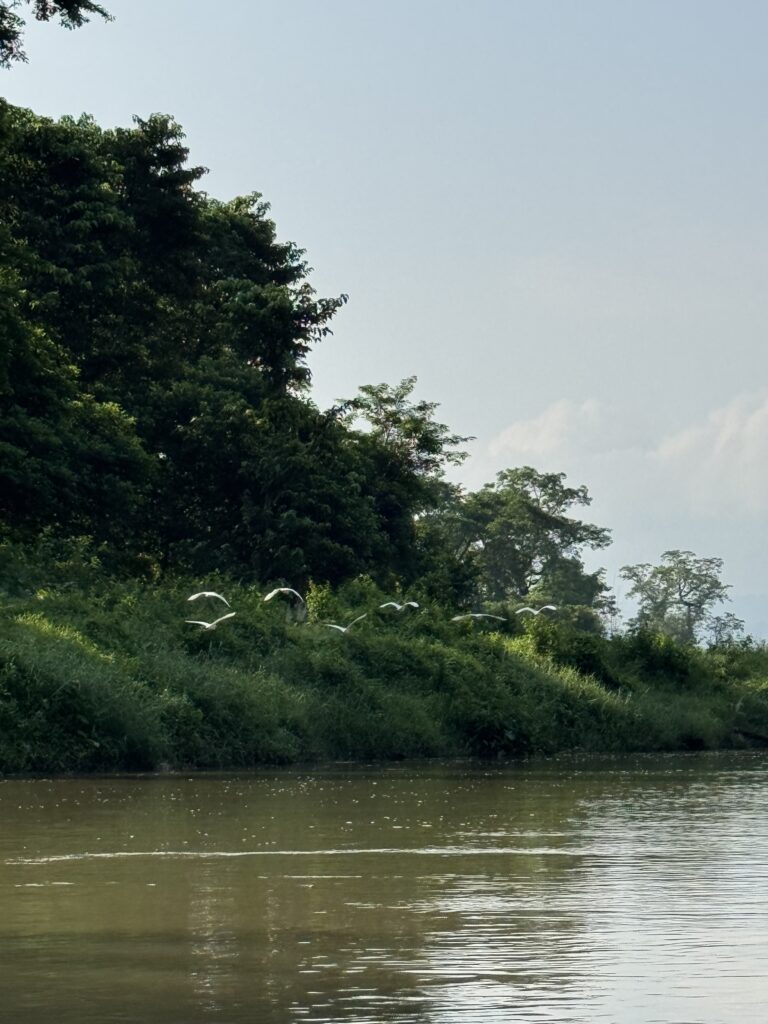
This was a very nice way to spend an hour.
We were on dry land, and our guide asked us if we wanted to go on a short jungle walk, or if we wanted to go straight to the elephant breeding station. When he mentioned that the conditions would be muddier than yesterday, I plumped most decidedly to go straight to the elephants.
No more spending hours scrubbing and drying out boots for me!
Before we set off, the guides told us what to do if a tiger or elephant attacked.
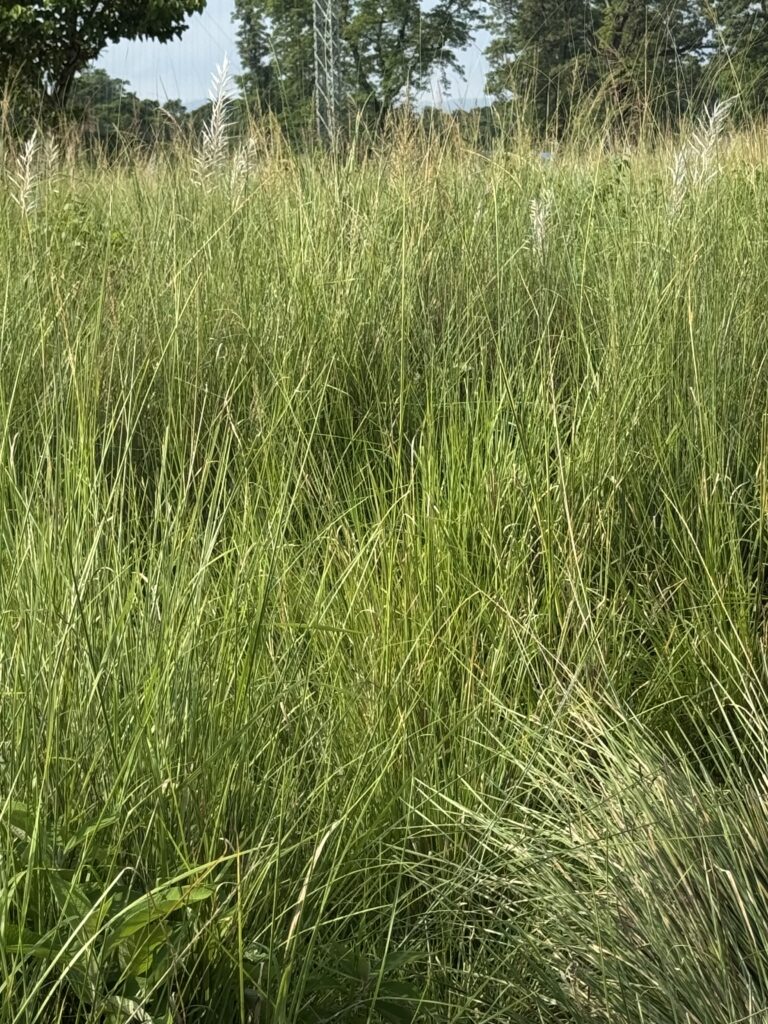
Look at the elephant grass that was surrounding us. A tiger could be a couple of inches away and you’d never know it.
I decided to stick close to the man with the stick.
After walking a few minutes, we heard a sound close to us through the tree line of the jungle. The guides tensed up and had a quick conversation.
There are 3 wild elephant bulls that hang around the elephant breeding station. They’re permitted to do so, because ever since they started fathering babies instead of captive bulls, infant mortality plummeted.
They’re permitted to one the guides didn’t want us to encounter was Ronaldo, so called because he kills by kicking people like a soccer ball.
They moved us along pretty smartly.
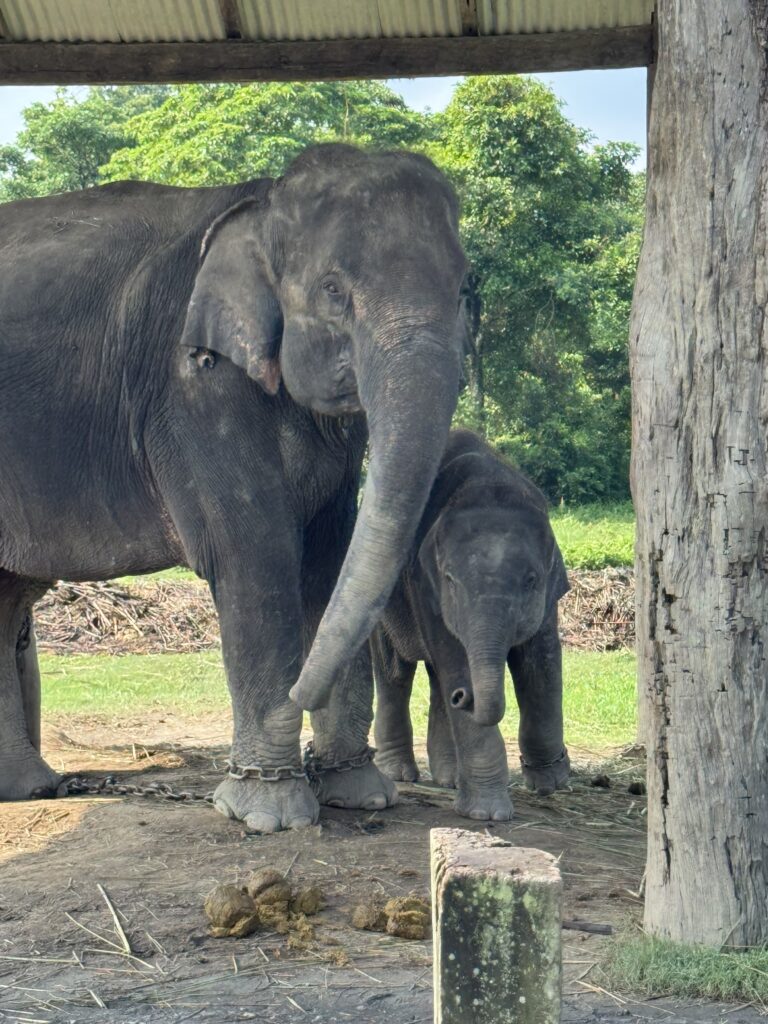
There were around 7 or 8 mums and babies at the breeding centre. They’re permitted to babies are also chained up, because when they left the babies to run free, they’d run off and their mothers would pull against the chains and injure themselves trying to catch up with them.
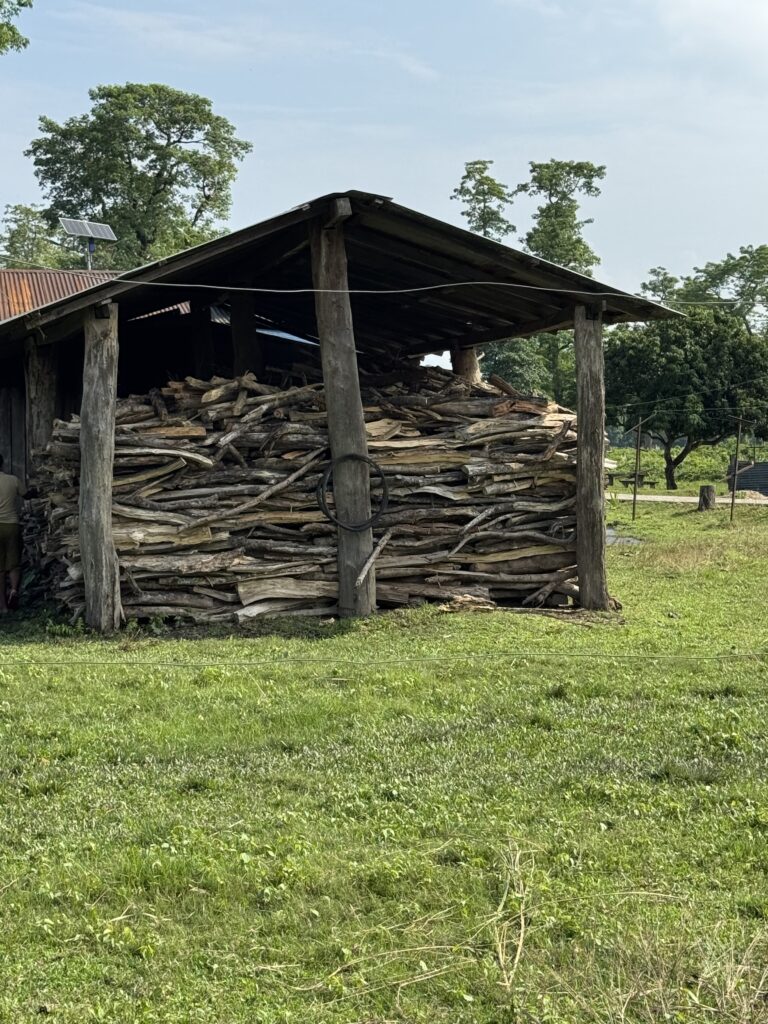
When the men take the elephants and their babies out into the jungle each day, they’d run off search for dry wood kindling to cook on. Nepal has to import all of its gas, so wood fires for cooking makes sense.
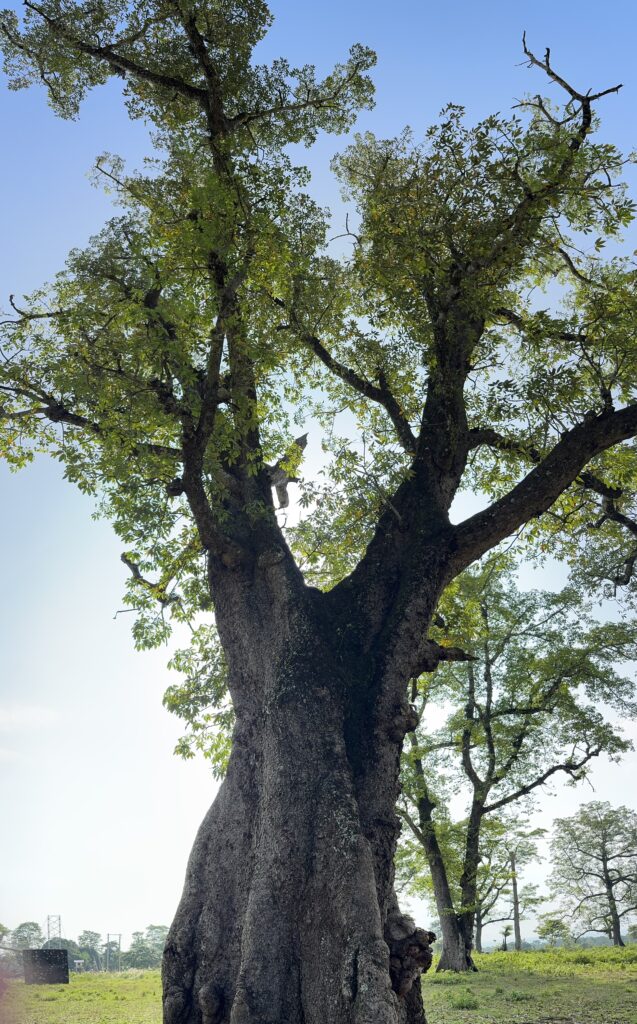
This is called a No monkey climb tree. It has thorns all over the trunk when young. It’s a great tree to hide behind if a rhino comes.
Locals make boats from the trunk, like the one we went in this morning.
The branches are good for elephant food. A local type of cotton is also harvested from it.
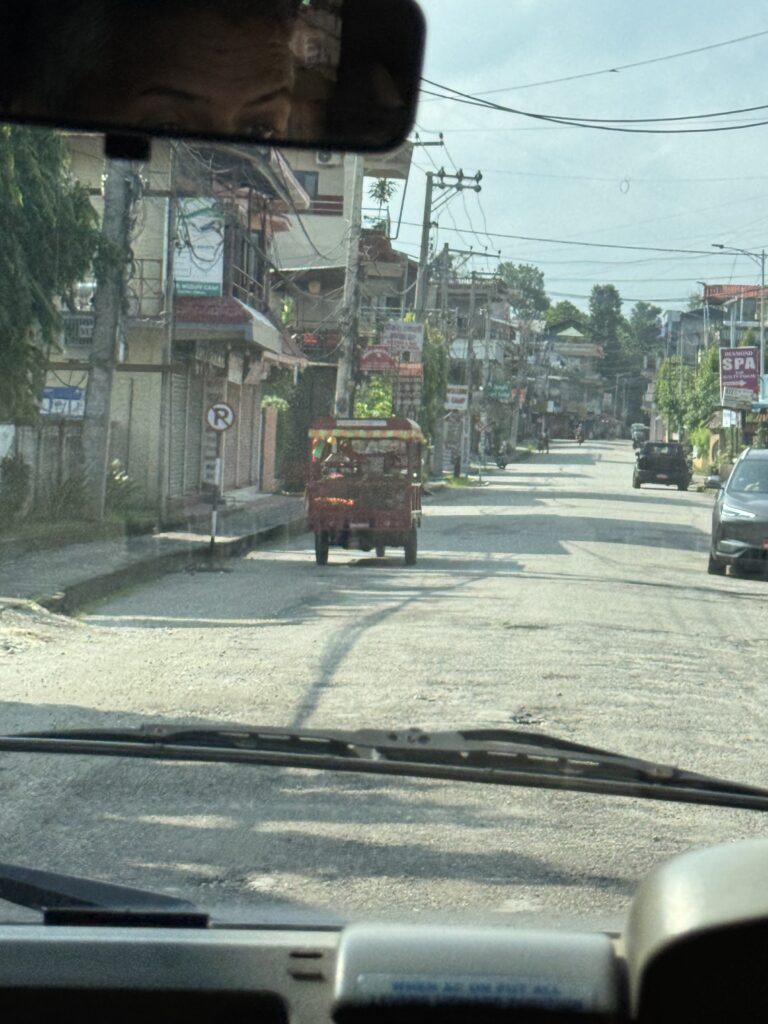
And a view of a typical Nepalese street as we went back to the hotel for lunch.
After lunch and a nap, we were back out, this time for a jeep safari. A little bit like the African safaris.
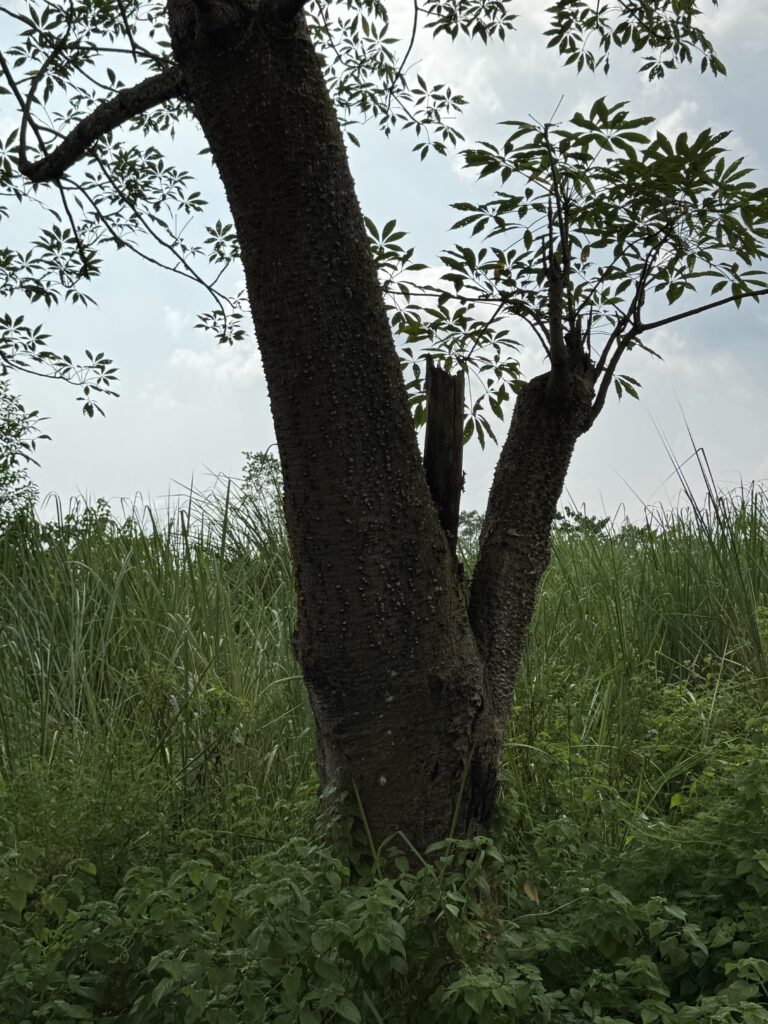
Remember the No Monkey Climb tree? Zoom in, and you’ll see the thorns on the trunk.
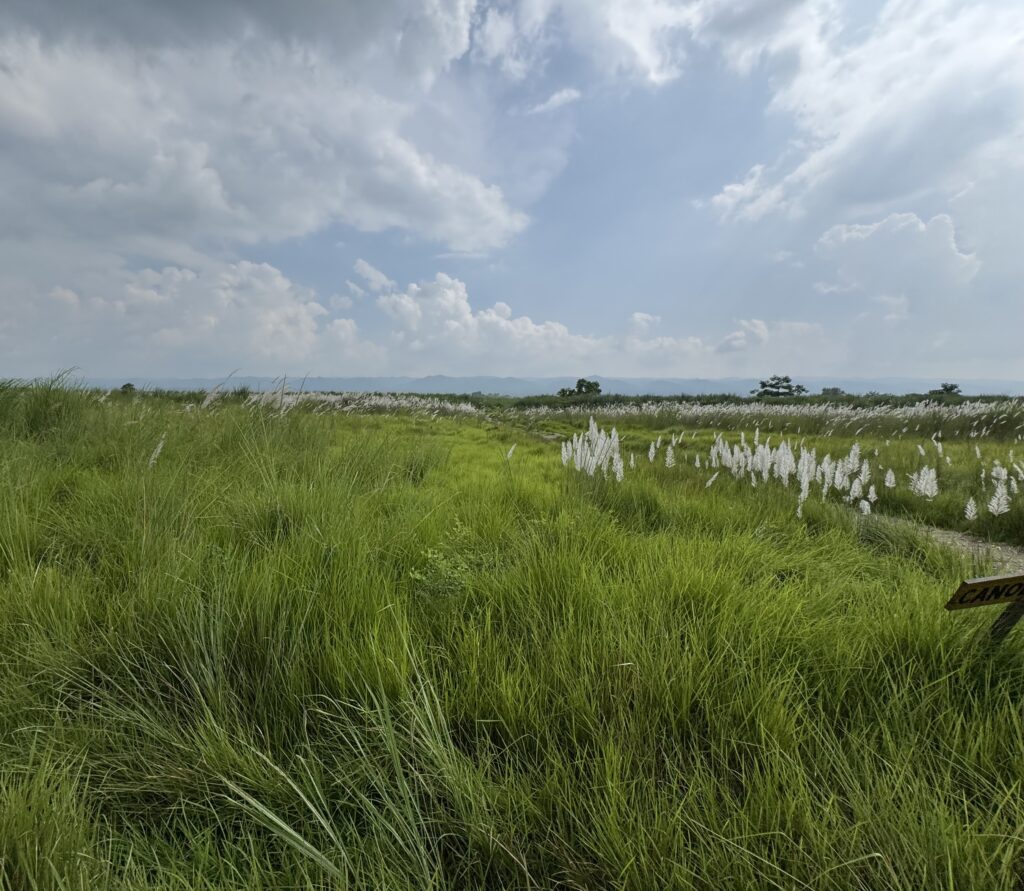
At first, the terrain was like this. Thick grasses, which could be hiding anything anywhere. Then, about 15 minutes into the drive, we rounded a corner and saw this:
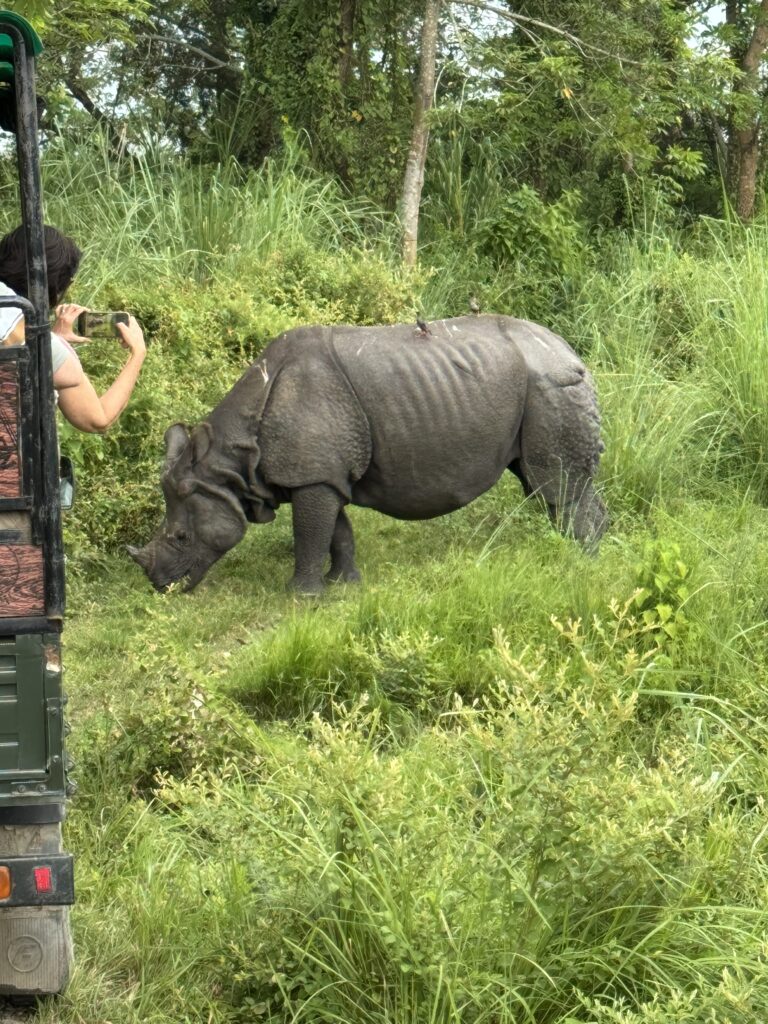
It seems like rhinos are practically throwing themselves at us.
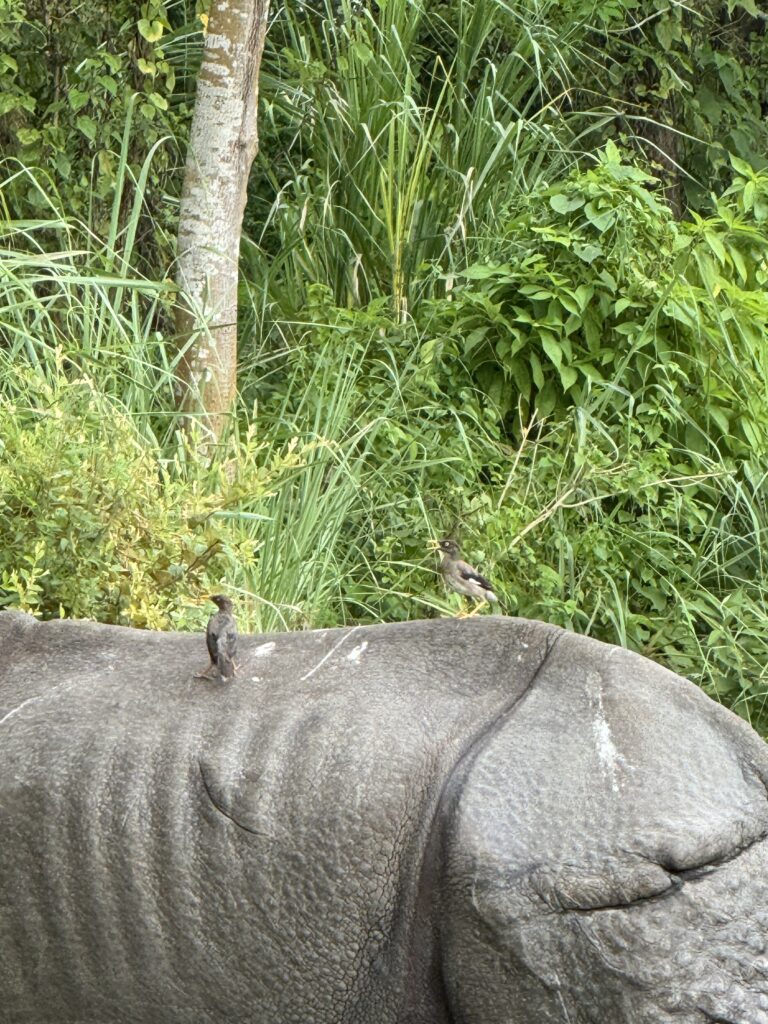
He had a couple of passengers on his back.
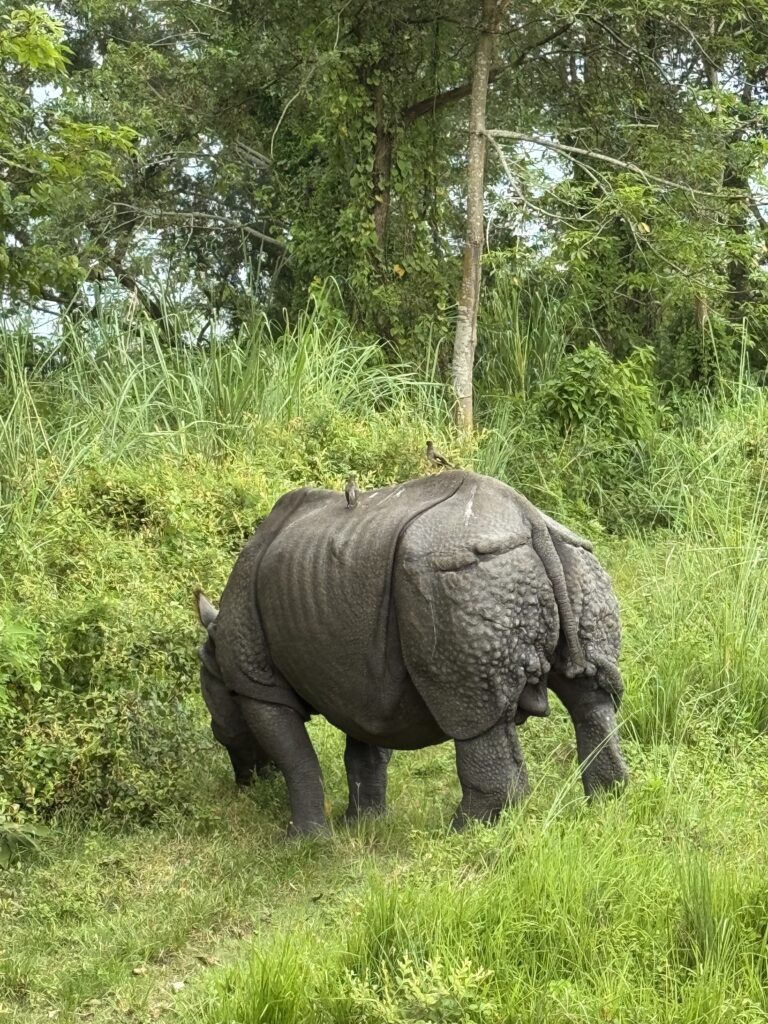
Look at what a rhino’s rear end looks like!
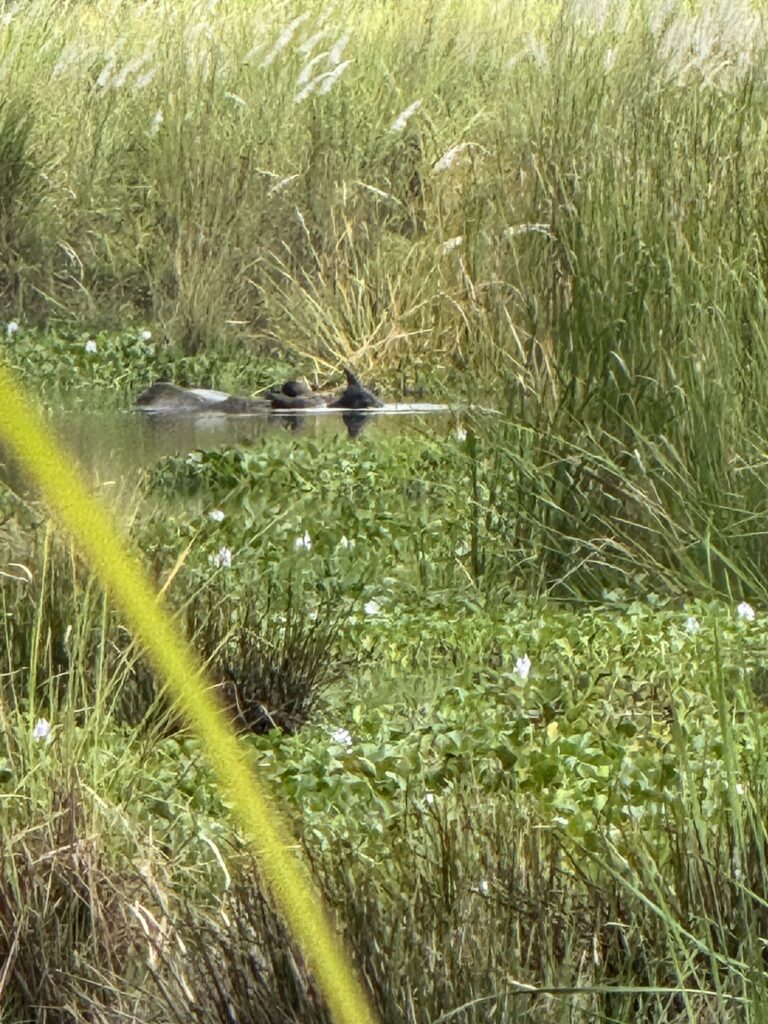
I’m including this one because our guide saw this rhino in the water 100 metres from the road. Well spotted.
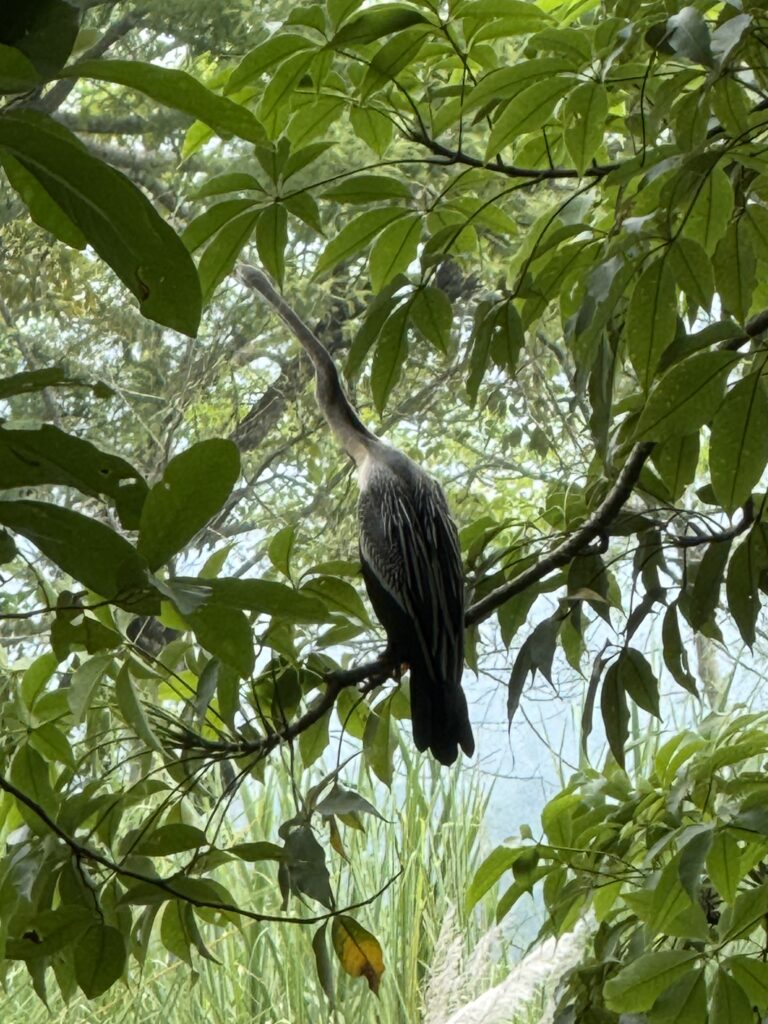
Snake bird, for obvious reasons.
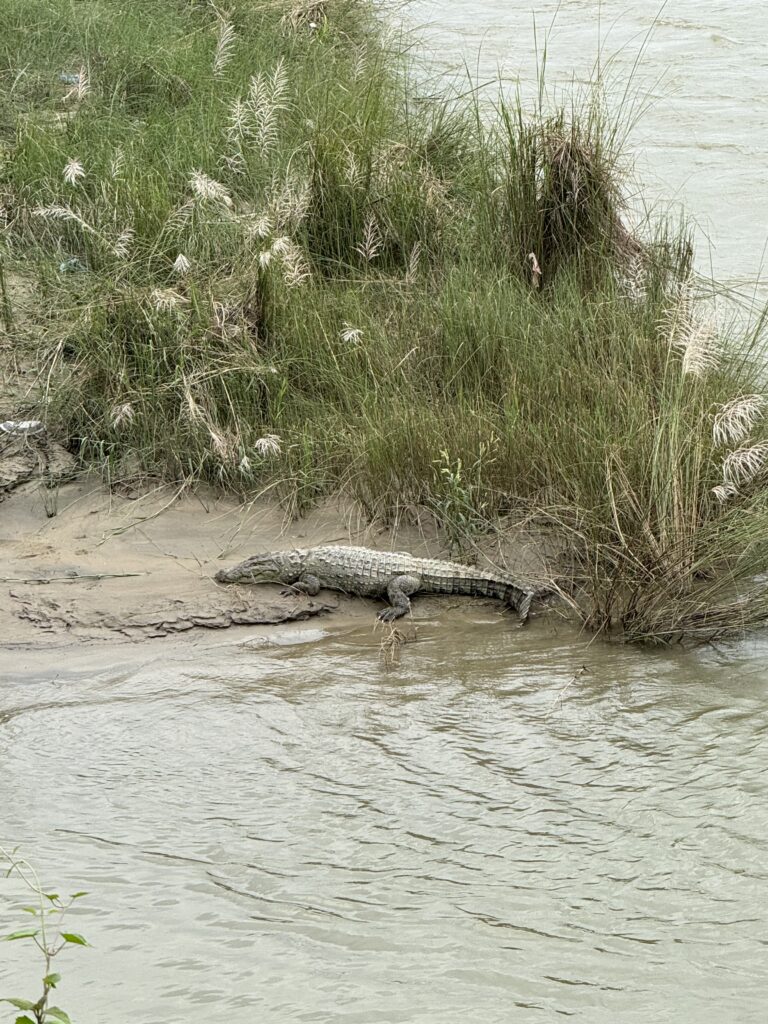
Honestly, this crocodile looked like it was striking a pose for the camera.
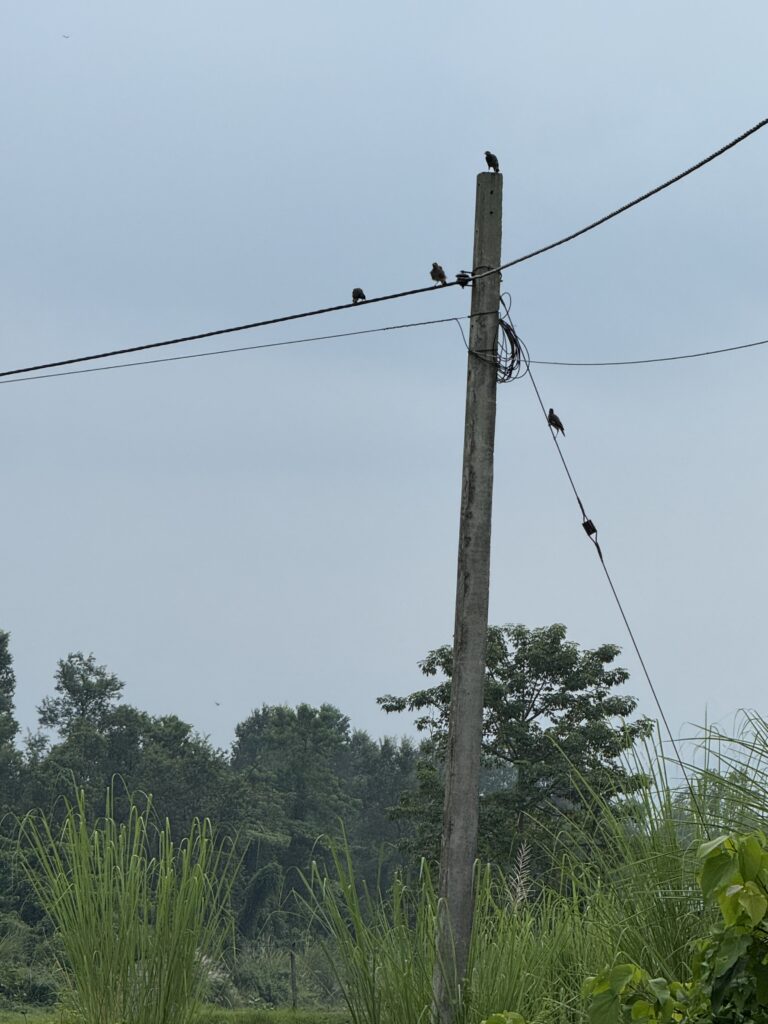
Jungle my a, Durango and shrike. No, I don’t know which is which, either.
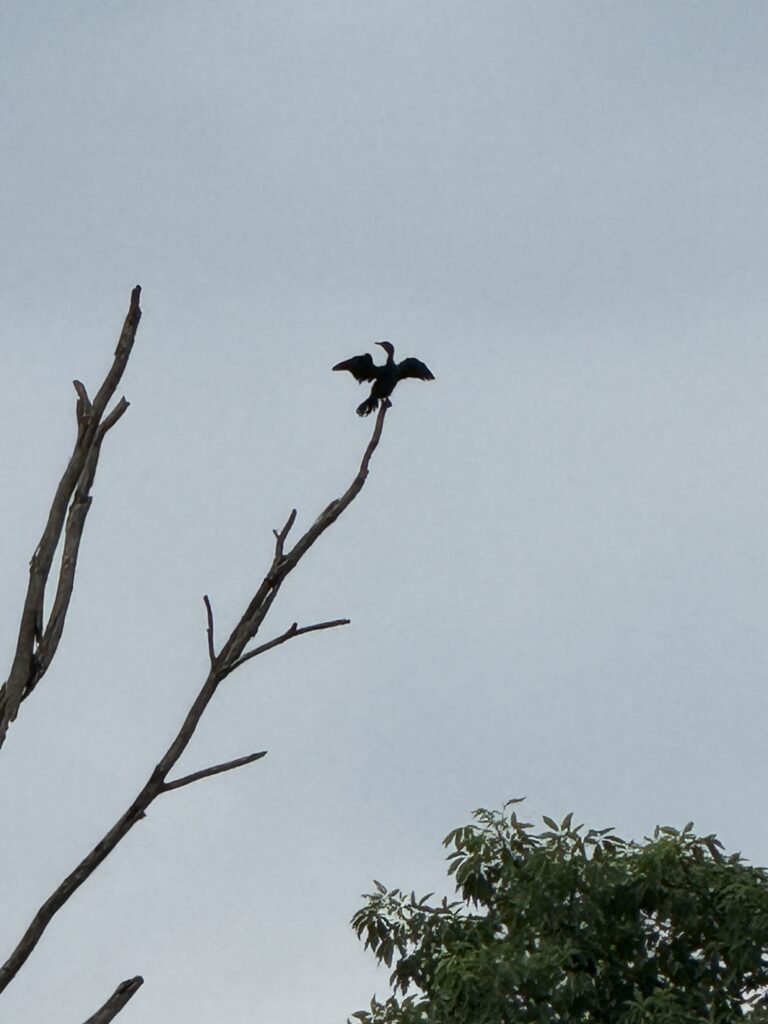
A cormorant, drying its wings.
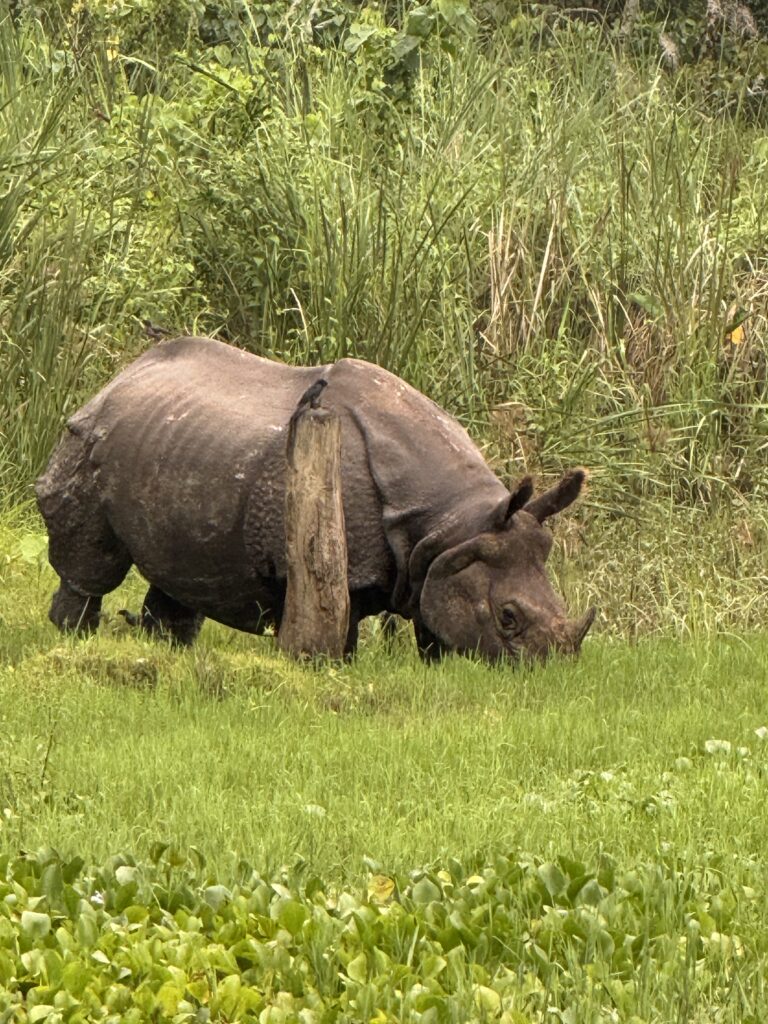
Yet another rhino. We saw others, including a white rhino hiding in the vegetation behind this one, but I’m not including any photos that aren’t ok.
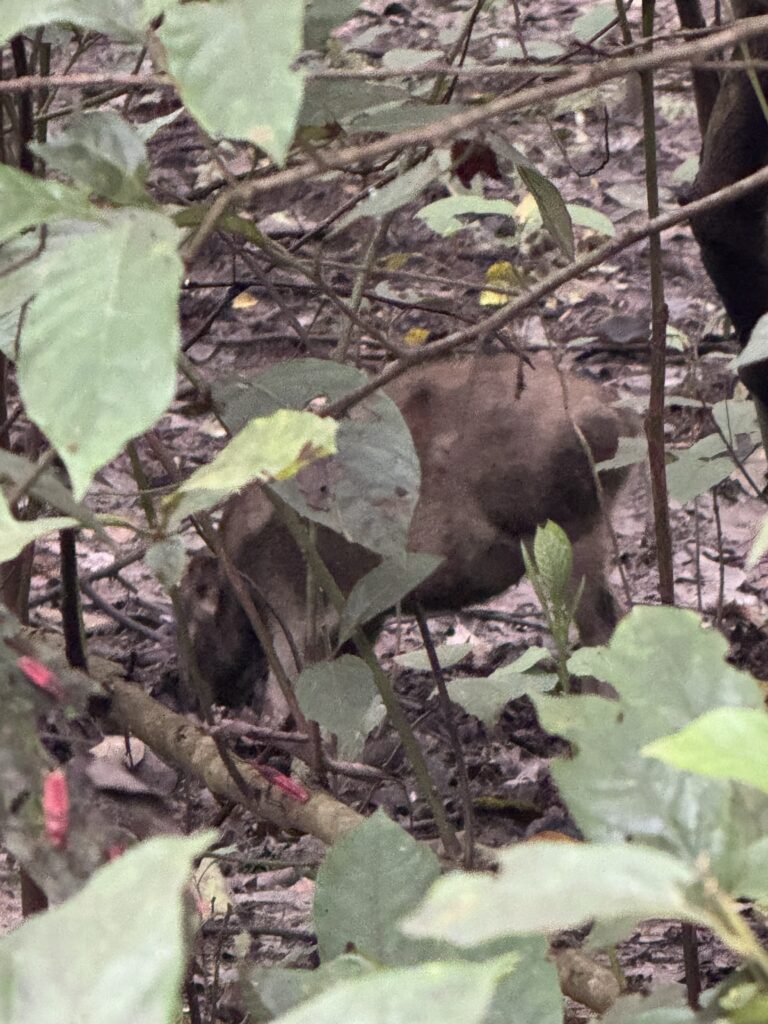
Except this one. Wild boar in the undergrowth.
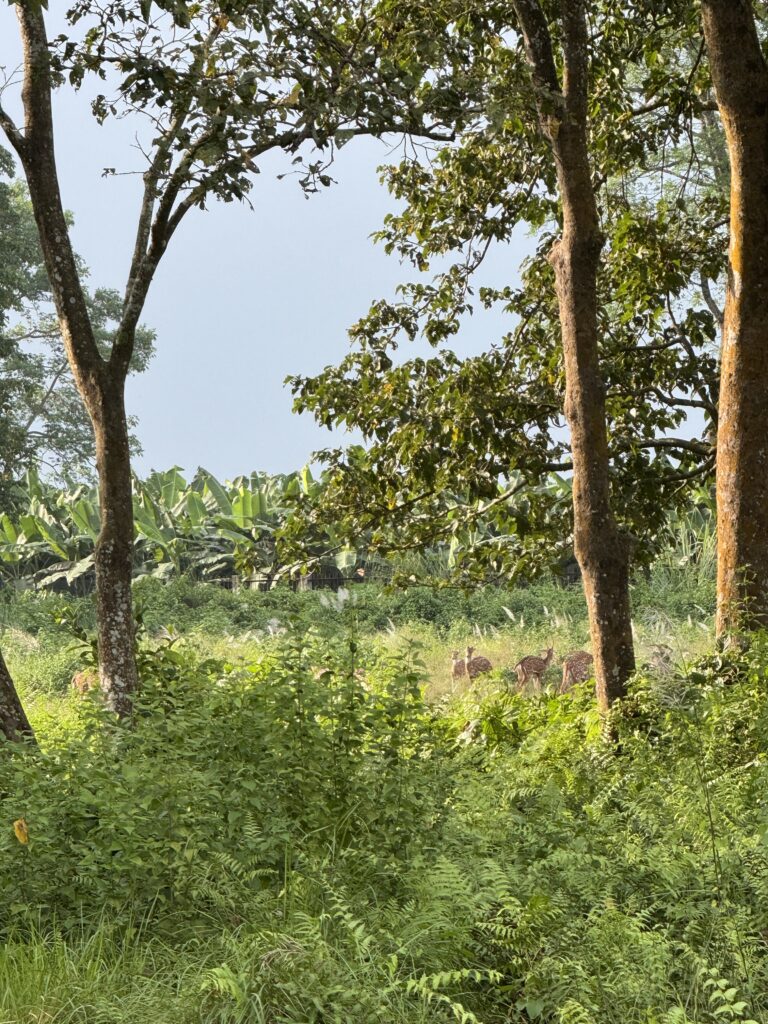
A herd of Spotted Deer.
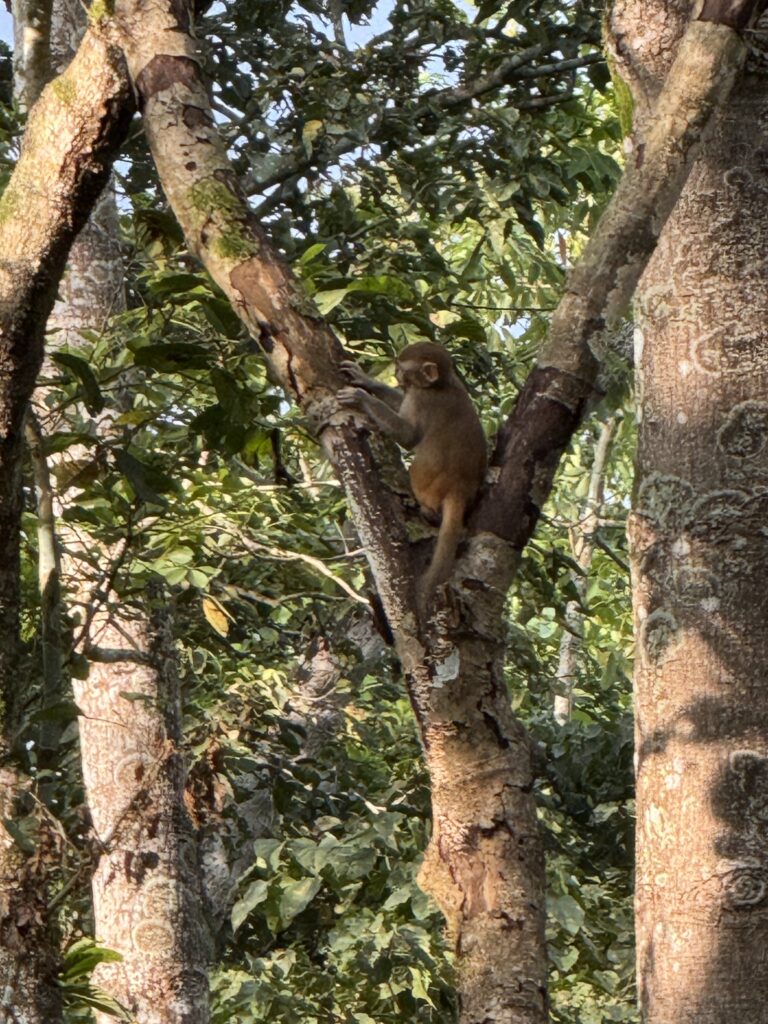
Monkeys!
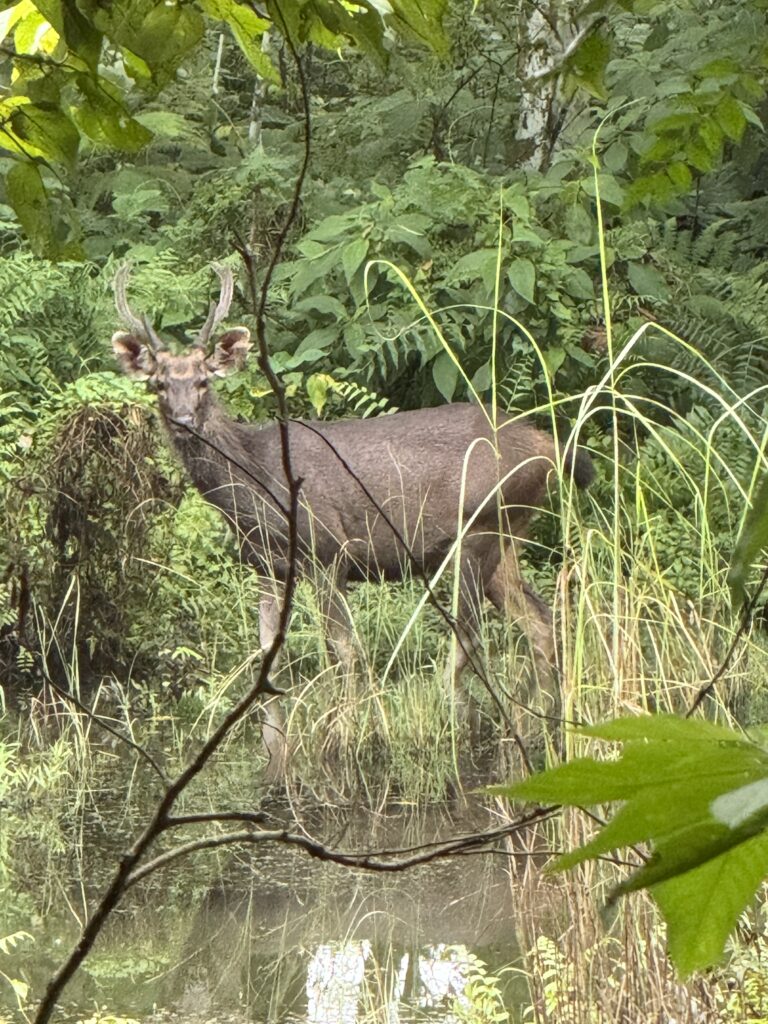
A Samba deer, the biggest deer in the park.
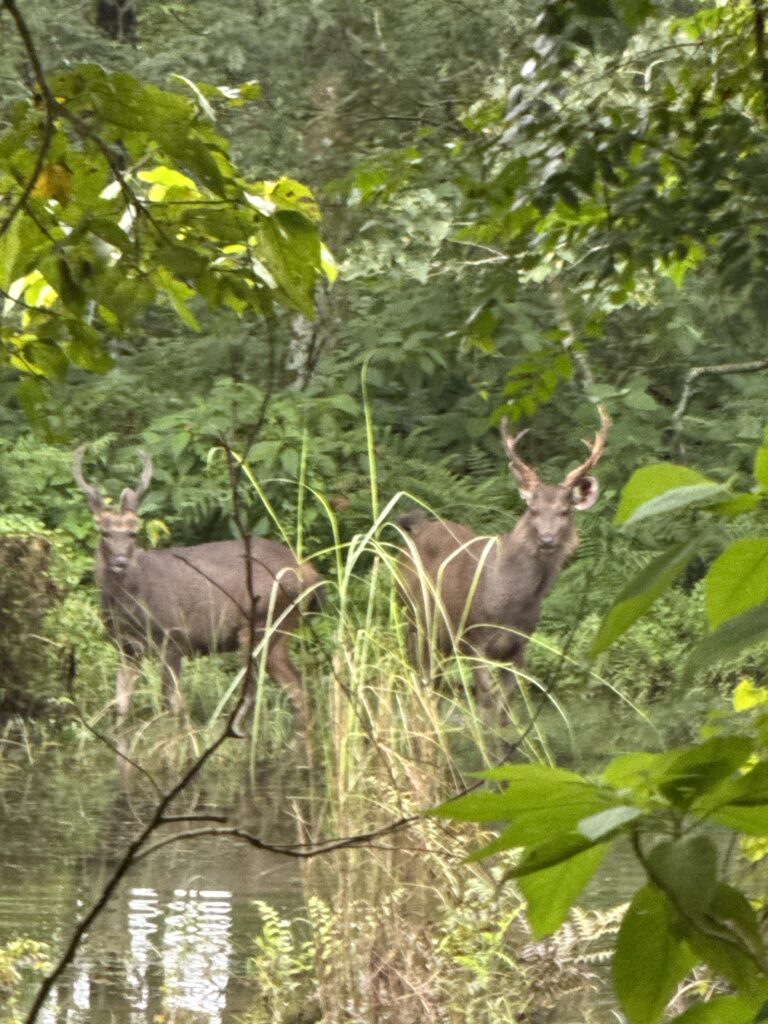
And then there were two…
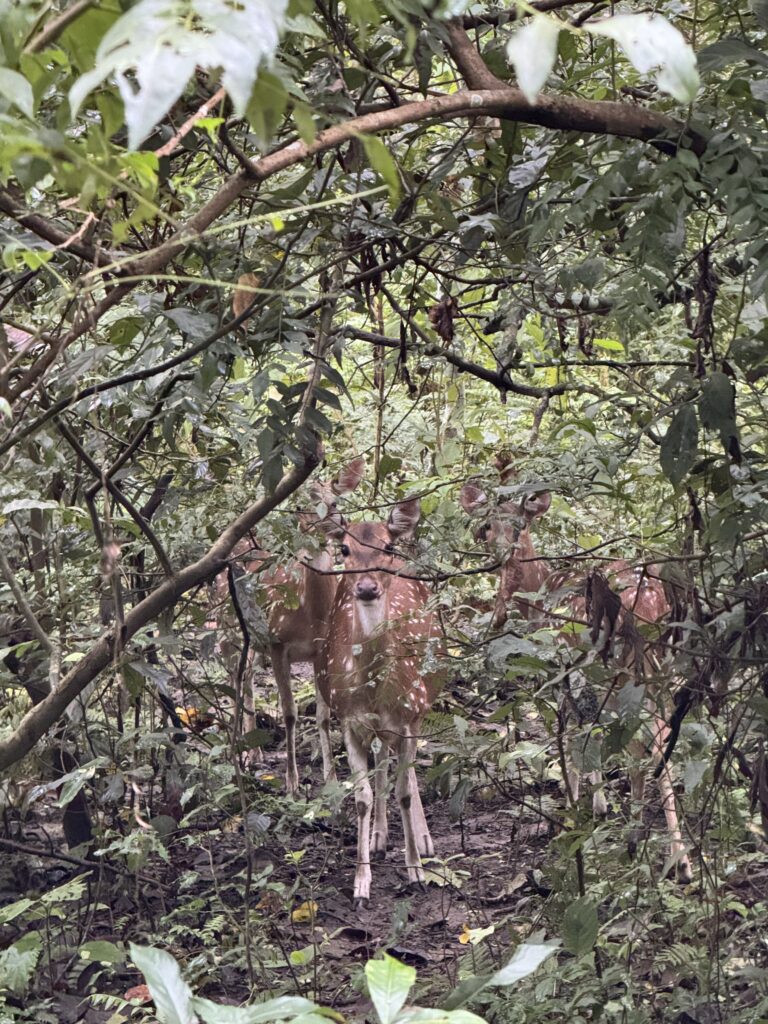
I think this Spotted Deer and I formed some sort of psychic connection.
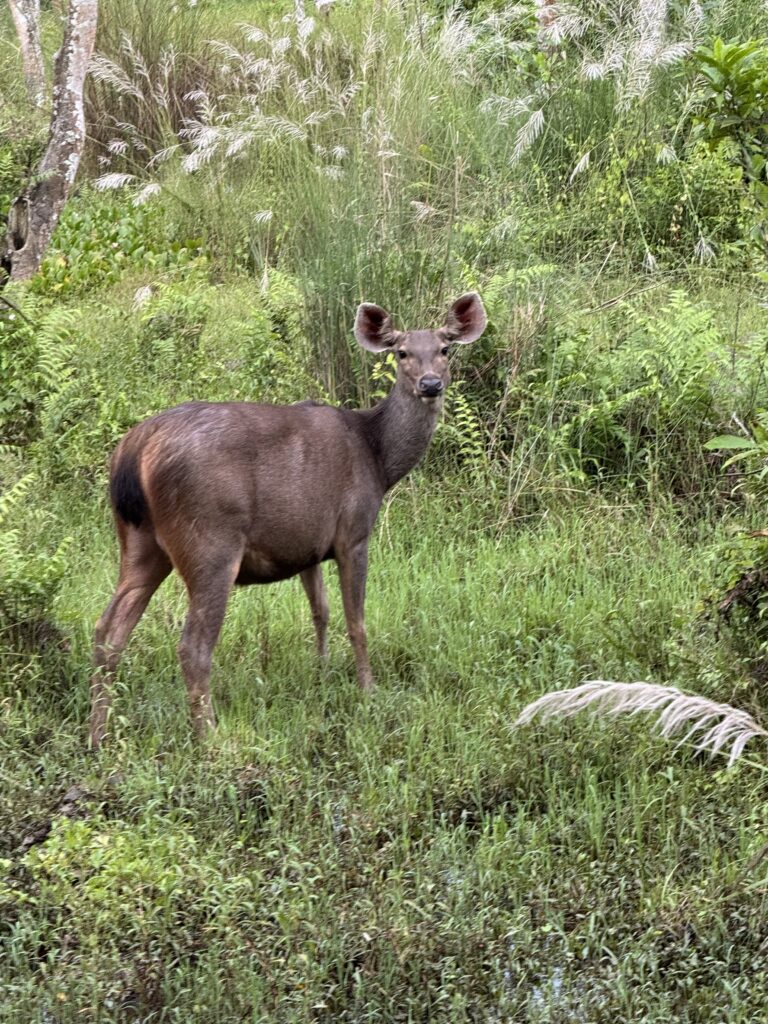
So close to the road! We couldn’t believe it.
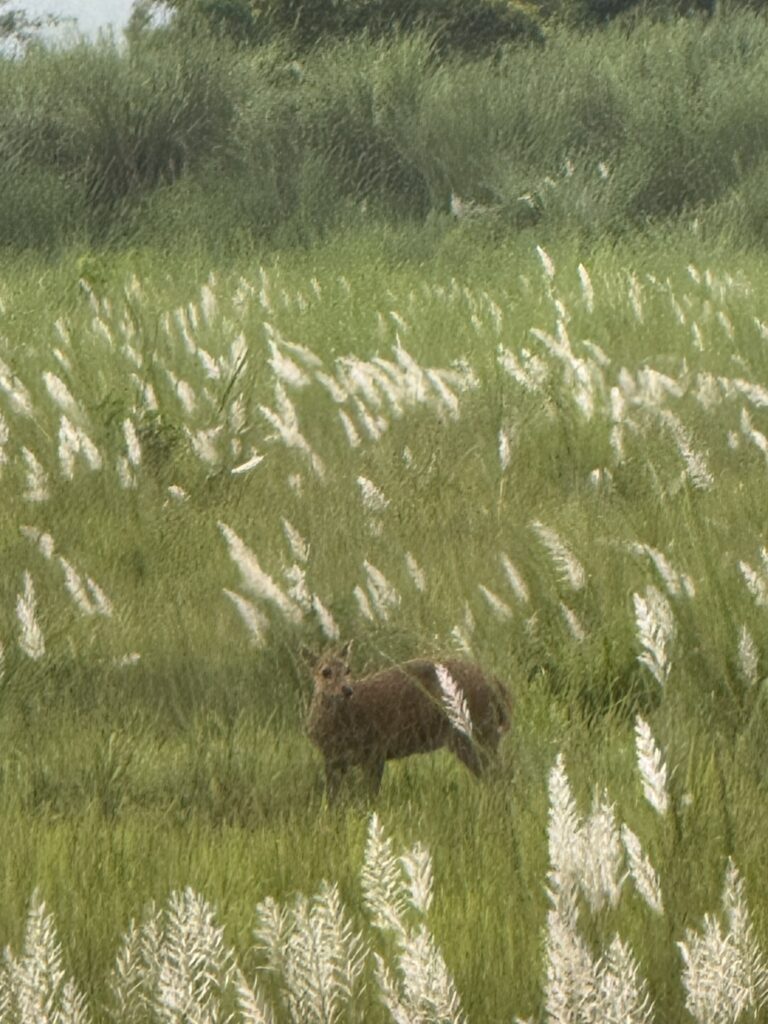
A Hog Deer, so called because it moves through the long grasses like a boar. It’s endangered.
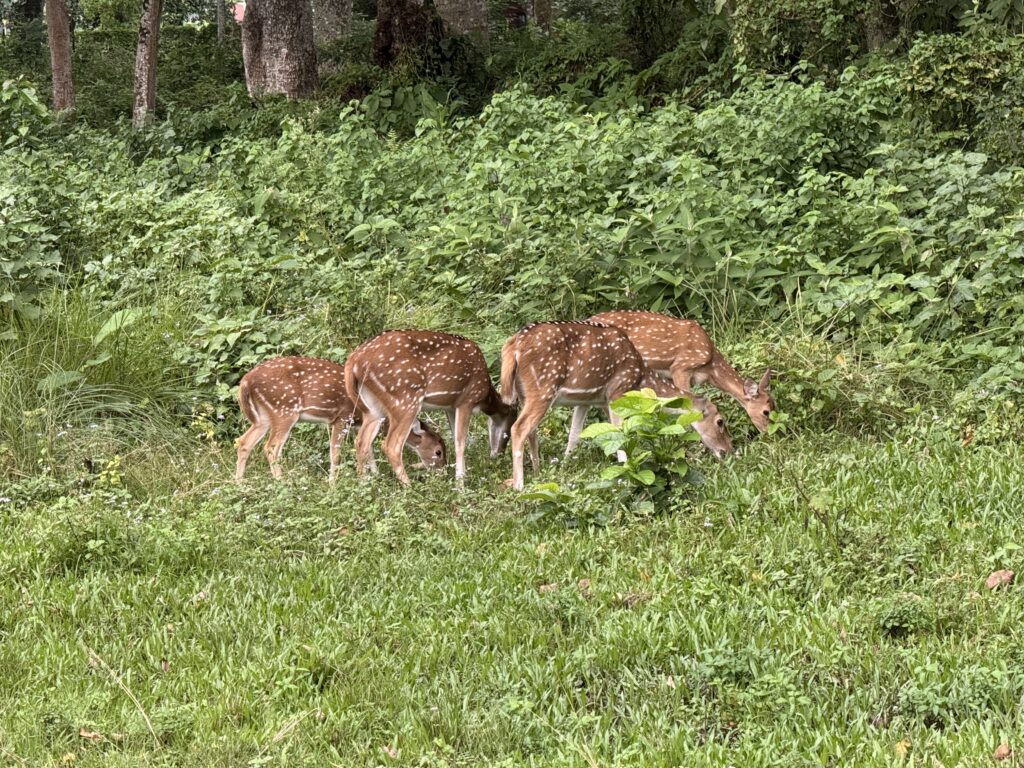
As we were driving out of the park, these Spotted Deer gave us one last hurrah.
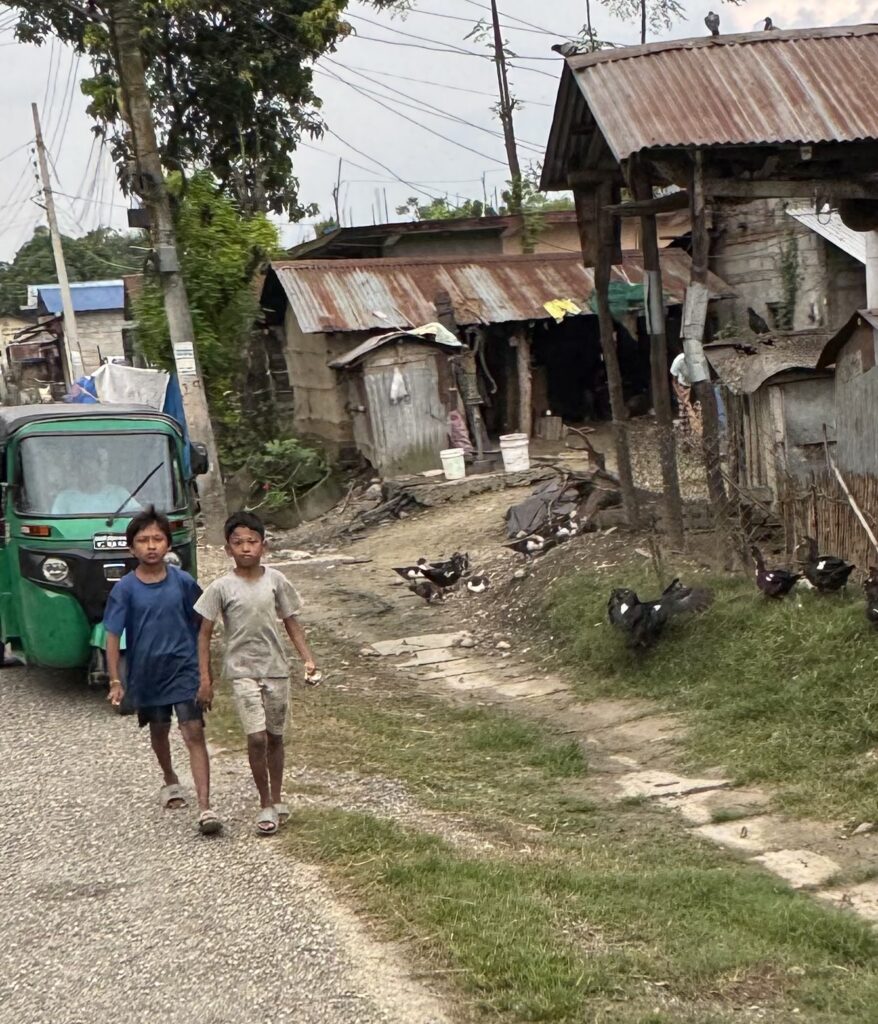
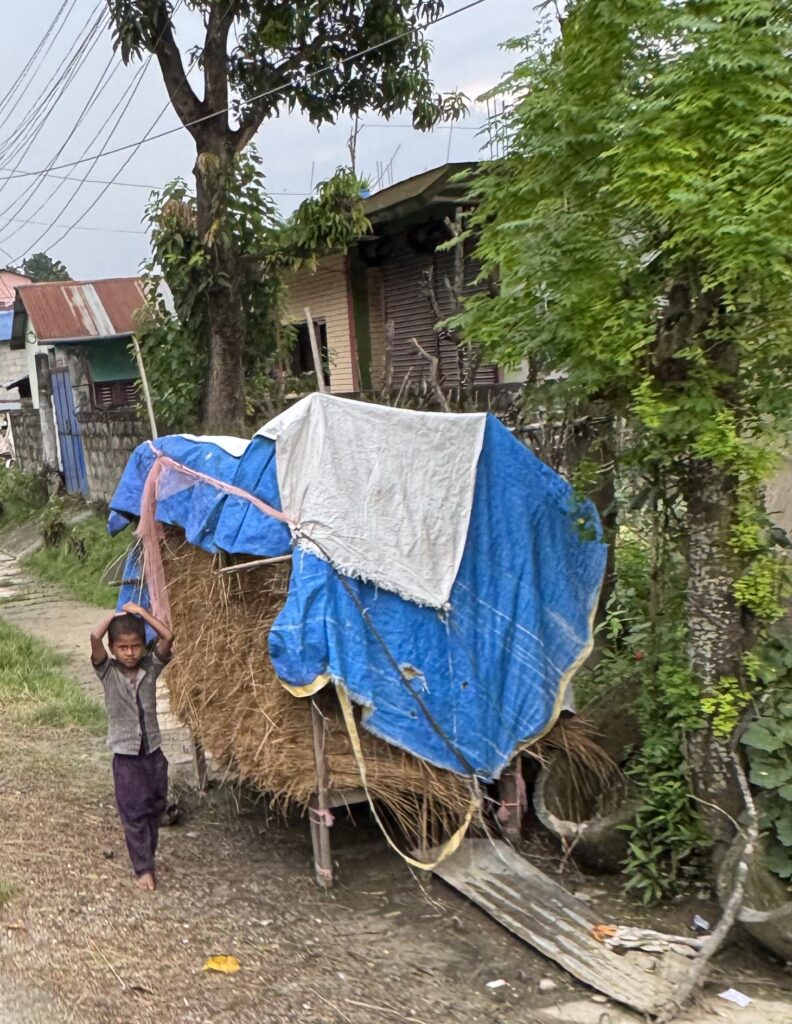
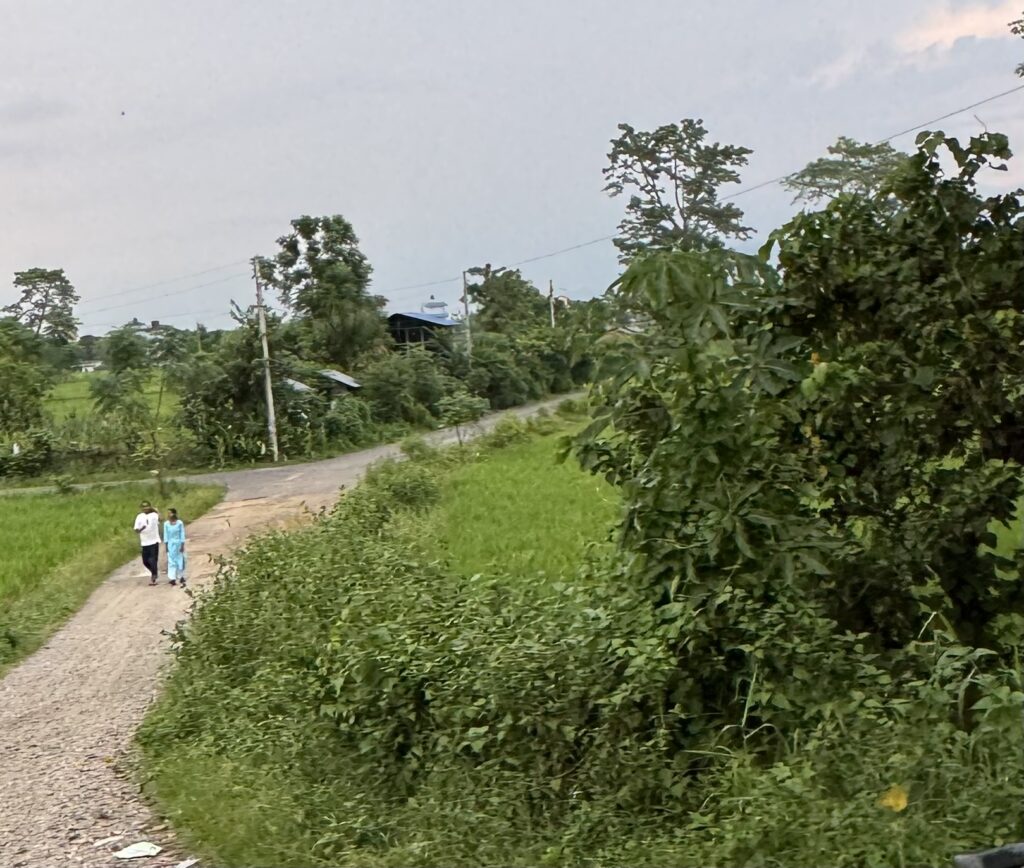
Tomorrow, we fly back to Kathmandu.
Dad joke of the day:
The trip is looking fabulous – so many animals and birds today! Including your gorgeous new girl!!
I could’ve done without the leeches… 😂😂