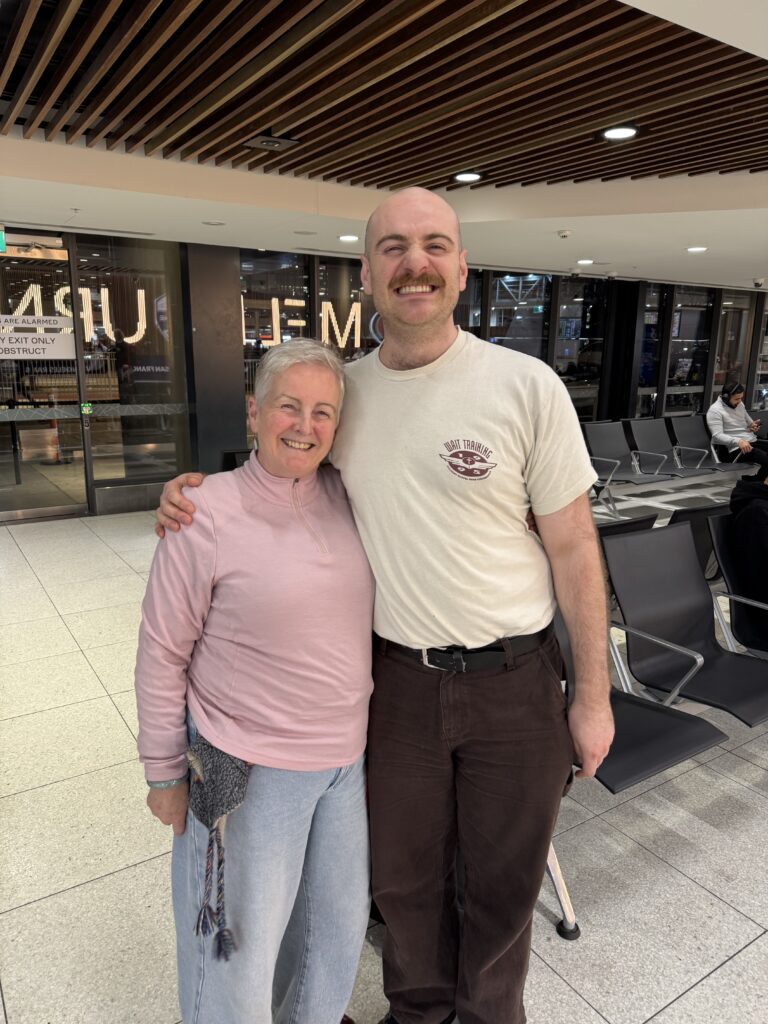
This holiday began the night before my flight. Evan29 was flying into Melbourne after spending 5 weeks away at the Edinburgh Comedy Festival, where his show “Man Sings The Same Song Over And Over Again For An Hour” was literally a smash hit.
Rather than miss each other by a few hours, I headed to the airport early, booked a room and surprised him at Arrivals.
Then it was off to Kathmandu, Nepal.
Fortunate Frogdancer was offered to move seats to a full row of empty seats. AGAIN!
This was actually really lucky because I woke up that morning barely able to walk. Somehow, I’d hurt my right knee. Weird.
As it was, I was able to sleep flat for 6 hours and my knee is totally fine now. I was worried… that Tigers Nest monastery in Bhutan has a lot of steps to reach it.
The next morning, I joined up with the whole group… of only 6 people. How fantastic is this? All Aussies, with 2 married couples and another solo traveler from Sydney. Macy is married, but her husband wasn’t drawn to Nepal, so to their credit, she’s come here without him.
Our first day was a tour of some of the sights of Kathmandu.
This city is huge! It’s much bigger than I expected.
Our first stop was the ancient religious complex of Swayambhunath (Monkey Temple.)
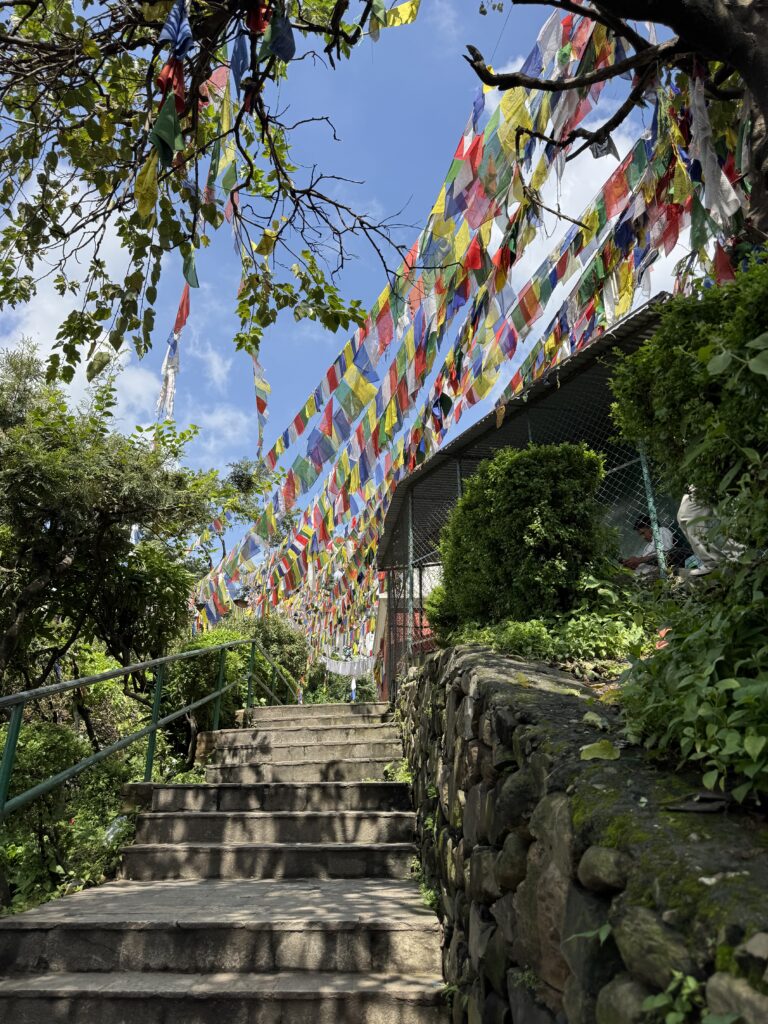
The prayer flags have 5 colours for the 5 elements.
Blue: Sky and space (infinite open-mindedness)
White: Air and wind (compassion and purity)
Red: Fire (passion and transformation)
Green: Water (balance and harmony)
Yellow: Earth (stability and grounding)
The more the flags flap in the wind, the more they spread harmony. I bought some for my front yard. Nothing wrong with bringing the neighbourhood some good vibes.
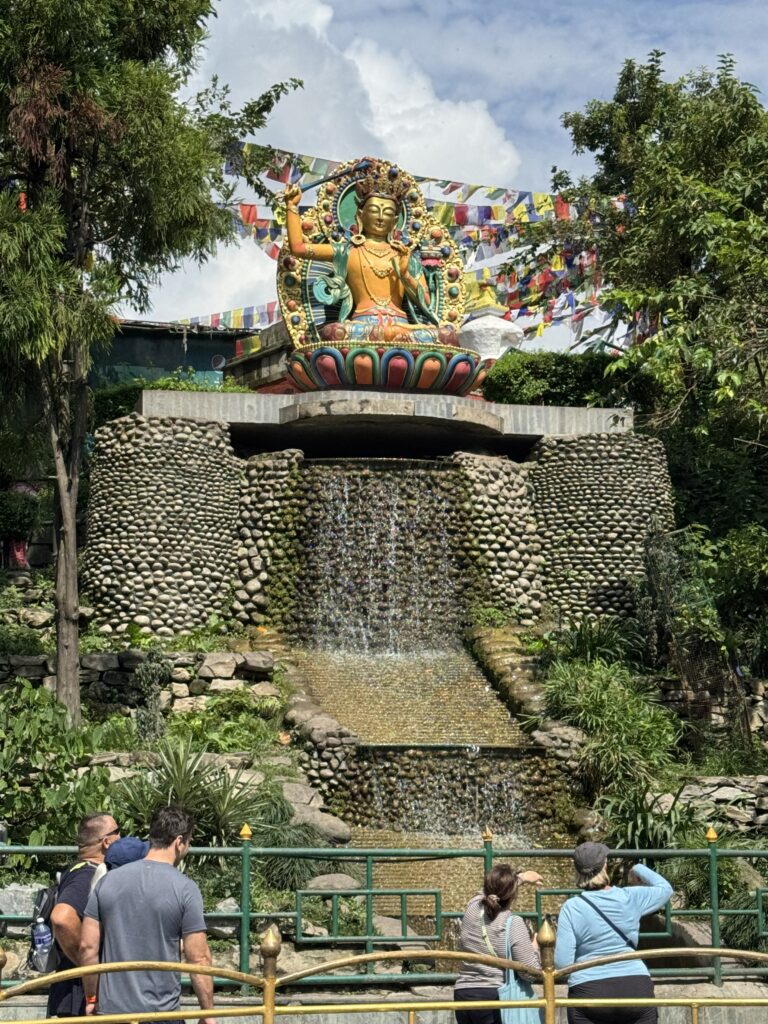
Buddha with a sword. There’s quite the legend attached to this.
Once, there was a big lake where Kathmandu now stands. In the middle of the lake was a huge lotus where this temple now stands. Some guy, represented by the Buddha with the sword, came strolling in and thought that this valley would be a great place for a settlement.
He cut the valley with the sword and drained the lake.
The first settlement was established in 400 AD.
Archeologically, the story holds true. This valley used to be a lake…
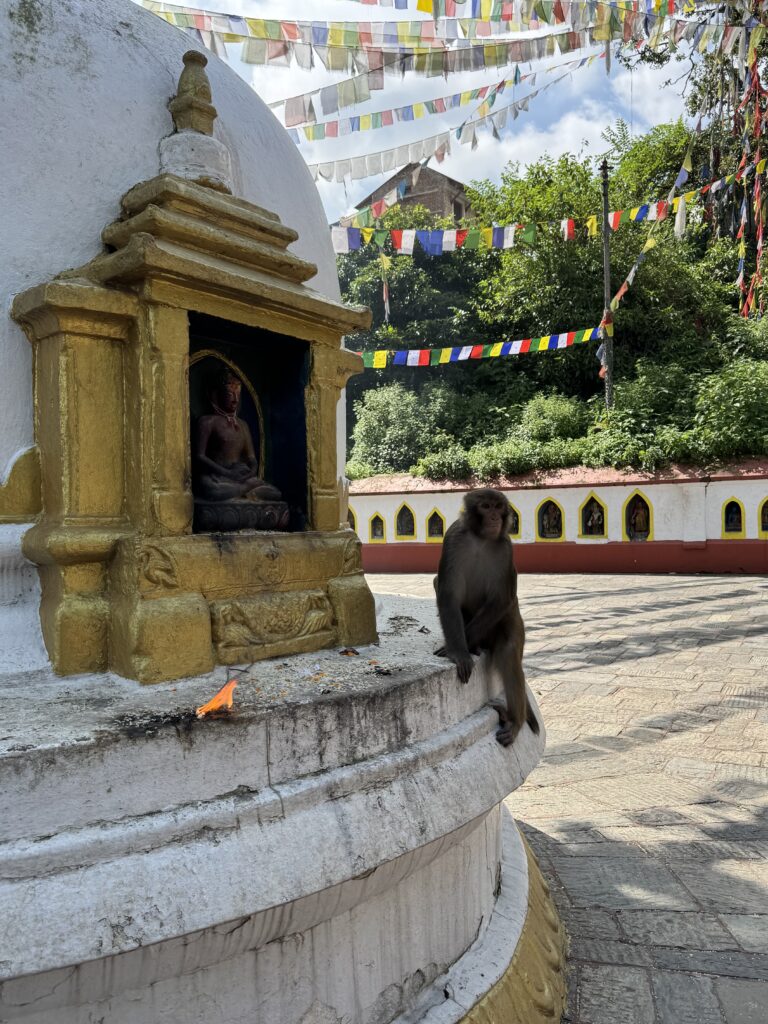
There’s a reason this is called the Monkey Temple. There’s quite a few of them around.
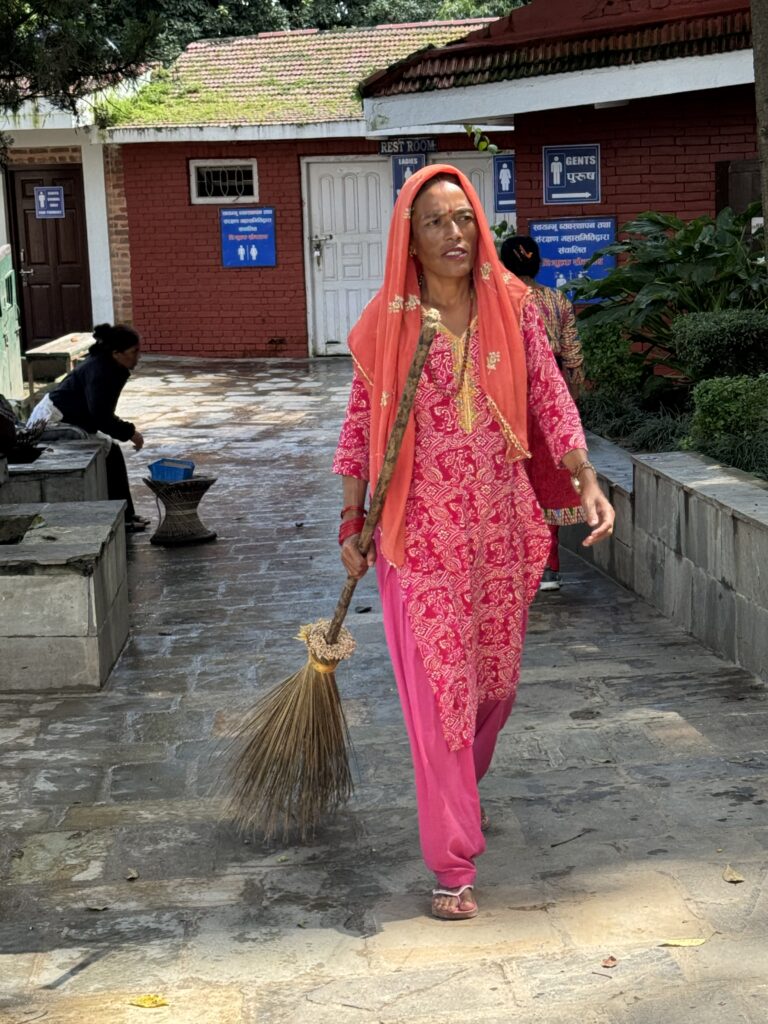
I loved the look of the brooms around here. Just bundles of sticks, but they seemed to get the job done.
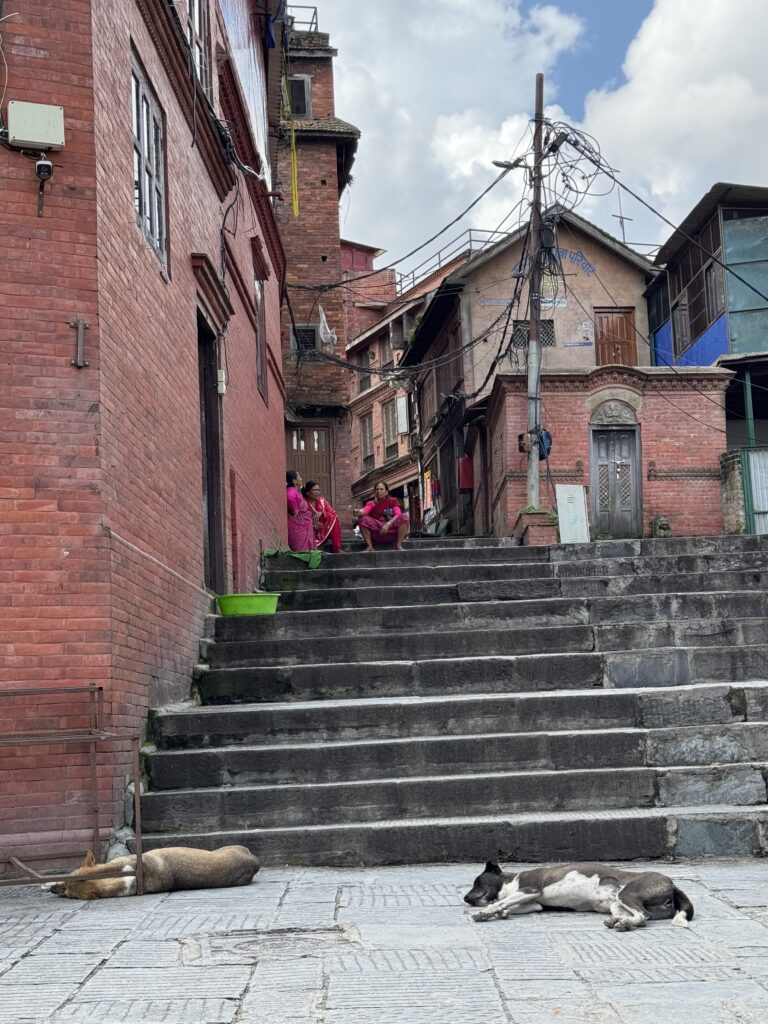
The stray dogs, the tangled wiring, the women in their bright clothes. We were heading up to the top of the temple here.
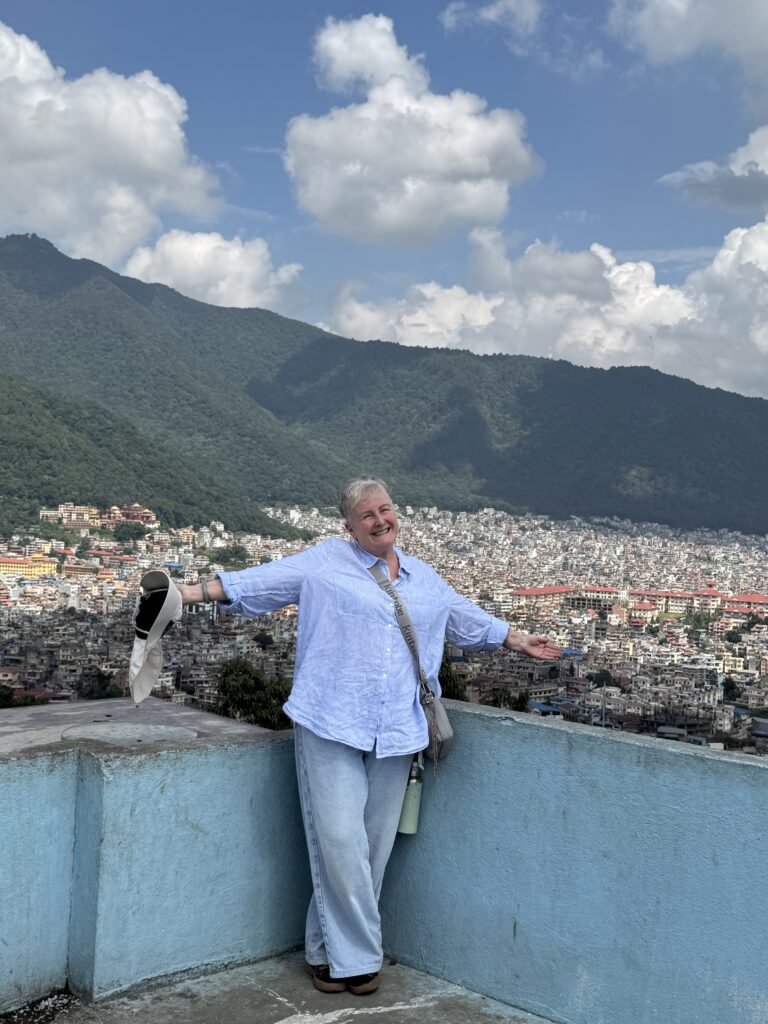
It was quite the view.
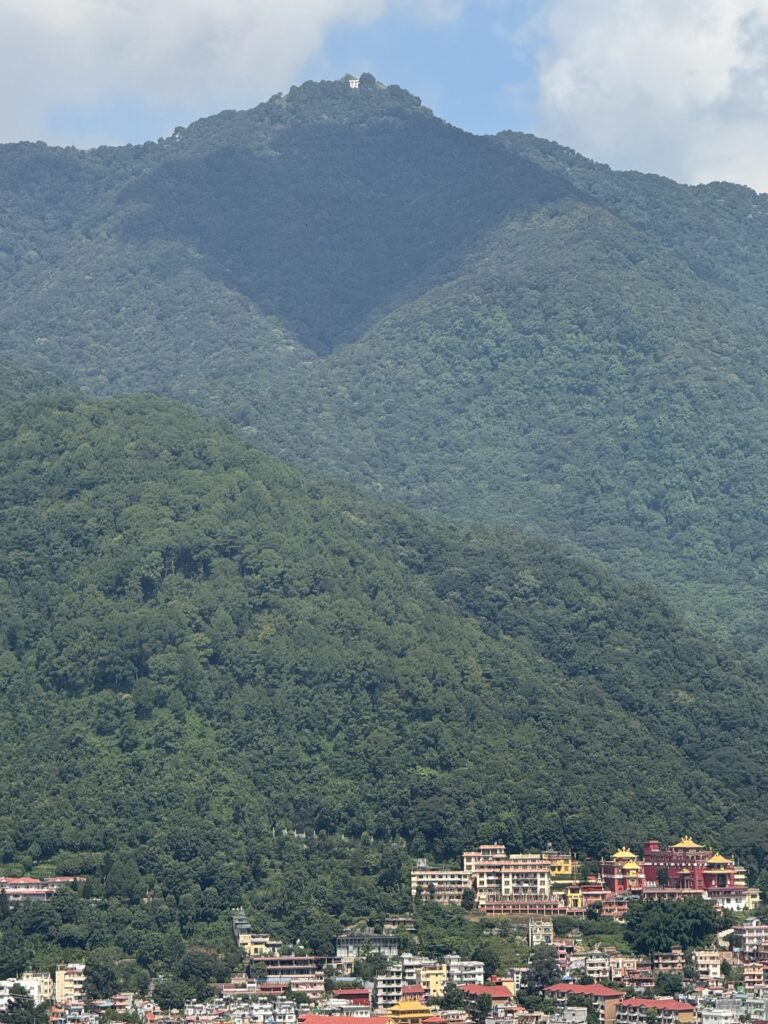
The white building at the top of the mountain is a monastery. Our guide said that in days gone by, people would climb the mountain to get there.
Nowadays, they just drive.
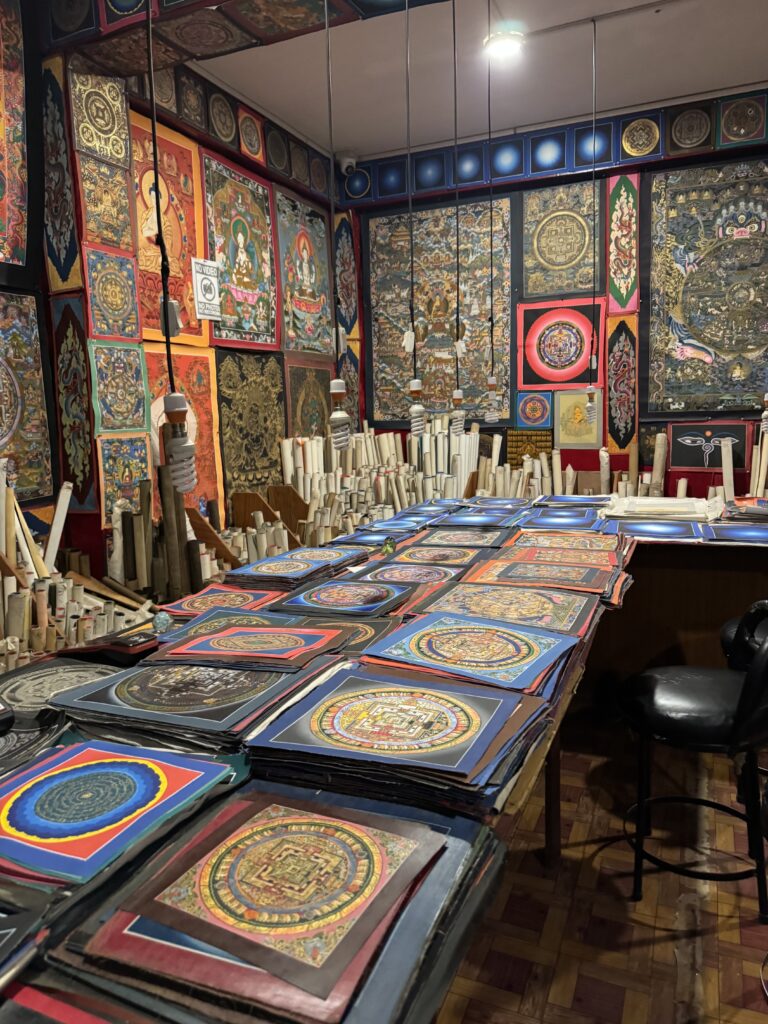
Our next stop was an art studio, where I may possibly have bought my art souvenir from this trip. The intricacies of this style of artwork are incredible.
The art for sale starts from very basic student work taking a week or two to do, up to the Professor level, which takes a couple of months and often uses gold dust. I restrained myself and bought a mid-tier one.
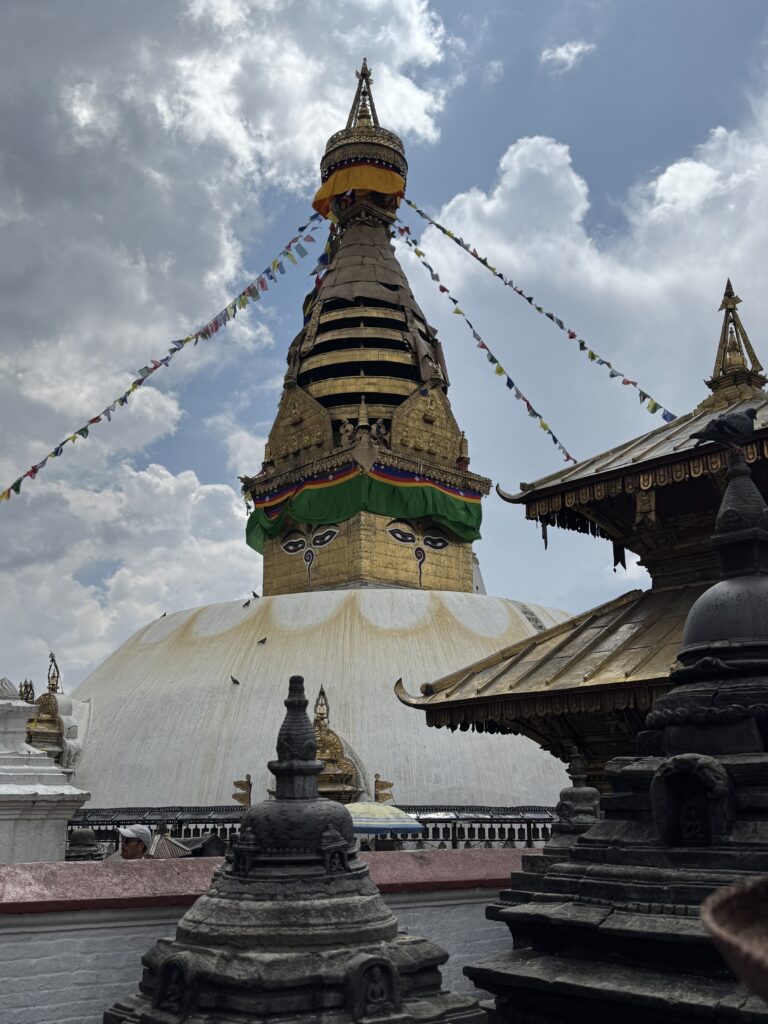
The main temple on this site.
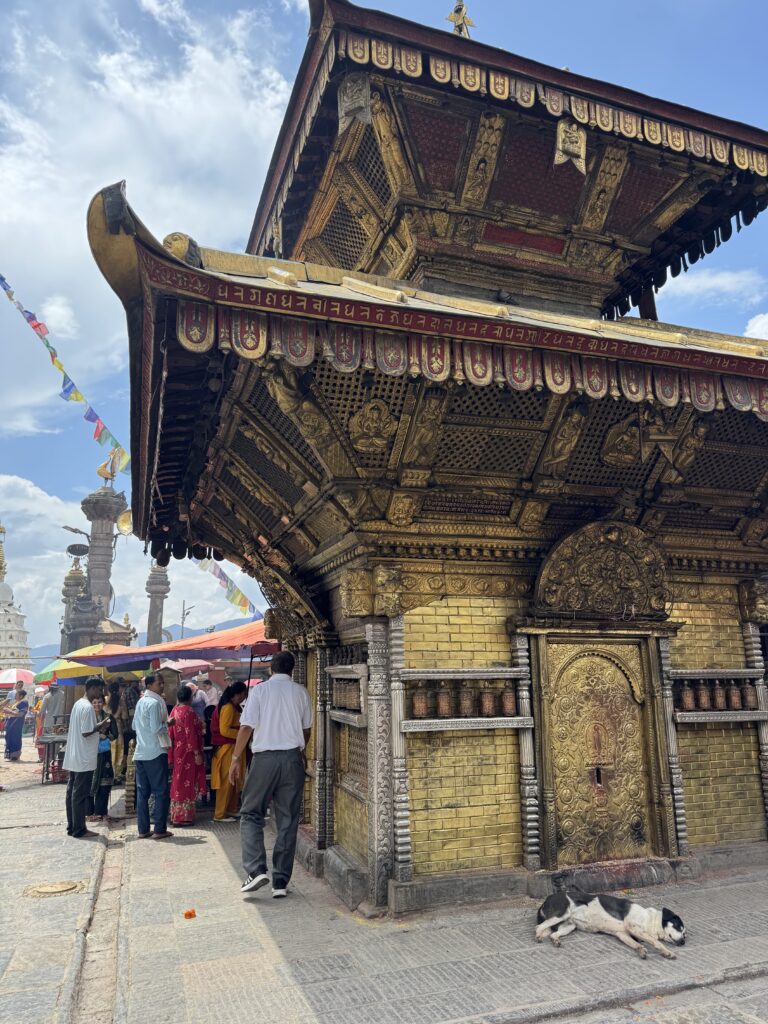
Gold pagoda … this is a temple for mothers and grandmothers. They come here to pray for pray to their children and grandchildren.
See the prayer wheels? You spin them clockwise and they get rid of all the negativity. I think we all had a go.
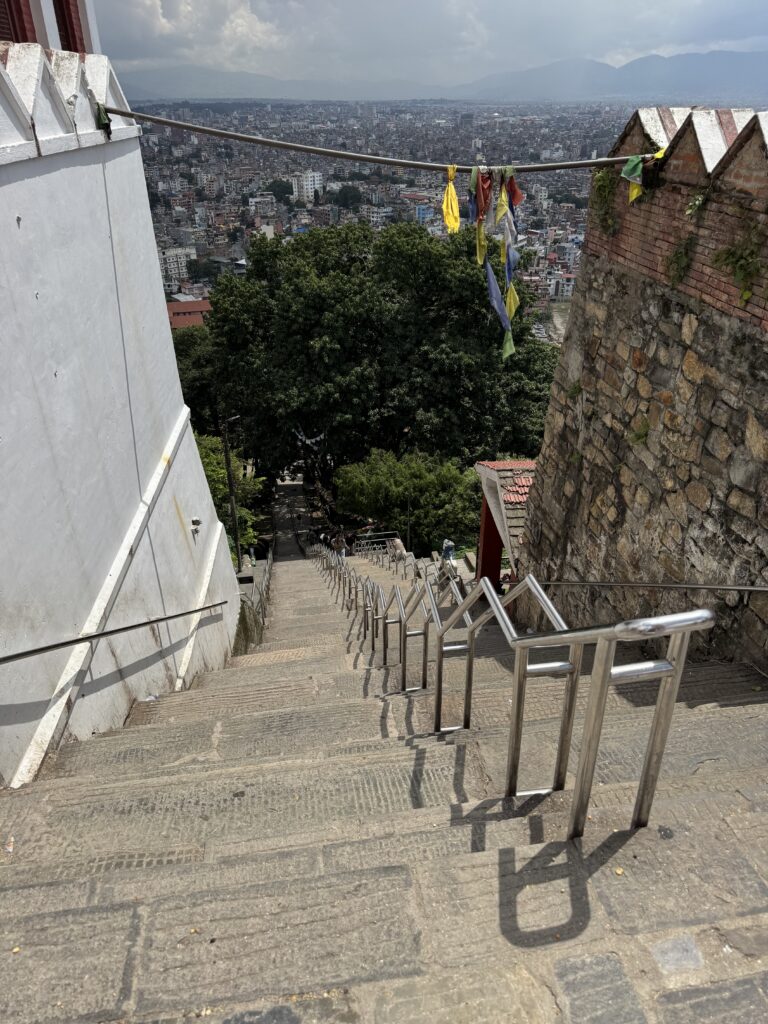
There are 350 steps here. If you start at the bottom, climb up, do some rituals and go down again, all of your sins are washed away.
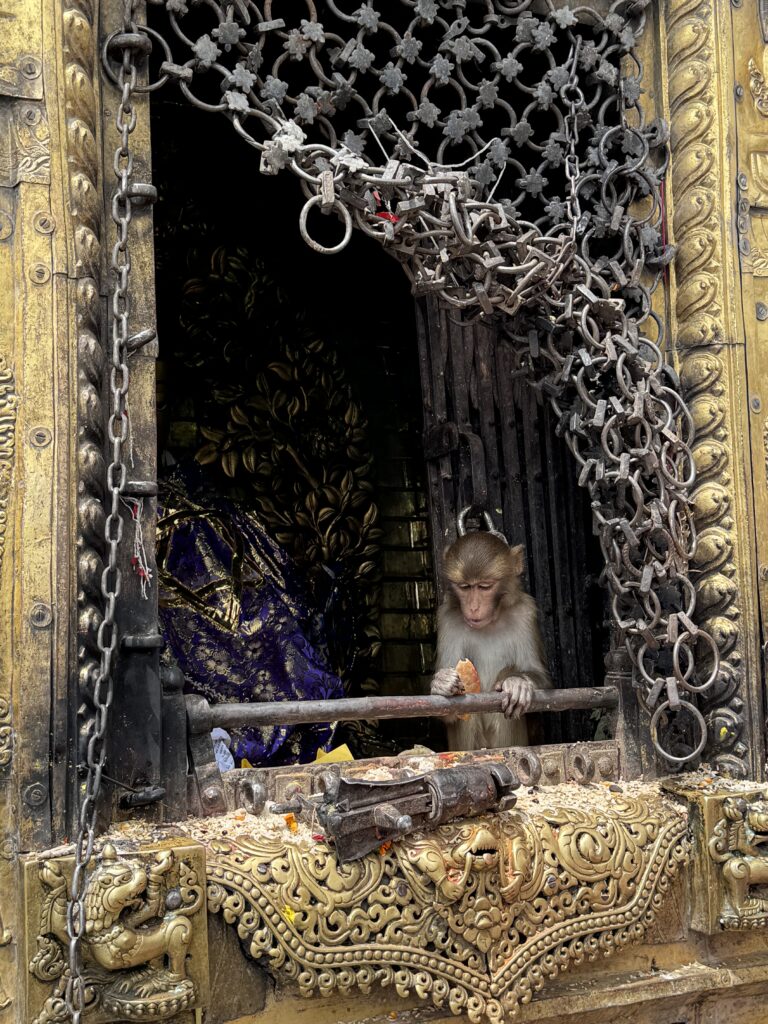
Look at this cheeky boi, eating the offering!
Grain is scattered everywhere around this temple precinct, to feed the monkeys and birds.
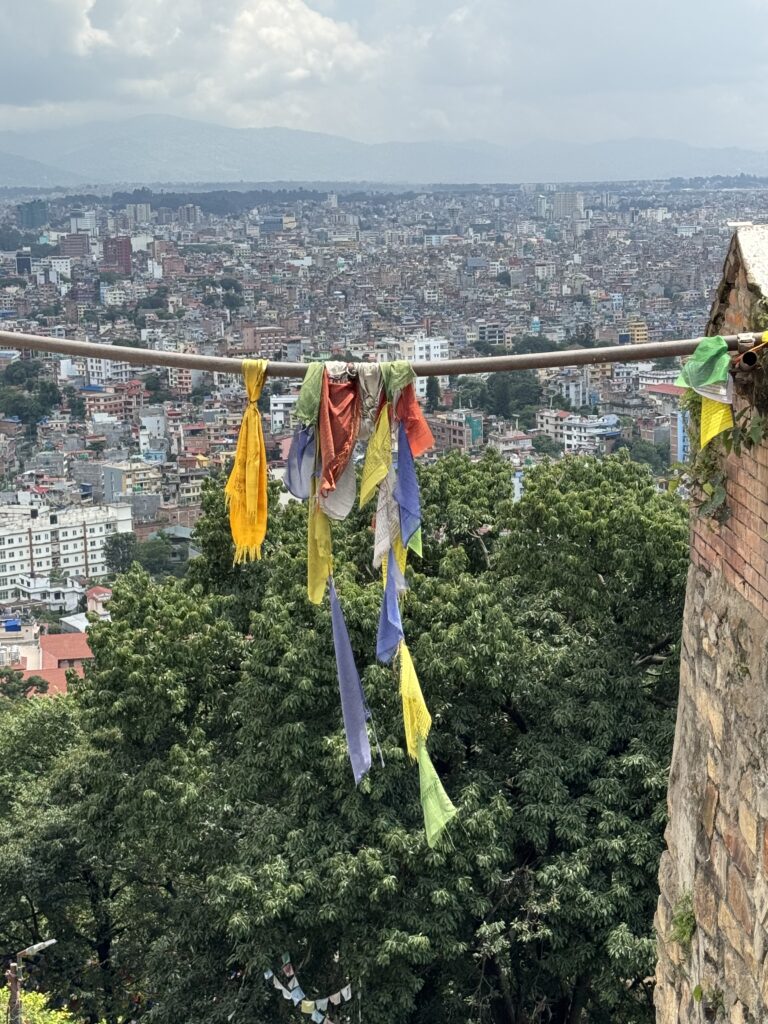
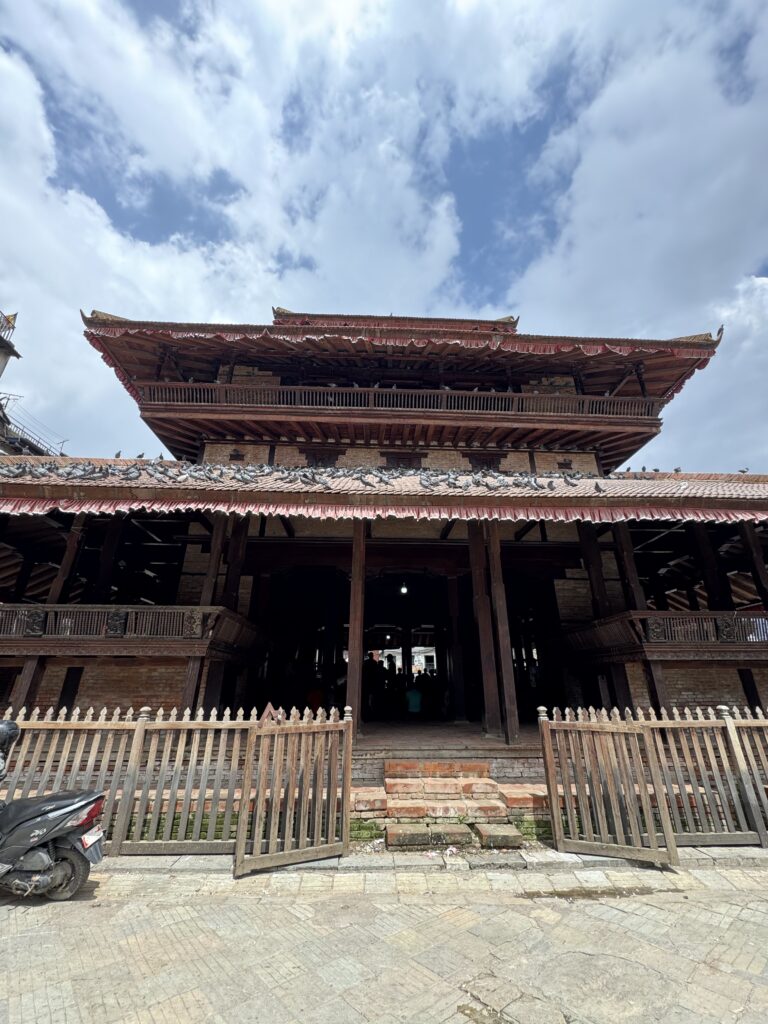
Then we were off to the Kathmandu Durban Square, which is built around a palace where the royal family used to live. There are MANY temples here.
Most were built in the 17th century, but this one, the oldest, was built in the 7th century. All the wood used here was cut from a single tree. Can you imagine how big the tree would have been?
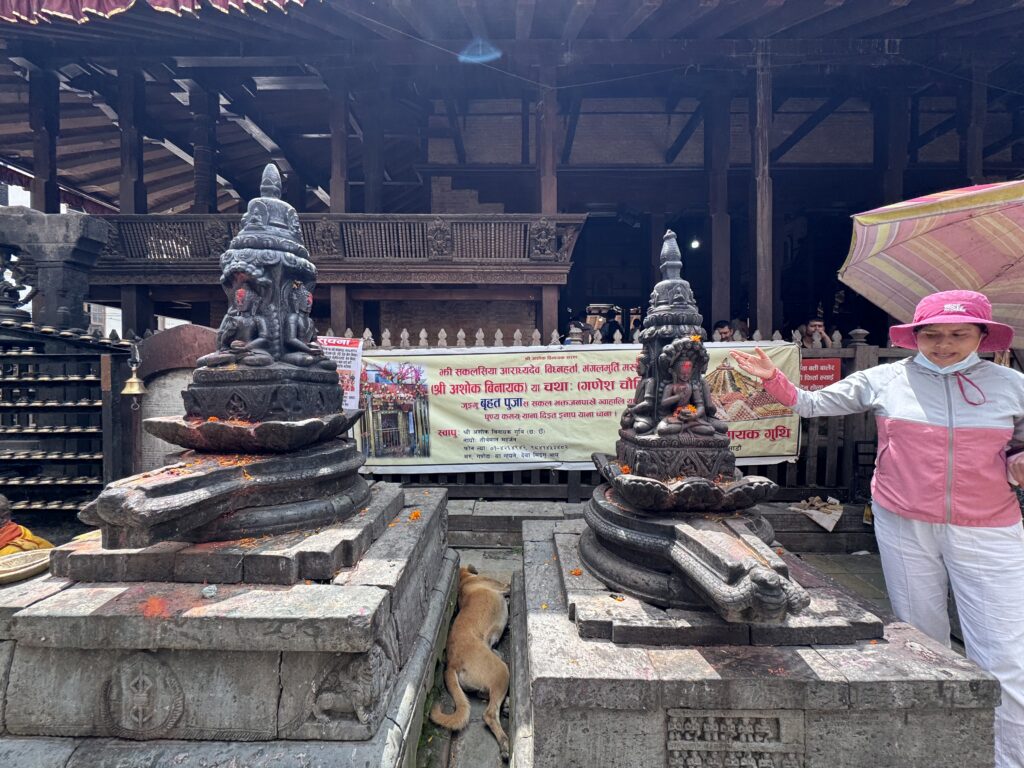
These statues are a blend of how Hinduism and Buddhism are blended here. The tops are Buddhist, while the bottoms are Hindu. With a dog in the middle.
”Sometimes there’s a cat!” said the guide when I pointed it out.
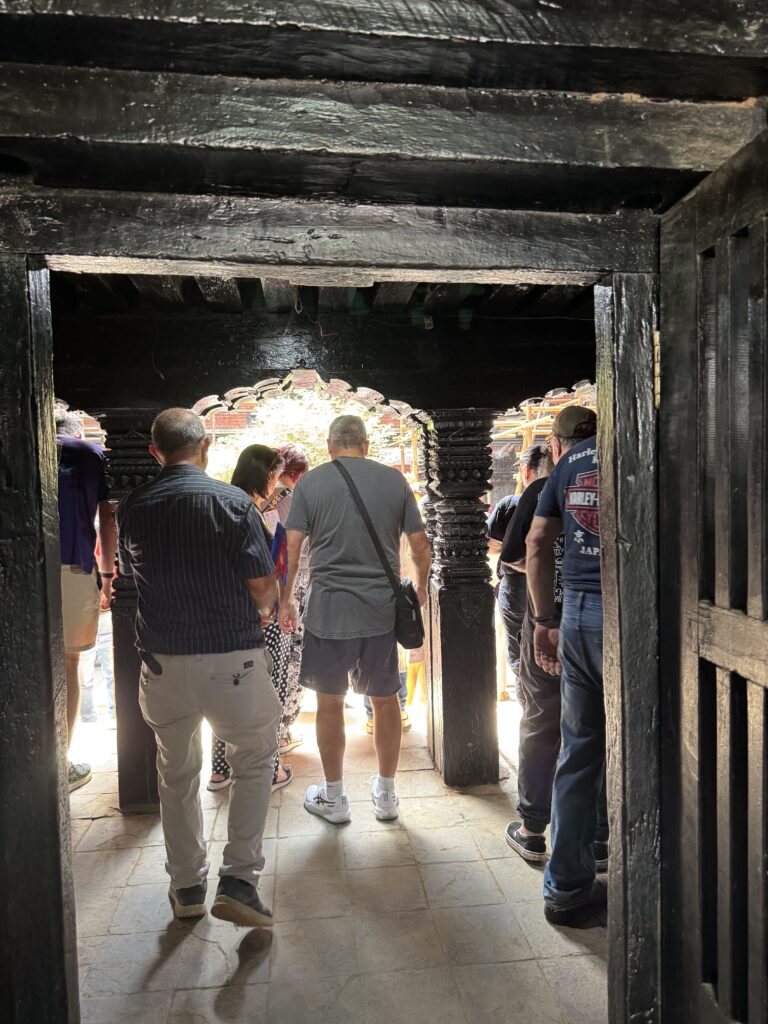
Then suddenly we were being rushed to a house a few minutes away. We raced into a courtyard, being filled with a mixture of locals and tourists.
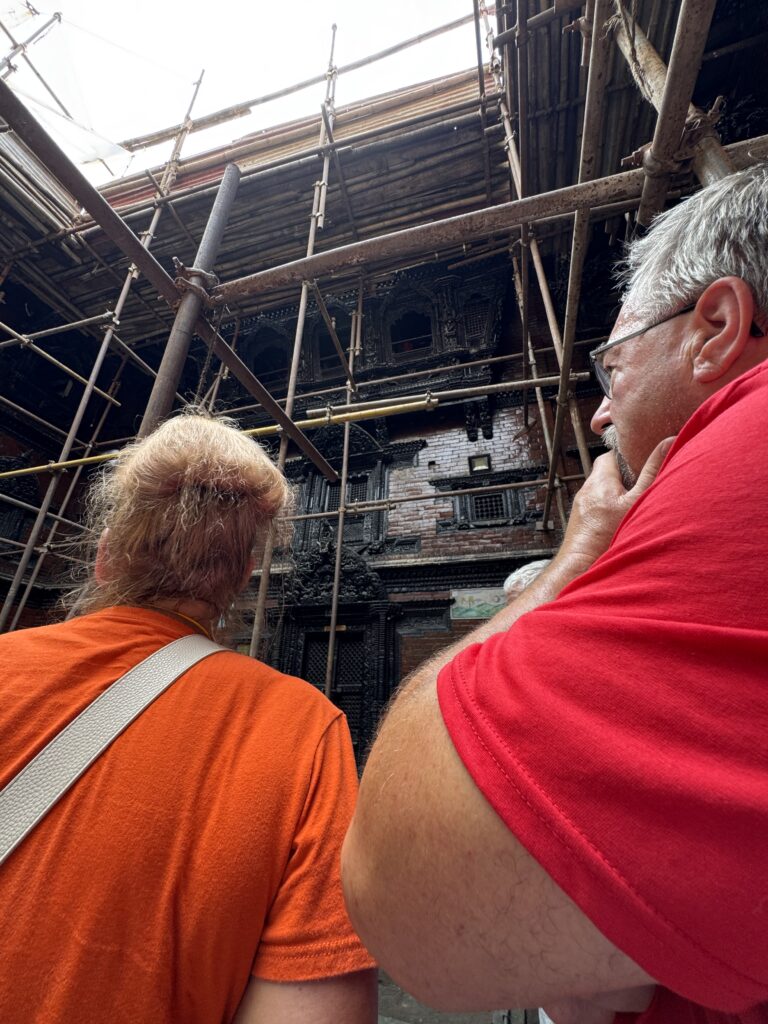
See those windows behind the scaffolding? We were about to see the living goddess Kumari.
This is a tradition going back centuries, where a little girl is selected from one family to be the representation of the Hindu and Buddhist divine female energy, or goddess Taleju Bhawani.
She lives here in this house, secluded, with her feet never touching the ground outside. Once a day, she comes to the courtyard, where no photos are allowed. They were serious about this, confiscating phones. I decided to refrain from my usual sneaky photos.
Thirteen times a year, she is taken outside and paraded around the square with men pulling a wagon where she’s seated.
In modern times, tutors come for her education, and her family is allowed to visit, but not to stay.
Unlike the Dalai Lama, this is not a lifetime assignment. When she gets her first period, or she has a major injury with lots of blood, the goddess is said to have left her body and she is returned to her family, free to live a normal life, but with a handy government pension for life.
Being selected is regarded as a huge honour. The living goddess must pass strict screenings evaluating 32 perfection traits, including specific hair, eye, and teeth qualities, alongside a test of fearlessness.
The current one is 3 years old. She appeared above us for about 30 seconds, all dressed up and made up, before being whisked away.
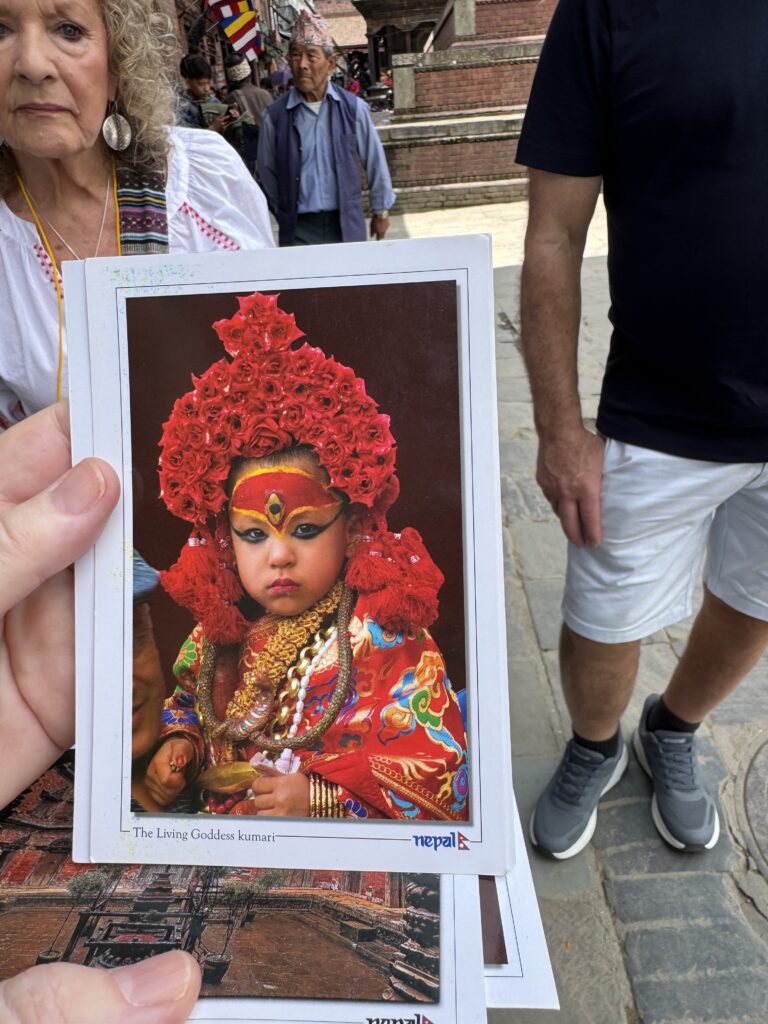
Here she is.
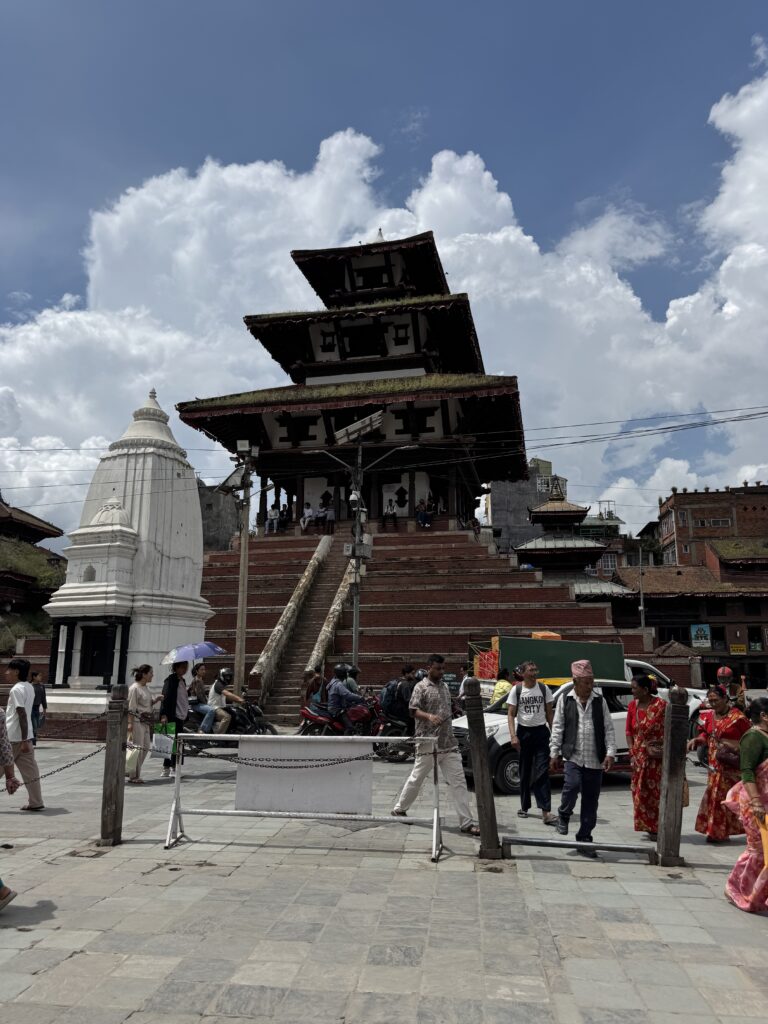
This is the Hippy Temple. Back in the 70’s, marijuana was briefly legal. Lots of hippies flocked here, buying their MJ and coming here to sit and smoke on the steps.
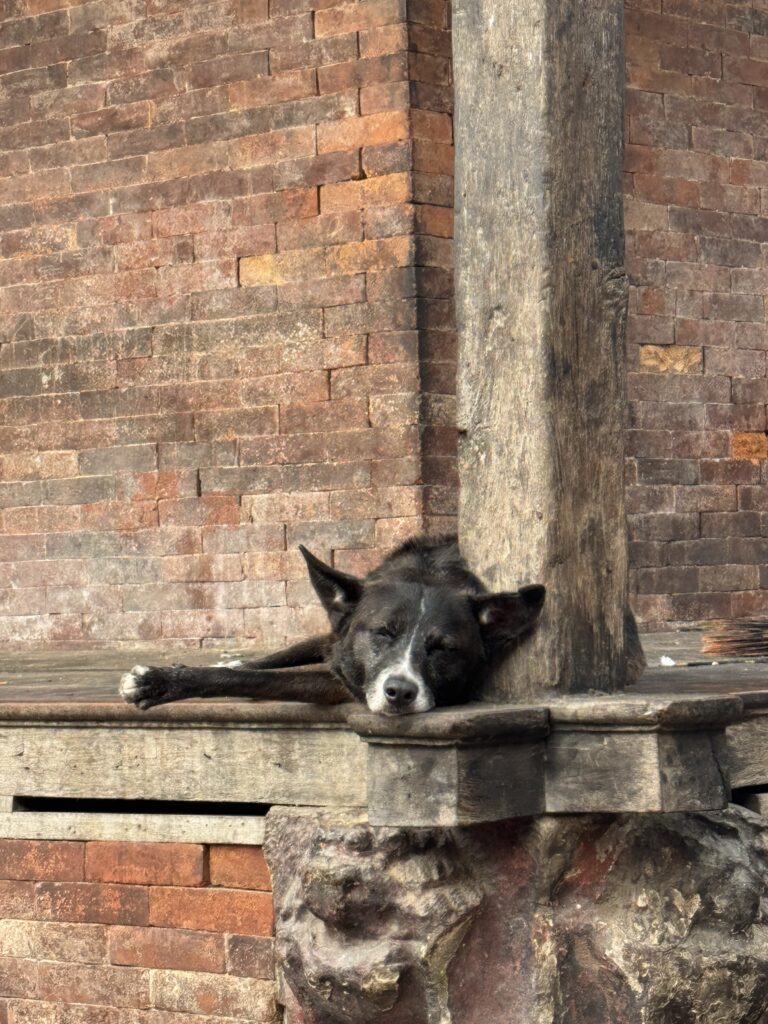
Cosy boi.
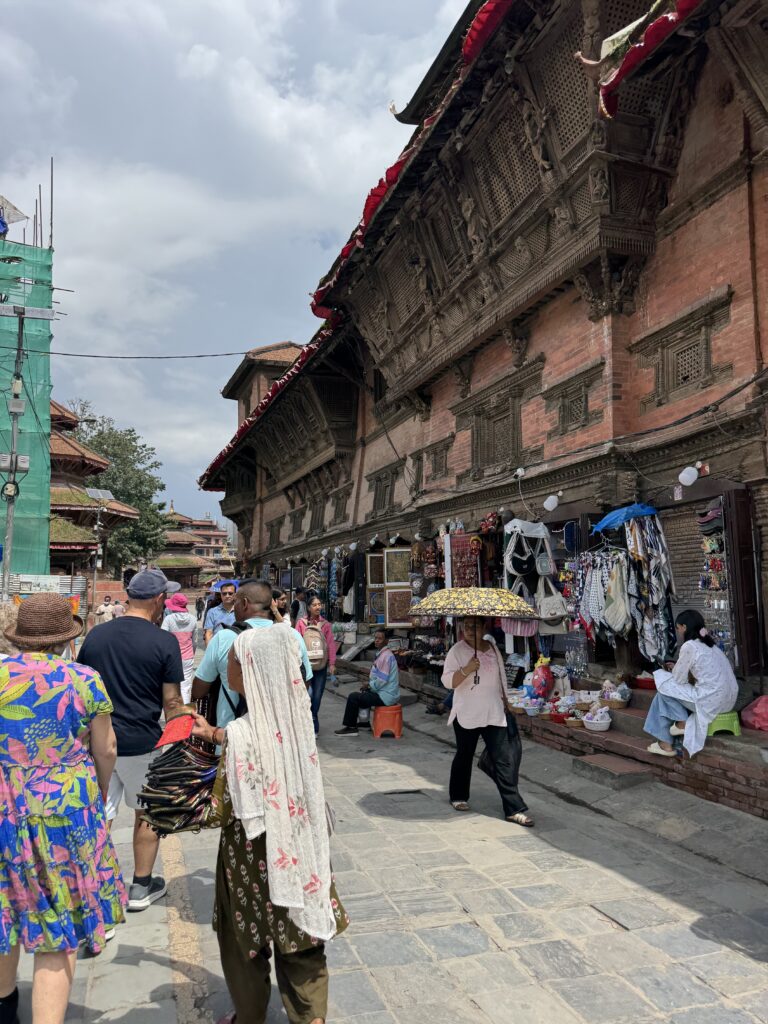
Janine ended up buying some bags from this woman. On the right, the upper story of the building reminded me of the buildings in Lima with the balconies where women could see and not be seen.
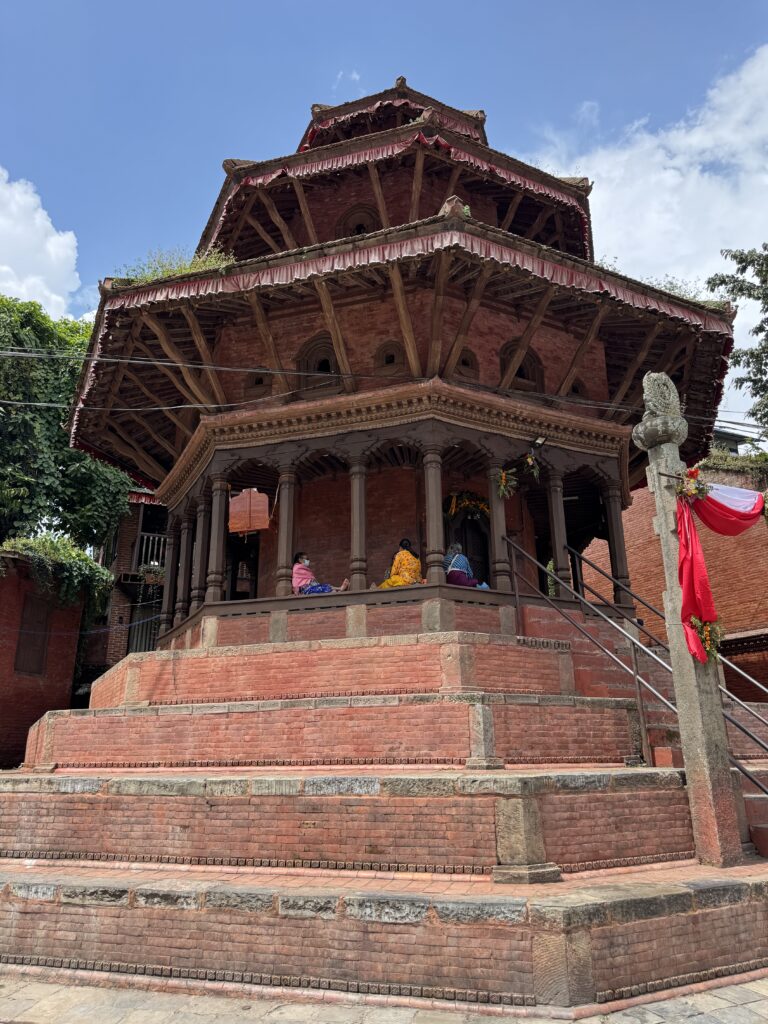
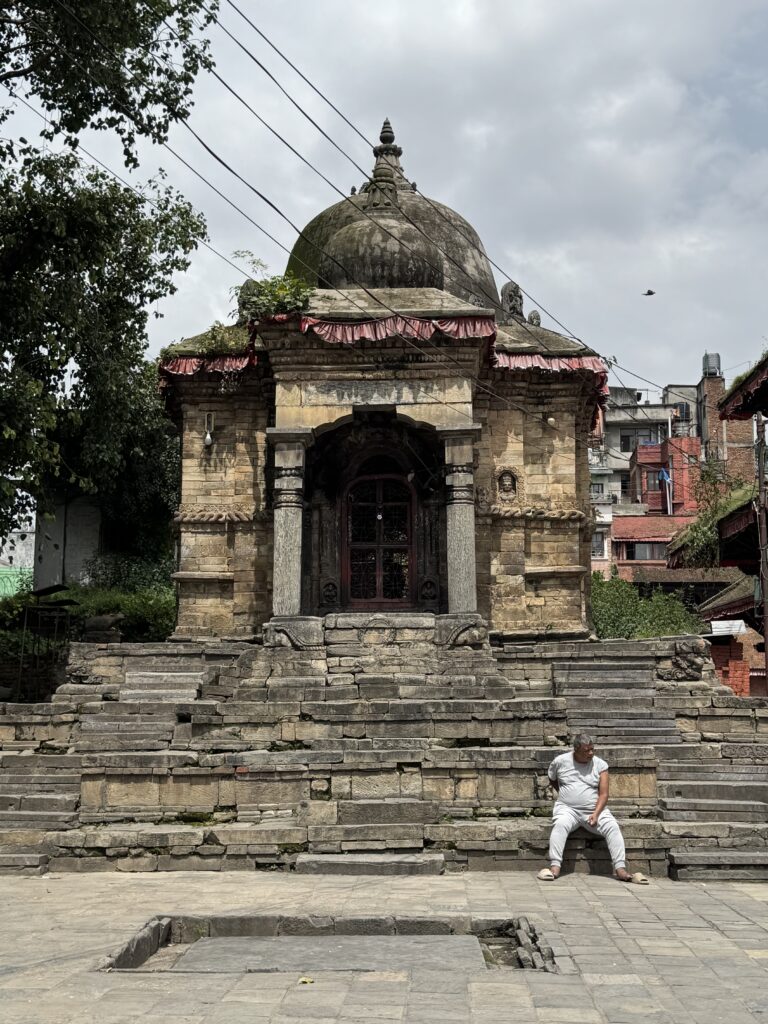
I liked this old crumbling temple.
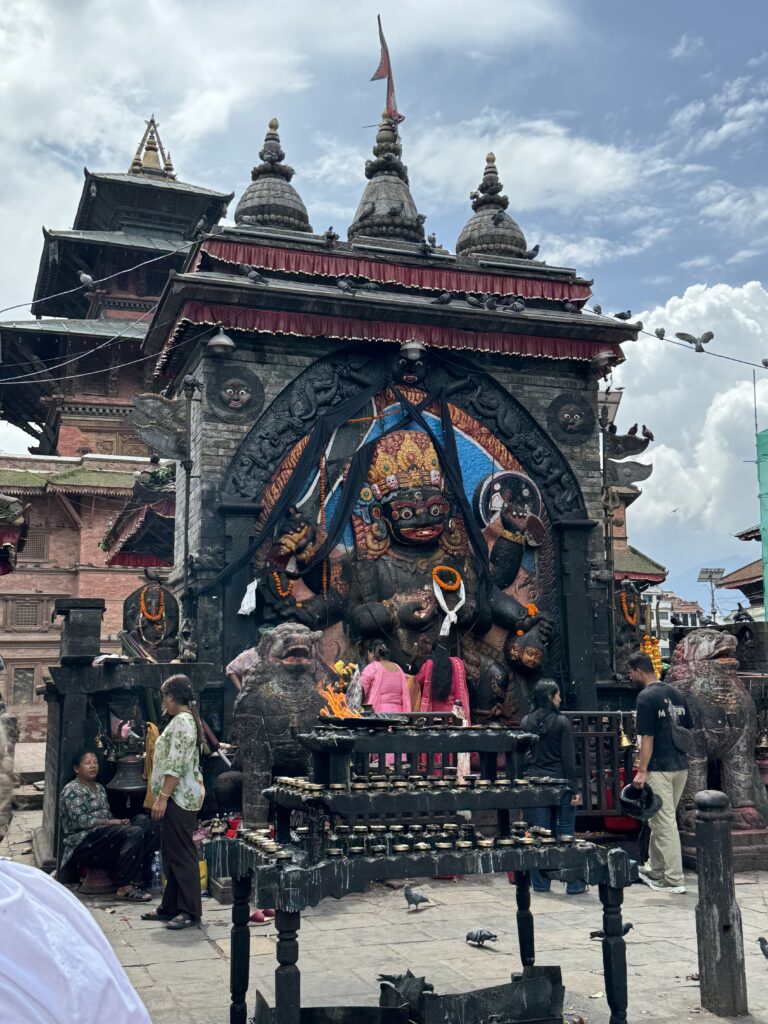
Black temple. Back in the day, they didn’t believe that people could lie in front of this temple. Otherwise they would be struck dead instantly, so it was a very good way to keep criminals honest. If anyone was accused of doing something wrong they dragged them there and they would tell the truth.
It probably doesn’t work so well today.
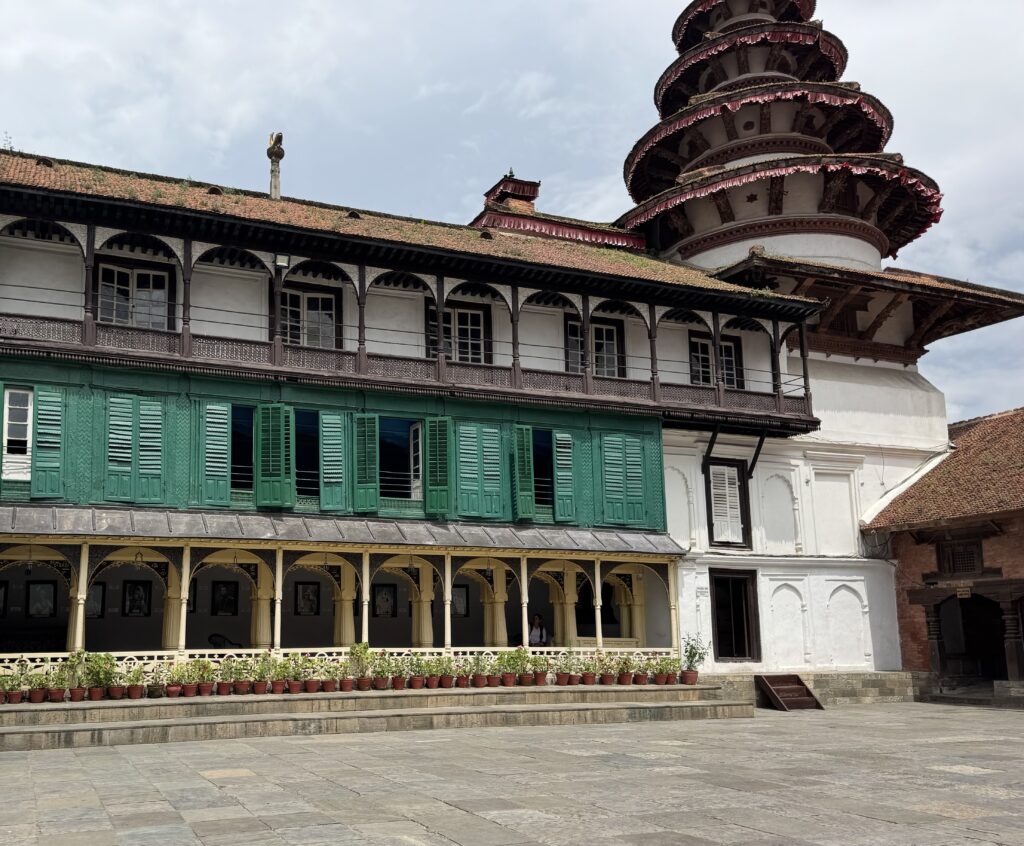
Here is part of the royal family’s palace. If you squint, you can see a row of portraits under the verandah roof. It’s the series of kings, ending with the massacred king and crown Prince, with the last one being so incompetent that the Nepalese people pushed him off the throne.
The Nepalese royal massacre was a mass shooting on June 1, 2001, at the Narayanhiti Royal Palace in Kathmandu, which claimed the lives of 10 people, including King Birendra and most of the royal family.
Our guide was a child when it happened, and she can still remember the shock of it.
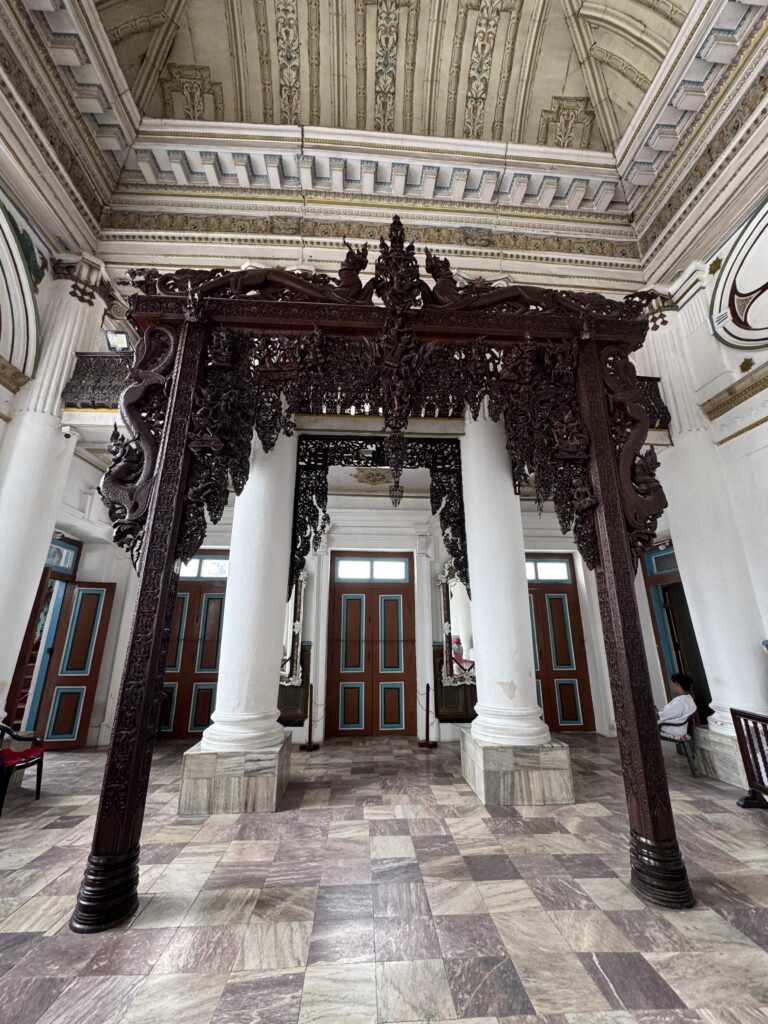
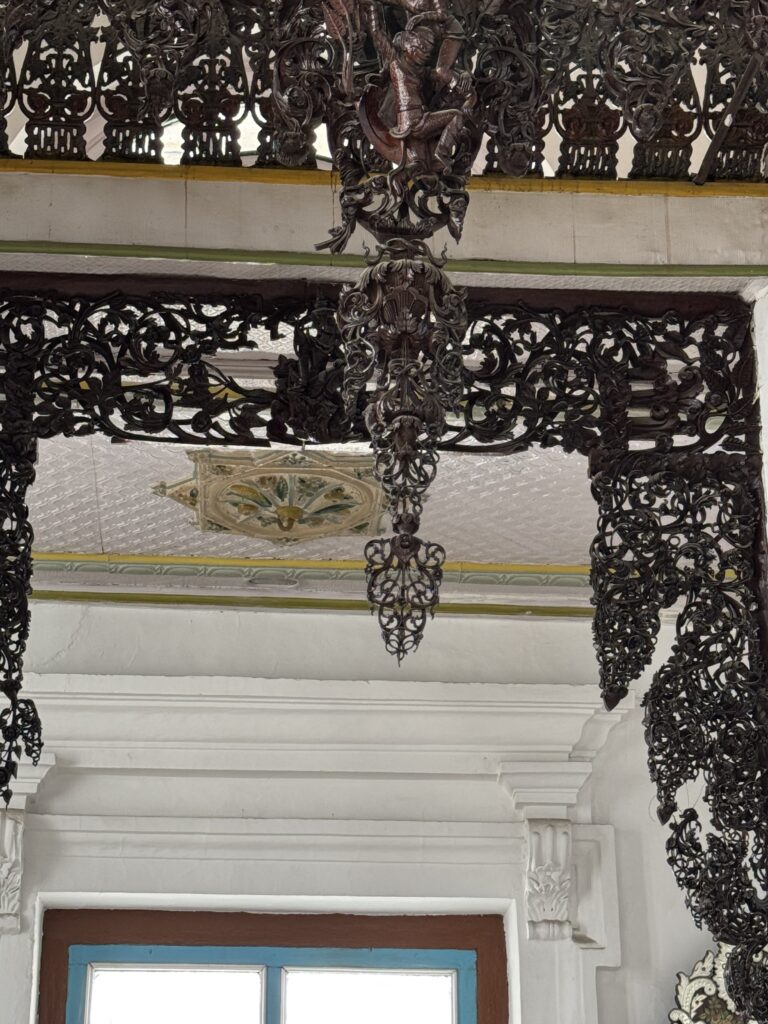
Excellent wooden carving, with a close-up below.
How is this even possible? They have a guard here, and I don’t blame them.
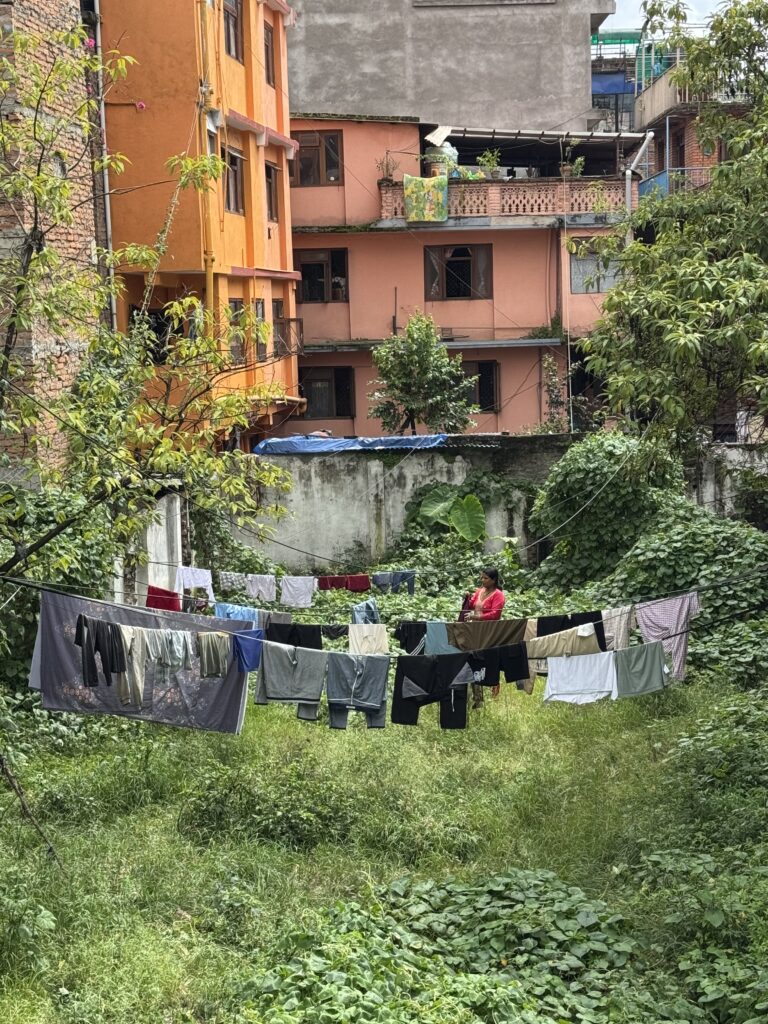
I saw this as we walked to the van to go for lunch. I hope she was bringing her washing in, rather than putting it out…
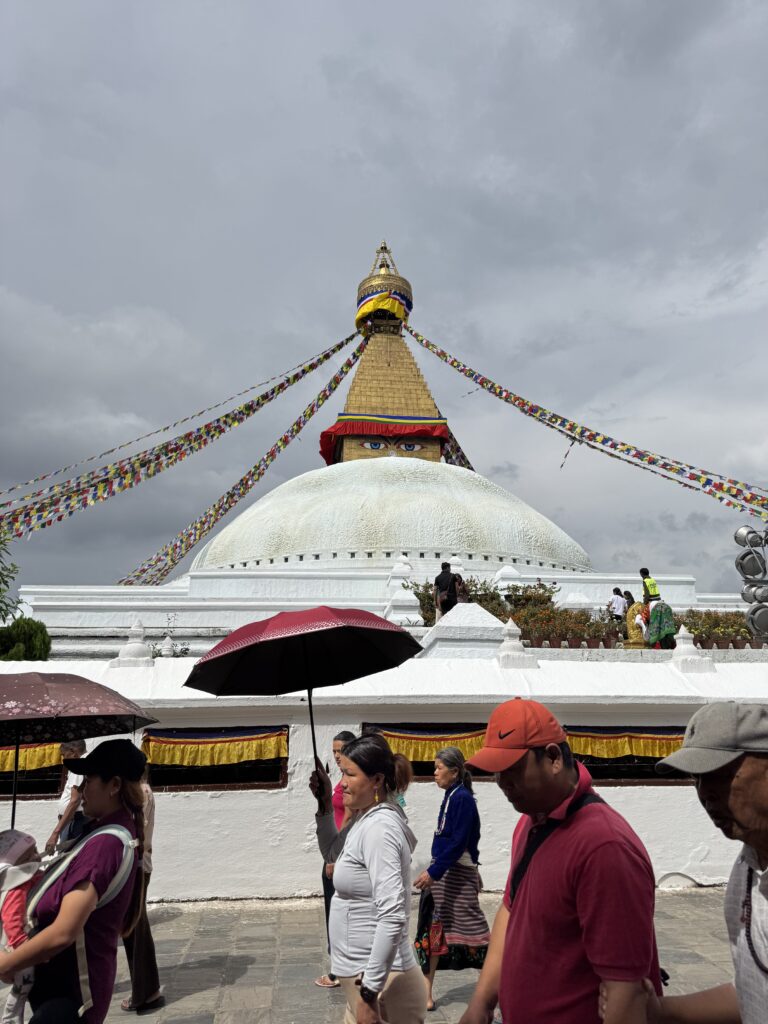
This is a UNESCO World Heritage Site, Boudhanath Stupa. It used to be the biggest Stupa in the word before Myanmar stole its thunder.
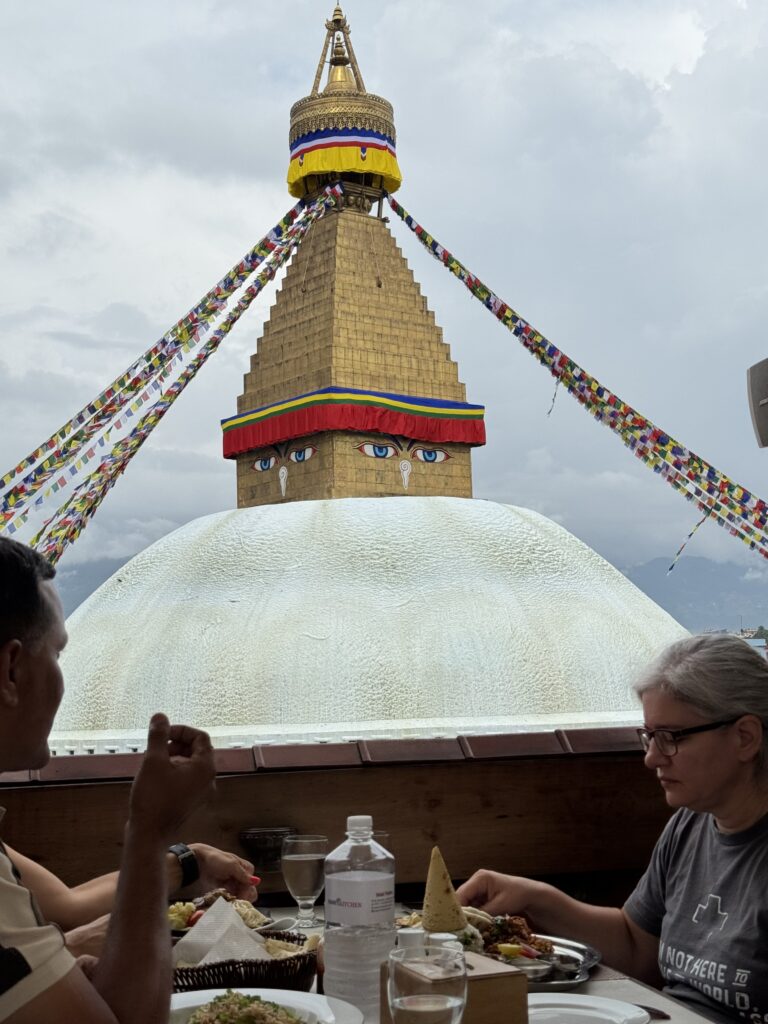
Our lunch location. Are we under observation?
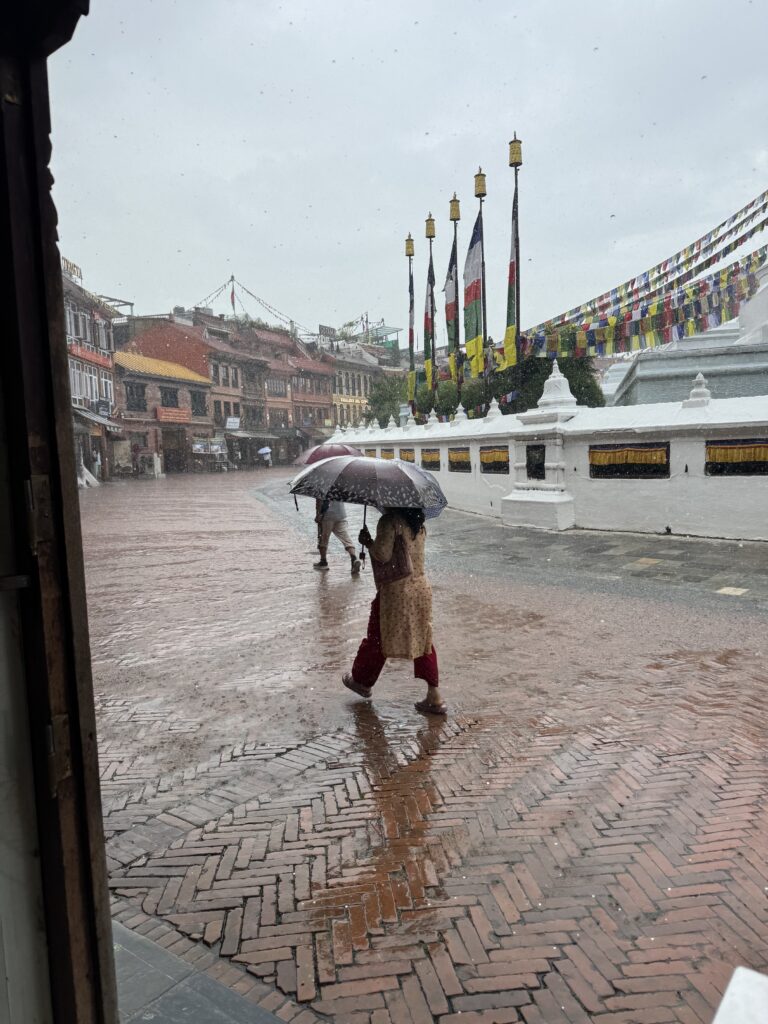
We came down to thundering rain. It was pelting down. This trip, I have only brought one pair of shoes and one pair of jeans, so I was worried about the jeans getting saturated, like they did in Norway when I went sloshing through the rain to get my artwork.
Naturally, all of us had left our backpacks with our umbrellas in the van. Our poor guide borrowed an umbrella from the restaurant and set off to fetch our things. I was so cross with myself for forgetting about the weather forecast. The sunny morning had lulled us all into a false sense of security.
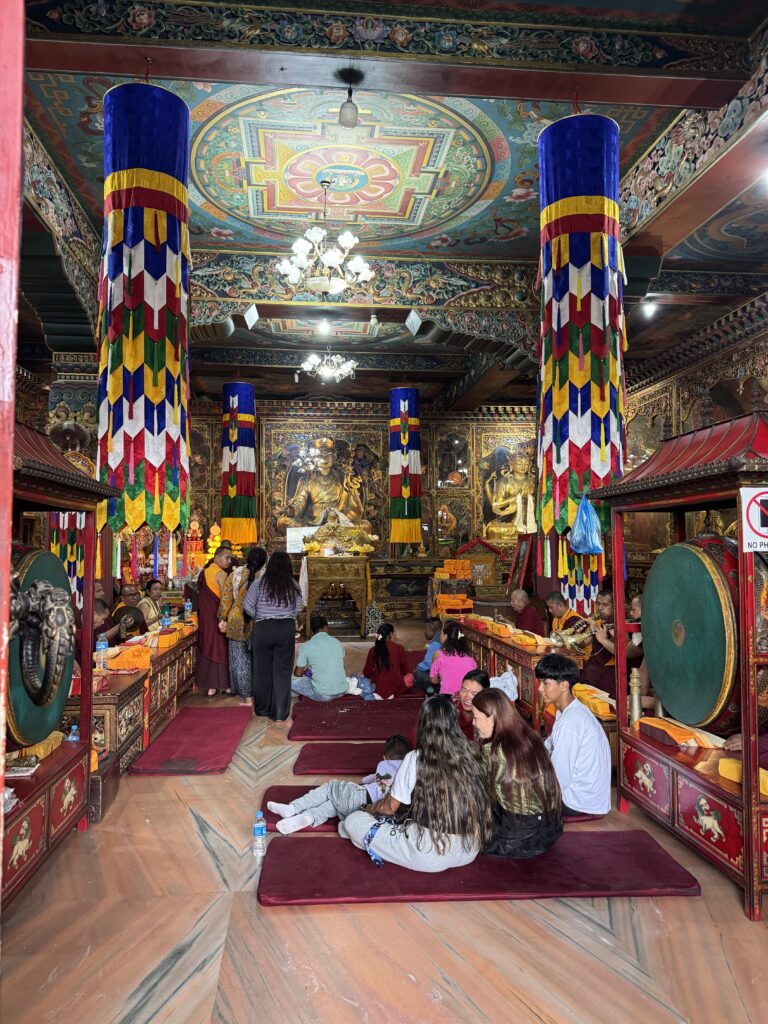
Anne went in here to do a spot of meditation, while the rest of us stayed on the balcony, chatted and watched the rain.
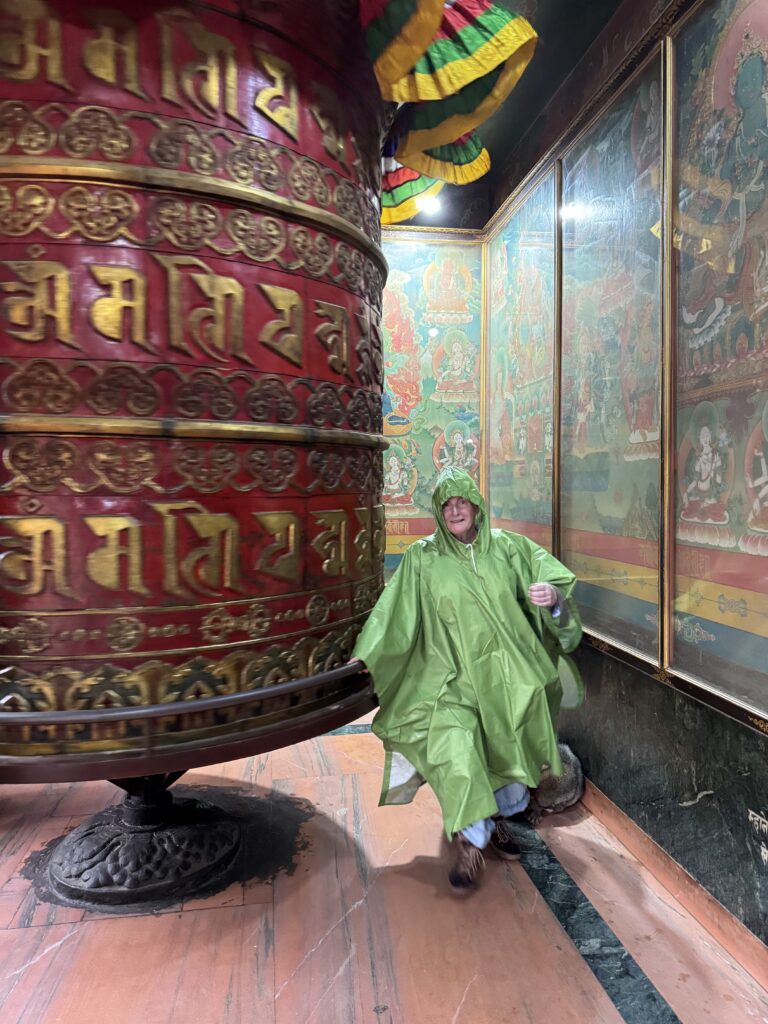
Remember how excited I was to get that rain poncho in Cusco? It was worth its weight in gold.
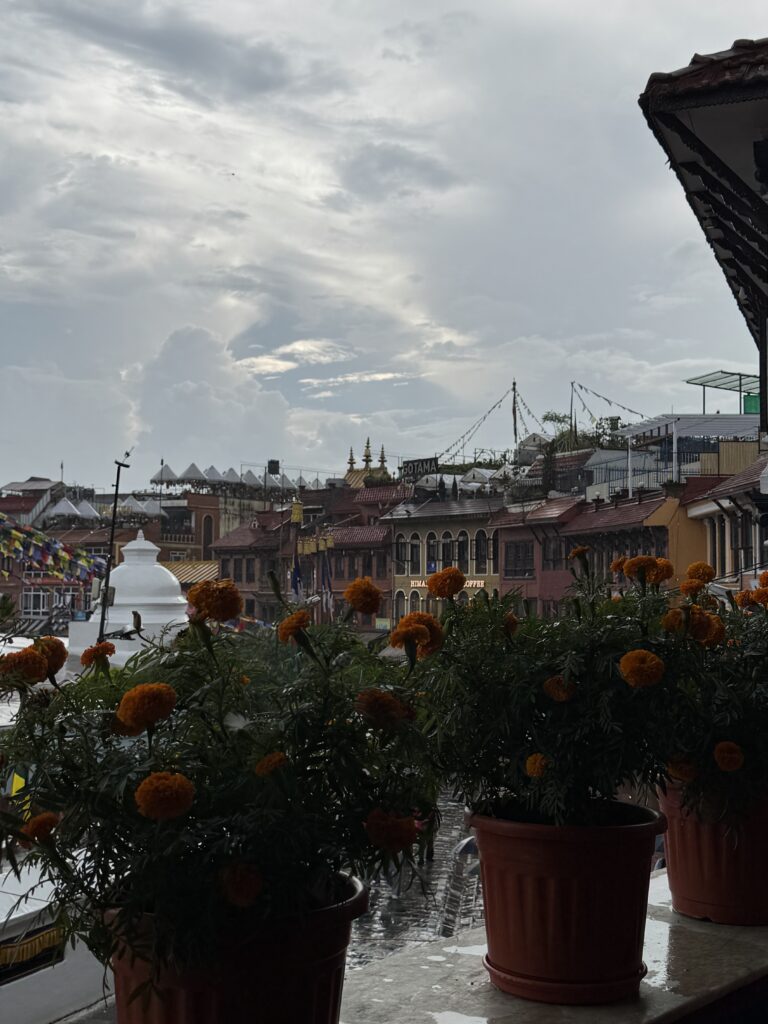
Marigolds are popular here.
As Max from Get Smart would say: “ That’s the second biggest prayer wheel I’ve ever seen…”
Dad joke of the day:

Definitely Frogdancer in that last photo!!!
Haha! I love that photo.
What a fascinating place! I wonder, though, how the seclusion of the girl chosen to be the living goddess affects those girls developmentally.
Even our guide said, “It takes a little while for them to adjust.”
I wondered that too, especially hearing how young she was.
As always, Frogdancer, fun photos and commentary!
Thanks Josie. I enjoy doing it.
Wow, so handsome!
He’s a chip off the old block… meaning me.