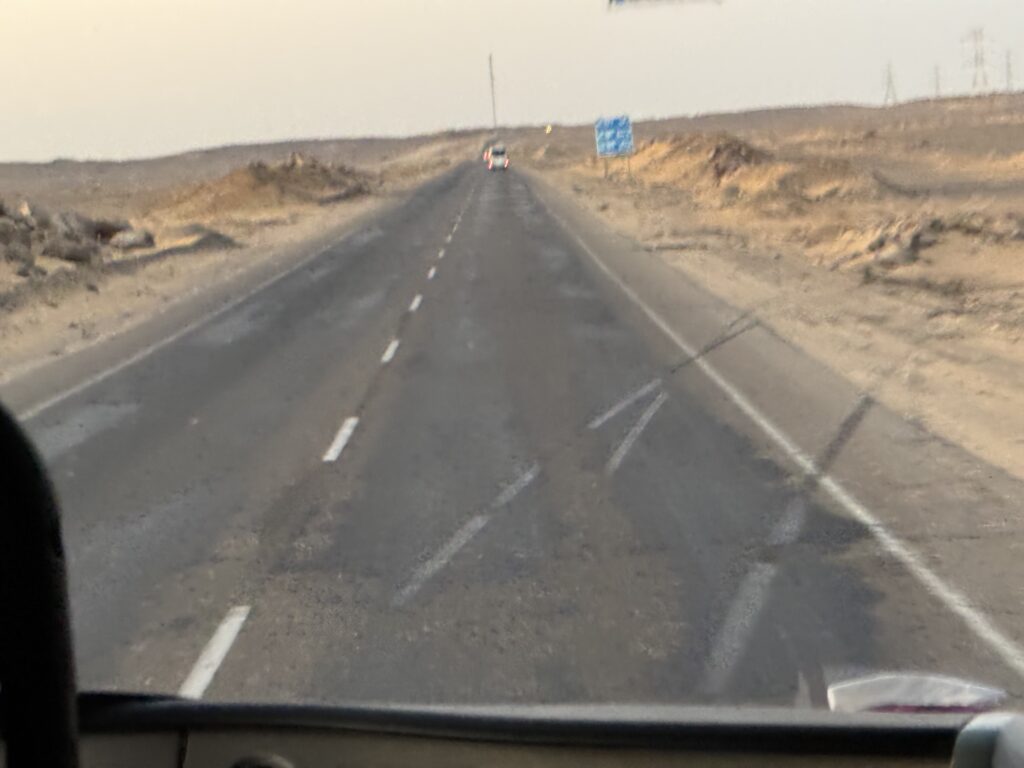
THIS is how I imagined the desert in Australia would look like. A whole heap of nothing stretching out on both sides of the road.
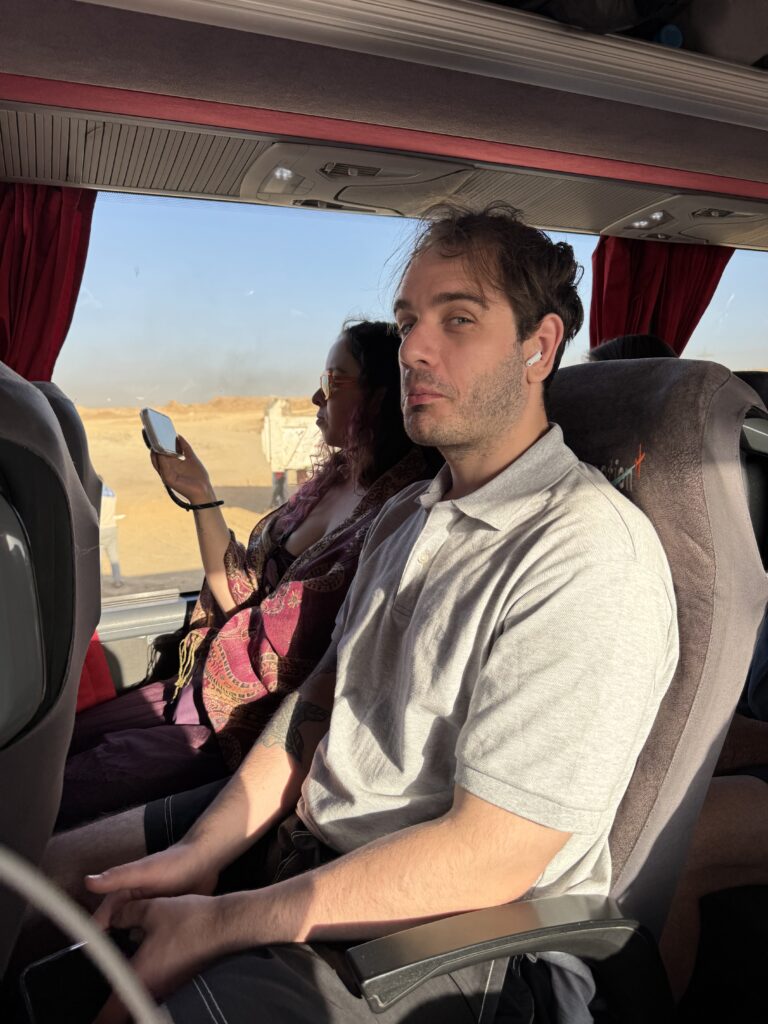
Another early start today. We met at 4 AM to drive 4 hours to Abu Simbel. This was one of the tours I booked for everyone, but that’s was a long time ago and I’ve been to many places since. In other words; I’ve forgotten all about it. I’m typing this after waking up in the bus, with 2 hours drive to go.
I hope it’s worth it…
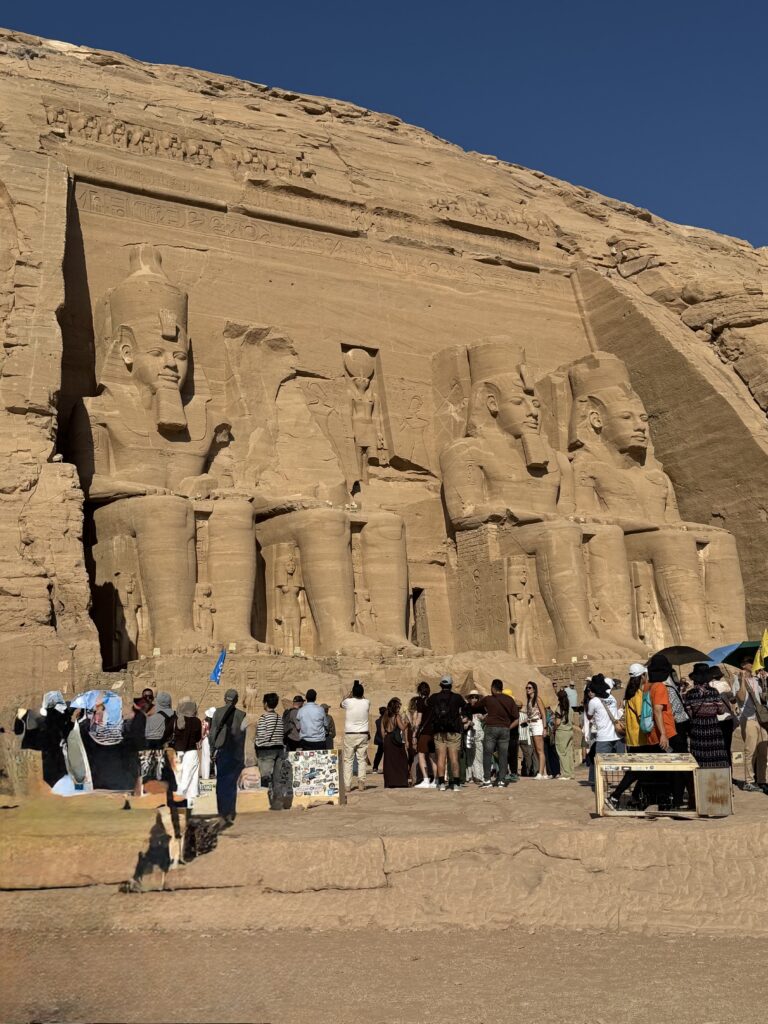
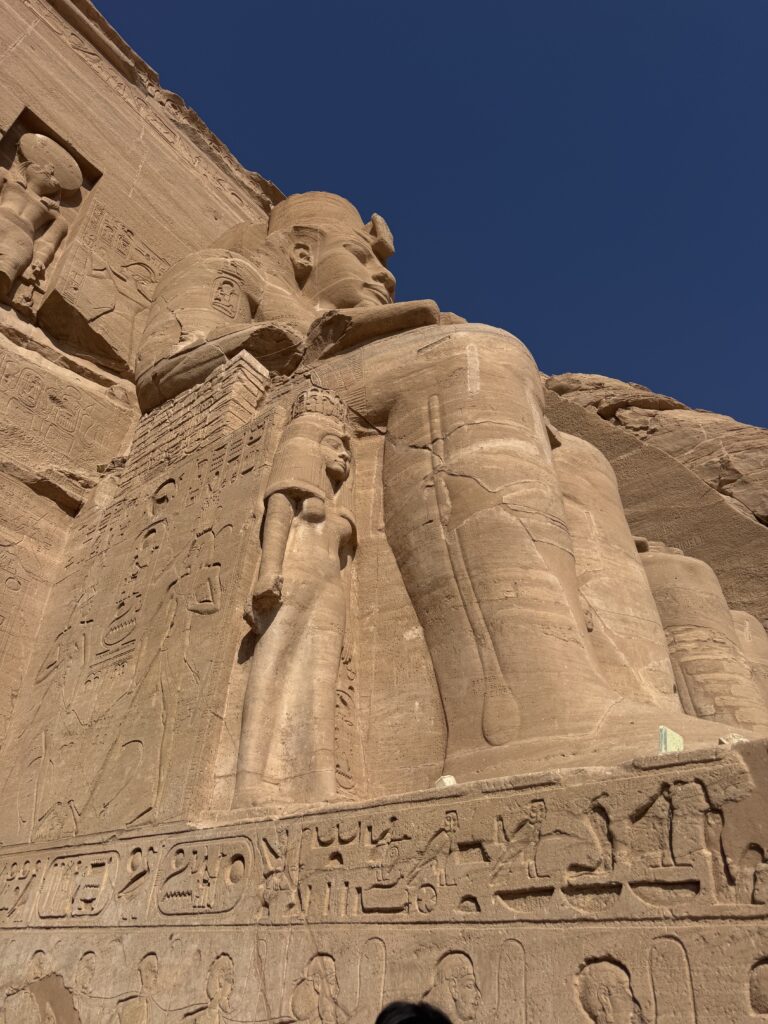
We stood in front of the enormous statues. “This is our egomaniacal pharaoh, Rameses II,” said Mostafa. “All 4 statues are him.”
This is one of the temples that was going to be destroyed by the new dam. The difficulty with this one is that it wasn’t a simple stone building, with bricks you could number and put back together like a jigsaw.
This one had to be carefully sawn apart with hand saws, (because the vibrations of the mechanical saws were damaging the sculptures), so the entire process took 7 years.
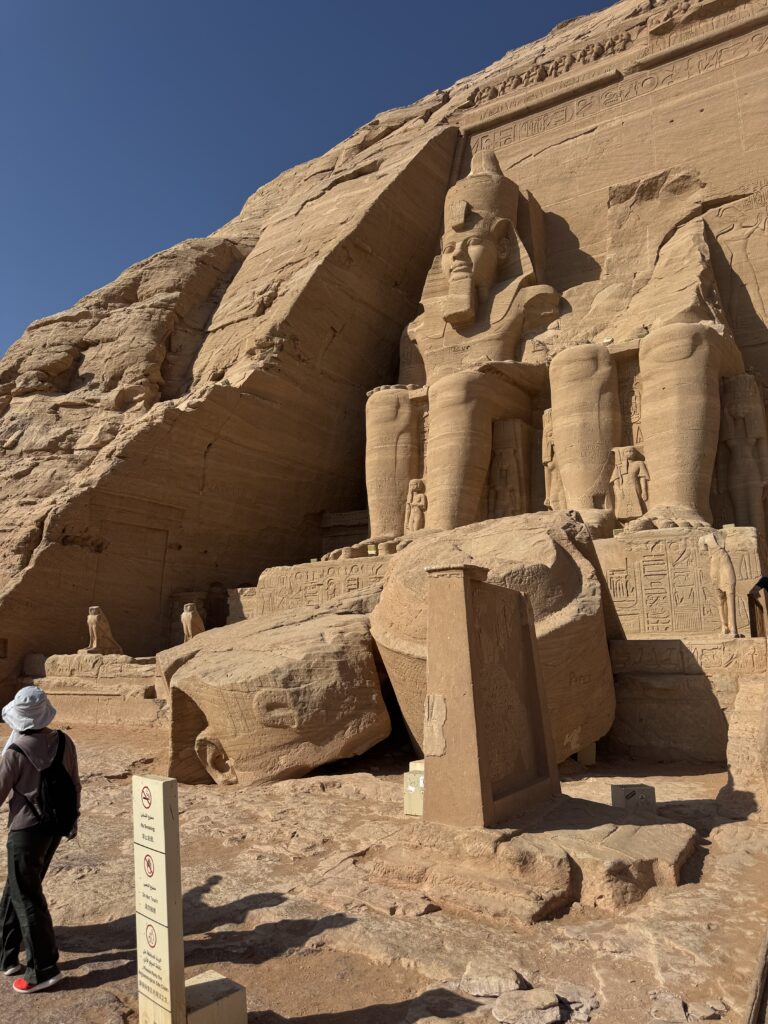
The statue of Rameses that has the big damaged bit has the missing pieces lying on the ground in front of it. UNESCO decided to keep them where they were found.
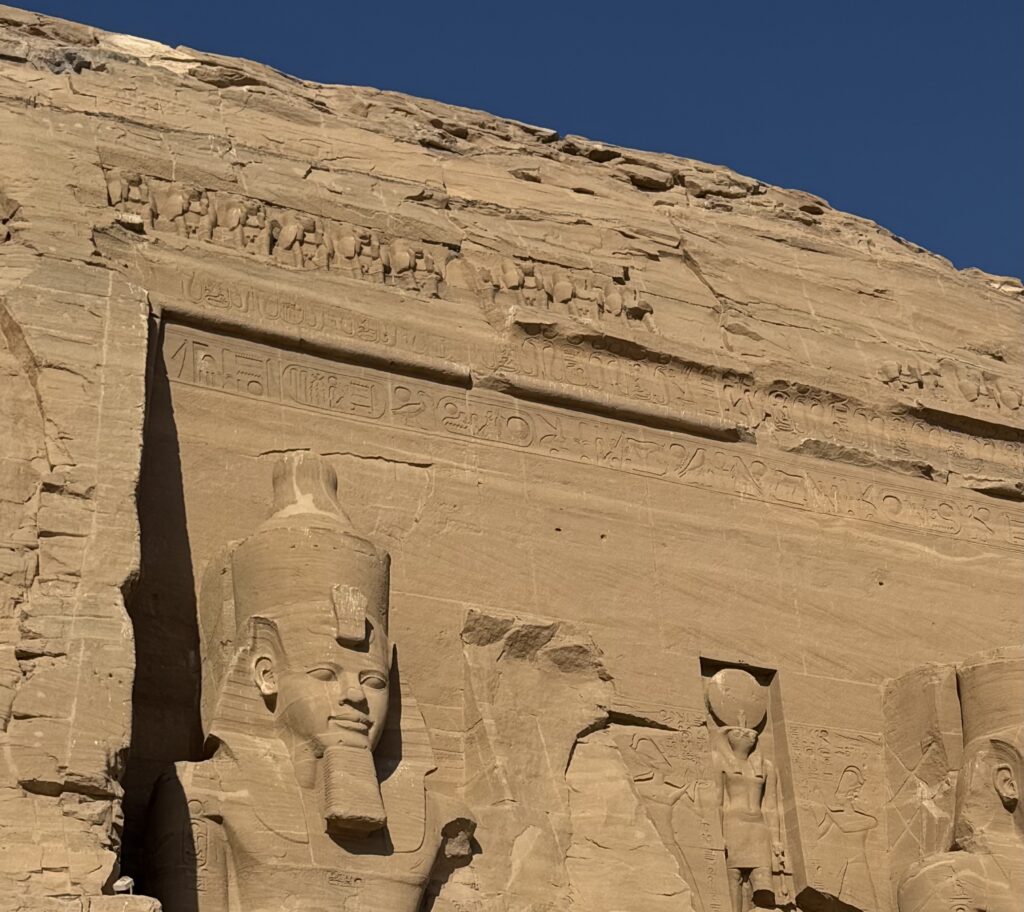
If you look at the top you can see Baboons. They were considered to be the greeters of the Sun God as the sun rose each morning. They make a lot of noise.
Next to his legs is his wife Nefertari, and some of the favourite kids are also beside his legs.
The smaller temple here is devoted to Nefertari, but he wasn’t exactly a faithful spouse. Even though he was the only pharaoh who built a temple for his queen, he had hundreds and hundreds of concubines He had 52 daughters and 94 sons, all of many different races.
As Mostafa said, “Usually we date the pharaohs by BC, which is ‘Before Christ.’ With Rameses, we date him as 1,200 BV… ‘Before Viagra.’”
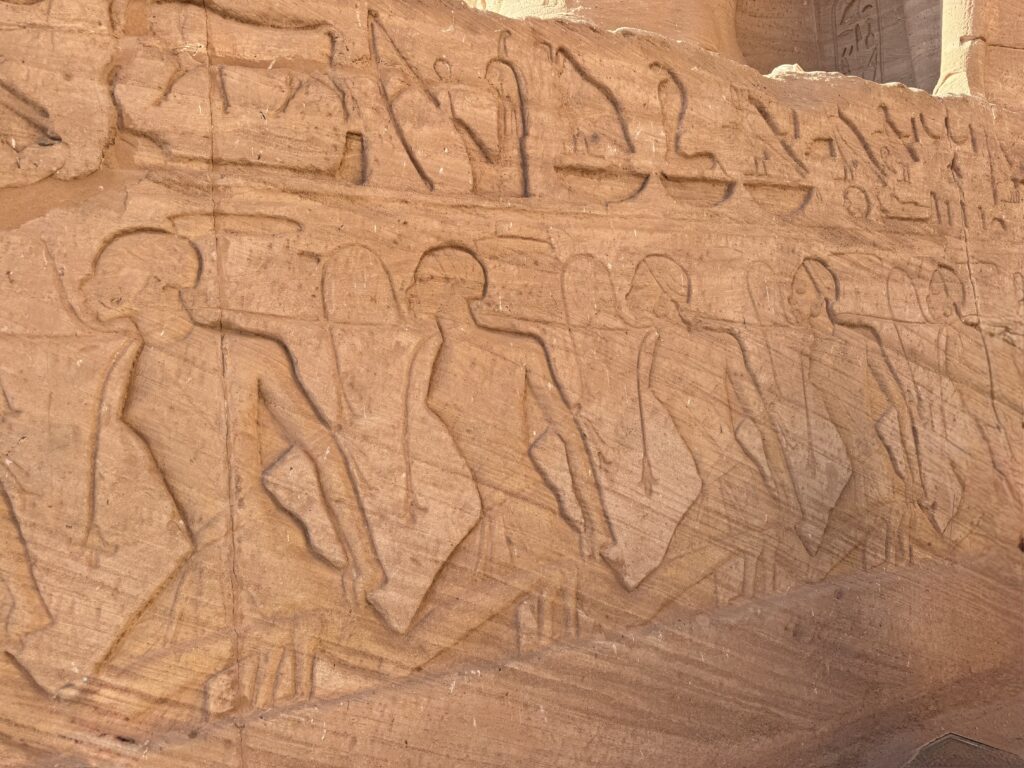
The carvings of the bound arms of the captives underneath the Queen are carved in a way that can never be done unless they’ve dislocated the arms of the captives. It’s a bit awful to look at them all while knowing that.
This was the most incredible place. It was well worth the early start.
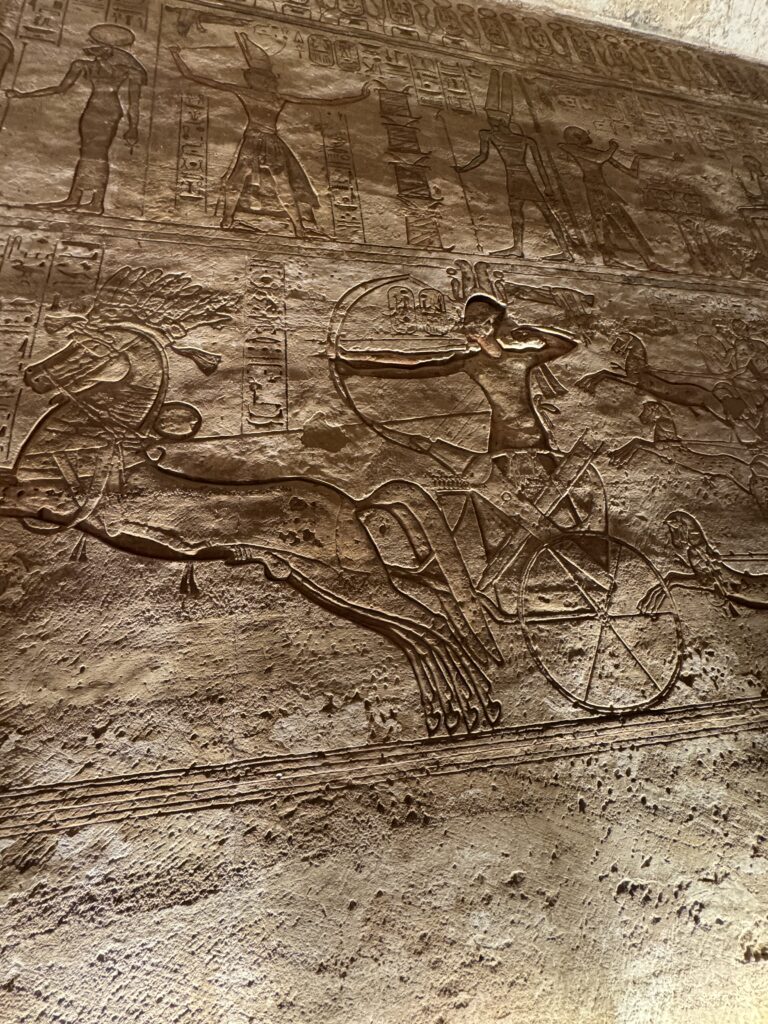
See how the horse’s legs and the archer’s arms are doubled? This is to show movement, like a modern cartoon.
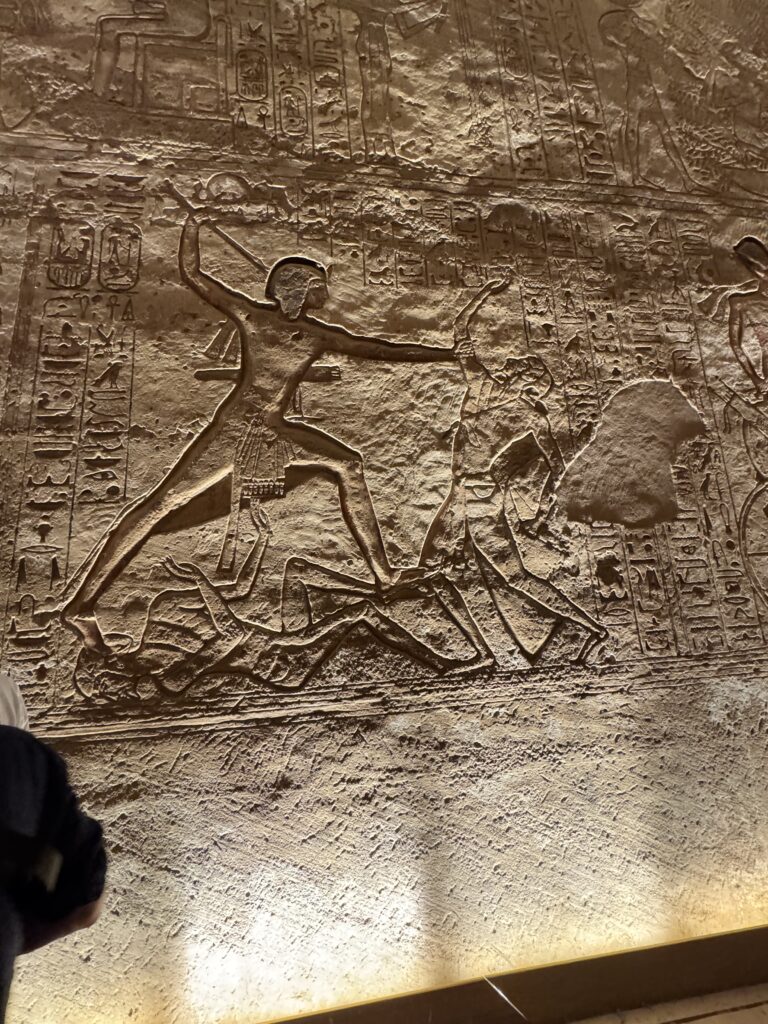
This whole place is full of propaganda about how great and fierce a warrior Rameses was. This is one of the most violent pictures in ancient Egyptian art. Rameses is stabbing an opponent while standing on the face of an enemy soldier.
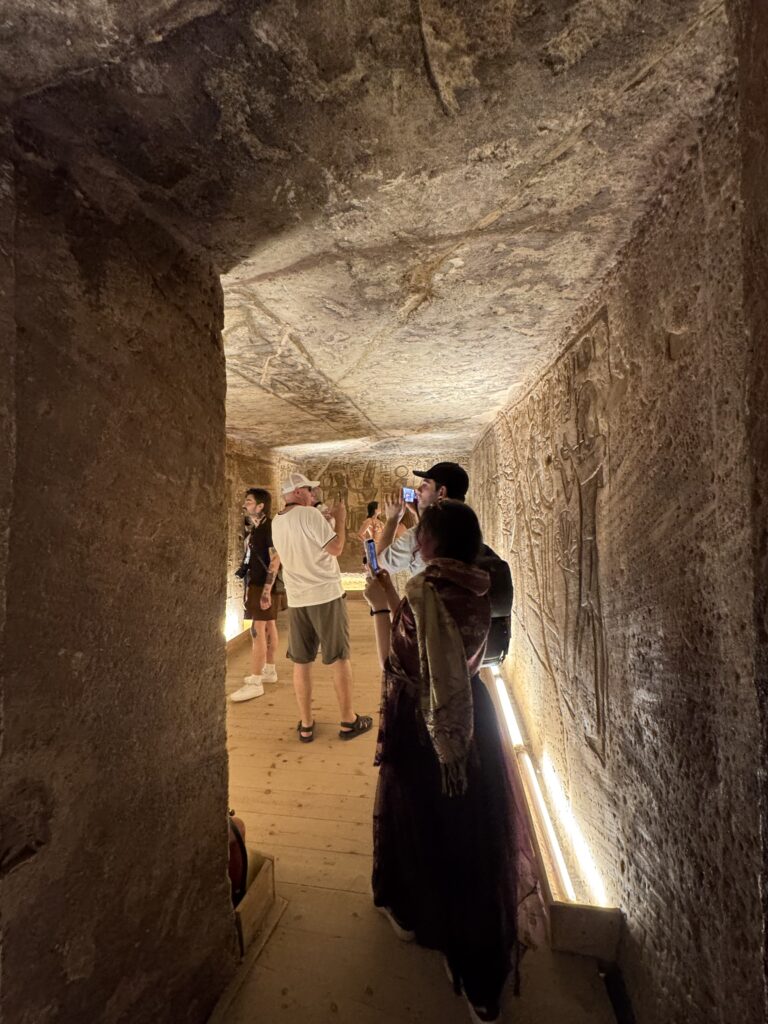
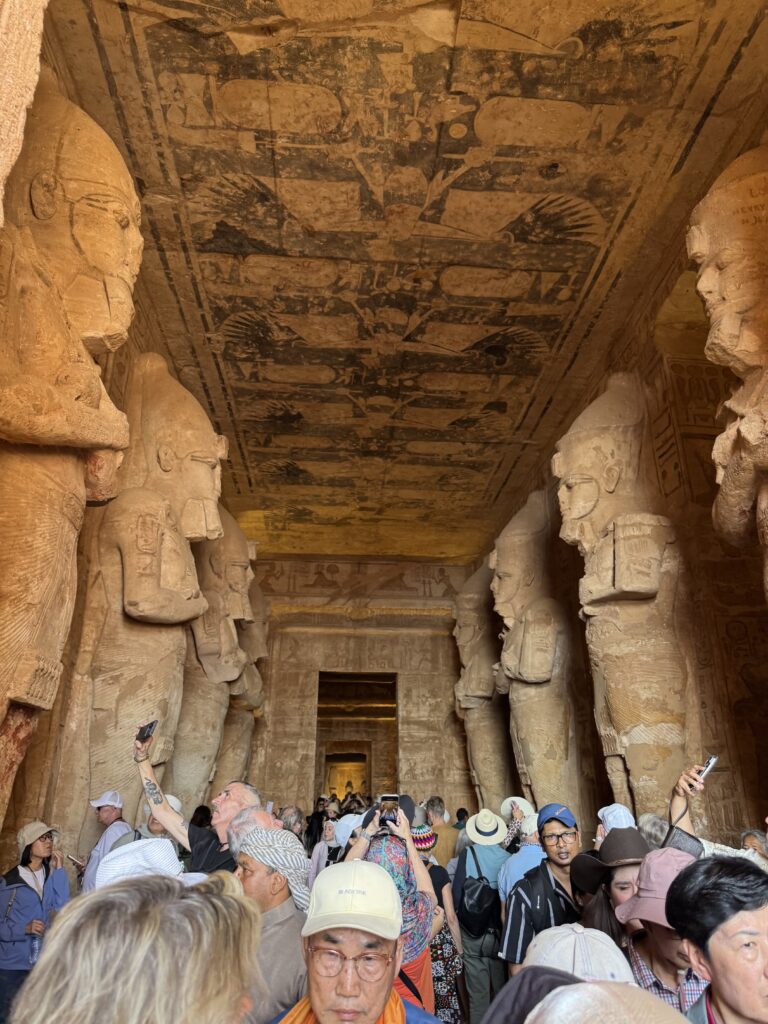
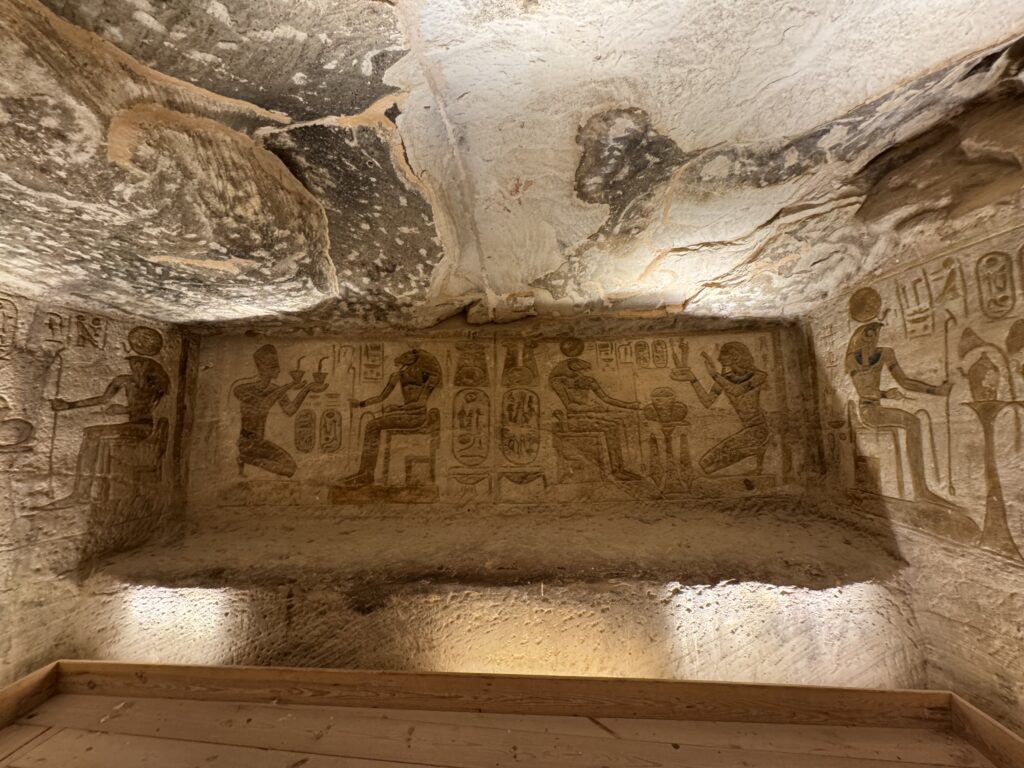
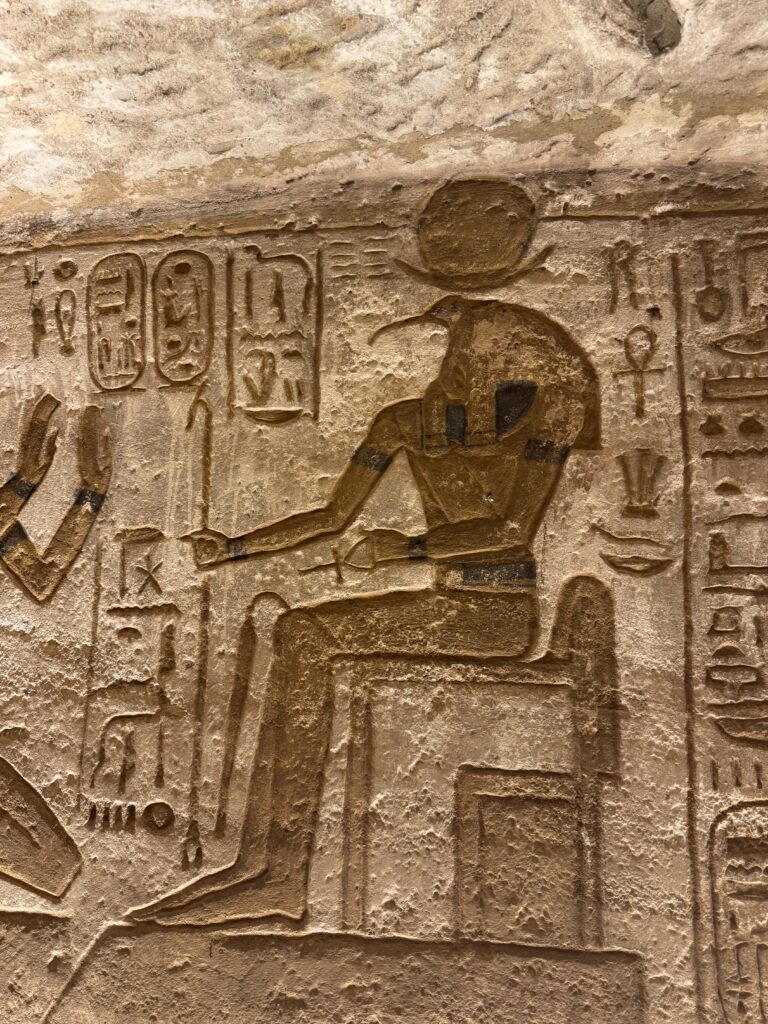
David 33 and Izzy in one of the anterooms. Every single wall was covered with carvings. No wonder they took the time to painstakingly move it.
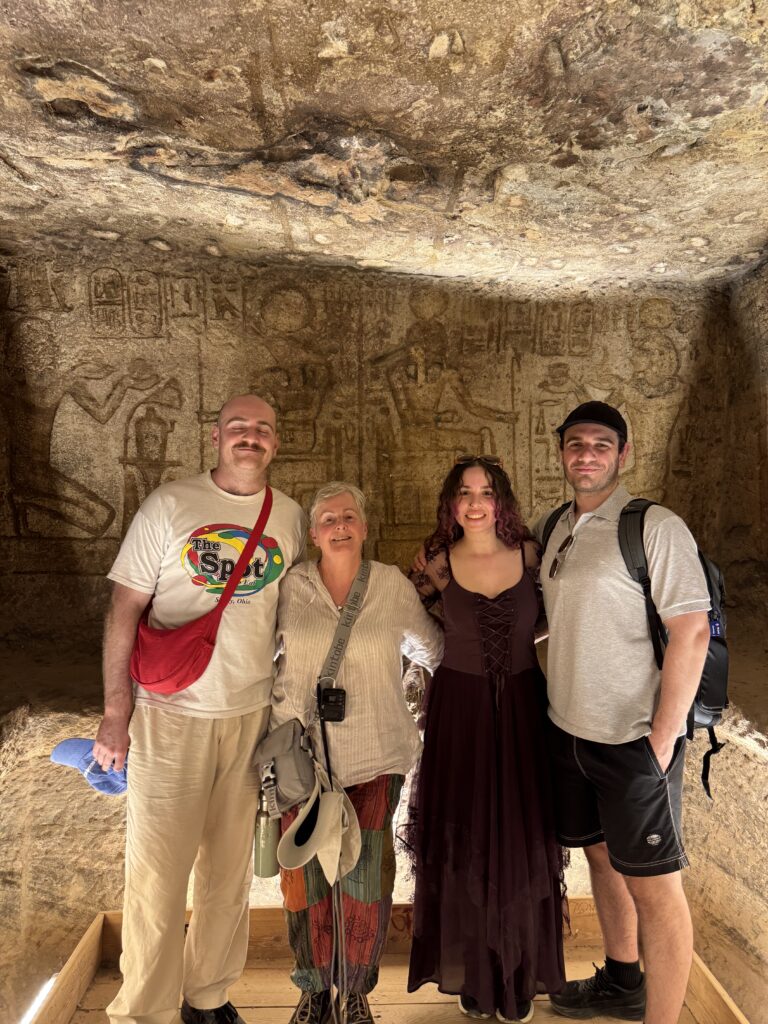
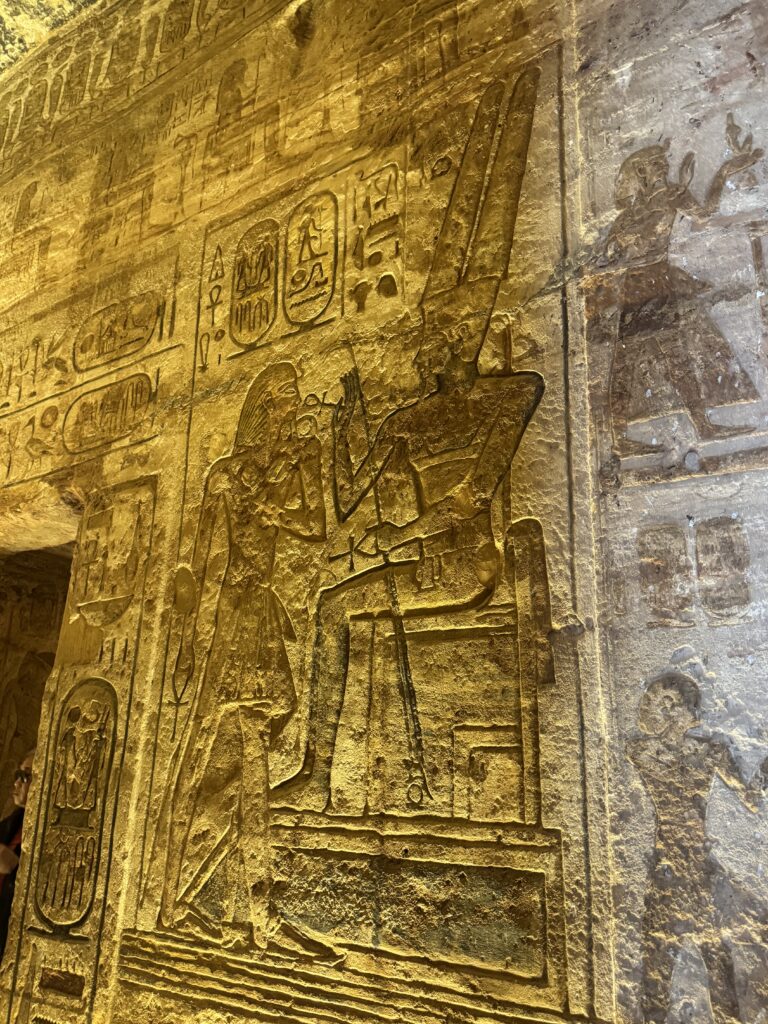
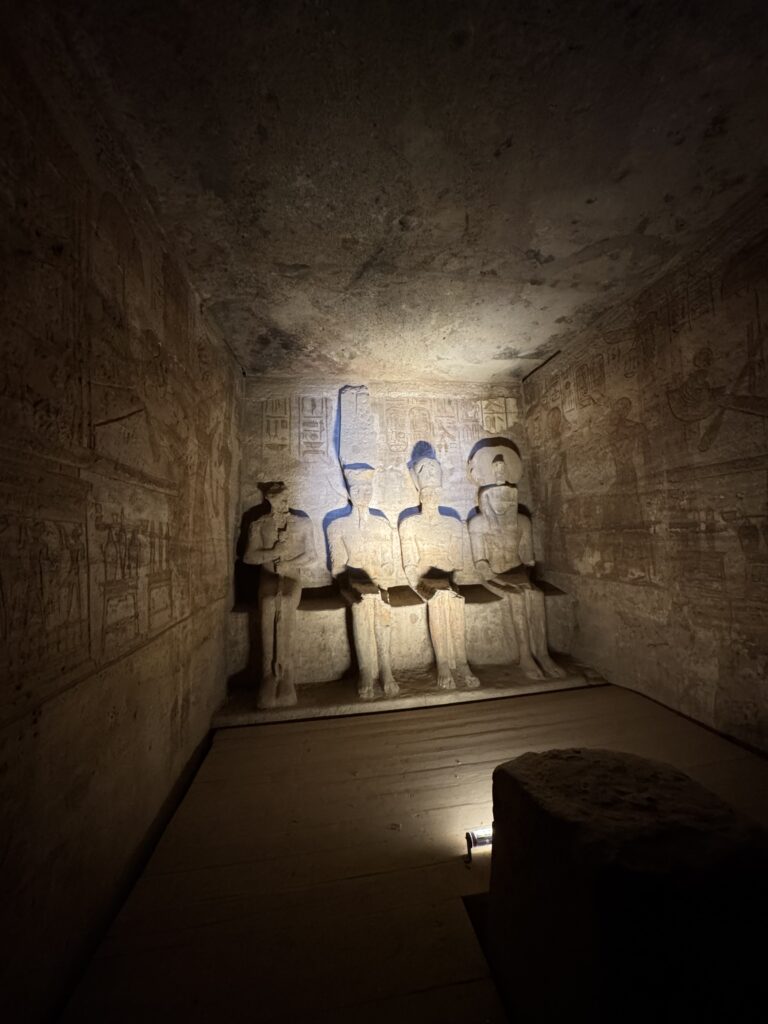
This is the most holy space of the temple, right at the back. In defiance of the usual custom, Rameses has put himself as an equal with the gods, sitting and chilling with 3 of them. When the temple was in its original position, the sun would light up the two middle faces on one day of the year. He is sitting on the middle right.
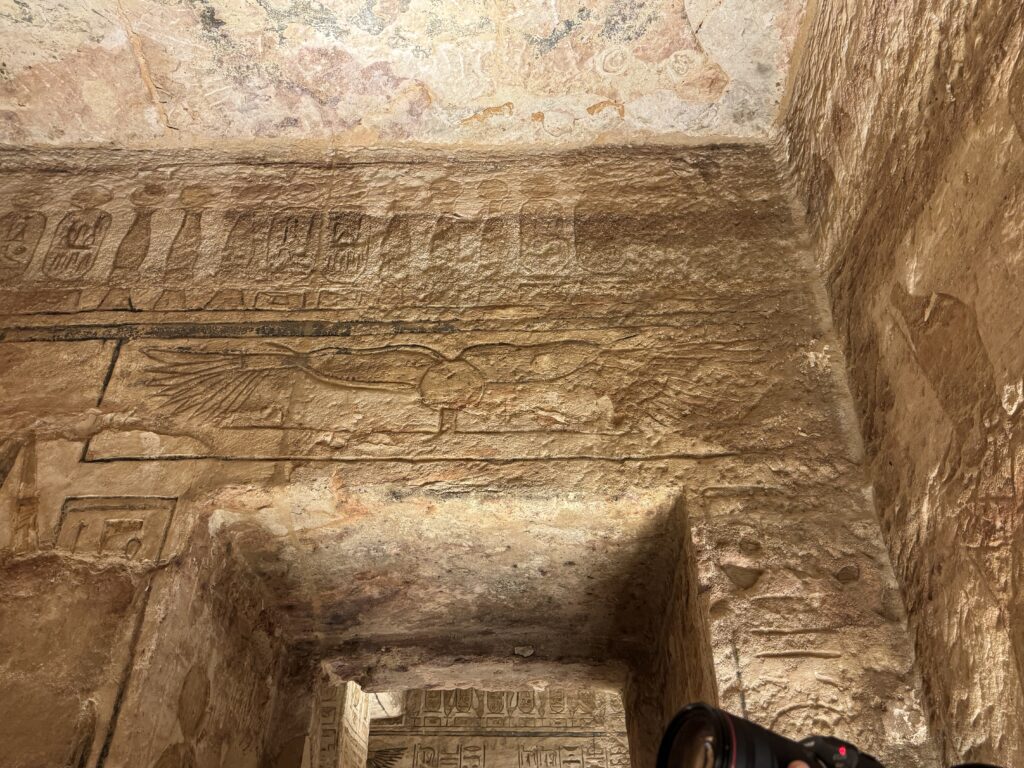
Izzy spotted this. If you zoom in above the door, there’s a golden snitch from Harry Potter.
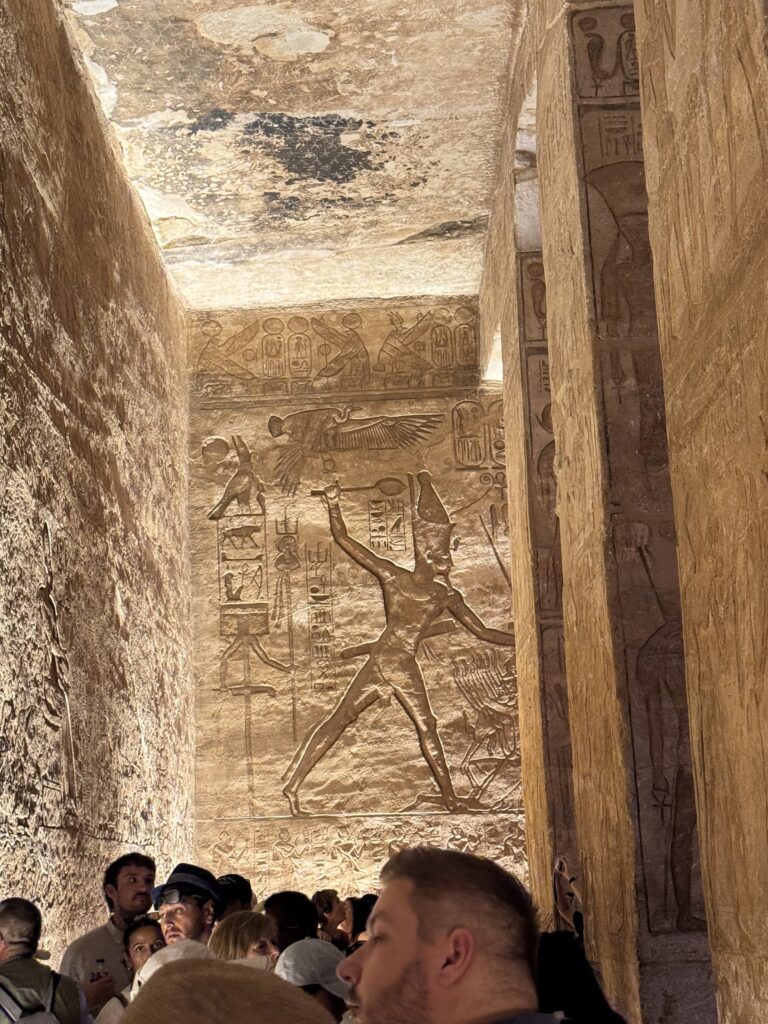
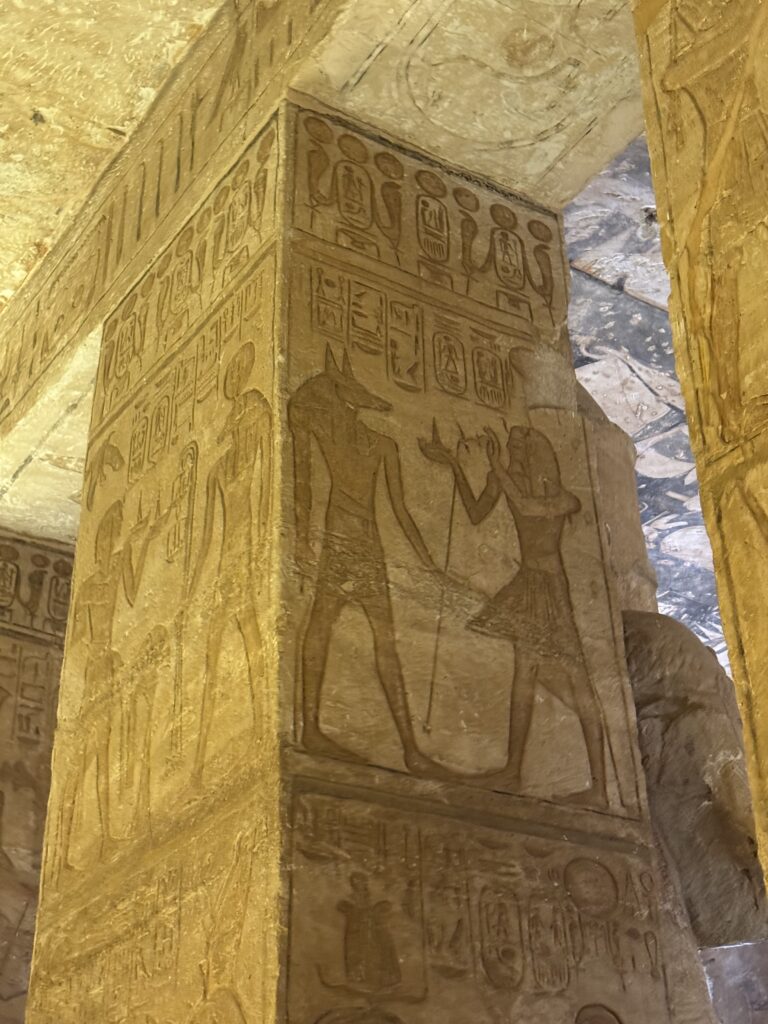
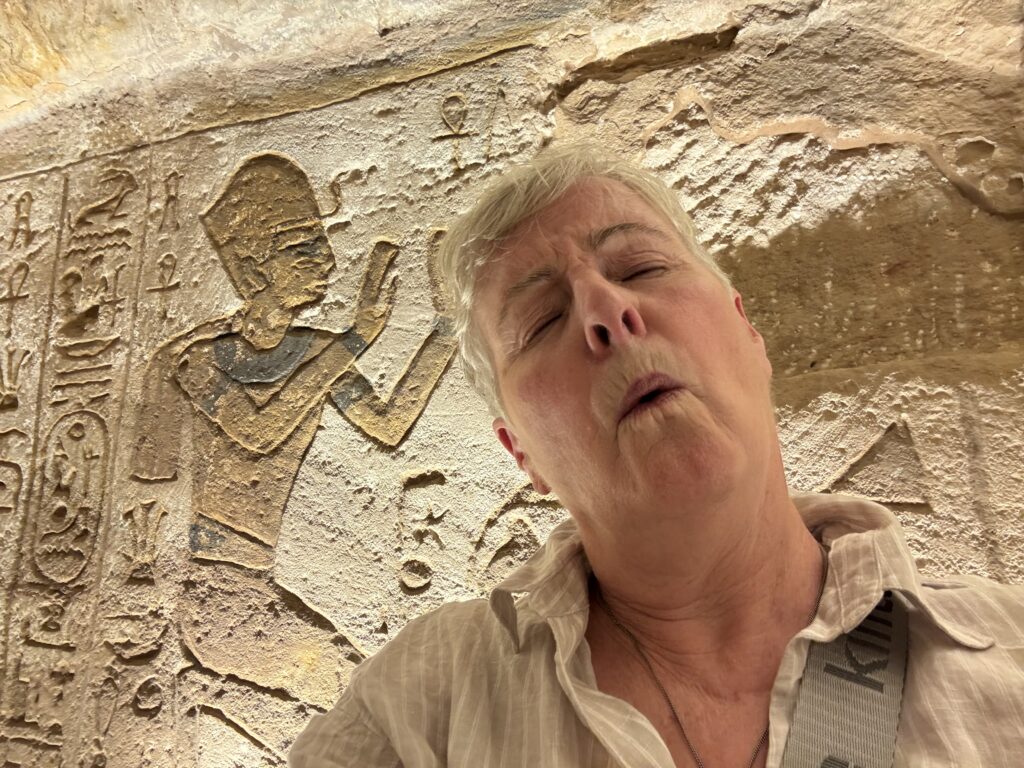
That felt good.
Poor tiny Queen.
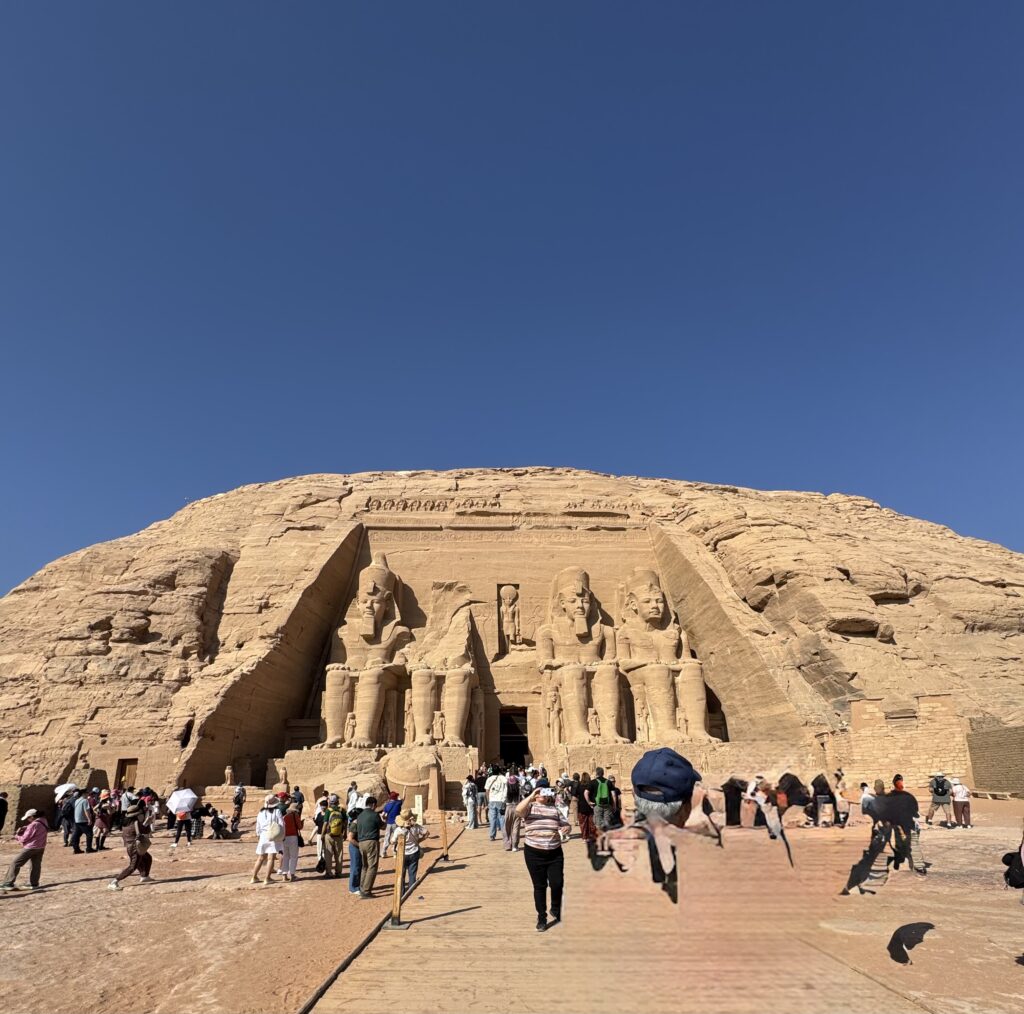
One last look at the big man’s temple, then we headed for the Queen’s.
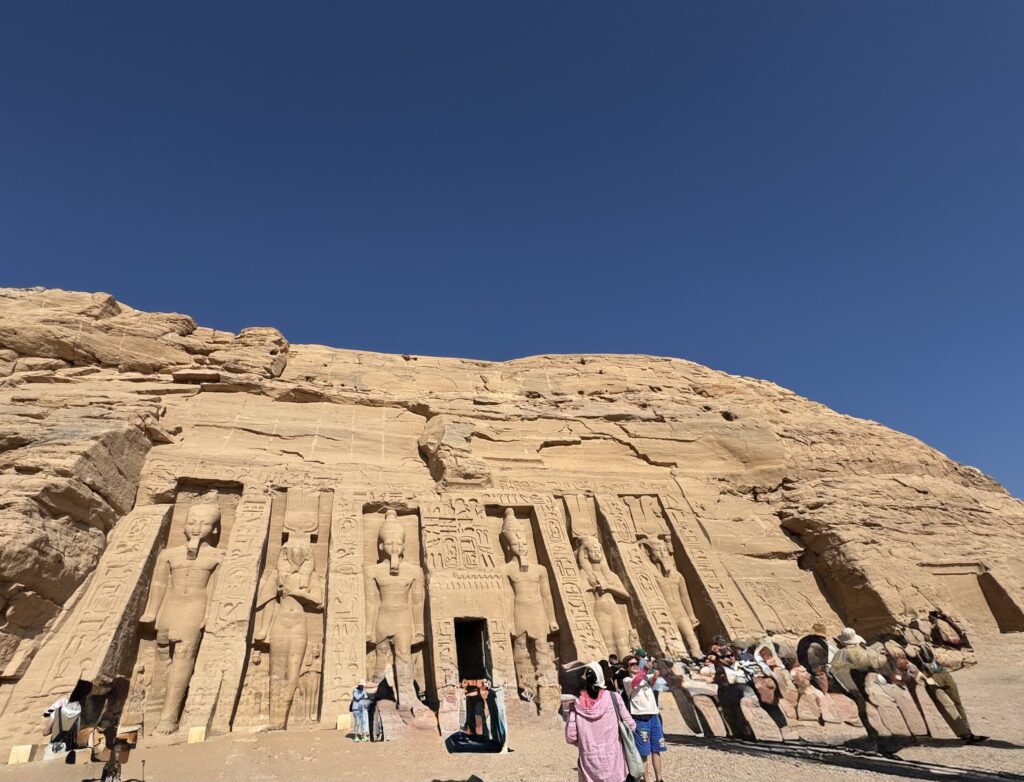
Even though it’s Nefertari’s temple, Rameses is all over the outside. Of course.
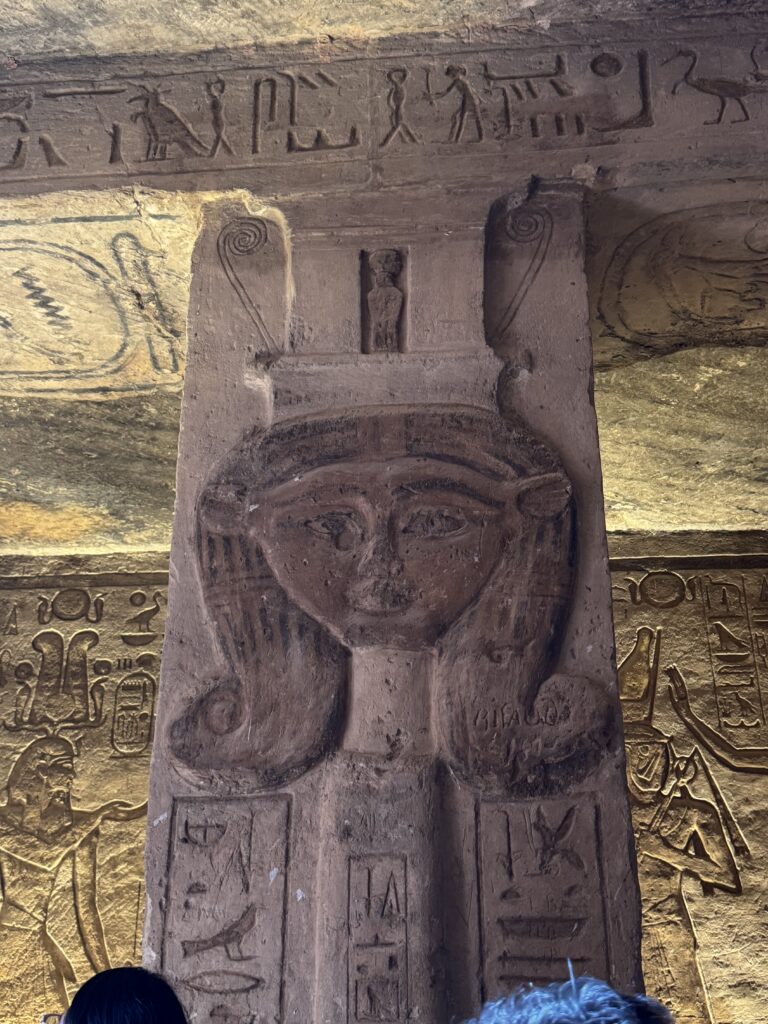
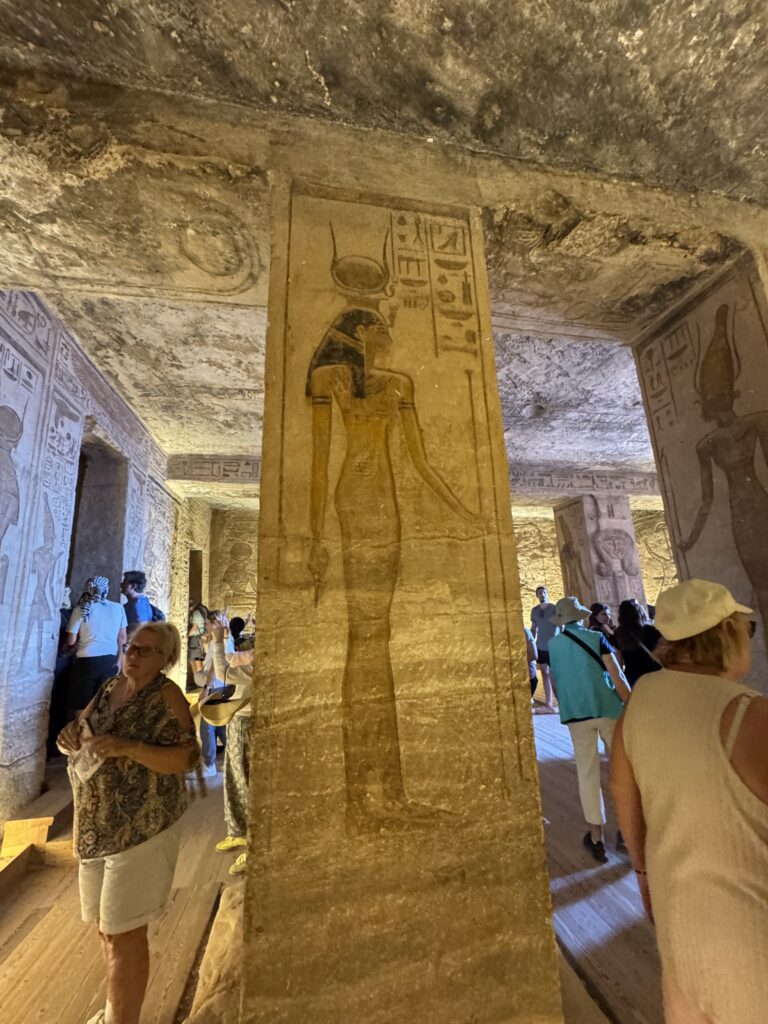
Rameses depicts his wife as being the equal to the goddesses , particularly of love and healing.
Here, she is shown as having cows ears.
Apparently, it’s a compliment.
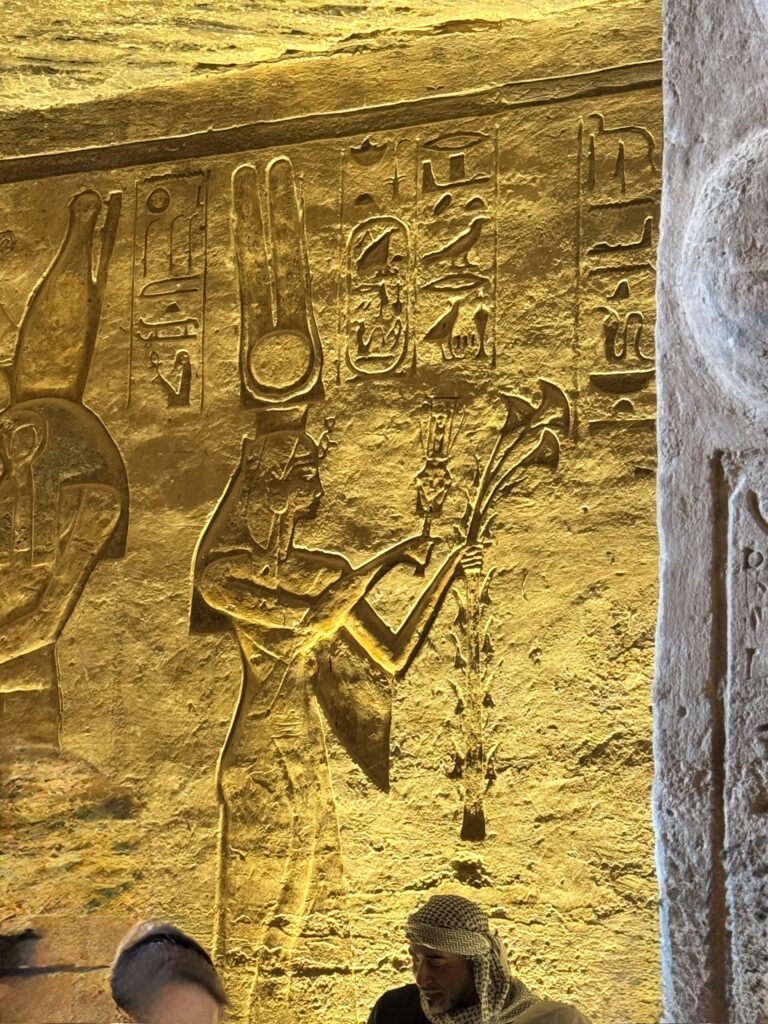
I liked the flowers in this one.
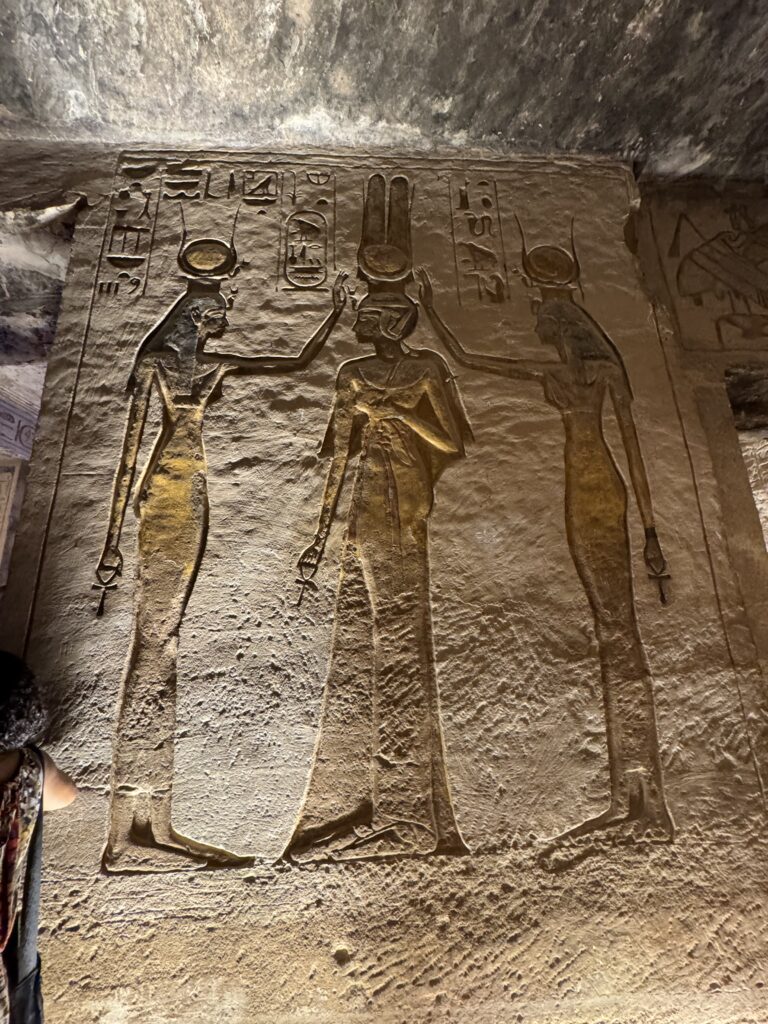
Here she is, being anointed by the two goddesses.
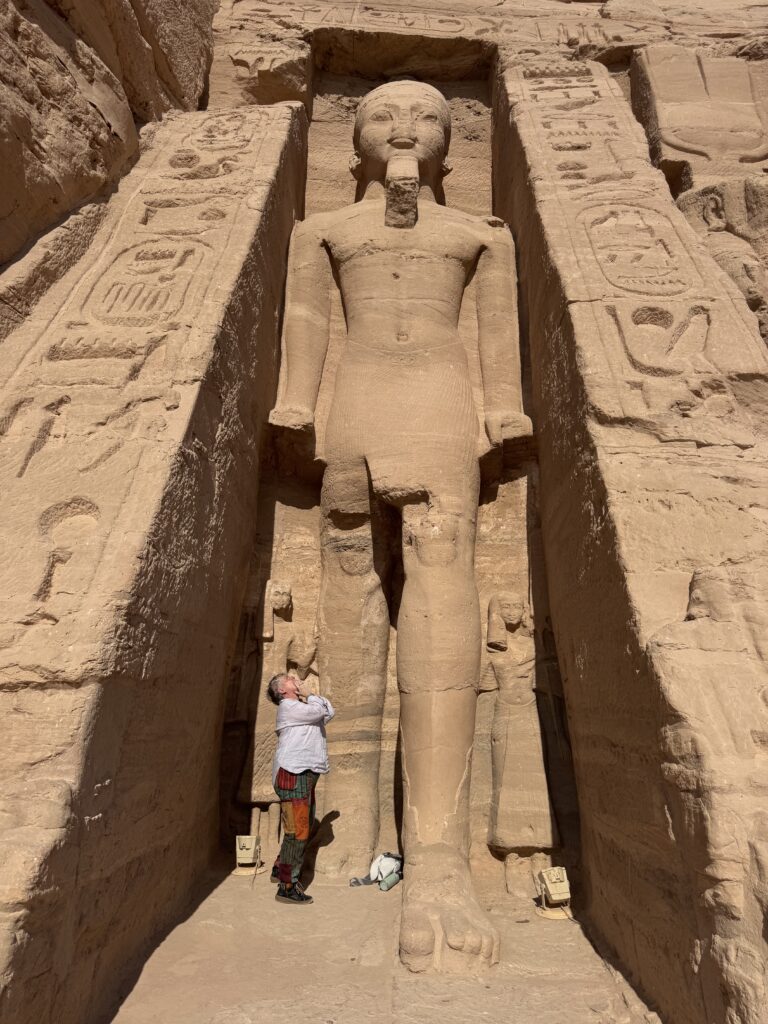
I can see up his skirt.
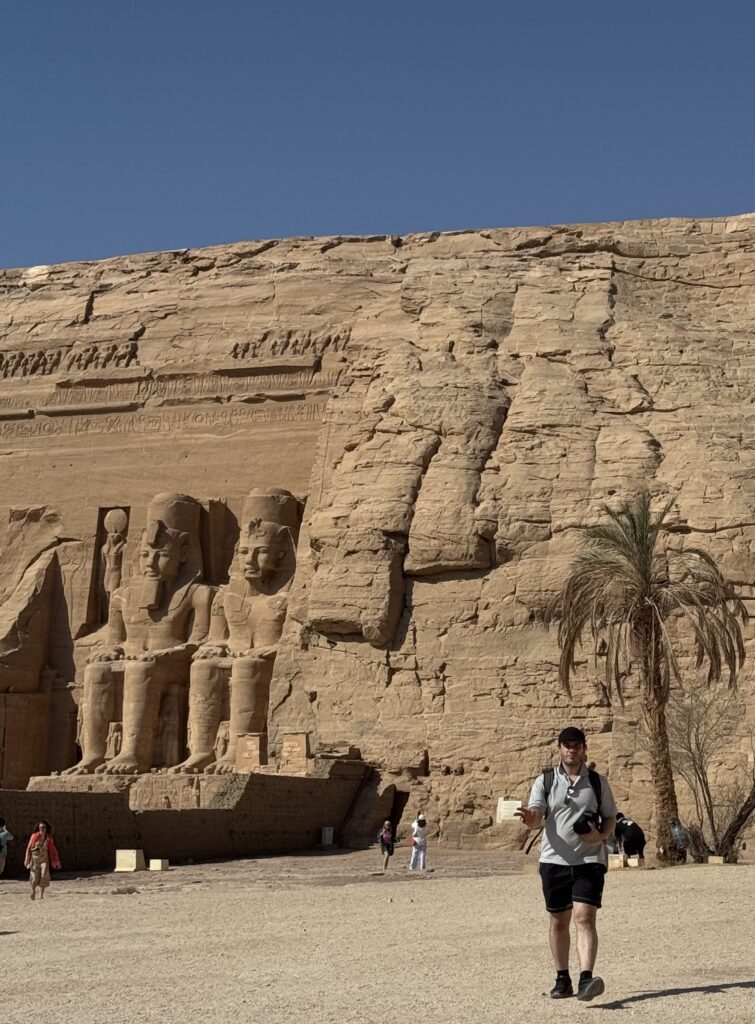
David33 coming back from a quick farewell photo of the big temple.
We popped into the gift shop and I bought a little granite statue of Akhenaten. I saw the original in the museum a couple of days ago, and it says “Magical day in Egypt “ to me.
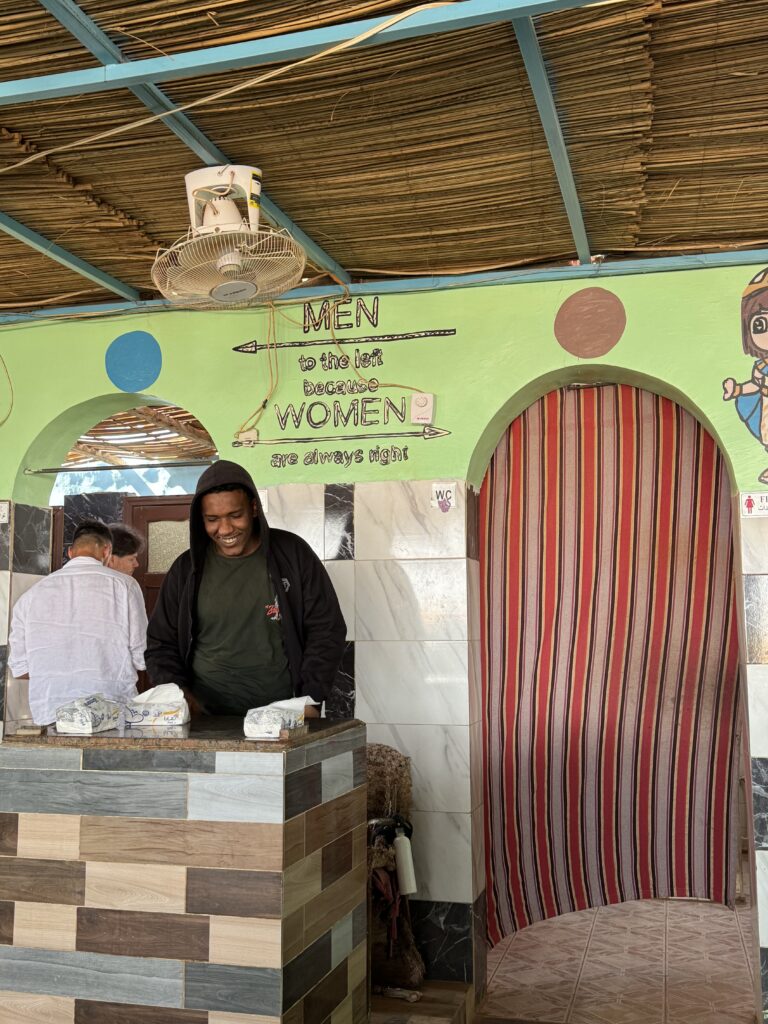
The guy taking the twenty pound fee for the loo, (around 20c), saw me taking this and was laughing.
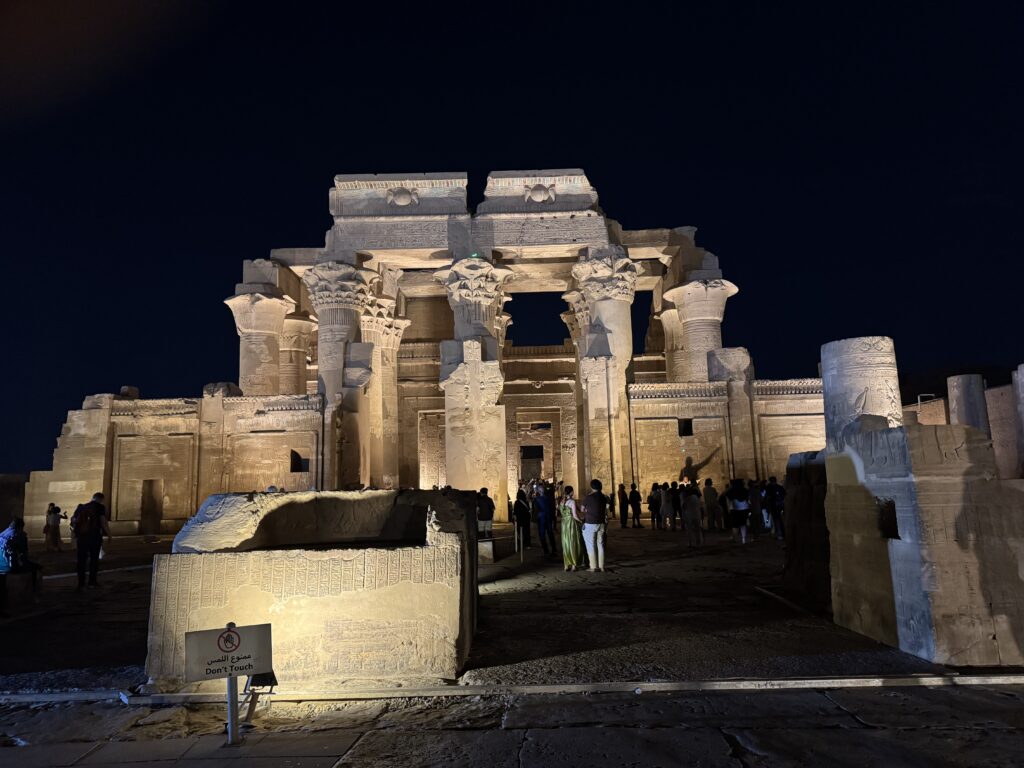
The ship docked late in the afternoon and we walked off to see Kom Ombo. This is a temple for the crocodile god Sobek and the falcon-headed god Horus.
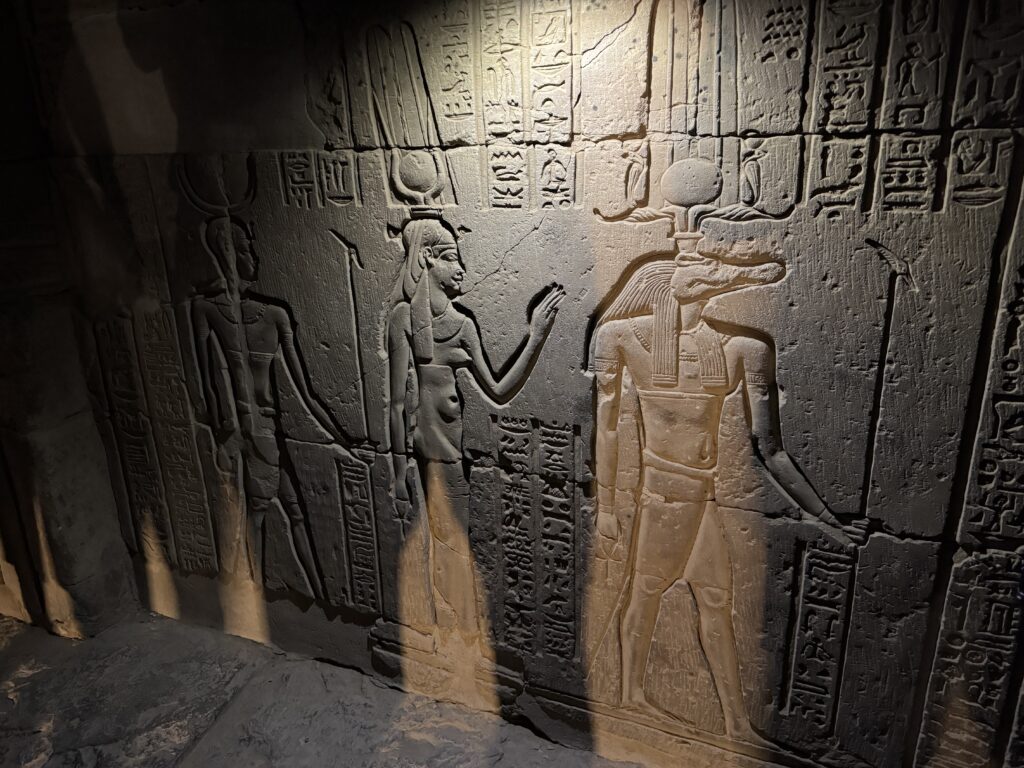
This temple is from the Greek/Roman period when the Ptolemy pharaohs ruled. It’s pretty new… only 1500 BC.
Mostafa was pretty scathing about the workmanship of these later temples. When the Greeks and Romans came to Egypt, many secrets were kept from the invaders. The newer temple builders tried to copy, but couldn’t match up to the originals.
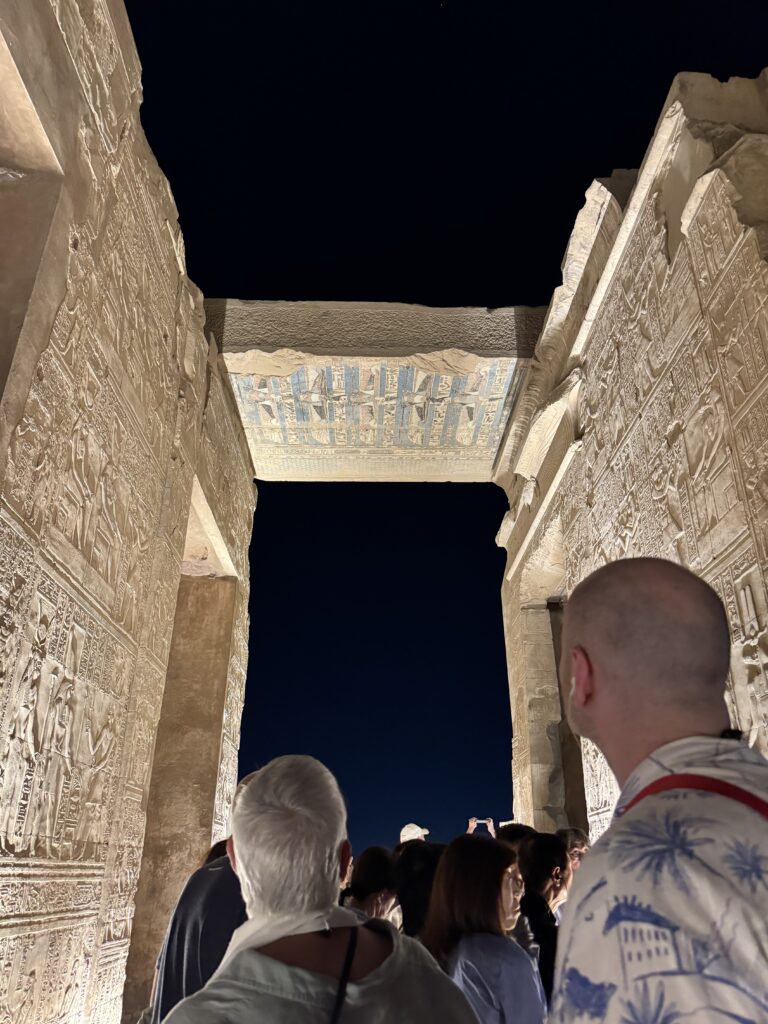
They still look impressive, though.
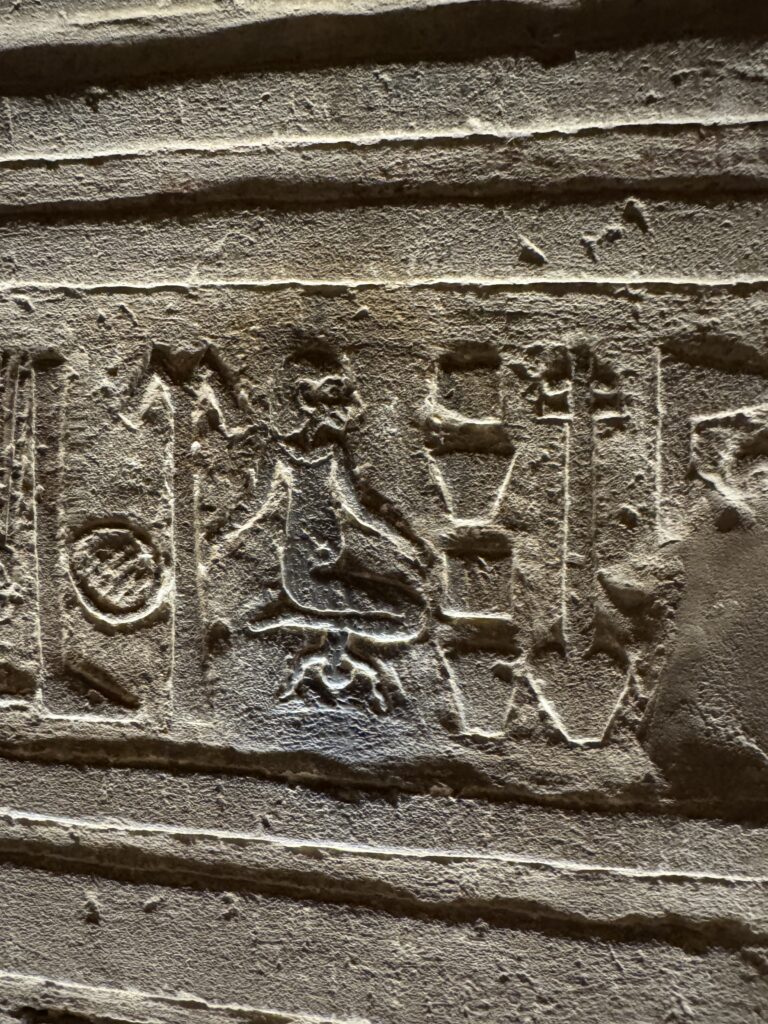
This is a woman giving birth. Pregnant women would leave sacrifices or money outside and the priests would pray here for them.
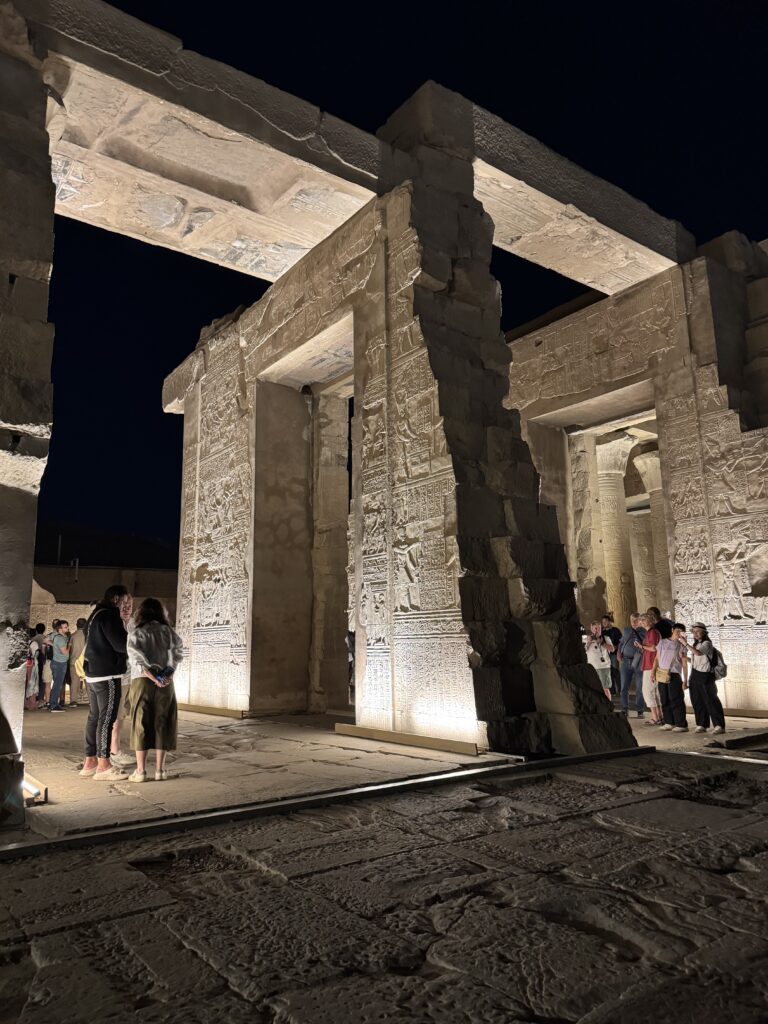
This temple holds the only surviving calendar from ancient Egypt.
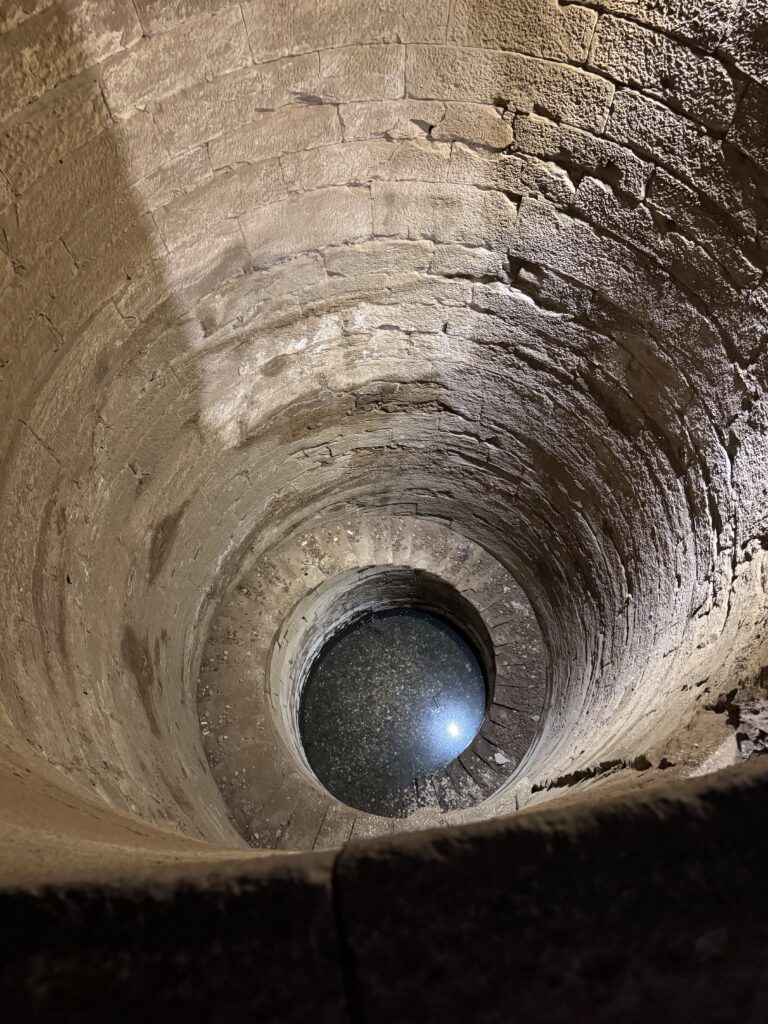
This is the crocodile pool, where they’d keep one as a symbol of the god. Whenever it died, they’d mummify it and grab another one from the Nile.
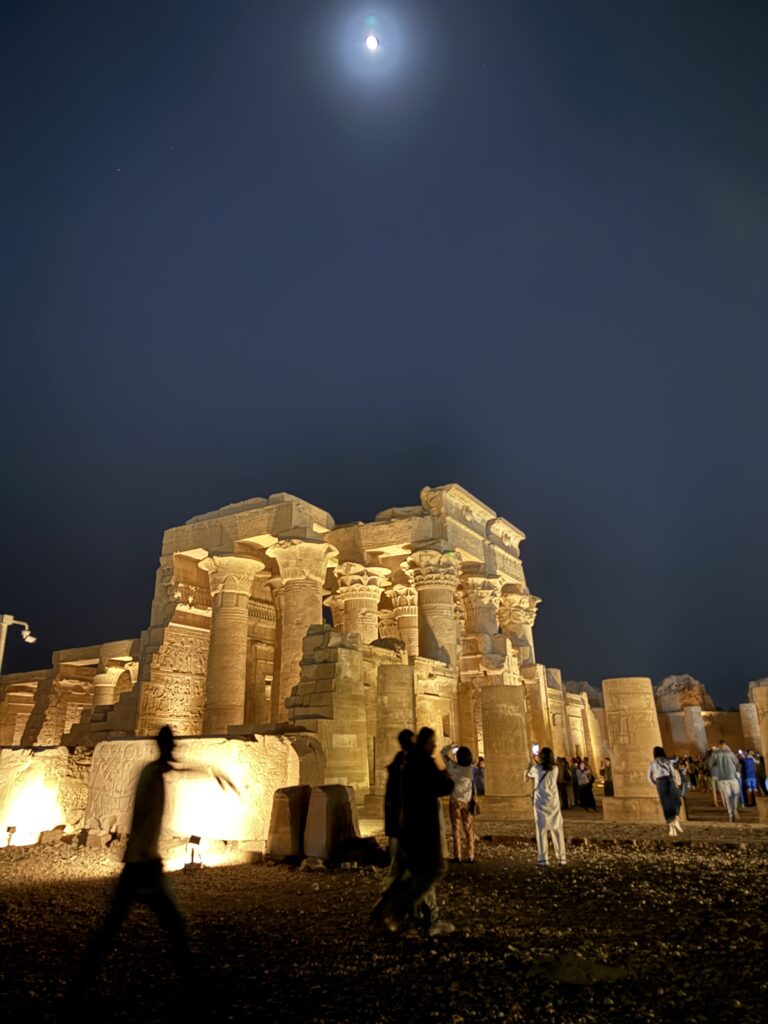
Almost a full moon…
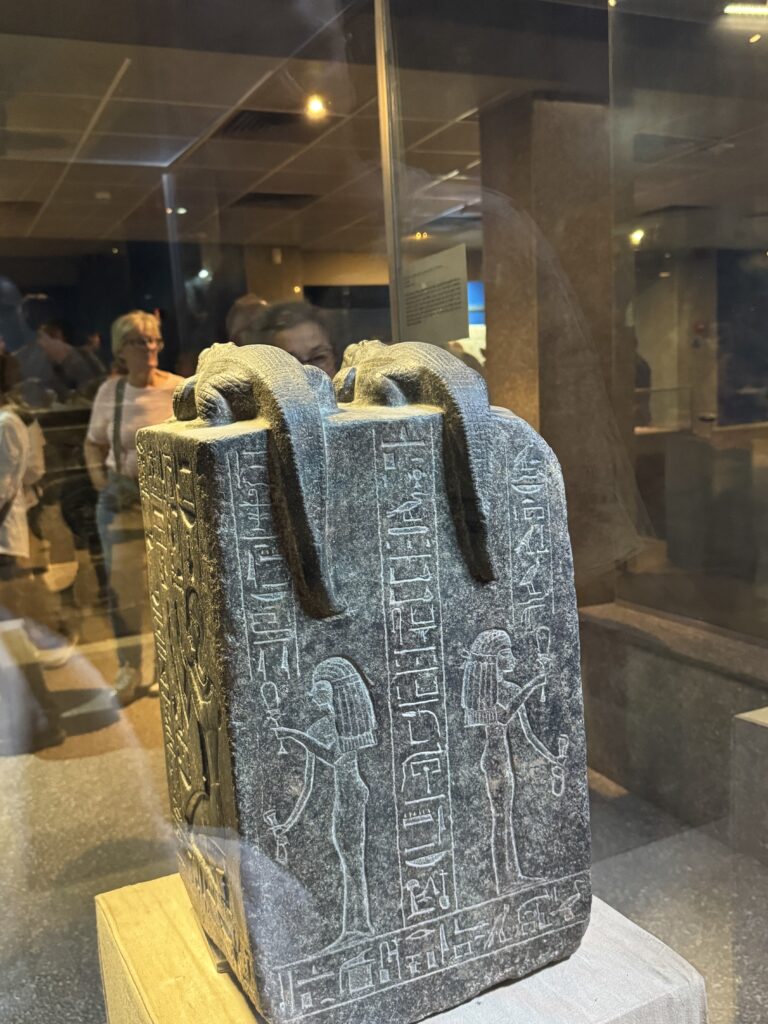
On the way out, we ducked into the crocodile museum next door. It has a few of the mummified crocodiles, but I particularly liked the tails drooping over the edge of this sculpture here.
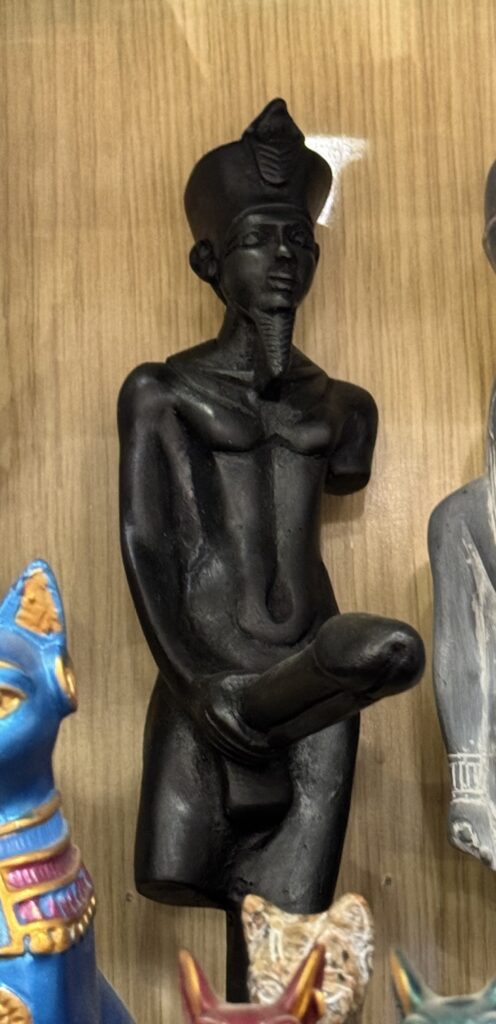
And Connor noticed this in the gift shop. Earlier today, Mostafa told us the story of a village caught in the middle of a bitter battle. One man out of all the men made it back alive, but he lost an arm and a leg.
He … ahem … rose to the challenge of repopulating the village. He’s a hero among the men here.
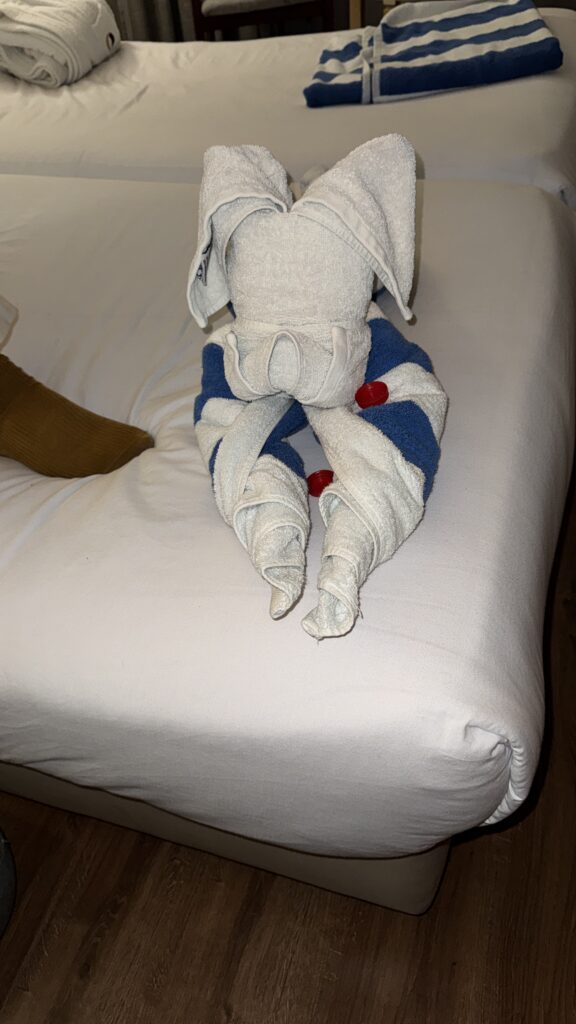
Look what we got when we arrived home… a puppy!
Dad joke of the day:

Leave a Reply