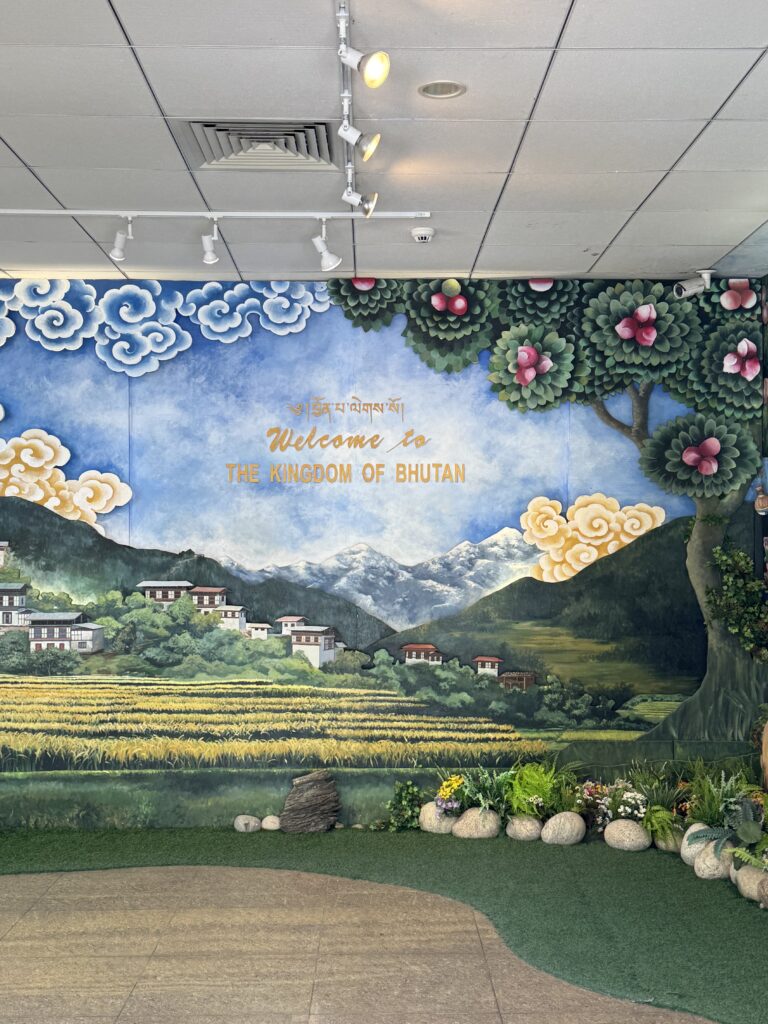
A couple of years ago, I was driving through South Australia on one of my Little Adventures, and I was listening to a Trevor Noah podcast. He was talking about a recent trip he made to Bhutan. The things he said sounded so interesting that I made a mental note to go there one day.
And now here I am.
On the flight from Kathmandu I saw Mt Everest!! It was sticking up from the clouds, gleaming in the sun. I wasn’t sitting on the right side of the plane, but I still had an excellent view. I’m taking a scenic flight around it on my last day, as well.
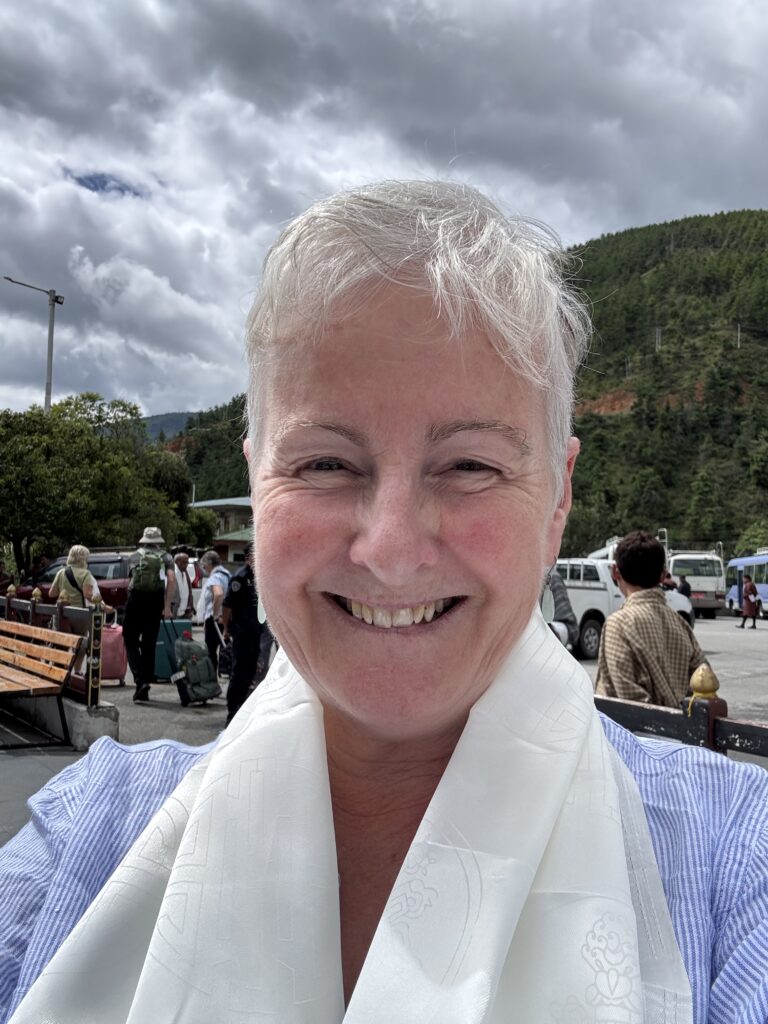
We were greeted by our new guide, Sither, and he gave us these traditional welcome scarves. We jumped into our very luxurious van and sped off down the winding mountain roads.
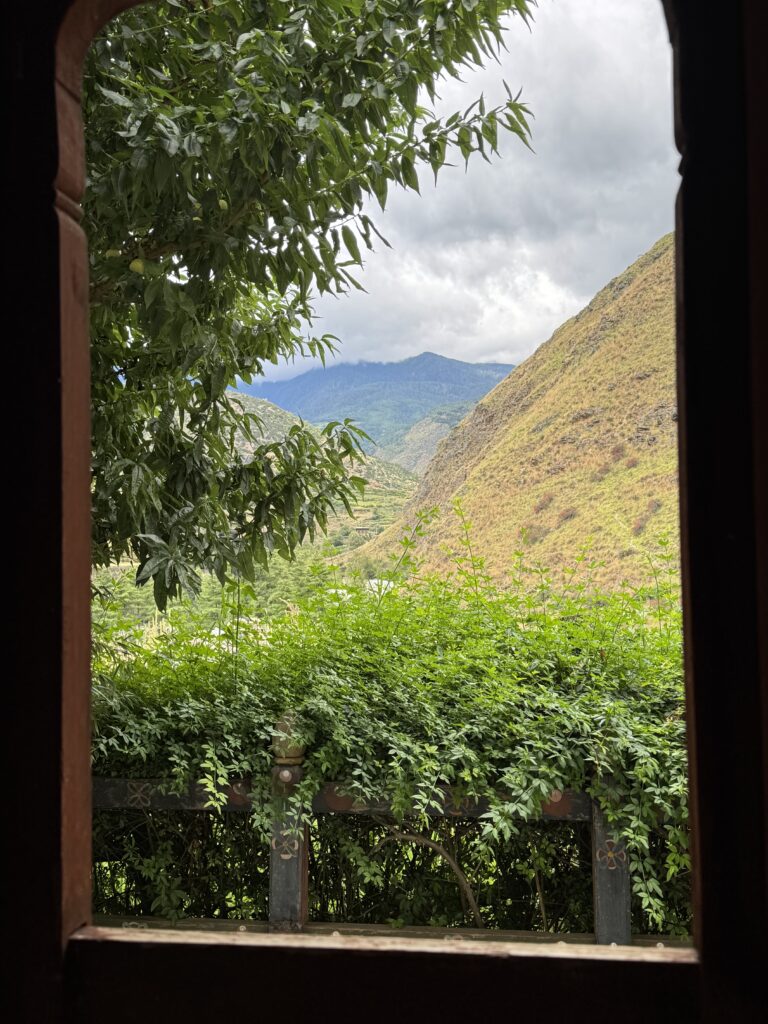
Bhutan is known as the sandwich country between China and India. If all the Chinese peed at the same time, the valleys of Bhutan would be flooded! 😂
Their population is only 800,000 people.
Crypto is set to replace the currency. They use the hydro electricity here to mine the bitcoin. This is the idea of the king. He’s completely modernised the whole country.
Bhutan is carbon neutral… it’s covered by 72% forest. If you cut down one tree, you have to plant 10.
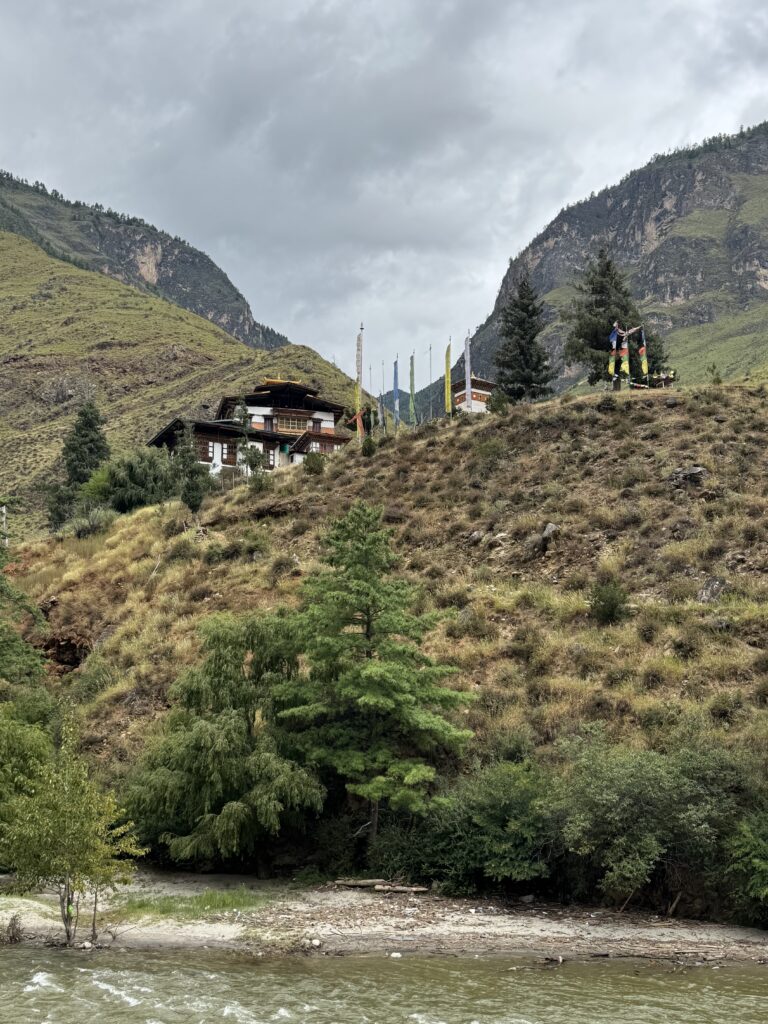
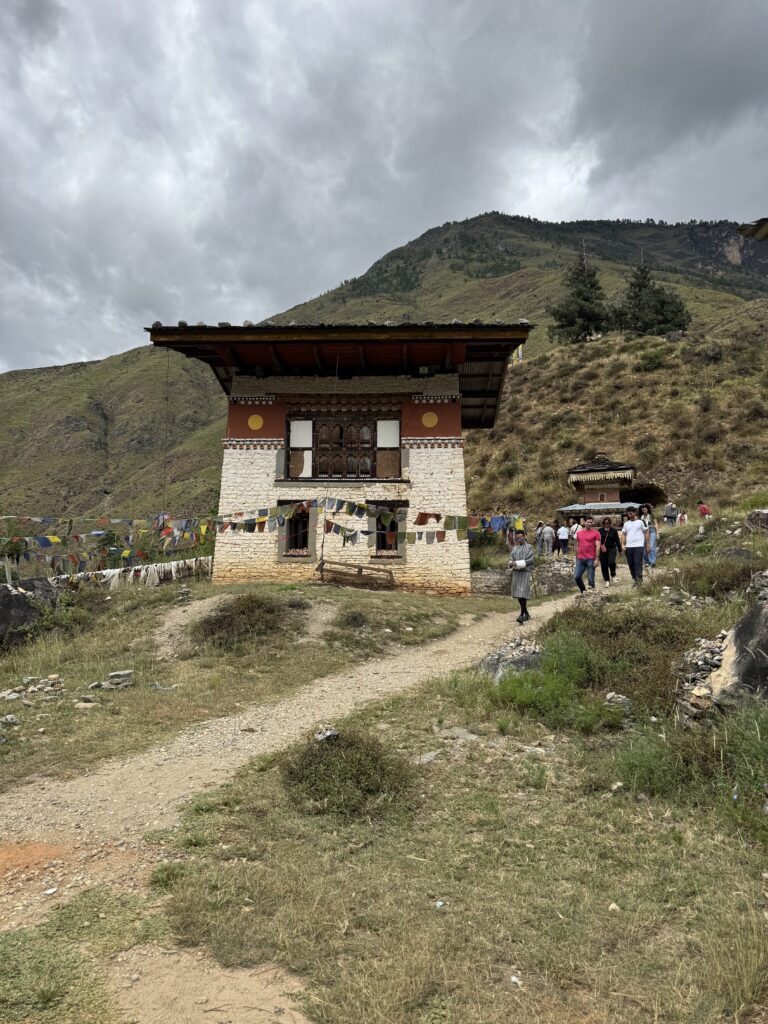
Our first stop was to a temple built in the 15th century.
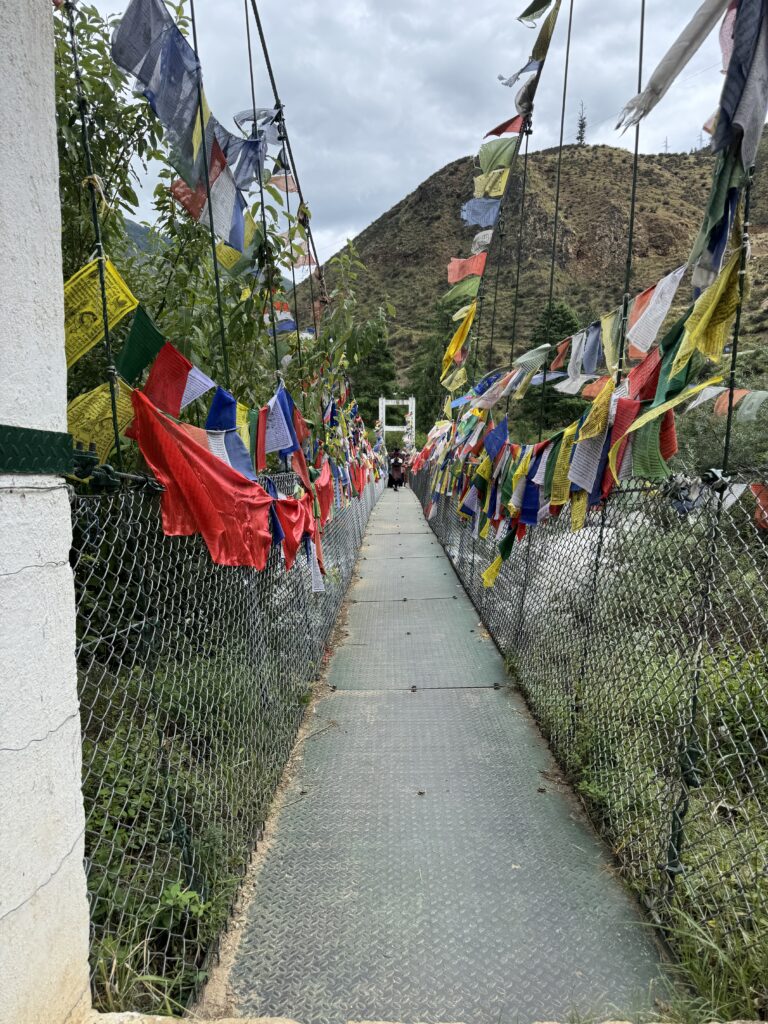
The way across the river was by this wonderfully bouncy suspension bridge. The prayer flags added a festive touch.
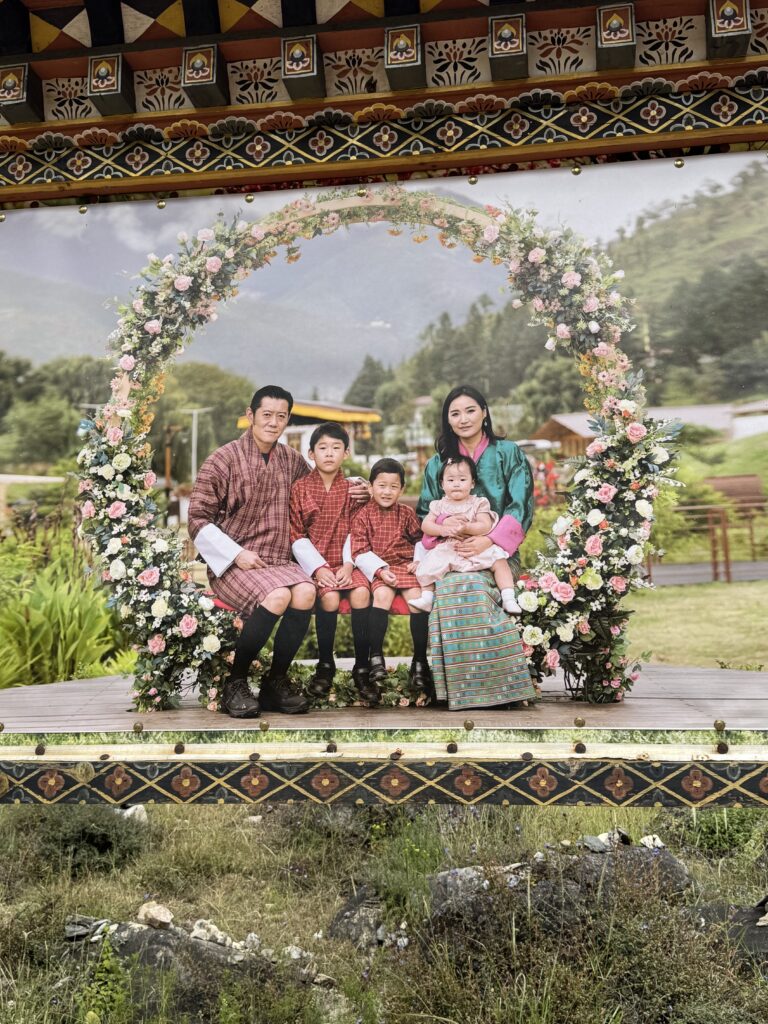
This is a poster of the current royal family. The people are incredibly fond of him. During COVID, he sold properties and shares to feed the people who couldn’t make a living during quarantine, such as people in the tourism industry.
He even fed the stray dogs as well. He knew no one would be leaving their houses to feed them, so he took care of it.
He was probably motivated by compassion, but it was a smart political move. These people adore him.
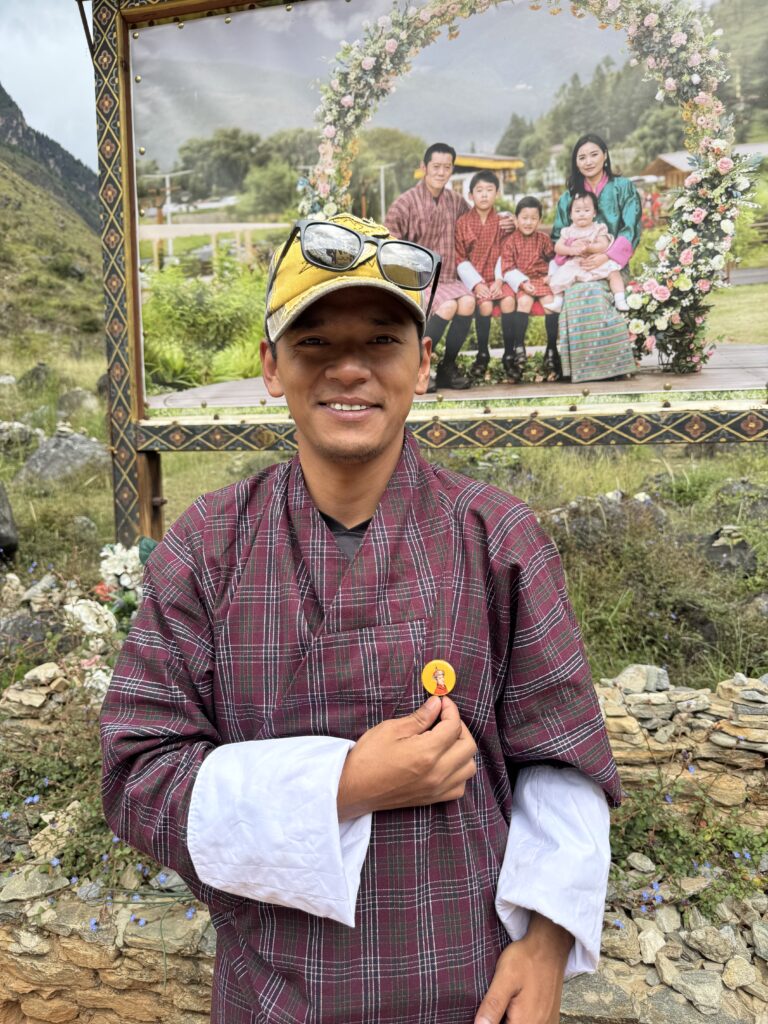
“This is why we all wear the badges so he can see that he is close to our heart,” said Sither.
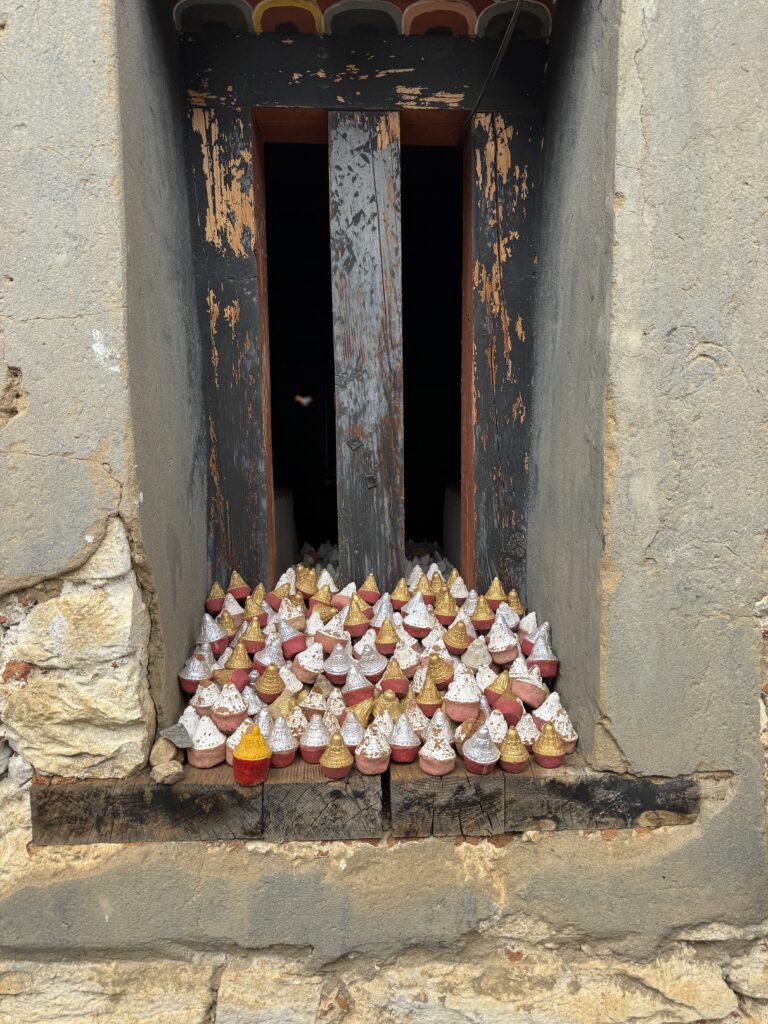
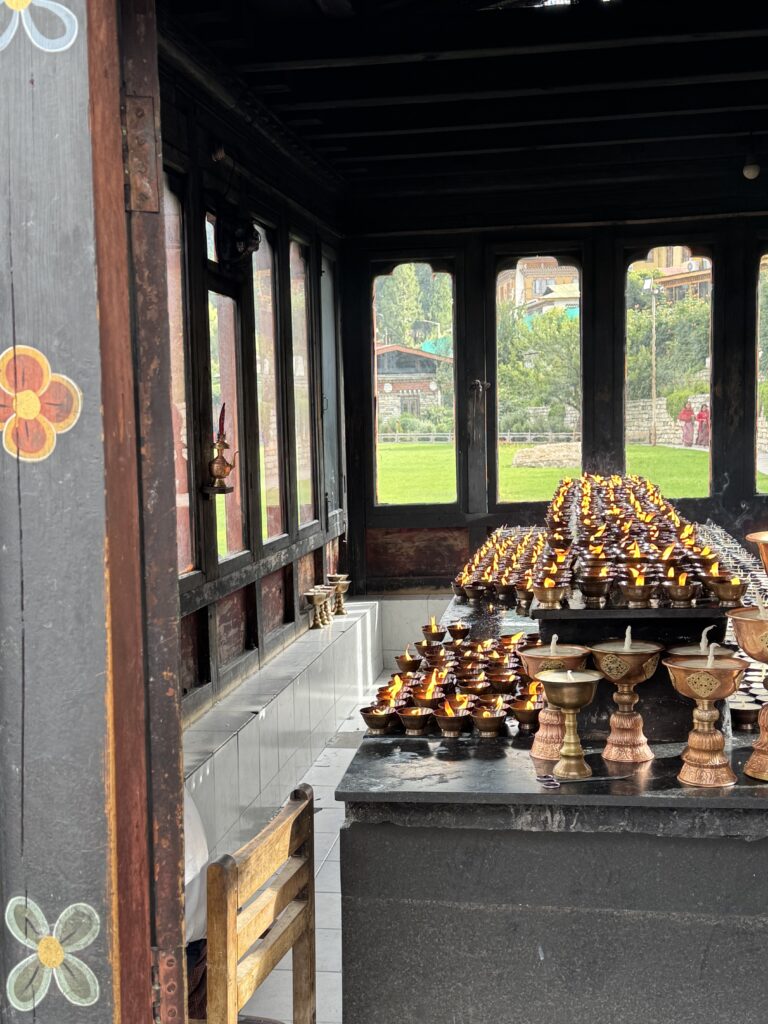
These are mini stupa. People put them where they need luck. This temple is for women who want to conceive a child, so naturally this hut is full of them. We also saw them at different spots along the highway.
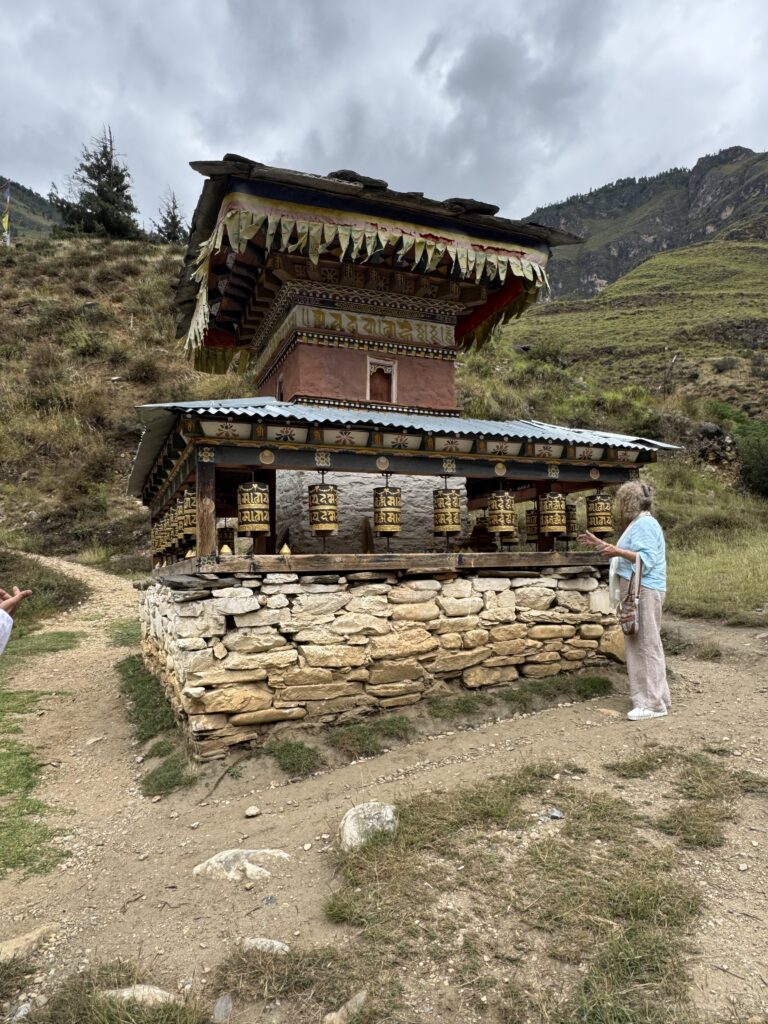
More prayer wheels.
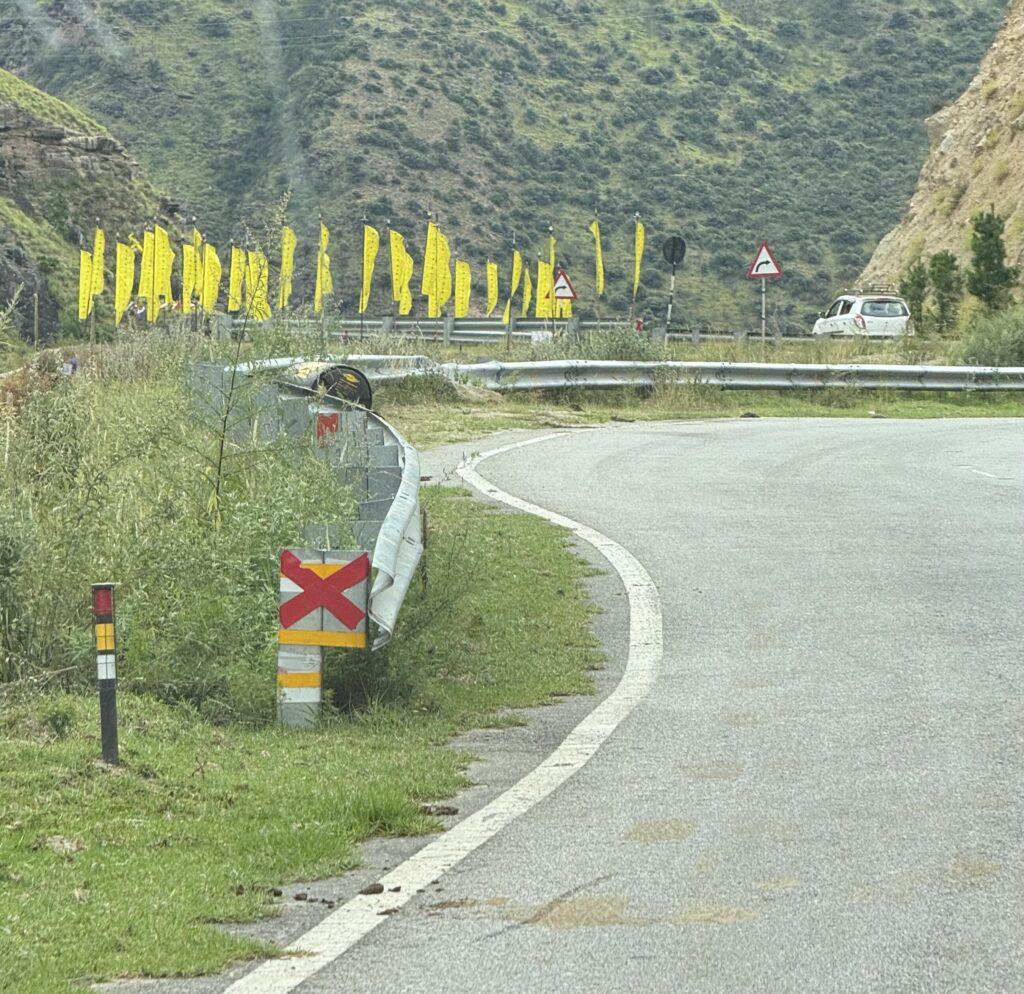
Prayer flags of all different colours are everywhere you look here. They’re believed to release goodness and purity to the whole world whenever the wind blows.
I like this.
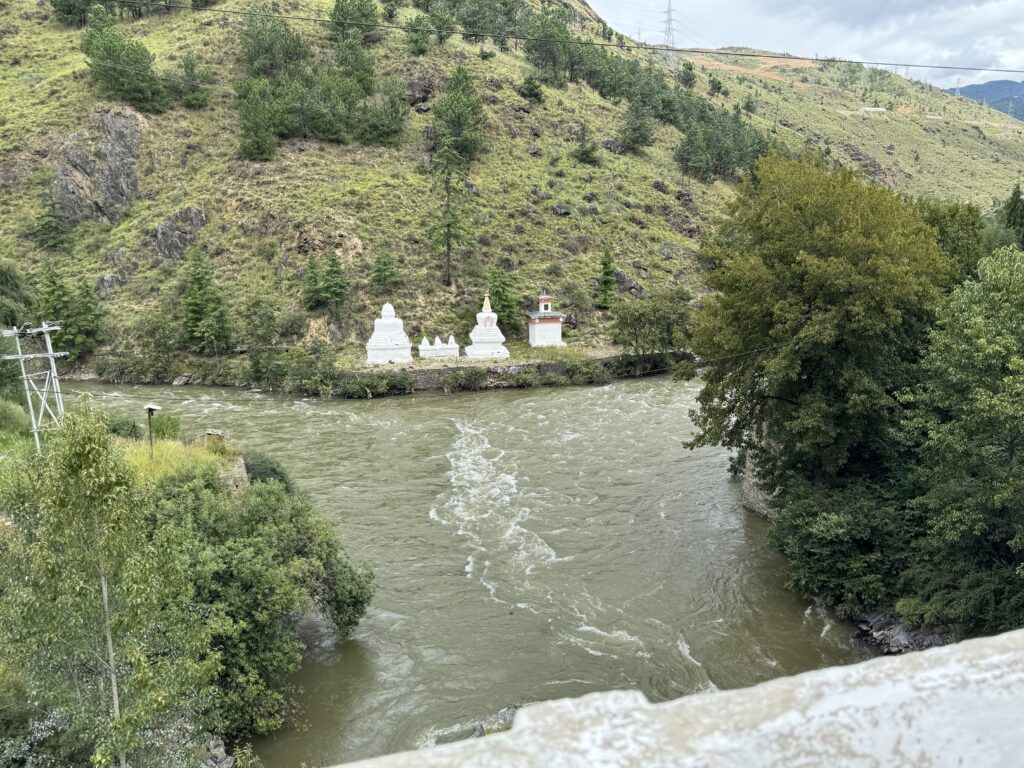
Meeting of the two rivers… this means evil activities in Buddhism. So they built stupas here to quash the negative forces.
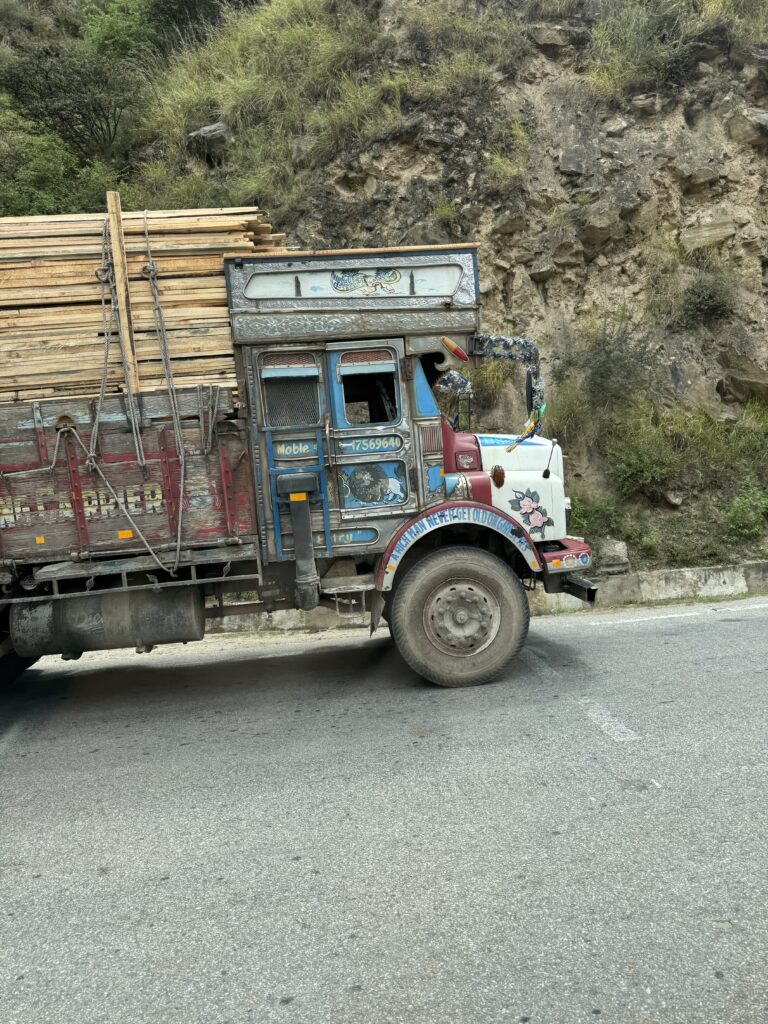
Look at the mud guard on the wheel.
“A rich man never get old on girls eyes.”
I think we can all find some meaning to take away from that…
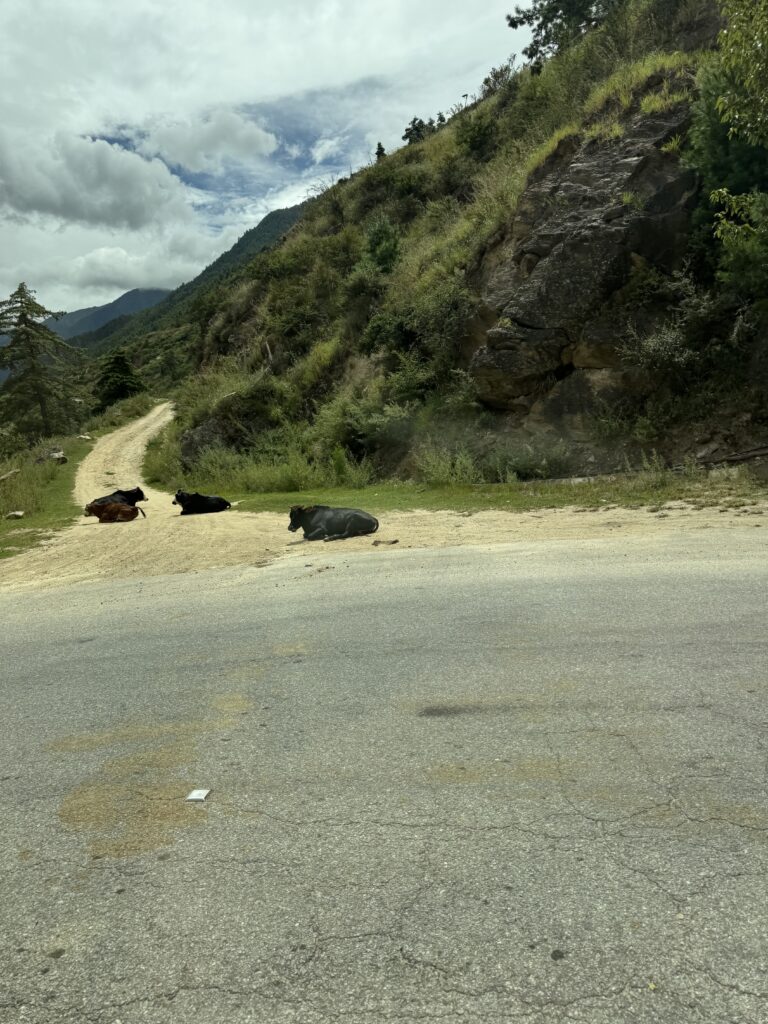
I thought it was the Hindus who let cows stray everywhere. It seems like the Buddhists do it too.
Oxen are free to roam now that farmers have tractors. Cows are still used for dairy products.
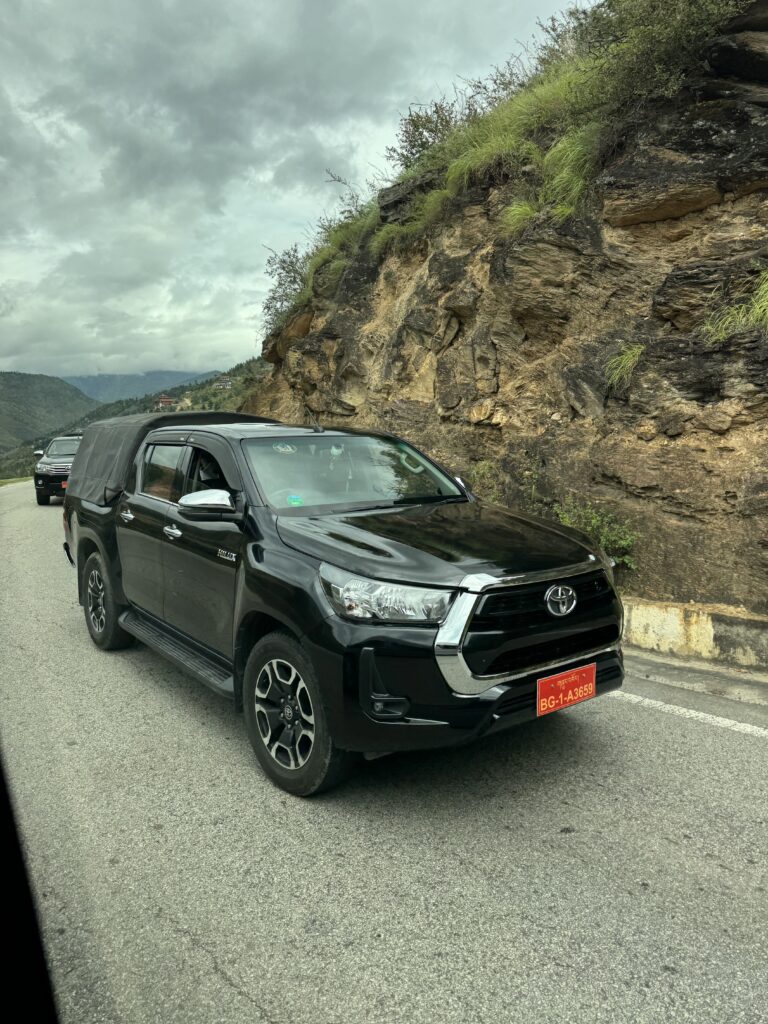
Suddenly there was a motorcade, all police flashing lights and big cars. It was a member of the royal family heading off somewhere.
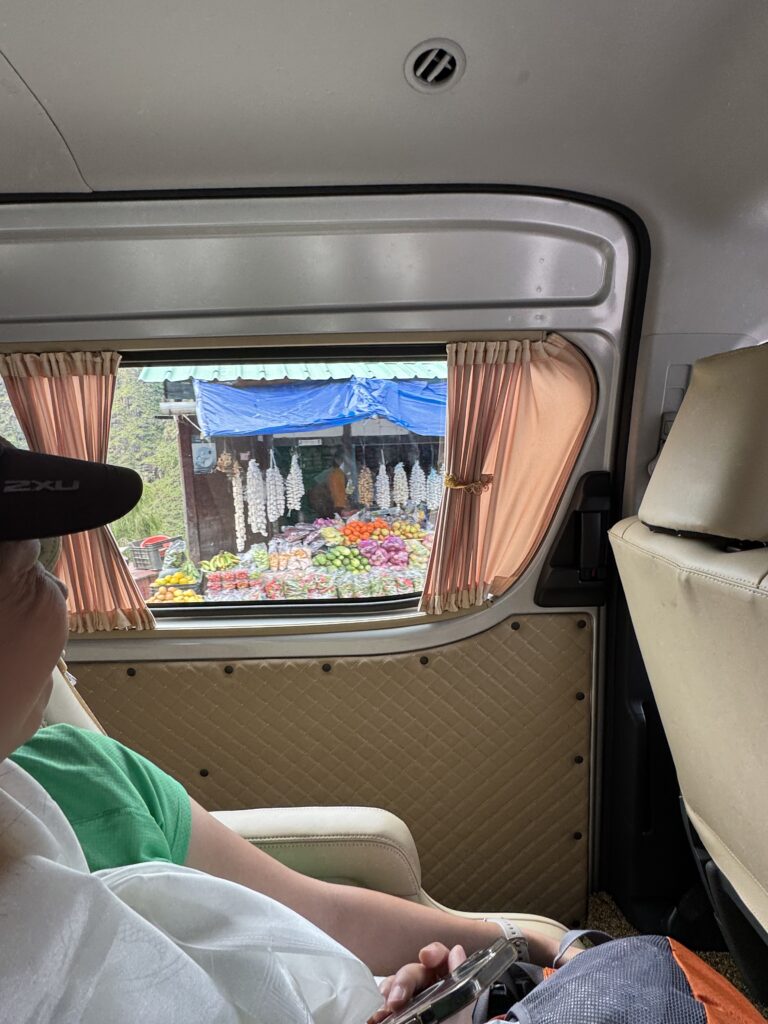
The government builds the small roadside stalls for the farmers to sell their produce.
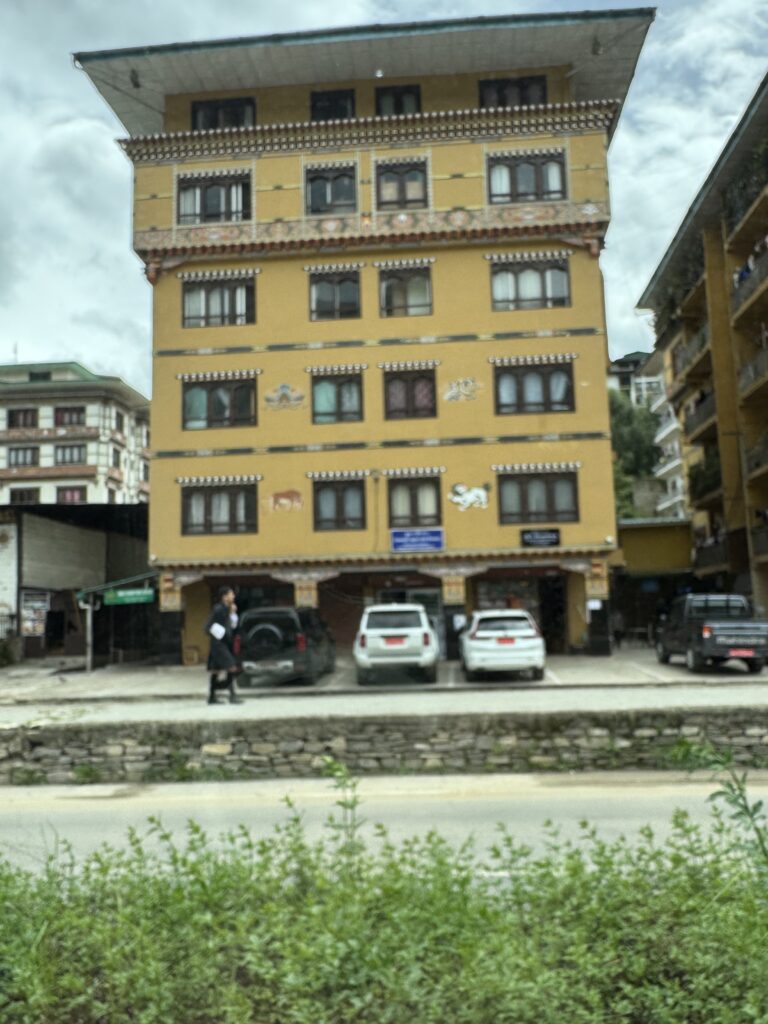
In Bhutan, you’re only allowed to build to 7 stories, due to earthquakes. Many buildings have decorations on them, like this one with tigers and other animals on it. Sorry it’s blurry… the van was moving.
3 stories for most houses. Ground floor is for animals; 1st floor is for people, while top floor is for ventilation and drying fruit and vegetables.
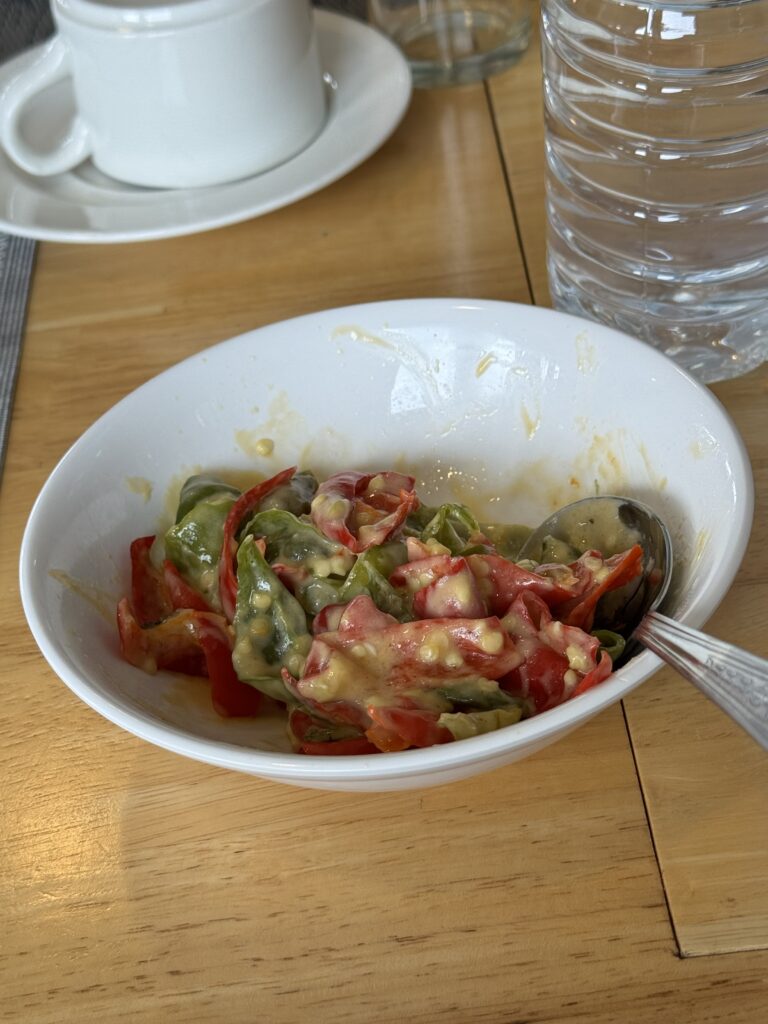
We were taken to lunch at a place that was next to an art and craft studio.
This was an unusual combo. Chillies and cheese. I’ve had 2 meals here at the time of writing and they’ve been predominantly vegetarian. There are no slaughterhouses in Bhutan. All meat is imported from India.
There are no zoos here, as Buddhism requires all animals to be free.
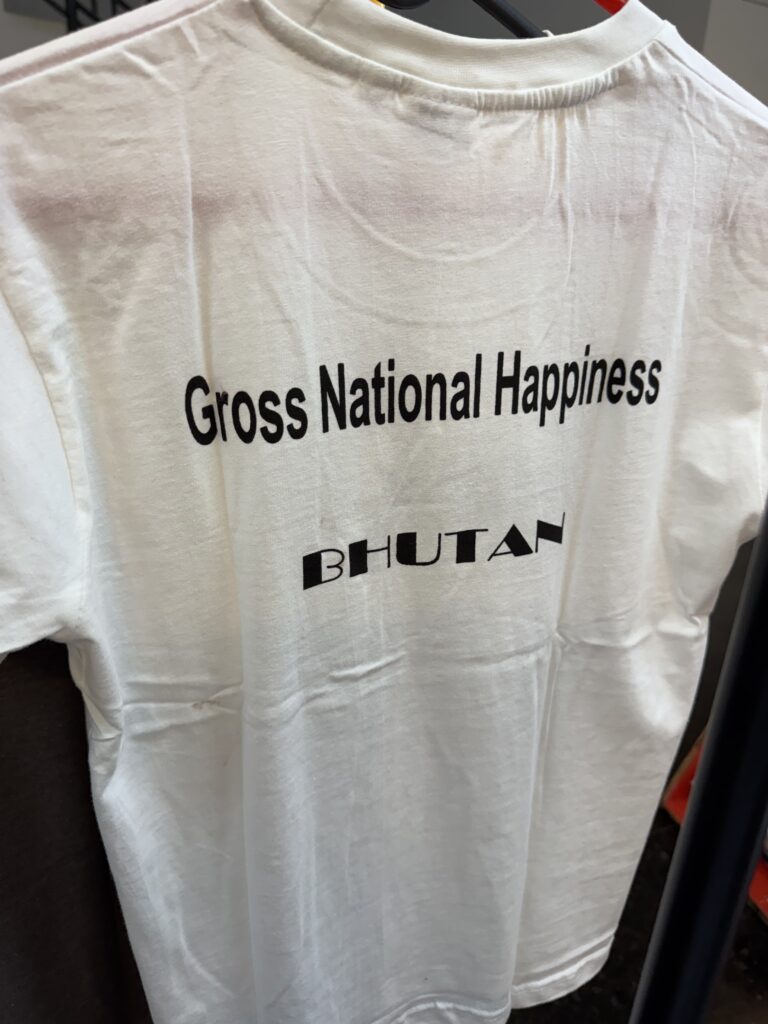
After lunch, we wandered around the art stalls. I took this photo because this was one of the reasons I came here.
I wanted to see a country that measured happiness instead of the Gross Domestic Product.
Marriages here are very simple. Friends and family gather, and the couple exchange wine, rings and white scarves. They are married. Interestingly, the man goes to live with the bride’s family, instead of the other way round.
By contrast, when someone dies, the family is expected to feed anyone who visits for 49 days. Every 7 days, a monk comes to pray for the departed, and you have to feed him too! On the 49th day, the biggest prayers and ceremonies are held, as it’s believed that this is the time that the dead person’s essence is released from the Buddhist version of purgatory.
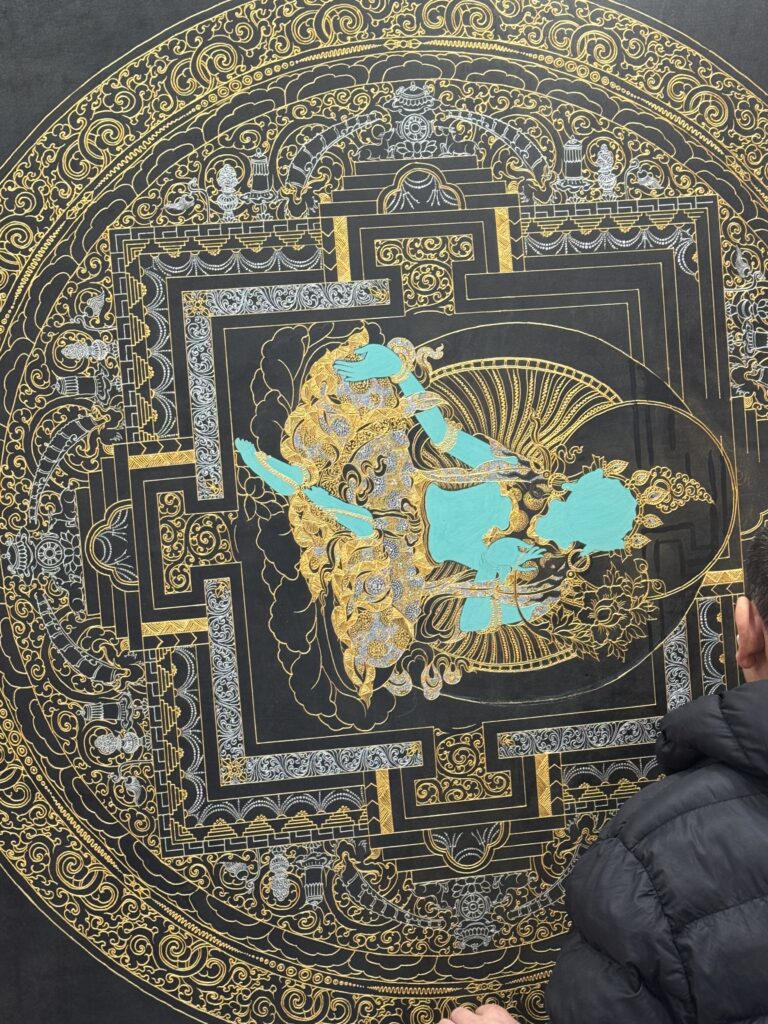
Look at how intricate this painting is. He was sitting there the whole time.e time we were there, patiently painting away.
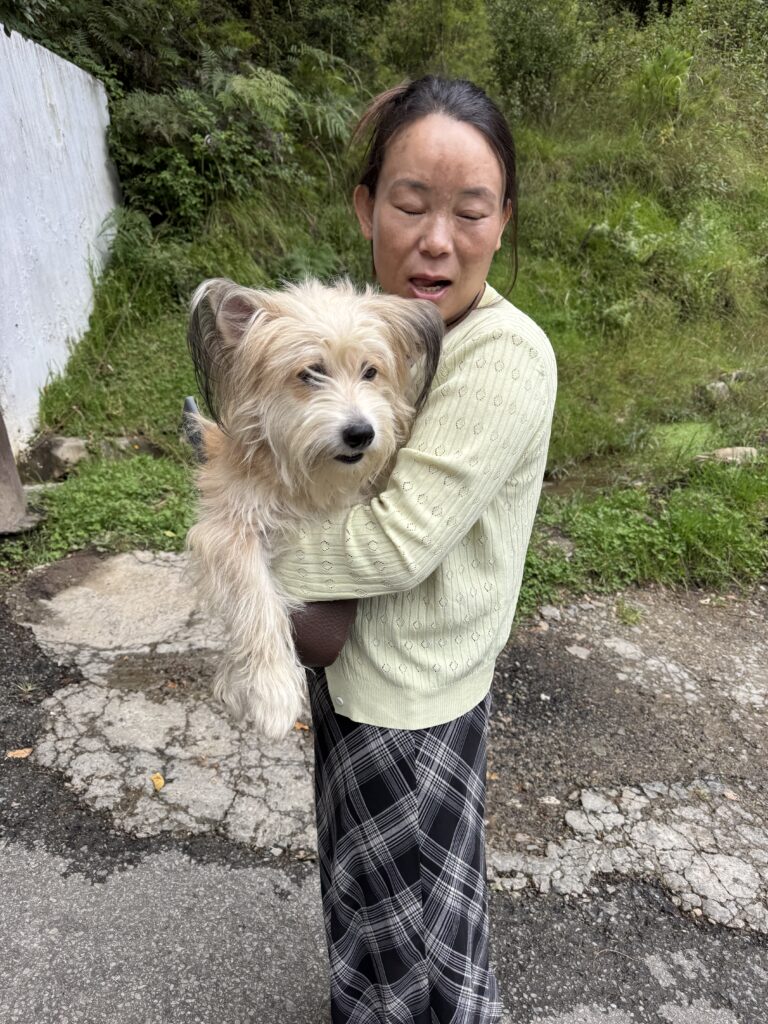
A very cute dog outside the animal rehabilitation centre. When people find injured or orphaned wildlife, they bring them here, where they’re treated and taught how to live back in the wild.
It was here that I saw one of the strangest-looking animals I’ve encountered.
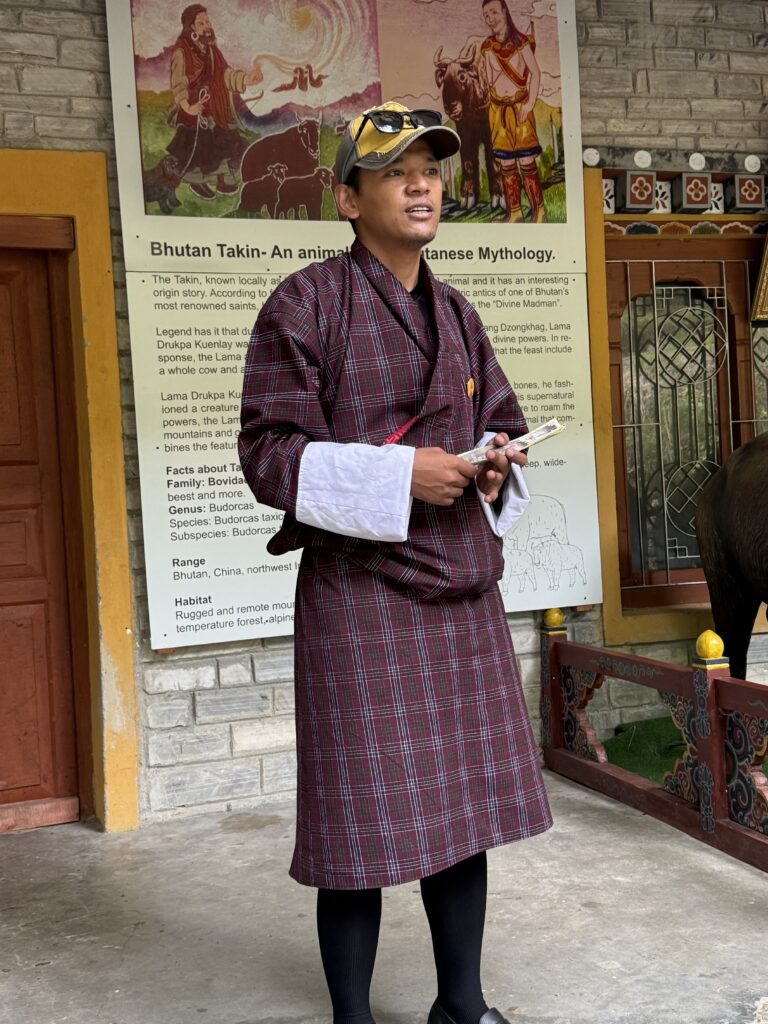
But before I get to that, why not talk fashion?
The men here wear a gho, which is compulsory for schools, government jobs and formal occasions. Sither joked that it has the world’s biggest pocket, as you can see at the front. The men carry everything here. Phones, wallets… when I started coughing, Sither fished out a cough drop for me. It’s the man bag you have when you’re not carrying a man bag.
Boys knee level ; girls ankle level.
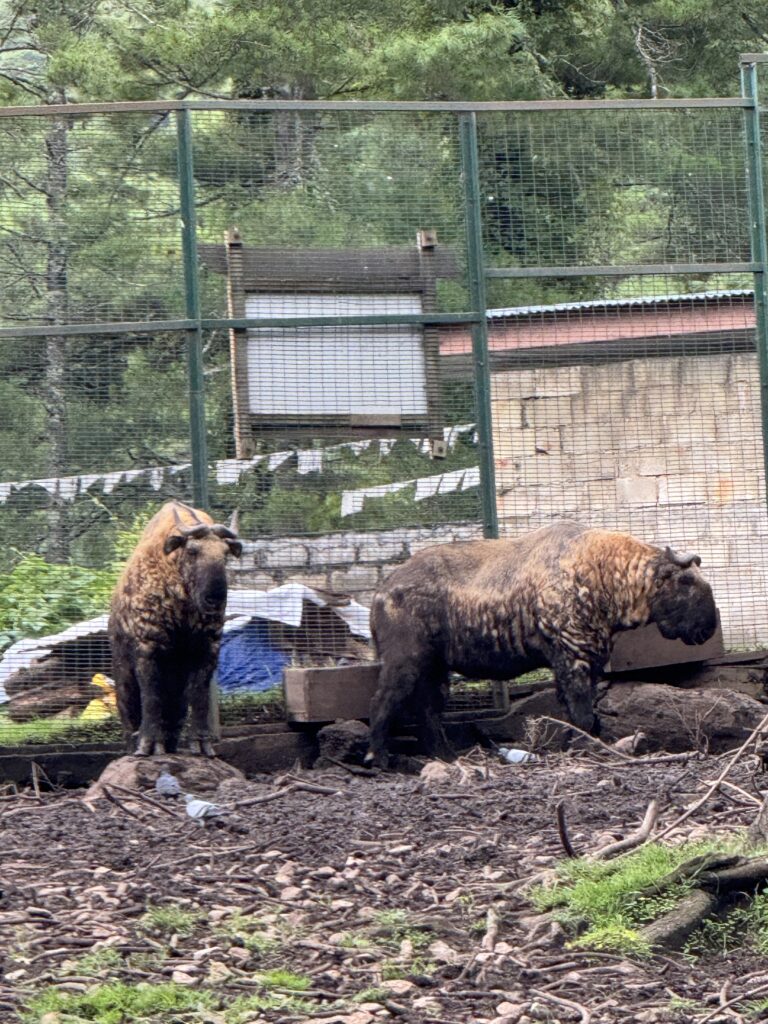
Here is the Takin. I’ve never heard of this animal before. The Takin, known locally as “Drong Gimtse”, is Bhutan’s national animal and it has a strange origin story. According to folklore, its creation is attributed to of one of Bhutan’s most renowned saints, Lama Drukpa Kuenlay (1455-1529), also known as the “Divine Madman”.
Legend has it that during a gathering, Lama Drukpa Kuenlay was urged by his devotees to perform a miracle to prove his divine powers. In response, the Lama asked for a feast to be served to him. He specifically asked that the feast include a whole cow and a whole goat.
Lama Drukpa Kuenlay devoured both animals, leaving only their bones. With the bones, he fashioned a creature by attaching the goat’s skull to the cow’s skeletal remains. With his supernatural powers, the Lama brought the assembled bones to life and commanded the creature to roam the mountains and graze. The resulting creature was the Takin, a truly weird looking animal that combines the features of both a goat and cow.
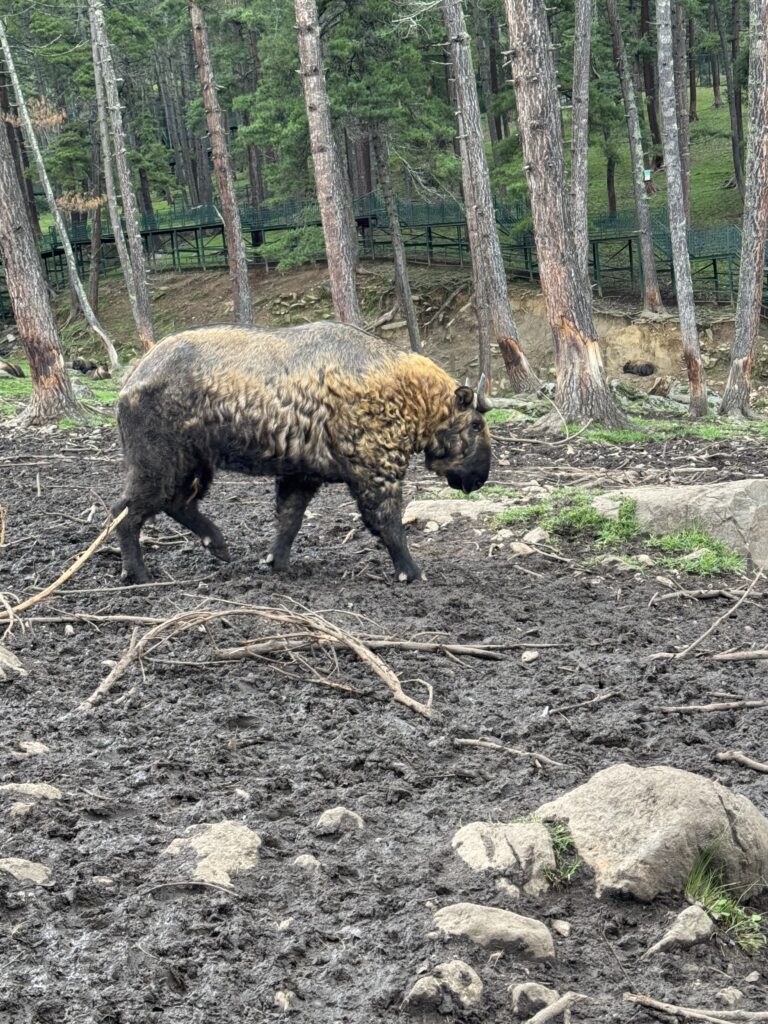
It’s one of the ugliest animals I’ve ever seen.
Itchy belly.
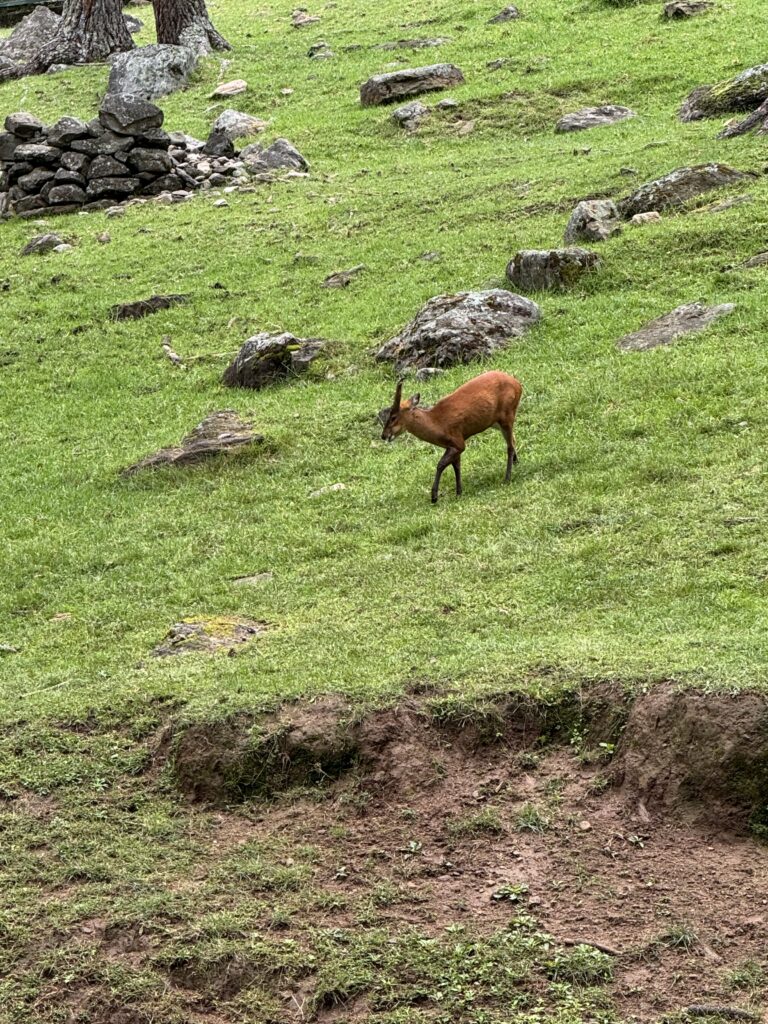
Barking deer, so called because of the noise they make at sunrise, or when they’re scared.
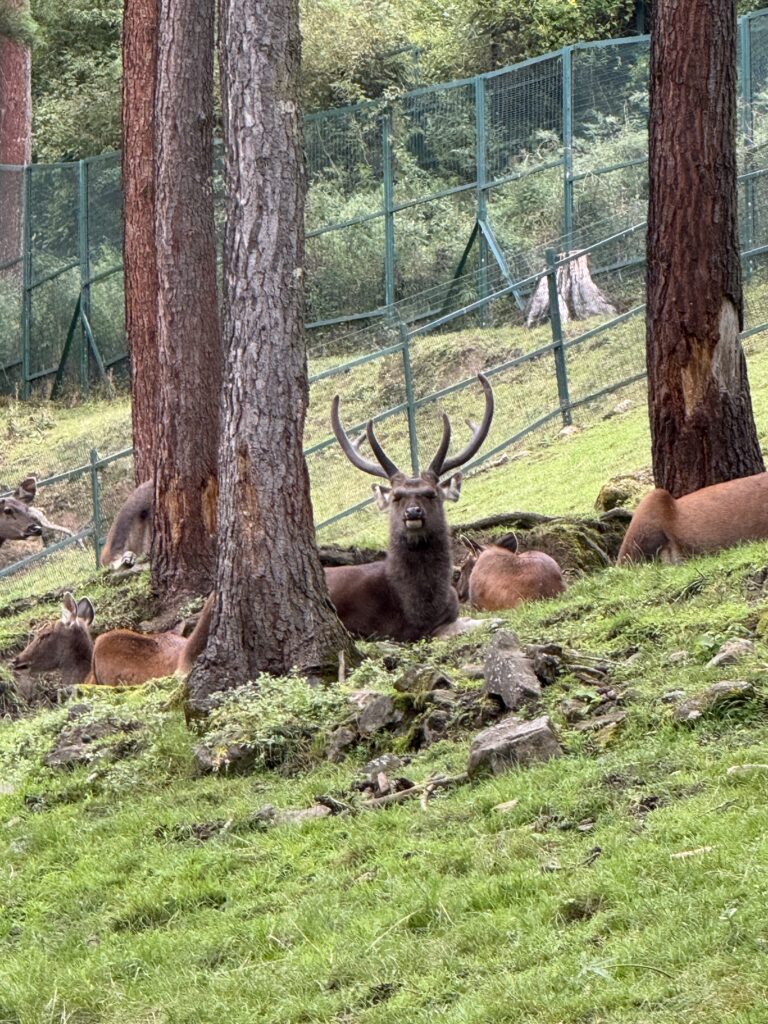
A majestic Samba deer.
The yaks were so far away that any photo I took just looked like a blur. Today, I bought myself a baby yak shawl. The wool is SO SOFT. Sorry for yelling, but it’s incredible.
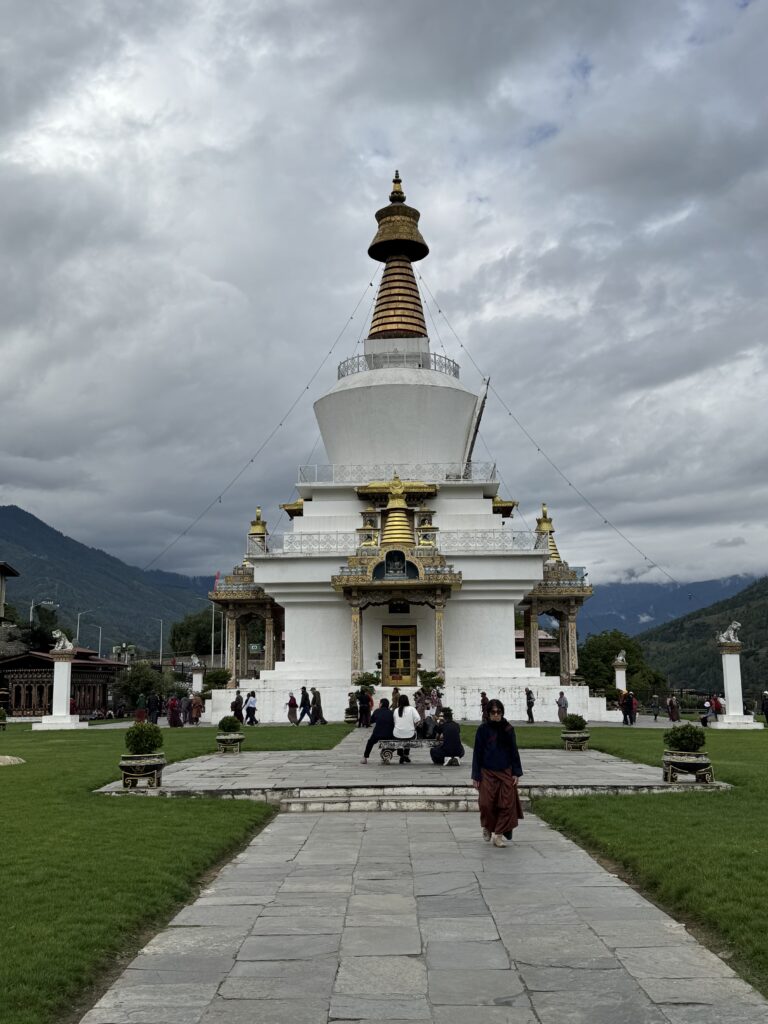
This stupa was built by the mother of the third king. He died in his early 40’s, and she wanted him to be remembered. It’s also meant to promote world peace and harmony… but really, it’s a grieving mother’s project. She’s still alive at 92. She’s the only person left in the royal family who has seen all 5 kings.
It’s a popular place for the locals. There’s a constant stream of people doing the ritual 3 X circumnavigation around the stupa, while old people gather here during the days while their families are away at work and school.
There were no photos allowed inside the stupa. There were 3 levels representing the 3 levels of consciousness: Desire, Form and Formless. There were lots of stairs. We’re really getting our training in for the Tigers Nest monastery in a few days…
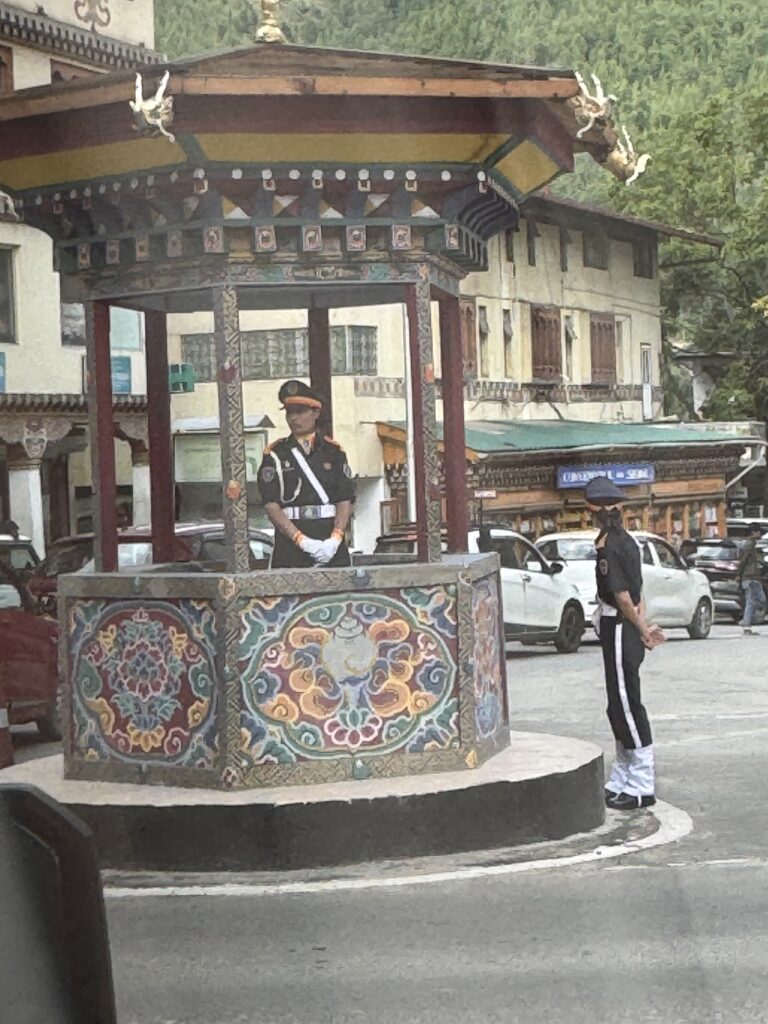
No traffic lights here. A while ago, they tried installing them but nobody liked them, so they went back to the traffic wardens.
Strangely, there are hardly any motorcycles here. Such a difference from the rest of Asia.
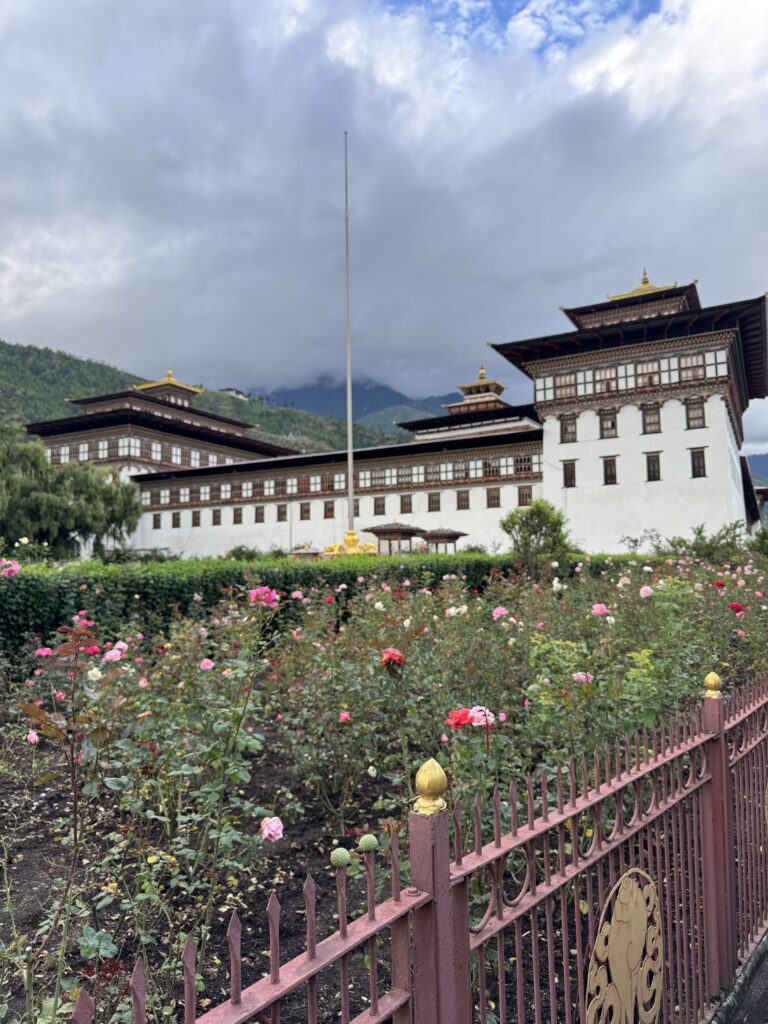
This is Tashichho Dzong. This fort and monastery was rebuilt in the 19th century after it burned down. It was built for defence, but nowadays it houses. Couple of government departments and around 250 monks.
The king also has offices here.
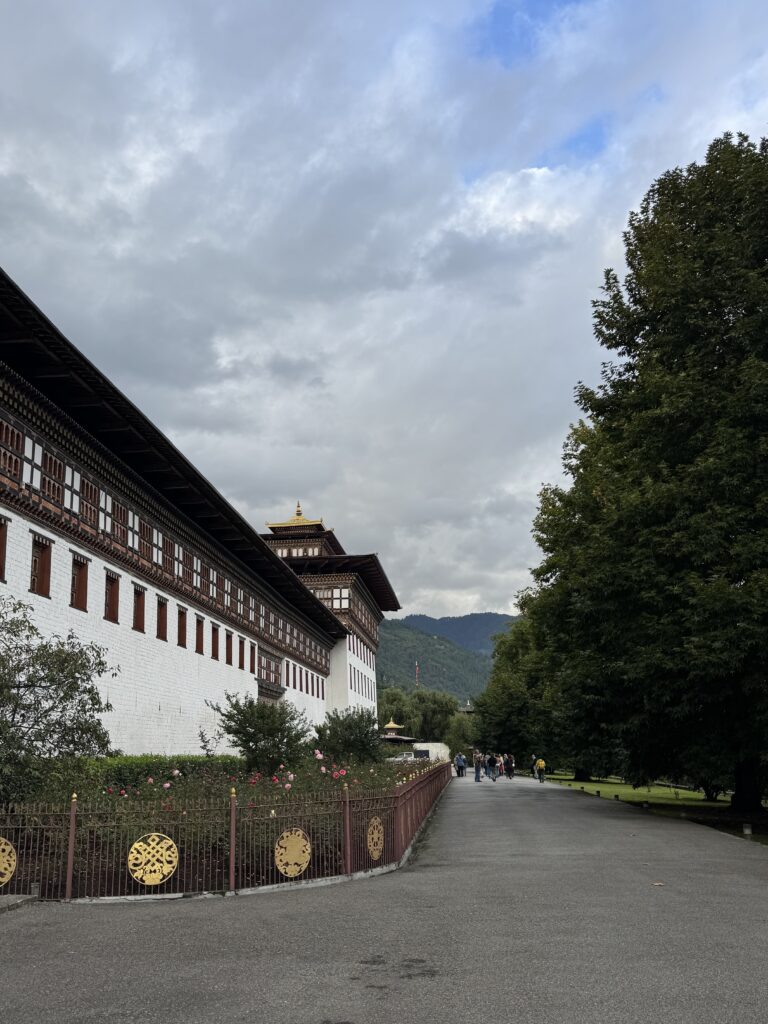
This is the summer location for government. In winter, it gets too cold so they move to another location down in the valleys.
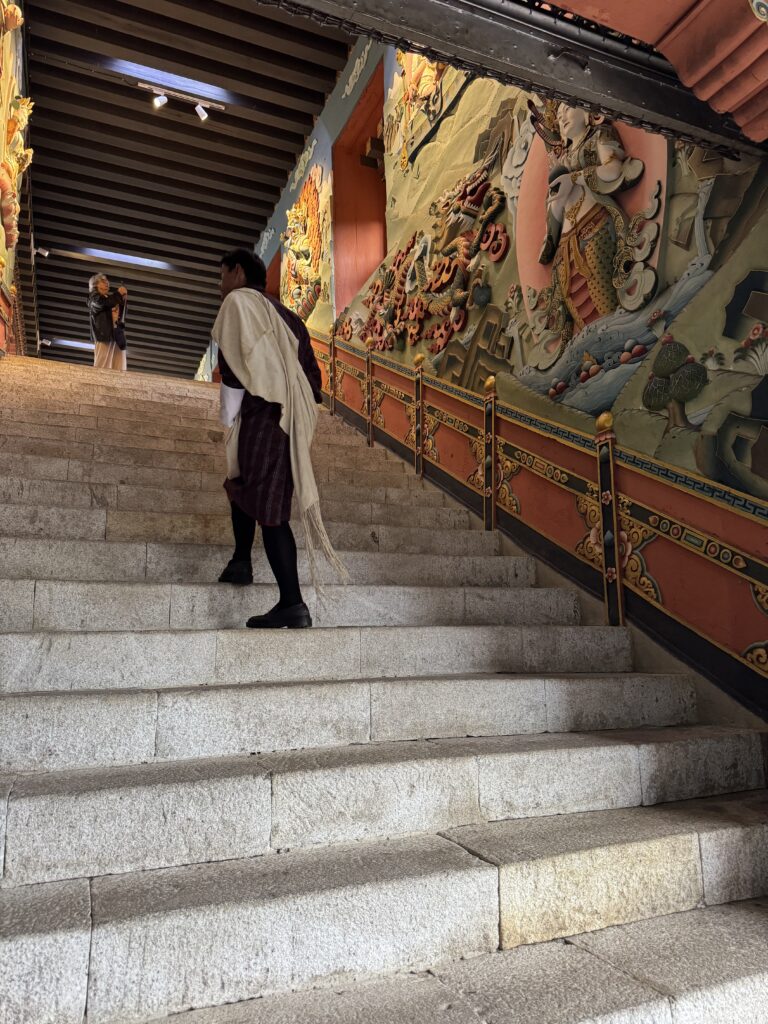
It’s quite the entrance.
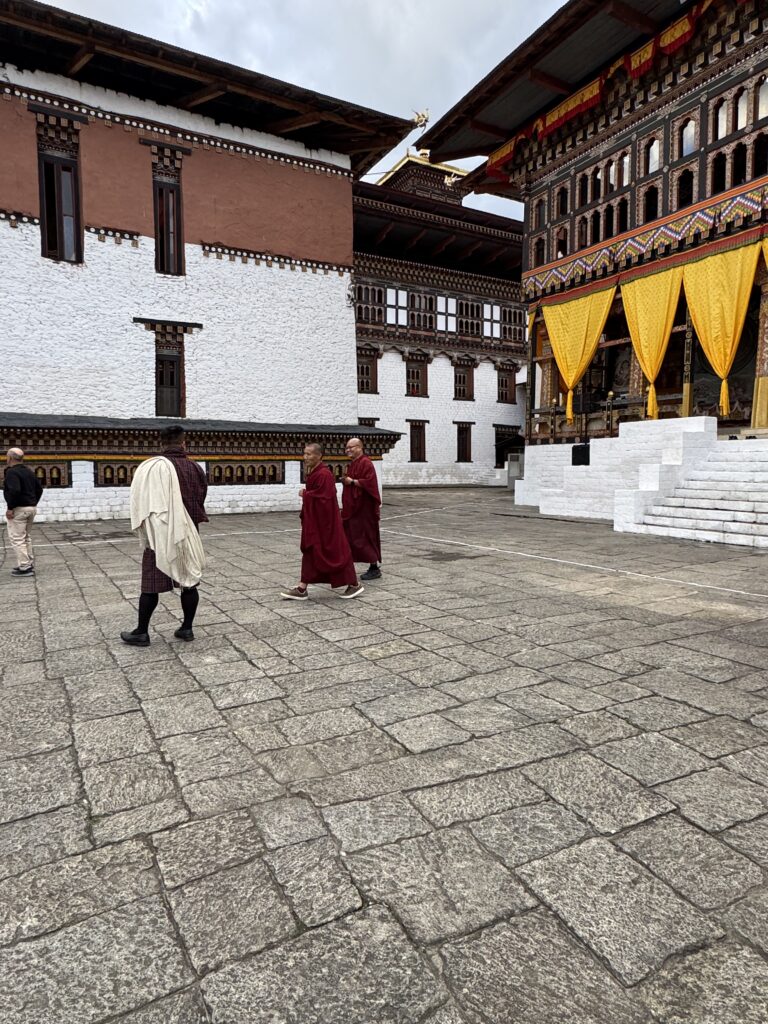
Tourists are only allowed in this square, and the temple.
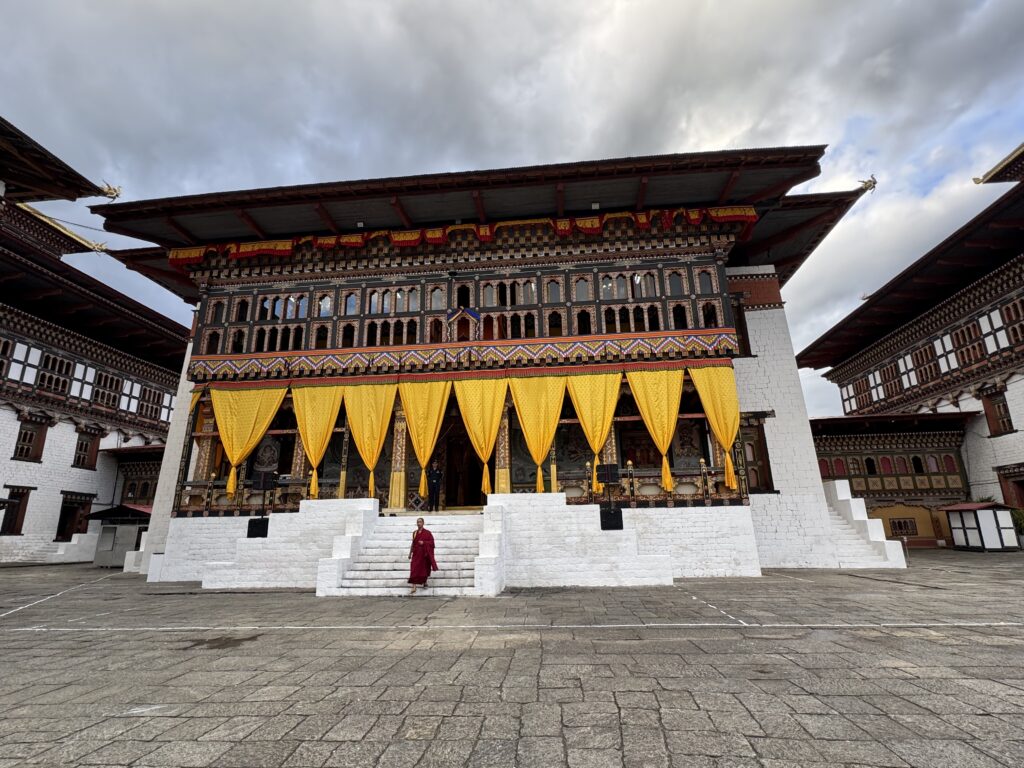
The temple.
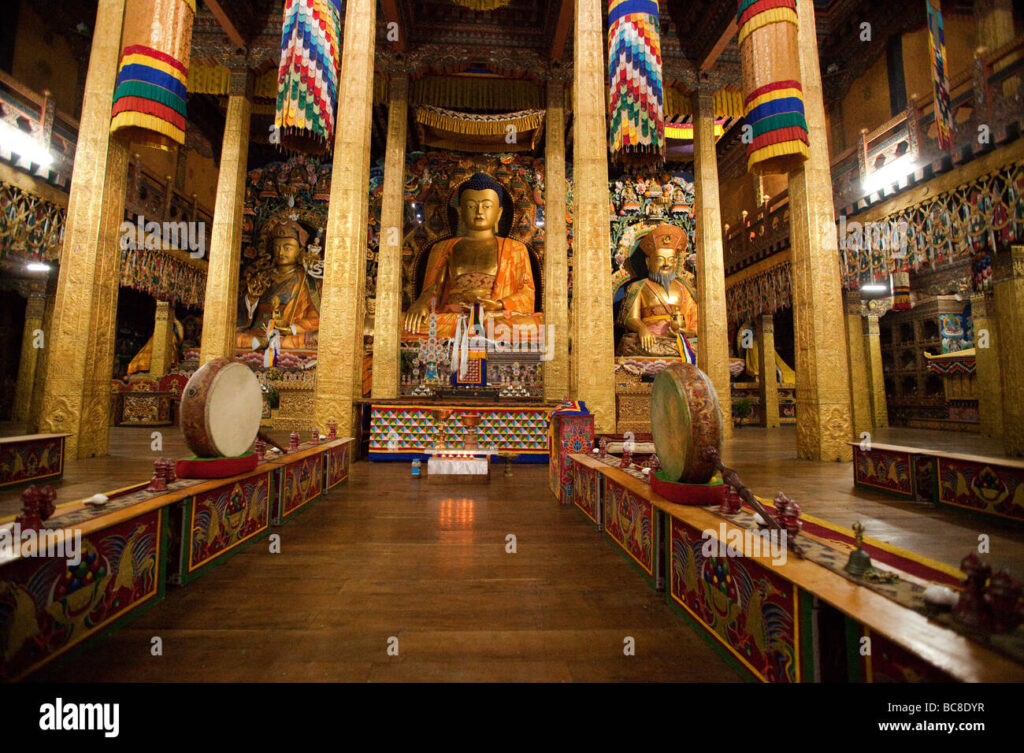
There were no photos allowed, so I had to do a google search to find this to show you. Along with the Christ the Redeemer statue in Rio, this temple was genuinely impressive.
The statues were clothed, with colourful neckbands made of the most exquisite embroidery. I’m sure there are women walking around here cross eyed after sewing such tiny stitches.
The walls were lined with 1,000 small statues of Buddha, clothes in bright yellow. These were made at the command of the third king. He also wrote a 29 volume set of Buddha’s teachings, which is stored here at the fort.
The more I hear about him, I wonder how good a king he was. He sounds as if he was obsessed by religion. He probably should have been a monk instead.
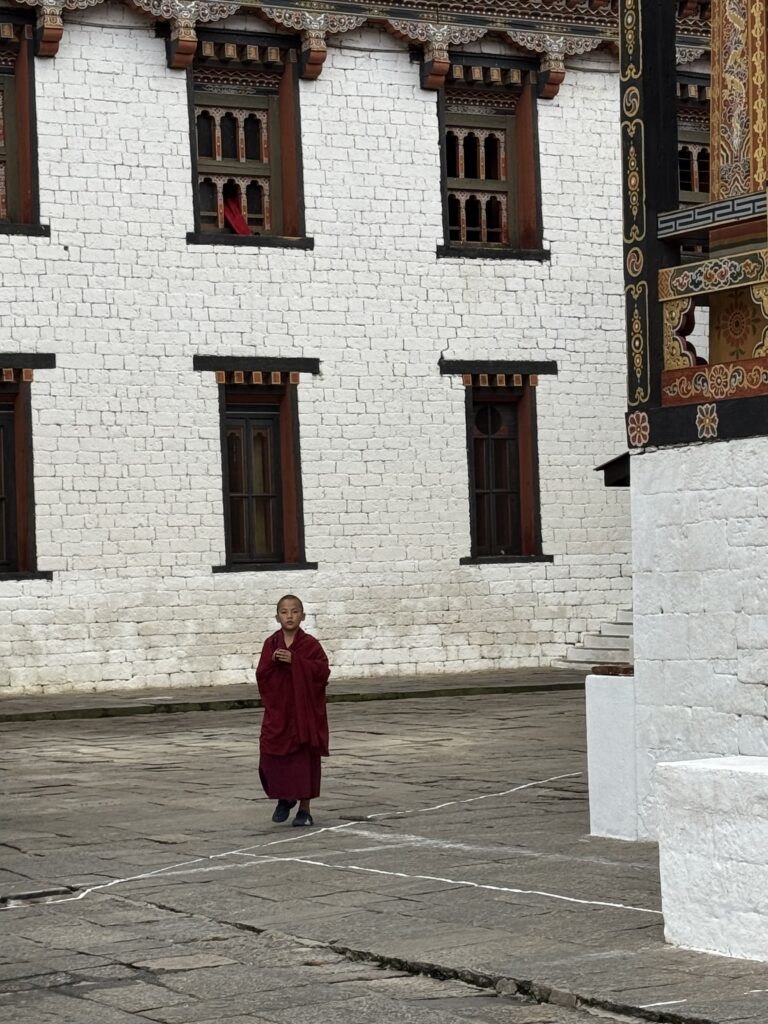
Speaking of monks, some families give over their young sons to be trained as monks. Boys as young as this one don’t have a choice. They are educated in monkey, for want of a better word, for years, until they are finally given the choice to make their final vows, or to go and live a normal life.
Older initiates are there of their own free will.
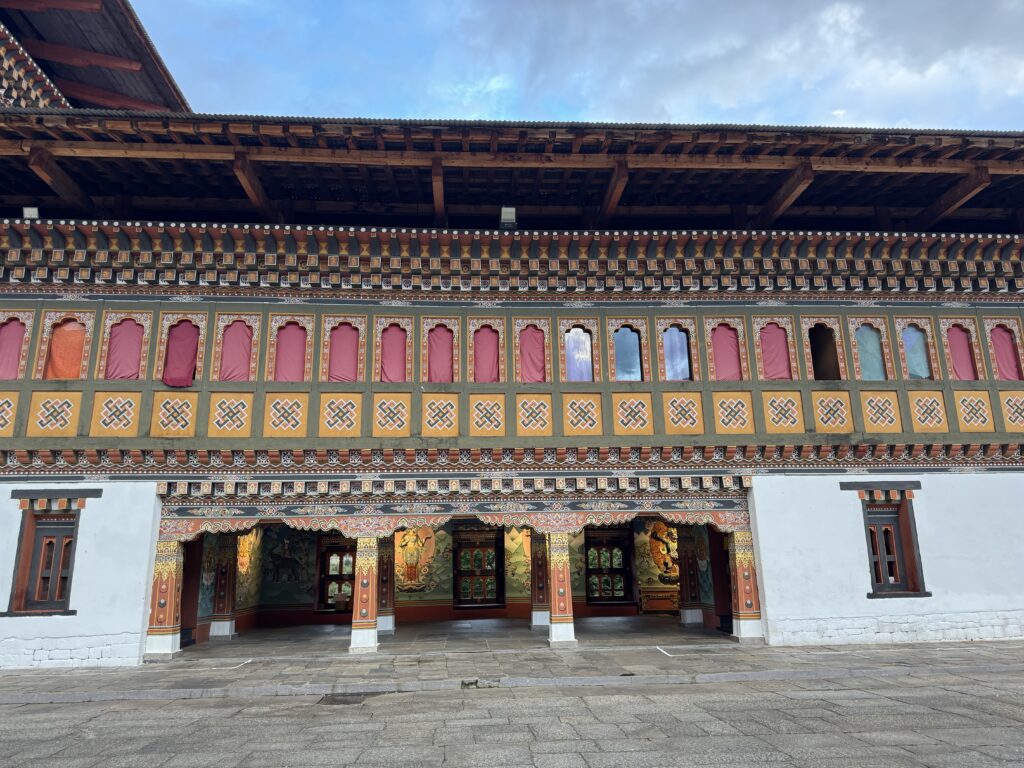
Zoom in on the decorations. The detail is amazing.
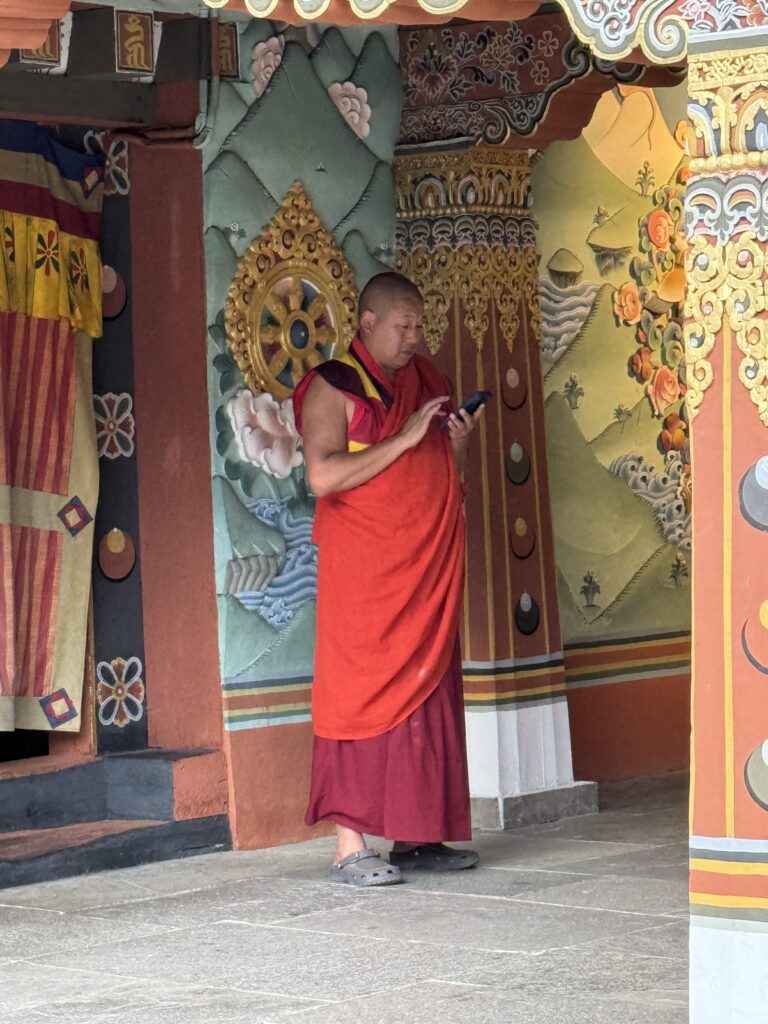
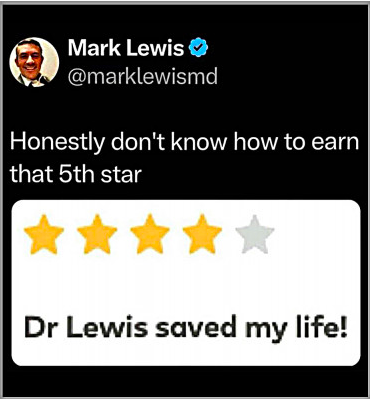
Dad joke of the day:
Leave a Reply