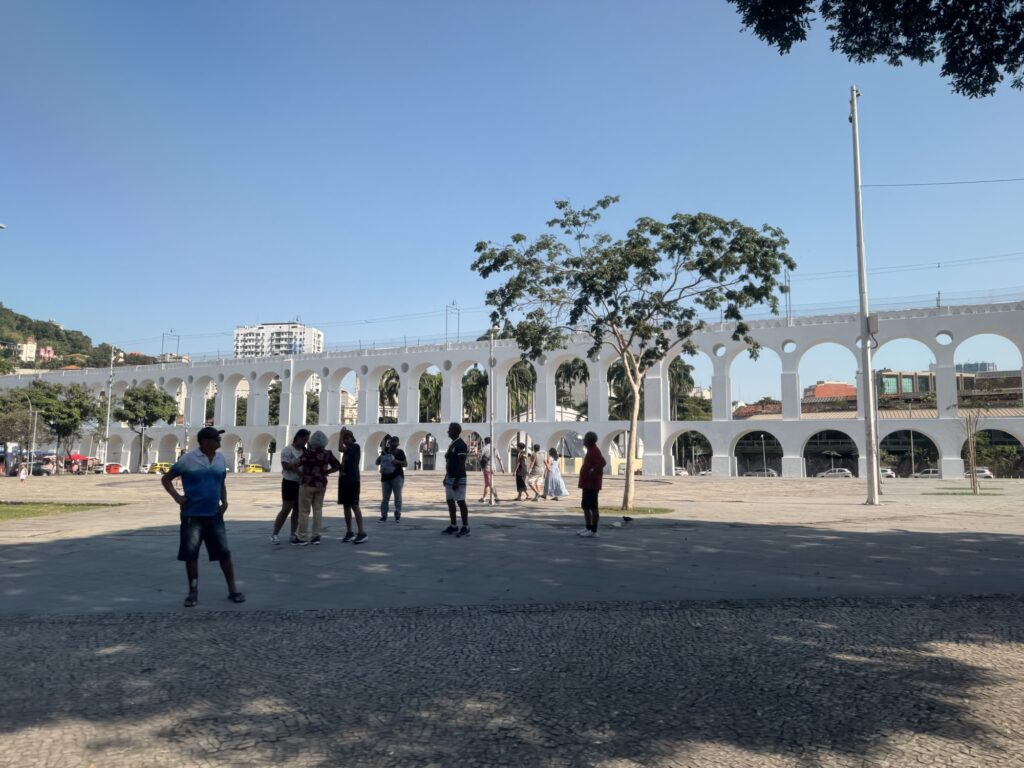
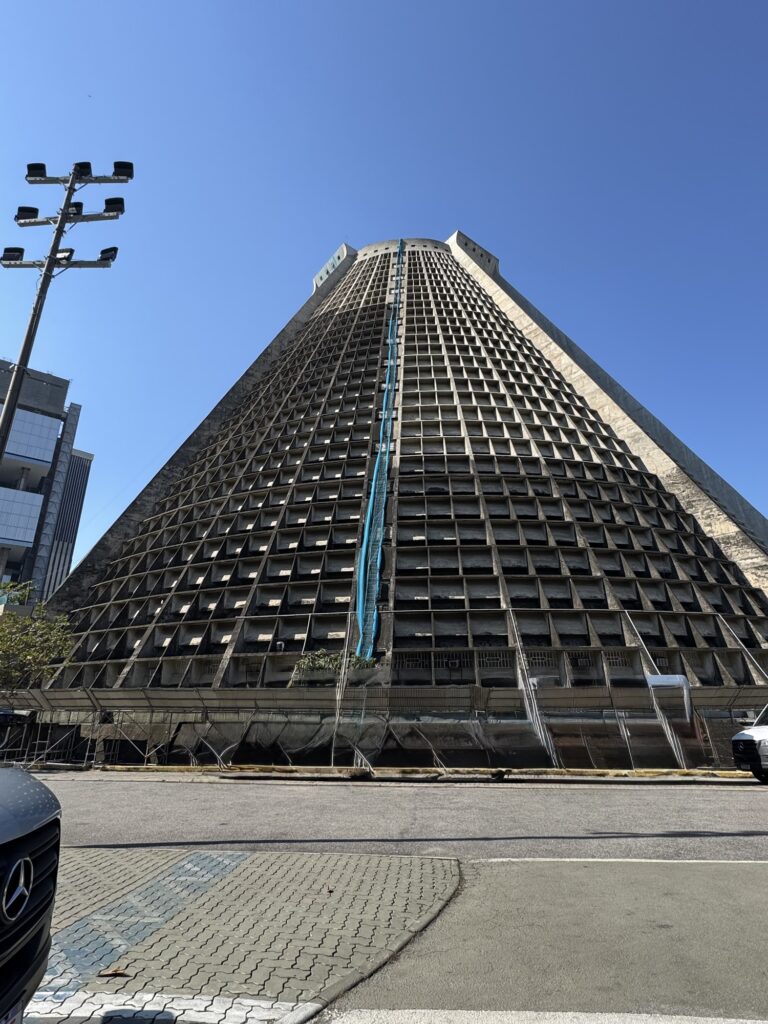
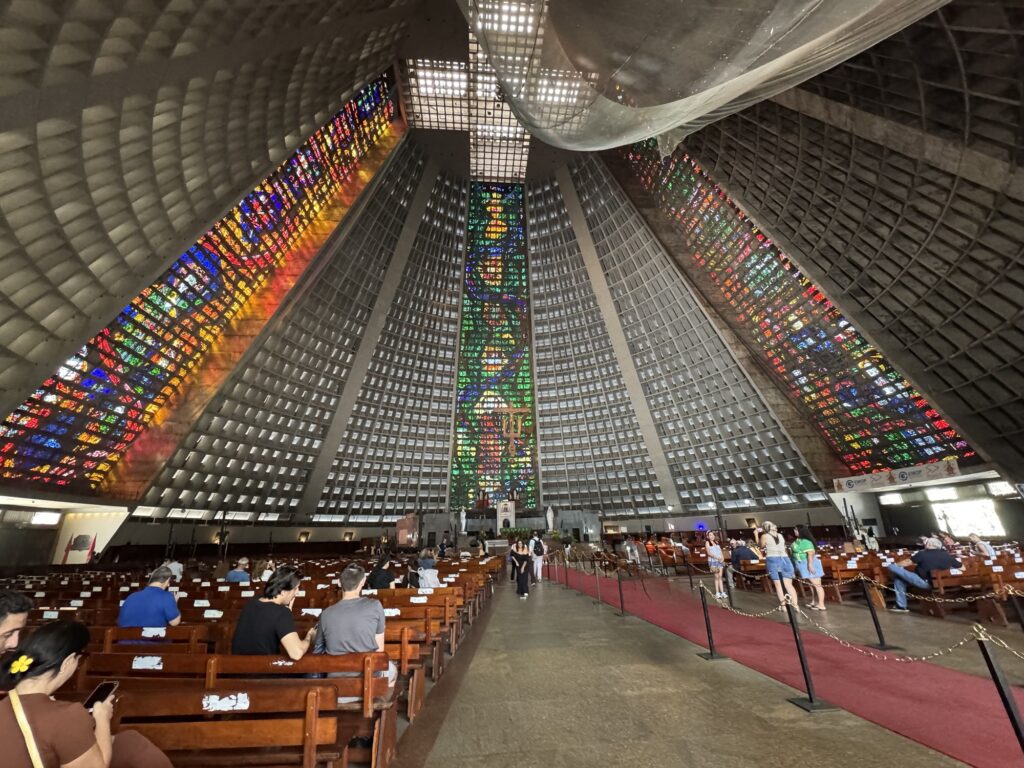
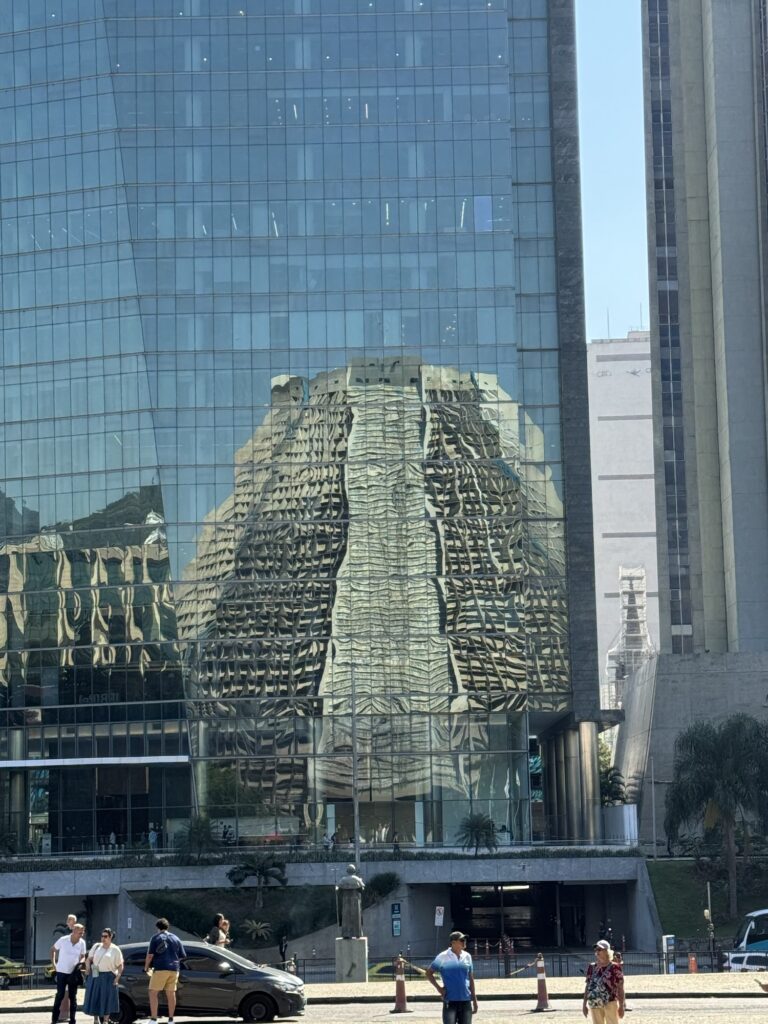
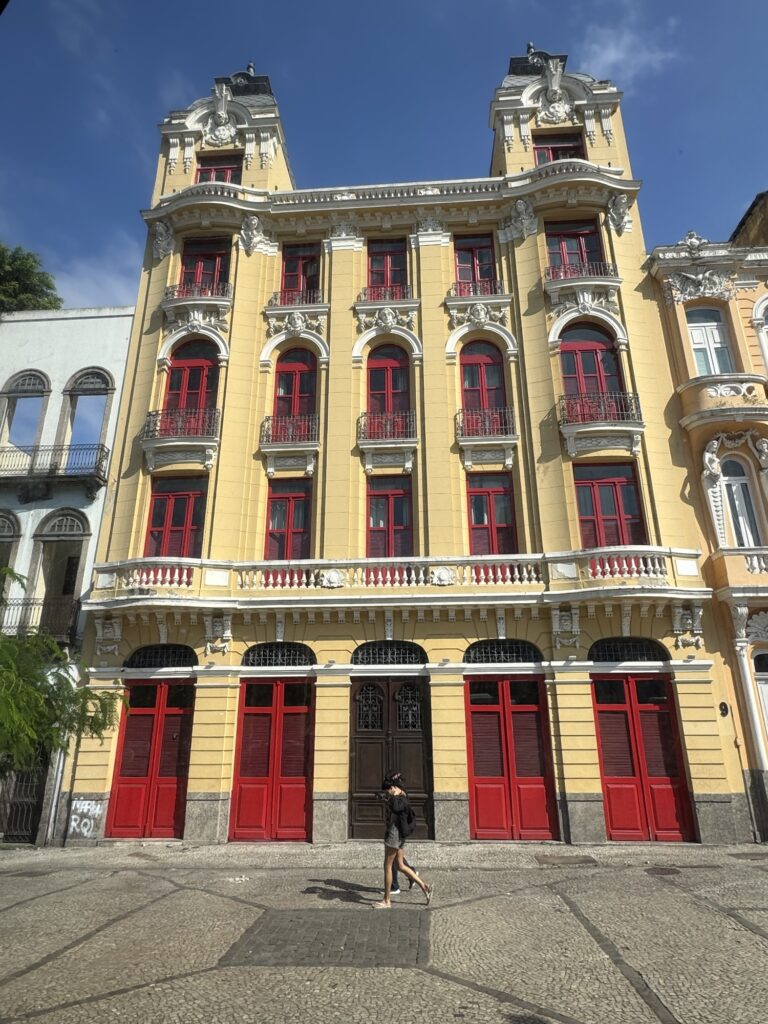
This cathedral, built in 1860, is a very handy landmark, due to its central location and distinctive colour. Next door is a Franciscan monastery that’s still operating.
It’s austere inside, because of the next door neighbours. Apparently, Franciscans aren’t very flashy people.
1895- earthquake. It pretty much levelled the town. This is where the more Art Nouveau buildings were put in.
Adam and Eve after the expulsion from paradise.
Prometheus. I bet he regrets giving fire to humanity. This looks painful.
This has been banned on the bridges in Paris, but it still goes on here.
Dragon bridge
Built for Sisi’s husband, for the 40th year of his rule. He ended up ruling for 68 years.
The little figures under the lamps are gryphons.
There are markets all over the place here!
800 years ago the first church was built here. This current cathedral is only 300 years old. Unlike the pink church, this one is very baroque, so we were told.
In 1990 the first Slavic pope John Paul visited, and they installed these fancy doors for him.
Roman tombstones 1800 years old are included around the walls.
100 years ago, the river was regulated. It used to be shallower and wider. It used to flood. No one swims here, because the temperature of the water is the same as in the caves. 10C.
New Square… only a few hundred years old.
This wall used to shield a German monastery, built in the 13 th century.
After WW2, they had to leave. Nowadays, it’s a secondary school for design students.
After the walking tour, we had a couple of hours to spend before we headed off to the countryside to the caves.
We had to look at the baroque church.
Yes, it was very… decorative. There was barely a square inch that didn’t have something painted, gilded or sculpted on it.
He looks bored.
On the way to lunch we spotted these two guys from the seminary.
This toddler was DONE.
So was this bear. Too many pancakes, I suppose.
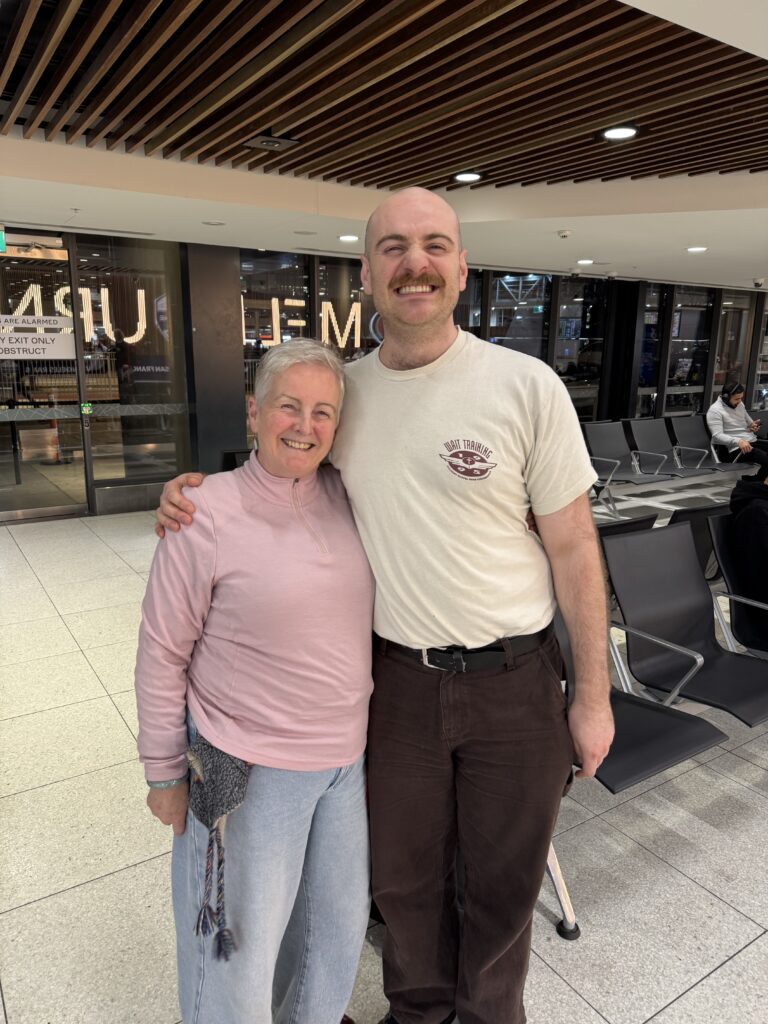
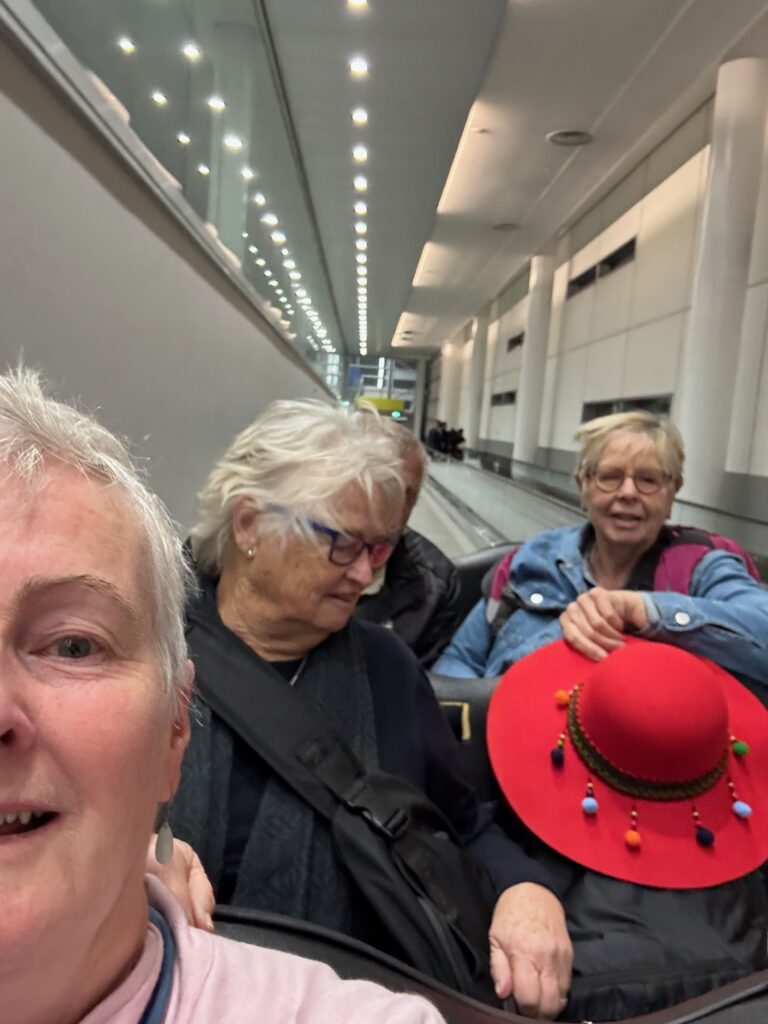
Before we knew it, we were sitting in a railway car, about to head into the Postojna Caves. ( My face is red because I had 4 layers of wool. The caves are only 10C.)
There was a bit of excitement before the tour, because Mary ( in the photo with us) caught a team of pickpockets in action. She was walking behind a woman wearing a backpack, and noticed that the zips on the backpack were gently being unzipped by a young “couple” walking close behind her. The minute she called out, the couple peeled off and disappeared into the crowd.
Wow. We all hear about it, but of course, we all get complacent when nothing happens. We all took notice when we heard about it, that’s for sure!
43 million people have come through here since the caves were opened for tourism back in the late 1800’s.
These caves are worth visiting. There’s a 10 minute train ride to get down to where all the fun is, then there’s a 2km walk through the caves.
This one looks like a lion.
People for scale.
Russian war bridge. It was built by Russian POWs in WW1.
What a dark, cold and miserable job it must have been.
Stalagmites and stalactites grow at the rate of 1 cm every 100 years. The one on the right is 50,000 years old.
They don’t know how old the one on the left is. They’re not sure how deep it goes, and they’d have to cut a hole in the centre to measure it. No one is prepared to do that. Safe to say, it’s VERY old.
Someone asked what happens to the caves when there are earthquakes. The short answer is: nothing.
The shape of the caves means that nothing disturbs them. People were in the cave the last time there was a huge earthquake here, and they felt nothing.
On the train on the way back out, I saw this. A nice touch of whimsy!
Blogless Sandy caught this view of the Slovenian alps on the bus ride back.
Jake said that there hasn’t been snowfalls on the alps in May for years.
Today we woke up to a bright and sunny day, much to Jake’s chagrin. Today we were taken to a pretty little village built on top of waterfalls.
I wonder how long you would have to live here before you stopped noticing the sound?
I sent this video to Morgan. Remember how he designed our Icelandic itinerary so we would see as many waterfalls as possible?
He replied, “Where is this place? I want to move there!”
This is taken from the bridge above the town.
It was pretty, but I couldn’t help wondering how often the village gets flooded.
Then we were on our way to Slovenia.
Slovenia is the most economically advanced country in the Balkans. They were the first to join the EU. The war in the 90’s only lasted 10 days here, as opposed to 5 years in Croatia and Bosnia, so they had a bit of a head start.
We have 2 nights in Ljubljana.
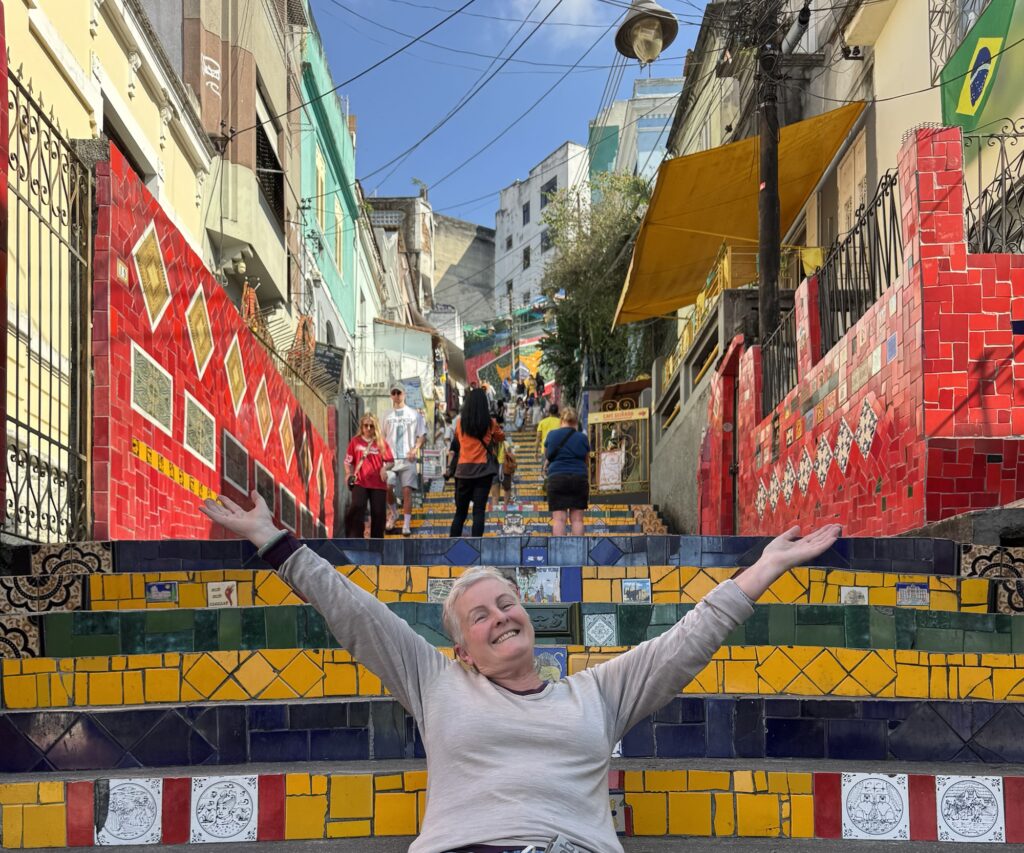
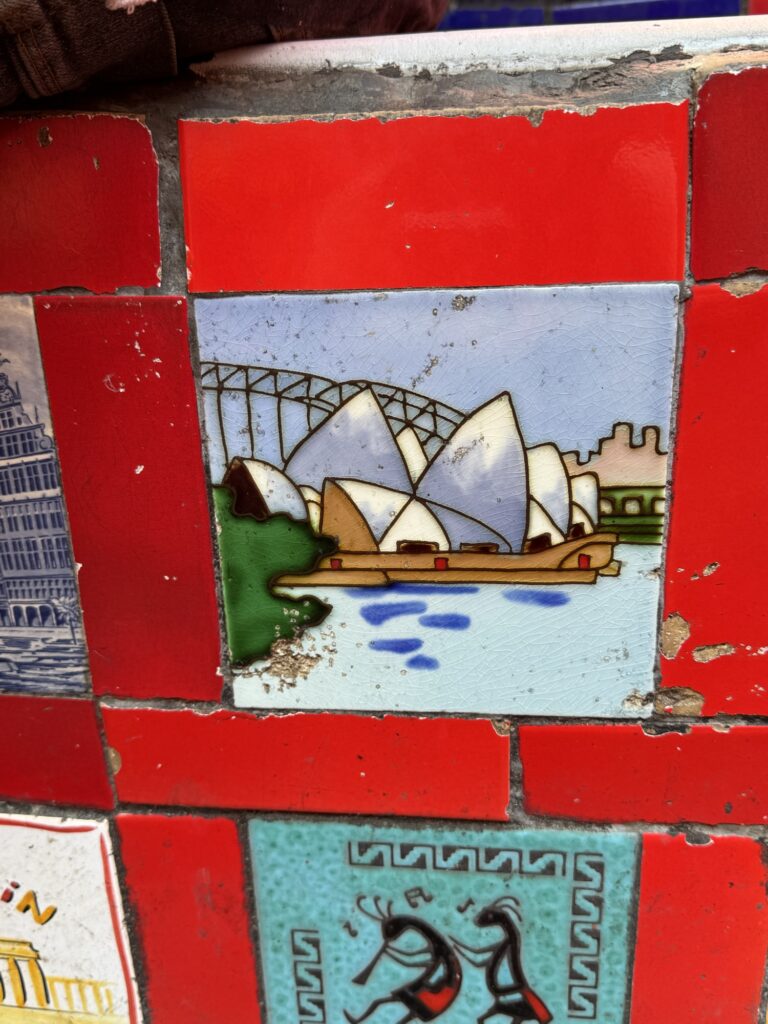
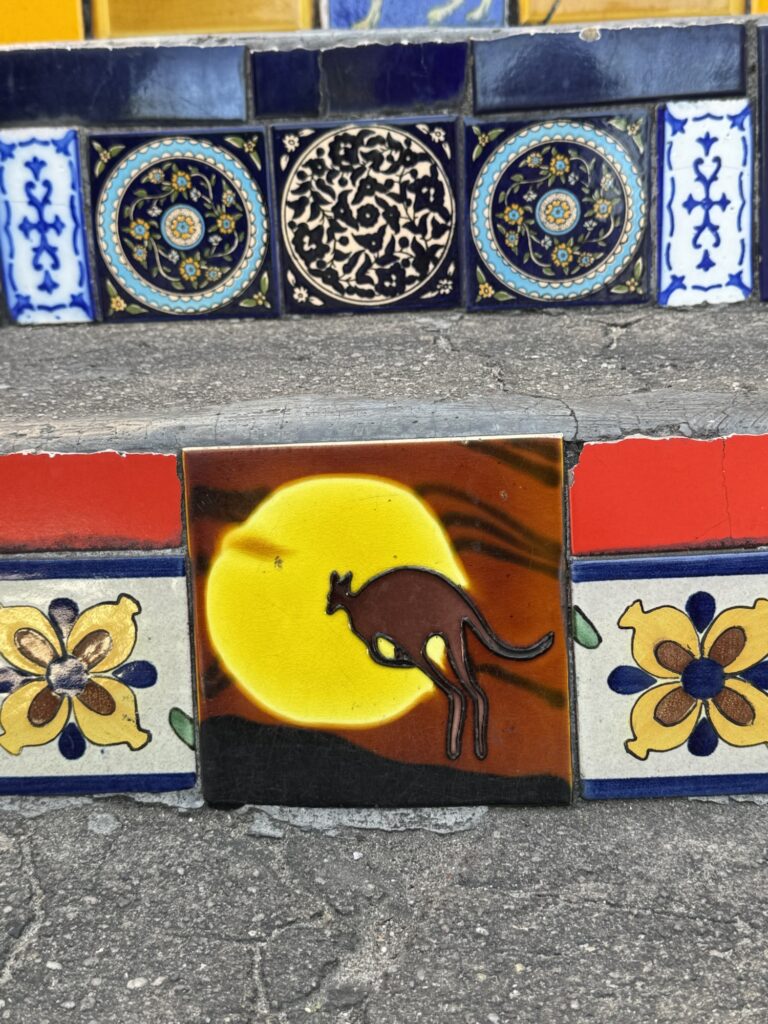
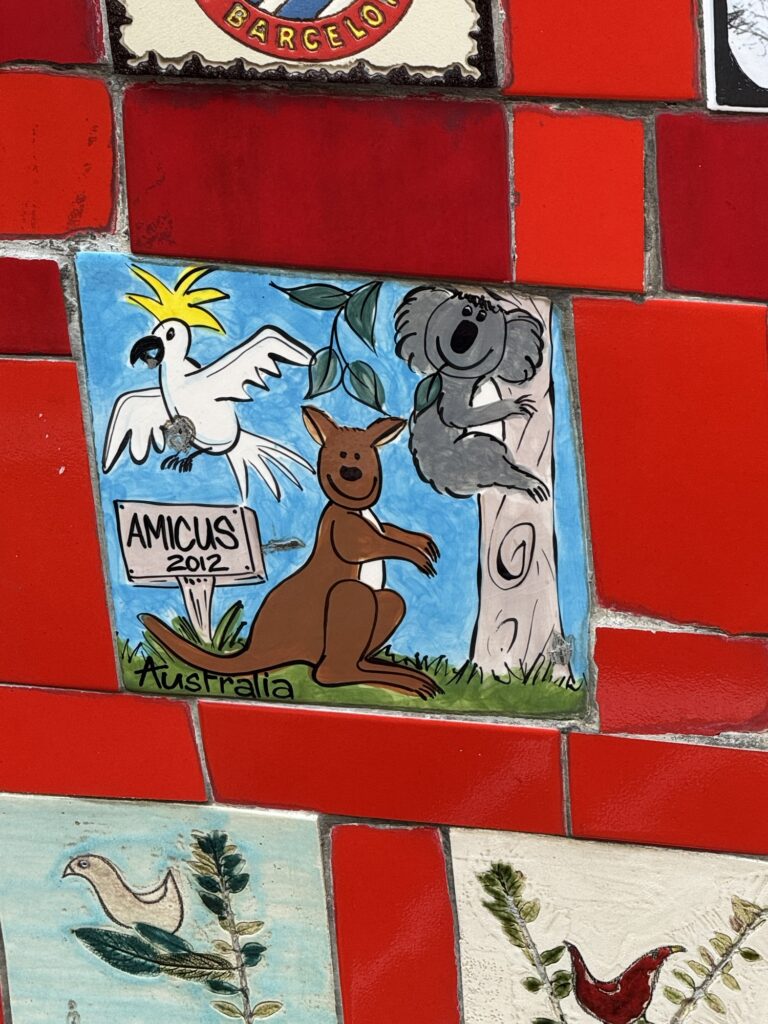
The first thing we saw when we got to the central square was an emu. Or ostrich. Either way, it was strange.
Later, we saw a kangaroo…
Tomorrow we have a walking tour in the morning, and then in the afternoon we’re going on an optional tour to see the caves. Ljubljana has a castle. The only time we’ll be able to see it is today. You all know how much I love an authentic castle. This one was perched on a hill overlooking the town, and we decided to take the funicular up to have a look around.
It was supposed to cost around 25 euros for the castle admission and the funicular ride, but when we got there, we found that the castle was FREE!
My favourite price!
There was some sort of celebration at the castle, which was all good news to me.
It was even better news once we’d ridden up the funicular and started walking through the castle.
It was all very sanitised. Barely anything authentic had been spared at the castle, so it was more a Disney version of what a castle should be. I was so glad we’d got in for free. If I’d paid money for this “castle “ I wouldn’t have been happy.
As it was, we climbed the tower, saw the snow- capped mountains, watched the entertainment and escaped before the crowds.
One of the entertainments was a bird show. Behind the scenes, here is a bird of prey with a hood on, just as they did in the olden days.
A view from the tower of the courtyard below, while the hunting birds show was on.
Another view from the tower, this time looking out over the town. There are some very pretty buildings here.
After we left the castle, Blogless Sandy and I walked around the central part of town for a while.
Church bells were ringing for ages. I wondered if they were marking the anniversary of a battle or something, considering that they were celebrating something at the castle.
We ended up having dinner beside the river, under a big willow tree.
It’s a pretty place; I’m looking forward to our city tour tomorrow.
Today, the long-threatened bad weather finally arrived. We counted ourselves VERY lucky that the torrential rain wasn’t falling when we were walking on the limestone streets of Kotor, and Dubrovnik. We would have been slipping and sliding all over the place.
As it was, today was a city called Zadar, and then a 7 km walk through the National Park of Plitvice, where Jake spends lots of time when he isn’t working.
Poor Jake! He was looking forward to showing us his happy place in all its glory, but the rain was almost biblical.
Zadar is known for its Sea Organ. We jumped off the bus, layered up for the 9C weather, and we scurried after him like soggy ducklings as he led us to it.
As we drew closer, we could hear it over the rain.
I took a video so you could hear it too, but unfortunately when I played it back later, the only audible sound was the rain hitting my umbrella.
I tried embedding a vid from YouTube, but the hotel’s internet isn’t letting me do it. So, go ahead and google Zadar Sea Organ. It’s a lovely sound.
“The Sea Organ in Zadar, Croatia, is a massive, wave-powered musical instrument. Architect Nikola Bašić built a series of hollow marble steps along the coastline. Beneath the steps are 35 organ pipes of varying lengths, sizes, and tilts that use the kinetic energy of ocean waves and wind to generate continuous, harmonized chimes.”
After that, we had an hour to view the town. To be honest, it wasn’t very enticing. If the weather was good, a walk along the harbour would be nice, but the wind whipping in from the sea put paid to that idea.
I walked into the town square to view the Roman ruins.
Fun fact: nobody knew that Zadar was built on the remains of a Roman town. It wasn’t discovered until the city was bombed by the Allies in WW2.
When they were clearing up, people started finding limestone and artifacts that didn’t belong.
The more they dug, the more they found.
I liked this story, so I headed towards the square. One moments inattention, and I stepped into a very deep puddle.
Wet feet.
The ruins were nowhere near as good as in Sofia, so I kept wandering.
This statue looks as disgusted with the weather as I was.
Finally, after buying lunch to eat on the bus, I conceded defeat and found a coffee place with a welcoming open fire.
We drove through the countryside for 2 hours until we reached Plitvice National Park.
I was sitting up near the front of the bus. I looked out through the windscreen. Rain was still bucketing down… if anything, it was even heavier than before.
If I’ve learned anything about myself in the last 62 years, it’s that I HATE getting rained on. I love a good storm if I’m sitting in a warm room looking out, or if I’m under the tin roof on my verandah.
But when I’m walking in it? No.
I would have been miserable every step of the way.
I was one of the 5 sensible people who went back to the hotel with the bus. One couple got all layered up, hopped off the bus into the pouring rain, locked eyes with each other and without words, jumped back in the bus again.
I was able to use the hairdryer to dry my shoes, socks and jeans while Blogless Sandy was out battling the elements.
She’ll have open slather when she gets back.
I’m going to wander out and find a bar in the hotel, where no doubt I’ll find the others who came back with the bus.
A warming glass of red wine sounds like just the thing.
Bosnia and Herzegovina has the same mountainous terrain as the other countries we’ve been in. It’s dotted with little villages, with some obviously being abandoned. Here, old stone walls are left on their own.
The quick answer as to why this country has such strange name is “politics.” The longer answer is that after the war in the 90’s, Bosnia had 3 major religions. The muslims and orthodox were fine with the name of Bosnia, but the Catholics , who were mainly in the Herzegovina region, wanted recognition.
So “ Bosnia and Herzegovina” it is.
Our local guide was proud to announce that Mostar has 300 sunny days a year.
Not today! Blogless Sandy and I ended up buying umbrellas as useful souvenirs.
Old Town was built in the Ottoman Empire
WW1 started here in the capital city of Sarajevo.
“We’re not proud of that.”
Mostar was heavily affected by the war. The street we crossed was the line between the two sides. If you keep your eyes peeled, many buildings still have pockmarks in them from gunfire during the war.
Refugees from the war sometimes own property. They’re understandably reluctant to spend money on buildings they’re now half a world away from. Plus these particular buildings are heritage listed. They were originally in the Austrian- Hungarian style, which would cost a fortune to rebuild.
So they remain like this.
Our local guide said that his family fled the town when the war broke out, and he himself was born in Germany. When they returned, the whole city was filled with rubble. He and his friends, when playing soccer, used to use unexploded grenades for goals.
“We didn’t know it was dangerous.”
3 presidents here. “3 corrupt presidents.” Between the bickering and corruption, nothing gets accomplished in a timely fashion.
The Old Town is a UNESCO heritage site. Everything looks as it did before the war.
Even the old ladies shopping for tablecloths.
Stone roofs protect from the strong winds here. The town is in a valley set between very steep hills. The wind whips through.
1566 when the old bridge was built.
The original architect used egg shells and stone, so the first 2 bridges collapsed.
Sultan Suleman told the architect “if it collapses again, I’ll have to kill you.”
So the architect, keen to keep breathing, used molten lead and stone for the third time, which worked.
The architect was so nervous that it would collapse again that he ran away just before the bridge was finished, so he never got to see his masterpiece. It stood for 400 years.
9 November 1995 it was bombed and destroyed by the war. People tried to protect it, but it was the most meaningful structure to the people, so the opposition felt that they had to destroy it.
20% of the original stone was used, and molten lead and stone were used again.
The original plans were used.
The raised strips on the bridge is for the donkeys. They used to bring everything in on donkeys’ backs, and this stops them slipping.
Plasma flavoured ice cream, anyone?
After we wandered around the market for a while, Blogless Sandy and I walked across the bridge and took the steps down to the beach by the riverbank.
There we saw the bridge in all its glory.
After yet another border crossing, we were back in Croatia and heading for Split, with many a nervous glance aimed at the steely grey clouds massing above. We have a nature walk booked in a national park tomorrow, and the weather forecast is pretty dire.
Still, we were afraid we’d get rained on today, but we’ve been lucky.
We made it into Split with a bit of time up our sleeves, so we checked into the hotel before heading down to the harbour to see the Roman palace. It wasn’t what I was expecting…
Diocletian’s palace was built in 3 AD to house Diocletian, his wife and daughter, and the servants and soldiers who served them. All up, around 200 people.
He was the last Roman emperor to persecute the Christian’s, and he was reportedly pretty vicious about it. After he died, his palace was gradually taken over by the common folk, who over time moved in and started repurposing the building materials here.
Everywhere you look, you can see modern dwellings next to columns like these that have been moved to help support newer dwellings.
See?
Other things have been left alone for centuries.
This place has been continuously occupied since the 3rd century. Nowadays, around 3,000 people live here.
We rounded a corner, and there was a wedding! Jake said it was pretty small for a Croatian wedding. “They tend to go for 36 – 48 hours. They start drinking in the morning and then they don’t stop until it’s over!”
This is reputed to be Diocletian’s bath. It was found in the basement floor, which ironically is the best preserved part of the whole palace. Unlike the ground floor, which had people all over it for centuries, the basement floor was quickly filled with rubble and rubbish, which made it impassable. It wasn’t until the 1950’s that it was finally cleared out.
What’s also ironic… or perhaps karmic … is what happened to Diocletian’s tomb.
He was popped into a sarcophagus, as was usual back then, and was laid to rest in this octagonal tomb.
But all too soon, the Christians took the building over and used it as a church. Sometime in the 7th century, they hauled what was left of him out of the coffin and chucked him into the sea.
The sarcophagi you can see around the outside of the building are all Christian clergy.
When the Romans were building the palace, they were on a tight time frame, so they went over to Egypt’s Valley of the Kings and stole some columns and sphinxes to hurry the job along. These things were from 3 BC, so when I say there’s a mishmash of styles, I wasn’t overstating.
There are many buildings in the Venetian style of the 1500’s. It shouldn’t all work together, but oddly, it does.
Outside one of the gates is this massive statue of Bishop Gregor, a man who championed for the translation of the Scripture into people’s native languages.
I don’t know if this works, but I’m touching his toe for luck. Between this and touching the statue’s nose yesterday in Dubrovnik, I should be the luckiest woman alive!
This was an interesting place to visit. Blogless Sandy adored it.
I was torn between wanting the ancient Roman palace to be pristine, yet respecting the people who saw available building supplies and turned them to good use.
Tomorrow, we have a weather forecast of 9 degrees and rain, with a 7 km walk around a lake in the National Park.
Today was the day we’ve all been waiting for. We were spending the day in the Old Town of Dubrovnik.
Game of Thrones fans would know that the Kings Landing scenes were shot here.
I read all of the GOT novels, but only watched the first series… (and the last couple of episodes of the whole show to see why people were upset.)
The Kings Landing scenes were enough to spark my interest into coming here.
Dubrovnik was founded in the 7th Century.
Napoleon conquered the city after hundreds of years of aristocratic independence. The walls around the city, as well as diplomacy, served Dubrovnik well until The French turned up.
Napoleon built a fortress overlooking the Old Town which is still there today. A chair lift goes up to it, but we didn’t visit it. We stuck to the Old Town and the old fort.
St Blaise is the city’s patron saint, and he’s found all over the place here. He’s always pictured with a model of the city in his hand, protecting it.
In 1667 there was a massive earthquake here, and parts of the city were destroyed.
The church survived the earthquake, but a fire decimated it. The only thing that survived was a silver statue of St Blaise. Of course, it was proclaimed as a miracle.
Today, the statue is coated in gold. It’s on display, but you have to pay money to see it, and it’s not included in the Dubrovnik Day Pass, so we didn’t see it.
Incidentally, if you ever come here, get a Dubrovnik Day Pass. It costs 40 euros, but it costs 40 euros just to walk the wall. When you factor in admission to the fort, the monastery, and all of the other things you can see, it’s definitely great value.
Here’s the first view of the town. Main st was first established in the 10th century. We were directed to look at the strange little stone down by the roadside.
The legend is that if you’re able to jump on top of this and stay there for a few seconds, you’ll be lucky in love forever.
Before you ask, I didn’t try my luck. I love it when people find love, but I don’t want a partner for myself. I think, after 29 years of being single, that I would be very hard work for any guy unfortunate enough to try his luck. 🤣
The fountain was built in the 15th century. The water is still drinkable and is free to anyone everywhere. Later in the day, we filled up our water bottles and the water was chilled and delicious.
I also like how there’s a dog statue on the top. It makes a change from all of the cat worship in the cities we’ve seen so far!
This is the Rector ‘s palace. They chose a new rector every month, to avoid corruption.
The city keys were given to him every night for safekeeping.
When the weather was bad, no work was done here, in case decisions were made that were badly affected by how they felt. When the sun came out again, the council would reconvene.
There was a huge earthquake in 1667.
This street wasn’t affected. See the stones on the street? They’re limestone and they are very smooth, due to the millions of footsteps they’ve had walking on them over the centuries. I’m glad it wasn’t raining today! I imagine they might get a little slippery.
This isn’t just a tourist spot, though. People live here, usually in the second and third floors above the shops. Look at the line of washing fluttering above the street.
Apparently, Fortunate Frogdancer struck again and we had a beautiful day in Dubrovnik. The rain is going to hit tomorrow…
Jesuit steps: this is the scene of the walk of shame that Cersei took in Game of Thrones.
Most gardens are simply in pots.
Ugh. Yuck. Bananas. The Devil’s food.
Little cafés and shops are scattered throughout the town.
There’s also little hits of whimsy as well.
If I lived here, I’d SO have this sculpture on my balcony!
After our guided tour was over, we had 6 hours here. The first thing we did was leave the town and go over to the fort. This was a 15th century build, but fortifications have been here for around a thousand years. Humans are a peaceful species, aren’t we?
“Freedom is not on sale for all the gold and treasure in the world.”
This is inscribed on the fort, which is a measure of the hundreds of years this city was independent.
A view of the city from the top of the fort.
Some of the walls were a bit tall…
Some of the people from our group didn’t go across to the fort, which was a shame. The sea was sparkling clear and the views of the walled city and the islands were spectacular.
The monastery – free with our day pass. It was a bit of a haven from the heat and crowds outside.
In the museum there, a reminder of the war.
Marin Držić, Dubrovnik’s Shakespeare. Guess which part of him brings luck when you touch it?
Handrails in the Rector’s Palace. I guess a good Dad joke is timeless.
Then 2pm arrived, which was the time Jake recommended that we walk the wall. More bloody steps upwards…
Here was the view as we began.
The fort from the walled city. Just look at the colour of the sea.
It’s amazing how narrow the streets are.
I had a choice… do I keep going, or do I climb the tower?
Of course I climbed the tower! The view was incredible.
Look! A veggie garden! The only one I saw all day.
And zoom in to the middle of the picture. You’ll see a restaurant on top of a building. Imagine how lovely it must be to have a meal, surrounded on all sides by the terracotta rooftops.
This is Blogless Sandy and I clinking some bubbles after our 90 minute walk along the wall. A well-earned treat.
After a wonderful day, we drove across the border into Bosnia and Herzegovina.
Today we spent a few hours at the wonderful Old Town of Kotor. It was established 2,000 years ago.
It has been ruled by… “you name it, they ruled it!”
Square of the Weapons.
There was so much fighting throughout the Balkans , especially during the Ottoman Empire.
700 years. It ended in 1912 in Albania.
Venice was running Kotor for commerce. Albania fell to the Turks, but everyone else continued to fight. The ruler here allowed everyone to come and buy weapons, but they had to leave at a certain time.
If anyone did the wrong thing, they were subjected to public humiliation in the square.
Baroque palace.
With all the money flowing into the town from the weapons, 110 families became rich .
Pima family had the longest balcony here, apart from the Prince’s.
This family were extremely distinguished… poets, businessmen etc, but now they’ve died out.
This cathedral is the heart of Roman Catholic Montenegro.
Patron Saint of the town is St Tripun, a Greek teenager who was martyred in the 300’s for being a Christian. He had his head chopped off and everything.
It’s giving me Notre Dame vibes.
An earthquake scoring 7 on the Richter scale destroyed the town in the late 1970’s. It took them over 20 years to rebuild the Old Town.
They’ve done a very good job. This place is wonderful.
This little church was built in 1195 . It’s dedicated to St Luke.
Interestingly, Orthodox and Roman Catholic both share it, which doesn’t often happen.
3,000 souls are buried here. They were cremated before being interred here, with large numbers occurring during the Black Death.
After our guided tour, we had a couple of hours to wander around. Blogless Sandy wanted to climb a certain way up the mountain path to see the view over the city.
Not being a mountain goat, I wasn’t filled with glee about doing this, but I knew I’d regret it if we didn’t go. She pointed to a spot on the map and we set off.
This is as high as we got. There was a man charging 15 euros to go higher.
It was my lucky day! No way we were going to pay that.
There are sections of the old wall that you can walk on. We ambled along here,
This is very much a tourist town, but as you can see, people still live here.
Here’s a close up of the city walls as they wend their way up to the top of the hill where the fort is. Two thousand steps were mentioned, but that seems a bit too few for me.
The town is squashed in between impossibly high hills, as well as the sea.
This cat statue is very appropriate. I’ve never seen so many stray cats as I have in the Balkans. They’re very friendly, though, and both stray cats and dogs are looked after.
We had a few minutes up our sleeve before we left, so we walked along the harbour.
I took this shot to show you the cliffs. The town is encircled.
After a 90 minute border crossing into Croatia, we arrived at magical Dubrovnik
This was our view of the Old Town as we drove into Dubrovnik.
omg. Can’t wait till tomorrow.
Our guide recommended a restaurant by the water.
It was a glamorous way to celebrate reaching Dubrovnik.
We have 2 nights in Budva, so today we went on an optional excursion to Lake Shkoder for a boat trip. We were there yesterday, you might recall. Here’s how it was advertised in our itinerary:
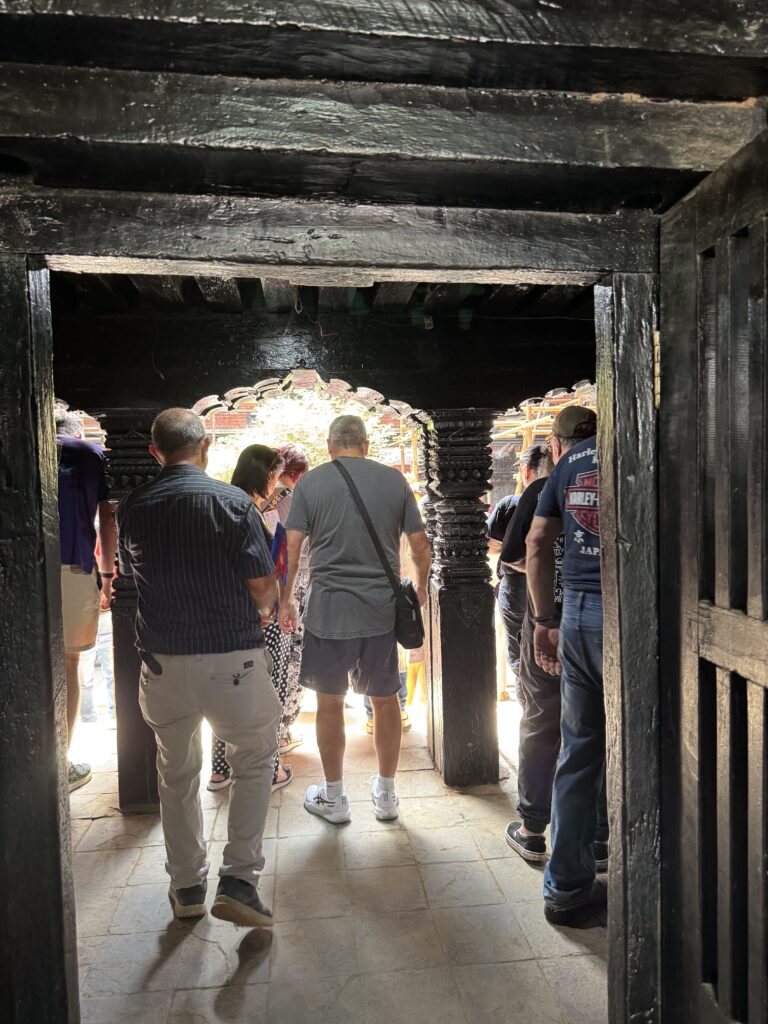
Optional Activity: Virpazar Traditional Villages, including a boat ride to Shkoder Lake Virpazar is a gateway to Skadar Lake National Park, offering boat tours that explore traditional villages like Karuch and the lake’s unique ecosystem with a wide variety of birds and water lilies. The boat trip includes scenic routes through narrow channels, visiting historical sites such as the medieval Kom Monastery or Lesendro fortress. A boat ride, park entrance and transportation are included
Reading this, it sounds like it would be worth 40 euro.
It was an absolute rip-off. Nearly 40 people were crammed onto this little boat. We went out onto the lake, did a big circle…
… slowed down to view this monastery (I assume.) We had absolutely no commentary from the driver. We then completed the circle and were dropped back off at the town.
Where were the traditional villages? Where were the “scenic routes”?
We paid 65 AUD for an hour long circle on a lake. Sixty five dollars! We didn’t even get a sandwich and coffee for lunch. We had to go and buy our own.
I wasn’t happy. Tripadeal will be getting a sternly-worded email when I get home. The thing that stings is that this was a newly added trip that we had to pay for in cash. I wish I had my time over again. People were saying that you can get a 2 hour boat trip, exploring 3 caves, for 15 euro back in Budva. TripaDeal need to change their provider, pronto.
The Balkans are littered with ancient forts. I saw this fort as we were headed out to the lake, when we were still naive and full of hope that we’d have a good day. Blogless Sandy made sure to get a snap on the way back.
Me? I was having a Power Nap.
Yesterday, when we were standing on the top of the Old Town walls, we saw people walking along a path winding around the cliff base. It seemed pretty popular, so we decided to follow suit.
We found The Ballerina. Isn’t she marvellous?
It didn’t hurt that we also had an absolutely wonderful view of the Old Town behind her.
The rock formations of the cliffs were so pretty, like a Sara Lee pastry in that old ad.
”Layer upon layer upon layer.”
The path ended at another beach, but just before then, there was a rocky outcrop right at the water, where a few people were sitting, enjoying the sun.
I sat there, gazing out at the Adriatic Sea. Soon, Blogless Sandy joined me, and we sat chatting with a nice Irish man who was here on holidays with his brother.
After a while, we were joined by some local boys.
School was out for the day, so why not? What could possibly go wrong?
We walked back through the Old Town, intending to have a Quick Look before getting dinner out in the town.
But then,
we saw another little ballerina outside an ice cream shop.
We sat down and had a drink. We became at one with our chairs. We ordered dinner – a marlin salad with wine. Delicious!
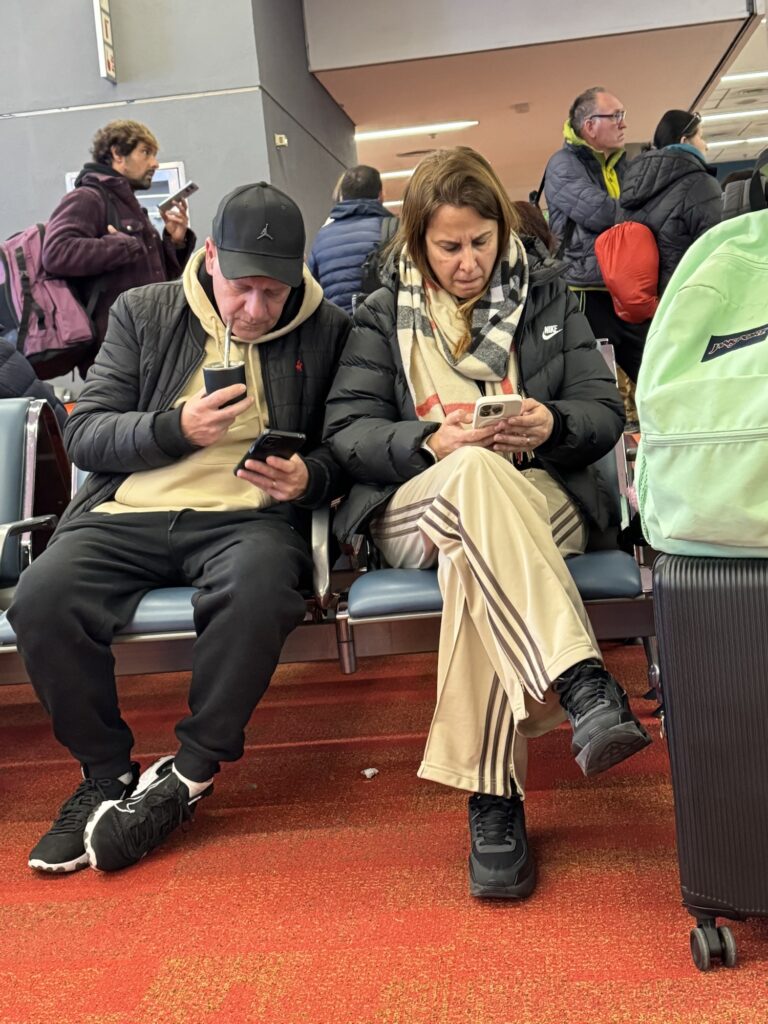
Parents with their phones.
More phone work.
Oh no! Clouds.
We’re bracing ourselves for a cold snap that’s on the way. We have Dubrovnik tomorrow, so fingers crossed we get to see it in sunshine…
but yeah. I’m still salty about getting ripped off by that boat trip.
We were at the border crossing between Albania and Montenegro. The Albanians told the bus driver that they would have to make him take out all the suitcases for them to inspect before we could go through.
They were after a bribe. They got it.
When someone on the bus expressed surprise, Jake shrugged and simply said, “It’s the Albanians…”
We saw this pretty couple on our walk through the capital city of Montenegro. It was a dull place, with it’s only redeeming features being this sculpture…
… and this old bridge. When Montenegro was part of communist Yugoslavia, they ripped down all of the interesting old buildings, just as they did in Albania.
It’s a city with many communist-era buildings like this. It’s not really worth the effort to go.
However, on our way out of town, we stopped for 30 minutes at Lake Skadar. It was very pretty.
As we continued driving, we saw our first glimpses of the Adriatic Sea. Italy is just beyond the horizon.
One lucky bugger was paragliding. Remember when I signed up to do that in Borneo and it didn’t happen?
Finally, we arrived at the very fashionable town of Budva. As soon as we checked in, Blogless Sandy and I hot-footed it down to Budva Old Town. It was fabulous.
The old city walls still surround the town. It has been here for around 2,500 years and the sense of history is palpable.
The streets are labyrinthine, curving in around each other. It covers quite a small area, but it certainly fits a lot in.
We entered by a side gate.
This place. Is filled with restaurants, cafes, souvenir shops and bars. It reminded me of Venice, in that it’s impossible to take a bad photo here.
The whole place is designed for photography.
We walked around, taking everything in.
Then we realised we’d walked the length of the town. Here was a side gate, leading out to the sea.
I dipped my hand into the Adriatic Sea.
Our next quest was to find the citadel and walk on top of the city walls. When we were on the beach, we could see people up there.
Look at how this tree is growing from a crack in the cobblestones.
Up on top of the walls.
The afternoon was simply perfect, even though my expression might not make you think so!
All of the roofs have the same terracotta tiles, which ties everything in together. Beyond the terracotta, the modern world.
We decided to treat ourselves and have dinner in this beautiful space, instead of walking back into town to look for something a bit cheaper. Aft all, when are we likely to be back here again?
(Well, we’re here in Budva for another night; but you know what I mean.)
We had dinner here, and it was very nice. I didn’t realise until I was going through my photos, but I took this shot almost as soon as we arrived in the old city, because I liked the writing on the guy’s top. We ended up eating dinner at the empty table in the foreground of the photo.
As we left Old Town to walk up the hill to our hotel, I looked back.
Albania has always been occupied by larger powers as it occupies a strategic position in Europe. From the Greeks to the Romans to the Ottomans to the Nazis to the Communists… it’s been like a revolving door of oppression.
After WWII, Albania was like North Korea. Until 1991, they were in a communist dictatorship.
They were totally isolated from most of the world outside the communist bloc.
The communists destroyed everything that remained of the Byzantine and Ottoman buildings. There are only Italian Fascist and Communist remaining, which, when combined with the modern buildings now being built is interesting. Still, when you hear of the old Byzantine markets being destroyed in the 1950’s because Khrushchev made a visit… it’s a shame.
This duo of squat blue blocks is called the twin towers. They were built after 9/11. Make of that what you will.
I was walking with the local guide and I asked about the wars Albania has gone through. Then, we saw this guy walking ahead of us. “Oh. Do you think he would have been a soldier?” I asked.
”Probably,” he replied.
A Catholic Cathedral dedicated to St Paul was our first stop. Mother Teresa is also venerated in this country, as after she left for Calcutta, her mother and sister moved here.
It wasn’t a smart move, as soon after they relocated, the communists banned all religion from Albania. Mother Teresa was never allowed to see her family. They suspected that she was religious, so the government refused her many applications.
She was an absolute cow to her patients in India, denying them pain killers because “It was God’s will that the poor should suffer”, but I did feel for her being unable to see her family ever again because of a regime change.
Albania was officially atheist during 1967 to 1991. Over 2,000 churches and mosques were destroyed. Anyone caught practicing religion would be jailed.
Nowadays, it’s very easy going. For example, the country is 70 % Muslim but only 7 % practice. Our local guide is orthodox Christian, and is married to a Muslim. They celebrate Christmas, Ramadan, Easter…. It’s all good.
This is one of the few Muslim countries where it’s ok for people to enjoy a raki (like grappa: but stronger) with their coffee without it being an issue. Honestly, isn’t that how it should be?
Albanian is considered one of the oldest languages in the world. It has no relatives anywhere. It’s thought that it is derived from the tribes of the Ilan people, who were cut off from everyone else, back in the day.
Written Albanian was forbidden to be used by the Ottomans for over 500 years. It’s quite amazing that it survived.
North and South Albanian dialects are very different. Sometimes they need translators to understand each other.The southern dialect is the official one.
There are bunkers all around the city, because during the Cold War the government was paranoid. They were sure that the great powers of the USA or Russia would invade, so they started a program ensuring there’d be enough bunkers for the whole population.
There are also tunnels between the government buildings, for the same reason. Nowadays, they are museums. This is the ceiling of the bunker we saw.
A few fun facts about Albania:
1 coffee shop for every 108 people.
Albanian is part of NATO, but is regarded as one of the poorest nations in Europe.
500 euros / month is the minimum wage.
750 euros / month is average.
It’s an agricultural economy.
Tourism is number 3, and is rapidly growing.
1 in 4 civilians were spies during the Cold War. You know, like the Stasi in East Germany. Grim times…
Housing here is expensive. 1,200 euros per square metre.
150 years wages to pay for a 100 square metre apartment.
Florence is the most expensive city in Europe. Tirana is close to that.
Healthcare and education is free. That’s something, I guess…
Look at this!! The local guide and I were talking about North Korea, when we rounded a corner and there was a propaganda mosaic. “ This is SO North Korea!” I said.
He chuckled. “Communist propaganda,” he said.
Unlike Macedonia, the Albanians only had ONE statue in the main square. He is their National hero. Gjergj Kastrioti (also known as Skanderbeg; c. 1405 – 17 January 1468.
He was taken by the Ottomans after they killed his family. He rose to be a general under them, even gaining the nickname of Alexander The Great because he was so good at Generalling.
Later he escaped from the Ottomans and came back home. He joined the factions and started a resistance movement that fought against the Ottoman Empire for 25 years. A mouse fighting against a pride of lions.
But look at how the Albanians have honoured him. Not just with a statue…
This apartment block overlooks the square where his statue is, and it depicts his face. That’s pretty cool.
We were there on a Sunday, so I don’t know if the vibe would be different during the week, but the city was buzzing. People were out enjoying the sun, eating out and generally having a good time. It was a pleasure to be there.
The inner part of town was alive.
I guess Pokémon is international.
On the way to our evening stop, we saw Rozafa Castle. It was originally built by the Ilyric tribe 2,000 years ago, and then subsequent invaders kept it going. The legend is that the castle was bing built by 3 brothers. Unfortunately, the walls kept crumbling. They sought help from a holy man, who said that one of their wives needed to be sacrificed and buried under the walls for them to stay strong.
The oldest two princess told their wives to stay away from the castle, but the youngest one forgot to mention anything to his wife about this disturbing prophecy.
The next day, his wife and toddler son rolled up to the building site to bring her husband’s lunch. Big mistake.
When a mob surrounded her, baying for blood, she accepted her fate, but asked only these things:
That she be left with one eye, to look upon her baby boy.
To be left with one breast, to be able to feed him.
To be left with one arm, to cuddle her son.
To be left with one foot, to rock his cradle with.
It’s one of the first legends to describe sacrifice for the common good. Though to this day, it’s reported that the inside of the walls run with breast milk…
We went out to the pedestrian precinct for dinner, and we had a lovely meal. It was bustling, and alive with music, local families, tourists, stray dogs, and food thieves.
YES! We were sitting with a couple from Sydney and an old woman came up, started ranting at them and then swooped in and stole one of Carol’s cabbage rolls off her plate and ran off.
The waiter said she is a local woman who lives with her family but is insane.
We also had a couple of child beggars coming up to our tables, asking for money. That was sad.
There is a downside to staying in a hotel close to a mosque, in a room that doesn’t have a plug low enough to plug a kettle in. It was 4 AM, when the mosque started up again.We started laughing and gave up trying to sleep.
The internet at the hotel wasn’t cooperating yesterday, so I was frantically downloading the photos for yesterday’s post while most people were off the internet. Meanwhile, Sandy REALLY wanted a coffee.
What could she do?
There’s always a way around everything!
This country is officially called North Macedonia, but everyone drops the first word. The reason ‘North’ is there at all is that Greece has a region called Macedonia, where Alexander the Great came from. So when Yugoslavia fell, they objected strenuously against Macedonia being used. In order to get into the United Nations, a compromise had to be found.
Though a few years ago, just to rile the Greeks, Macedonia put up a statue of Alexander the Great.
Classic trolling.
The plan for today was a free morning, grabbing lunch before jumping on the bus for a few hours drive to Ohrid. Sandy was googling and planning while I was blogging, so our morning was productive.
Here is the Alexander the Great statue, with Blogless Sandy helpfully standing at the bottom to give it scale.
Skopje is a city that likes a sculpture. Our bus driver is from here. As we were driving in yesterday, Jake said, “Our driver doesn’t have a statue of himself in the city… yet. Just give it two or three years and he will have!”
There was also a replica of the Arc de Triomphe, like in Pyongyang.
Here we are posing on the Bridge of Civilisation, which has lots of ancient Greek guys on it.
My jeans are rolled up to try and stop them getting wet. I gambled that the rain wouldn’t come, and although it was spitting, the rain held off. As I’m wearing merino again on this trip, that made me happy. Smelling like a wet sheep isn’t great.
We’ve noticed many stray dogs here. They appear to be well fed, which is surprising, given that this country is heavily Muslim. I remember in Zanzibar that dogs were never to be seen.
It was nice to see this kennel.
The Art Bridge is way famous. It’s lined with artistic Macedonian guys from all branches of the creative arts.
Unfortunately, some of the plaques have come off. I don’t know who this man is, but even as a statue his gaze sees right through you.
This one was cool. Swishing his arms around like that.
Action shot.
Zoom in on his little pointy shoes!
Meanwhile, the artistic women were chucked up on top of a building…
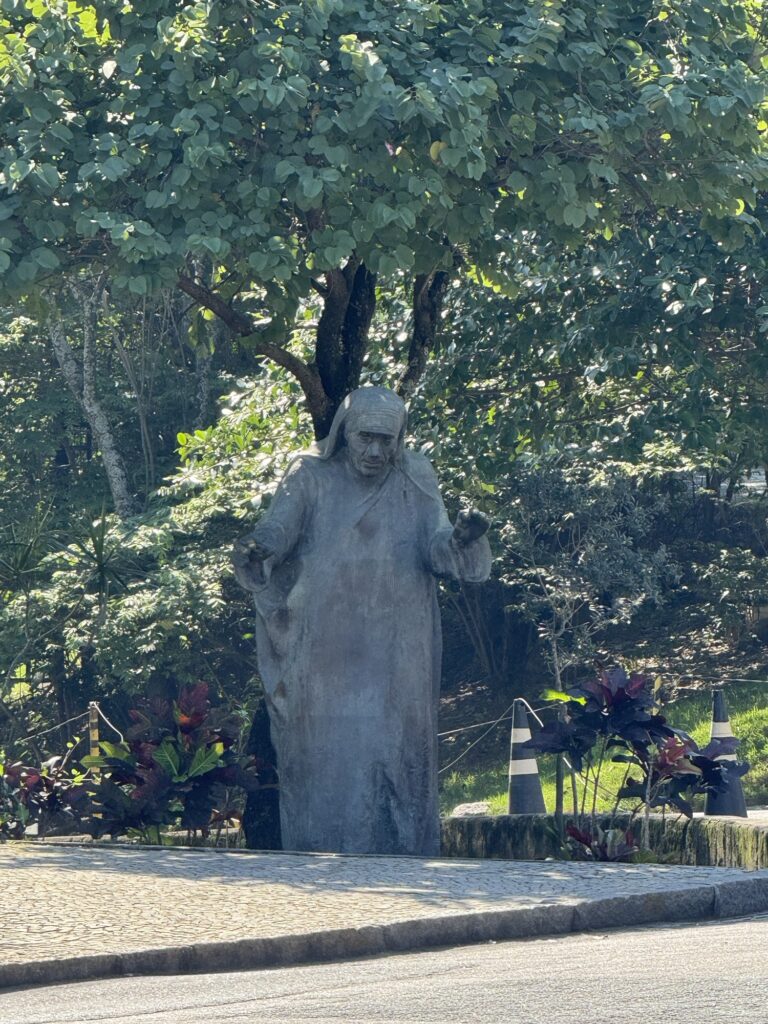
Mother Teresa was born here. There’s a Mother Teresa House here, but I’m not terribly interested in a woman who denied medicines and pain killers to sick people because it was god’s will that they should suffer. These quotes are all you’re going to get, I’m afraid.
The ancient fort was built in the 6th century. From the outside it gives Tower of London vibes, with the old stone walls within a bustling modern city. I didn’t go inside. By all accounts it hasn’t been well looked after, so it’s not worth seeing. I’m sure when they get sick of making statues – or they run out of room – they’ll get around to some restoration work here.
On the way back to the hotel, we bumped into Jake leading many of the group down to see the sights.
We were glad that we chose to see the city while it was uncrowded. I’m finishing this up while lying on my bed. I’ll have a short Power Nap before we check out and move onto the next town.
It was my turn for the window seat. It was a shame that I was so sleepy after our early morning call to prayer.
We drove over the mountains and they were wreathed in cloud. We stopped halfway for a toilet stop, and when we headed off again, practically the whole bus fell into deep sleep. I know I did. I was dreaming, and a couple of times I surfaced, realising that my mouth was wide open, which is a sure sign that you’ve been sleeping sitting up.
When Jake woke us all up, the sun was shining and we were 10 minutes away from the ancient city of Ohrid.
This place is a popular tourist destination for the area, with plenty of people from Serbia, Albania and Turkey wandering around. It was a Saturday, and I imagine in high season it must get packed.
This statue is a celebration of the activity they do here on the 19th January. Epiphany- the baptism of Jesus.
A bishop drops a wooden cross in the freezing water. Over a thousand young people jump in after it. The one who gets it will be lucky forever.
We began our walk into the old city at the waterfront, then moved up the hill, heading for the amphitheatre.
Along the way was the church of St Sofia. This one has a fantastic story.
St Sofia was originally built in the 11th century, but before this, there are ruins showing that 3 Christian churches were also on this site.
Underneath those ruins, there are the ruins of pagan temples. This has always been considered a holy place.
It’s famous for its fresco paintings. These originate from the 11th and 14th centuries.
The Ottoman Empire changed the church into a mosque. Rather than demolish the church, they covered the frescos with white plaster, because mosques always have plain white walls.
It remained that way until after WWII.
An international team saved 60% of the frescos. Can you imagine how carefully they must have worked, chipping away at that plaster??
I really wanted to see those frescoes.
We were heading off, so I raced down to the door and snapped this. It was a tantalising sight, but I couldn’t linger. It was off up the hill again.
There are many pearl shops here. Our guide explained that these are hand made. They take a granule of mother-of-pearl, then coat it in many layers of a compound they make from fish gills. Each layer takes 45 minutes to day before they can add another one.
There are over 100 churches in the Old Town alone. This why this town is known as the Jerusalem of the Balkans. This is one of the smaller ones, built in the late 19th century and consecrated to Saint Barbara.
Wood fires…
… and an Hellenic amphitheatre. This pre-dates the Romans.It was built in the 3rd century BC by the Greeks.
When the Romans came, they kept it and used it for gladiatorial games.
When the Slavs arrived, they used it for public executions.
It was deliberately covered by the traumatised population and was forgotten about for centuries, until it was rediscovered in the 1970’s.
The original stones are below. The seats are new.
Church of Saint Jovan the Theologian at Kaneo. This, according to the local guide, is the biggest tourist attraction in the city. To be honest, I’m not sure why.
I would have thought that the thousand year old frescoes in St Sofia would draw the crowds. The views of the lake outside the church are very pretty, though.
On the way back down, we passed this stray dog. The strays here are beautifully mannered and are cared for by the community. When stray dogs are collected, instead of being euthanised, they are sterilised. That’s what the tag on its ear signifies.
When we got down to the harbour, I had great news. Instead of taking us straight back to the hotel 4 kms away, we were staying in town for 90 minutes for dinner and exploring. I couldn’t see the frescoes after all! Blogless Sandy and I didn’t waste a minute.
Imagine being hidden for so long?
I took a video, but it wouldn’t upload no matter how many times I tried,,, and I tried a lot of times.
I guess you’ll simply have to go there yourself,
Then it was dinner on the waterfront, with a beer for Blogless Sandy and a pink gin and tonic for me, because that’s how we roll.
in a place like this, dinner by the water is practically mandatory, isn’t it?
Retirement Reading Quest – Reading my way to ‘free’ council rates.
I’m on a quest to borrow and read enough books to, in effect, cancel out the cost of my council rates per year.
It’s outlined in this post.
Year 8: 2018/2019 – $1,800
I may as well continue back-tracking. I moved here in 2016, so I’ll chip away at all the rates I paid up till then.
Running Total – $1,465.
Year 7: I’m already a year ahead on my rates, so I’m taking a reader’s suggestion and I’m going to go back and start covering the rates from the year before I started. I may as well.
Year 7: Total needed: 2019/2020…$1,800
Finished! 12/12/2025
Year 6 (2025/2026) $2,590 AREADY COVERED!!!!!!
10/08/2015 – I won’t have another rates notice until August 2026, so I have time to kill. Let’s knock over a previous year’s rates, just for fun.
Year 5 (2024/2025) $2,339 and dog rego ($63) = $2,435.
Finished it before I even had the new rates notice ready.
Year 4 (2023/2024) $2,413.
Success! Not sure exactly when I passed the total, because I was waiting on the dog registrations to come through. But yes – I blitzed it.
Year 3: (2022/2023) $2,350
12/01/2023 FINISHED! Not working gives me heaps more reading time – I recommend it!