Well, we’re here!
Egypt has a population of 109 million, with a new baby born every 14 seconds. I was a bit worried that they’d all be at the pyramids today, but it was surprisingly uncrowded.
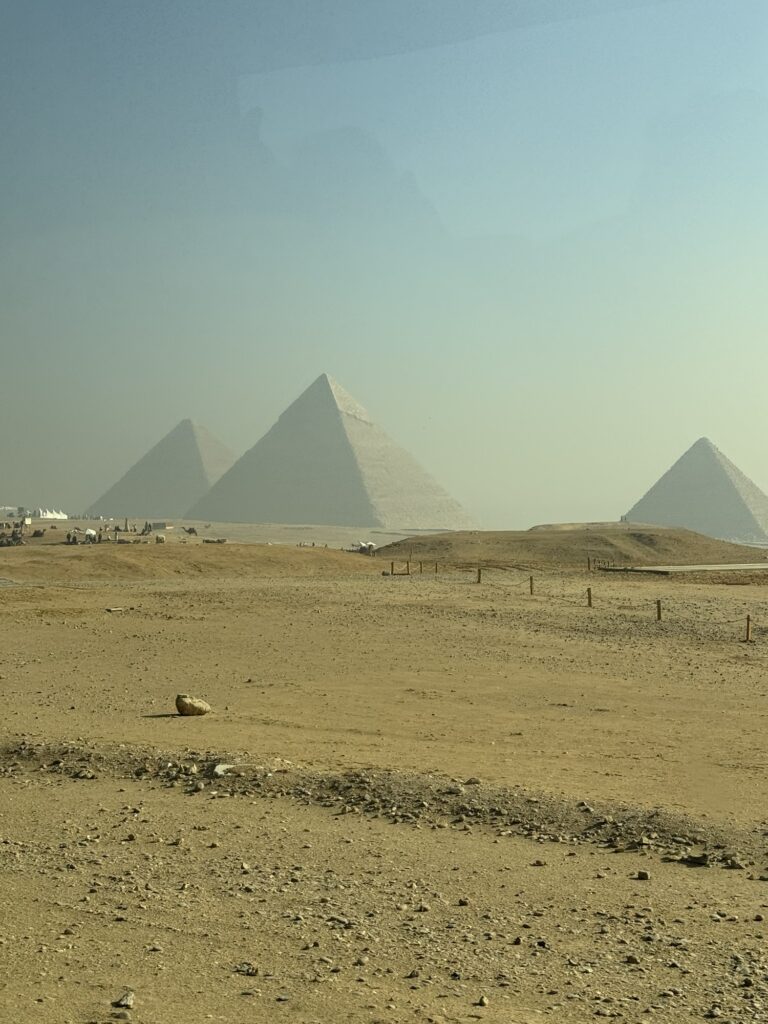
Here’s my first view of the pyramids, taken from the bus. Fortunate Frogdancer was sitting on the right side of the bus!
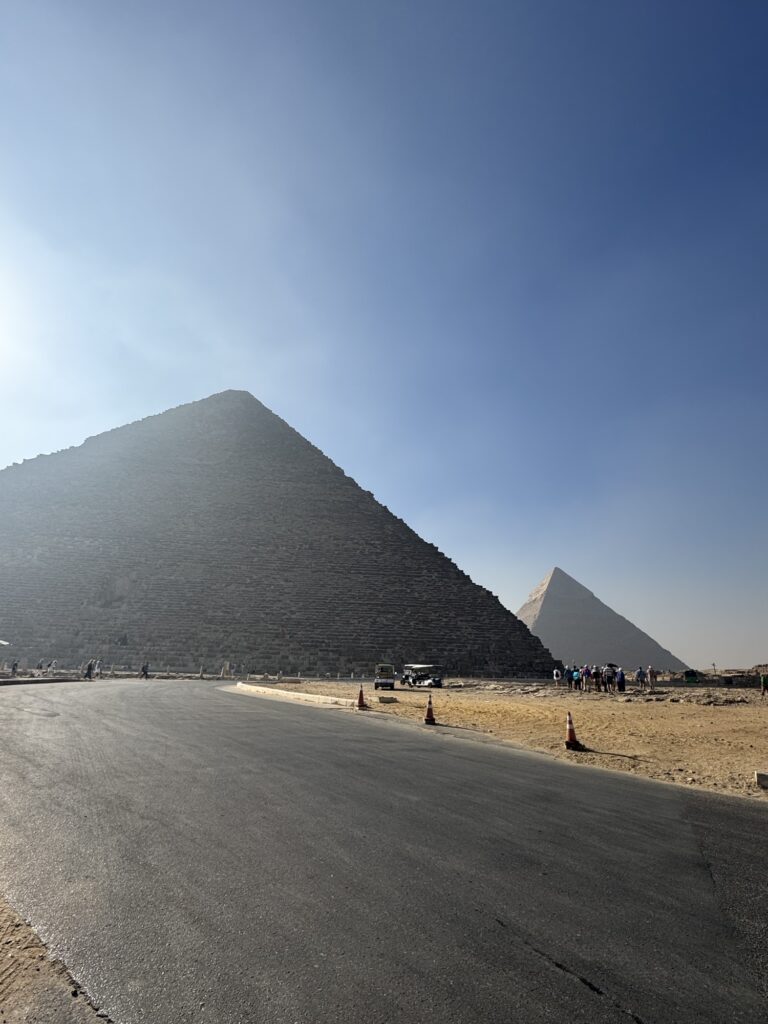
It’s good to have an experienced tour guide. Apparently, most tours go to the panoramic view of the pyramids first, and then come down and see the Sphinx and then go inside Cheops’ pyramid.
We did it in reverse order, so it wouldn’t be too crowded as we were scuttling, crouched along the tunnel to reach the inner room where the sarcophagus actually was.
That was a good call.
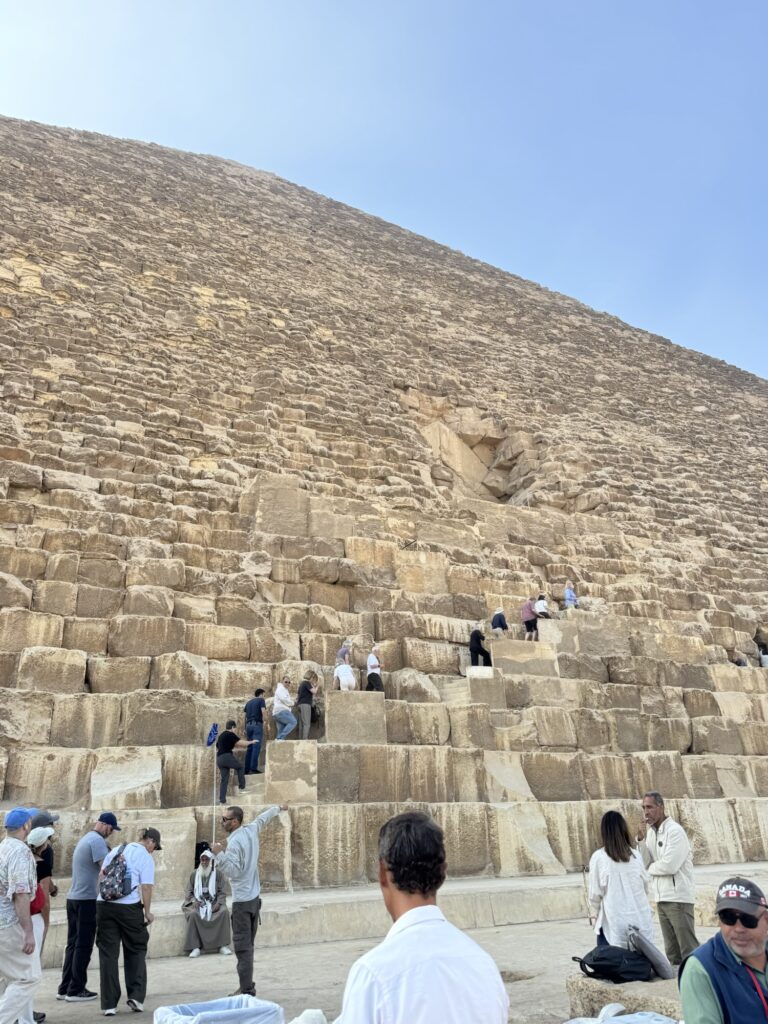
At 152 metres high and 228 metres wide at its base, the Great Pyramid of Khufu (Cheops) is the only survivor of the Seven Great Wonders of the ancient world.
This is the way in…
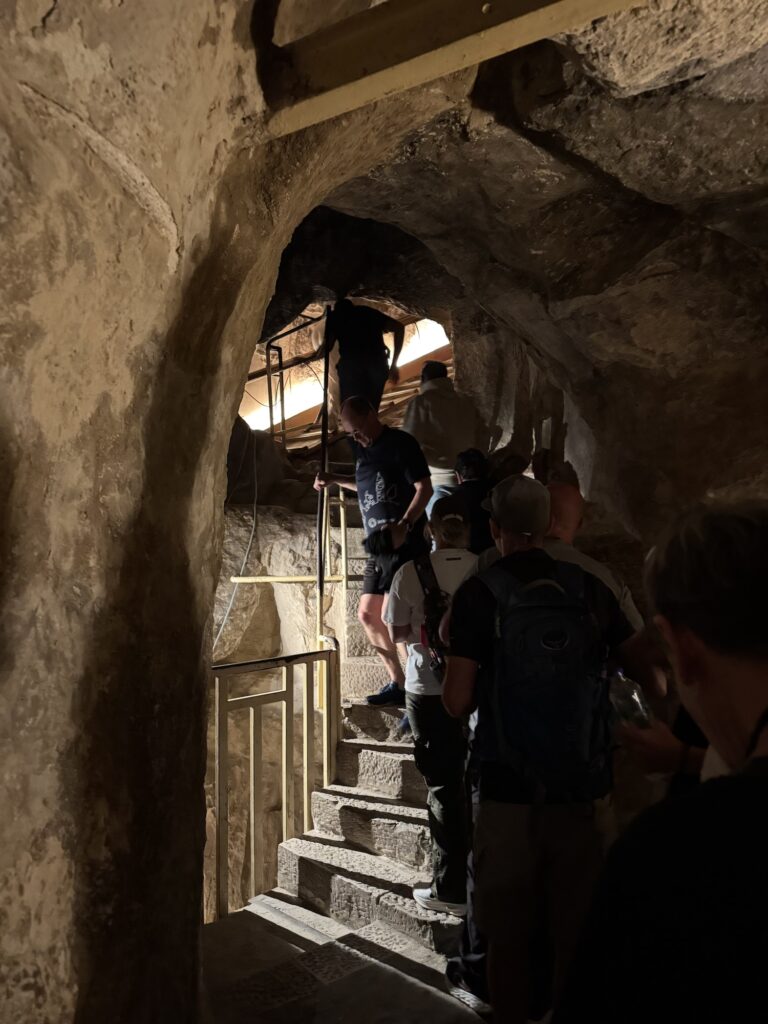
… and in…
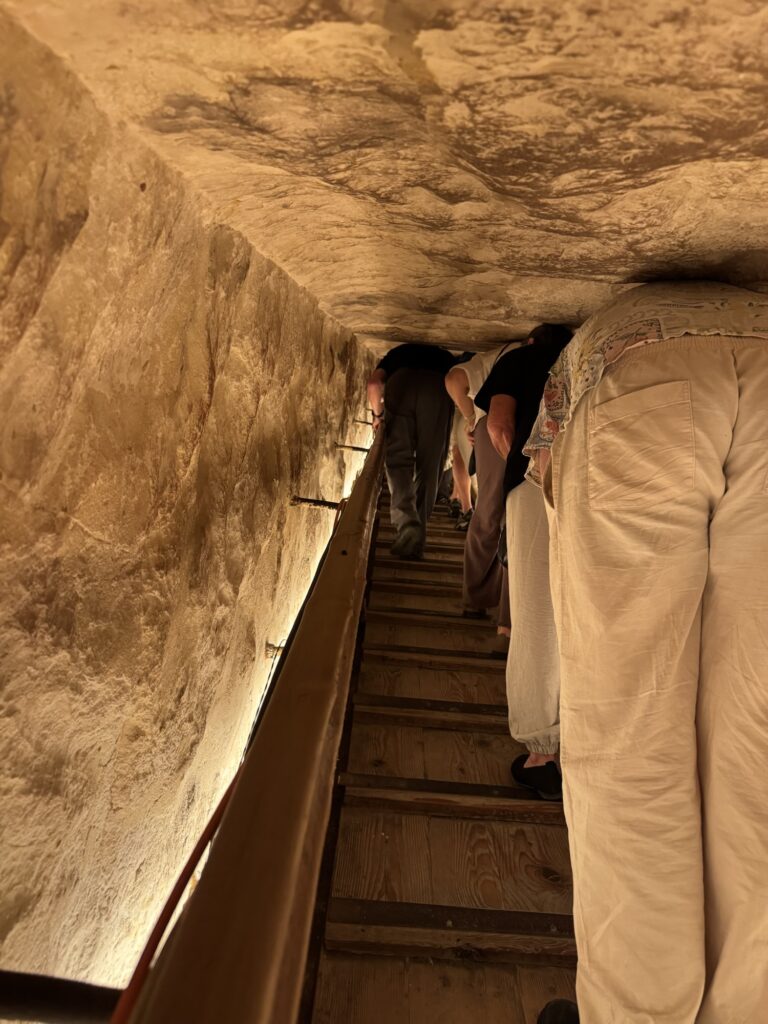
… and in. This is Evan30’s backside as he was doubled over, walking 25 metres through the tunnel heading upwards.
Sometimes it’s good to be short.
This tunnel was just wide enough for two people to walk side by side, which was just as well, because it went both ways, in and out. I was really glad we were doing it at the start of the day. I imagine that as the day wore on, the number of people trying to make their way through would be horrendous.
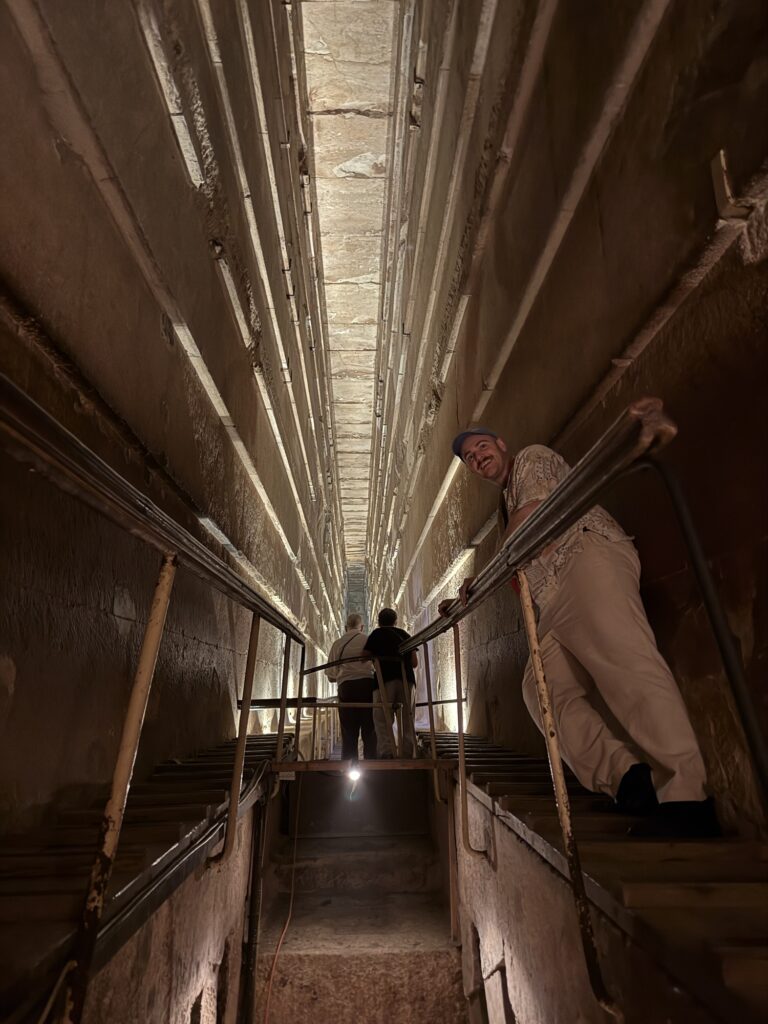
The next part is steep, but you can stand upright, so it was fine. As we went further into the pyramid, it got warmer and warmer.
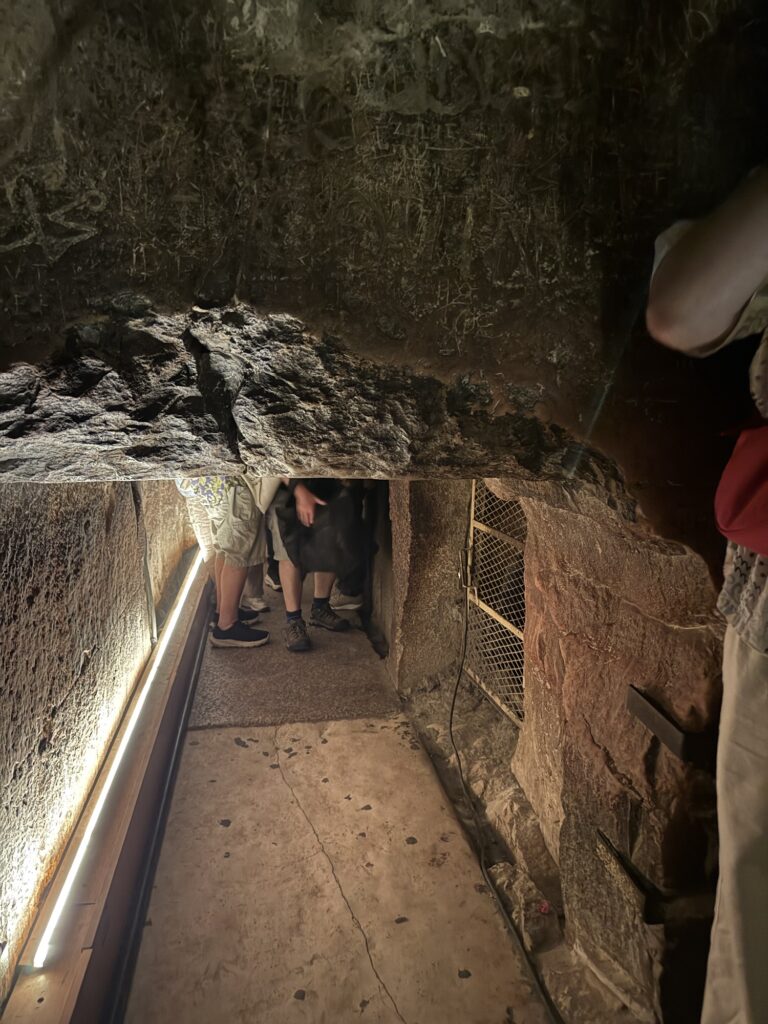
Another little crawly bit until…
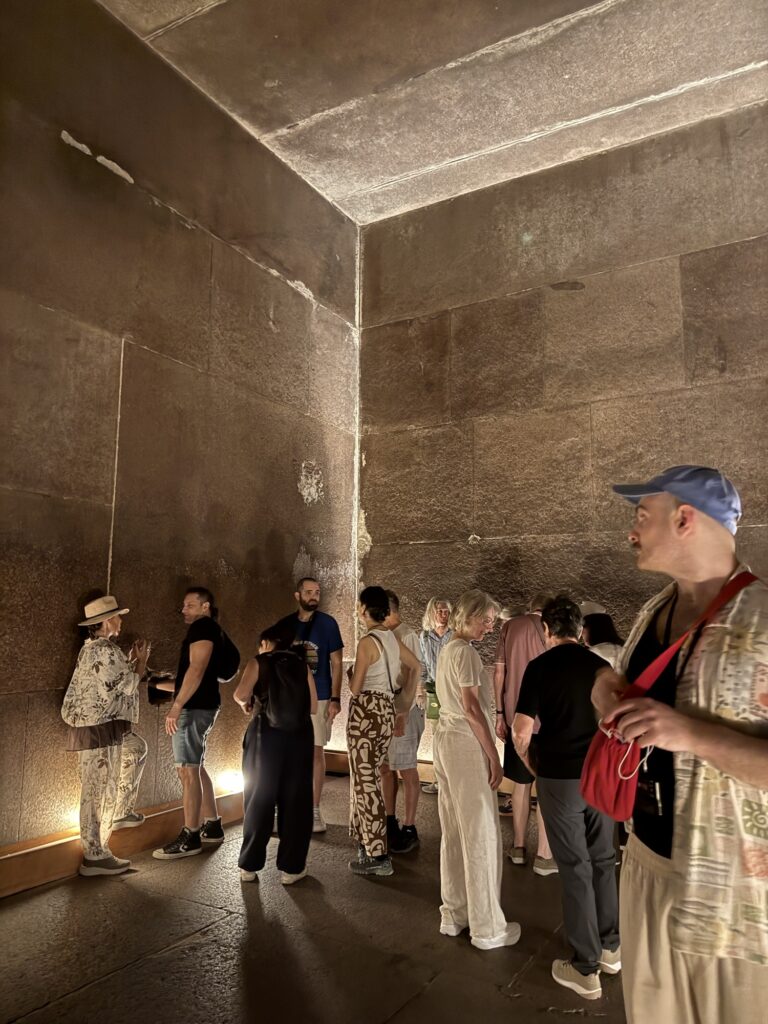
Success! The roof was WAY above our heads. The temperature was a bit like a sauna, so there were fans in the corners to cool everyone down.
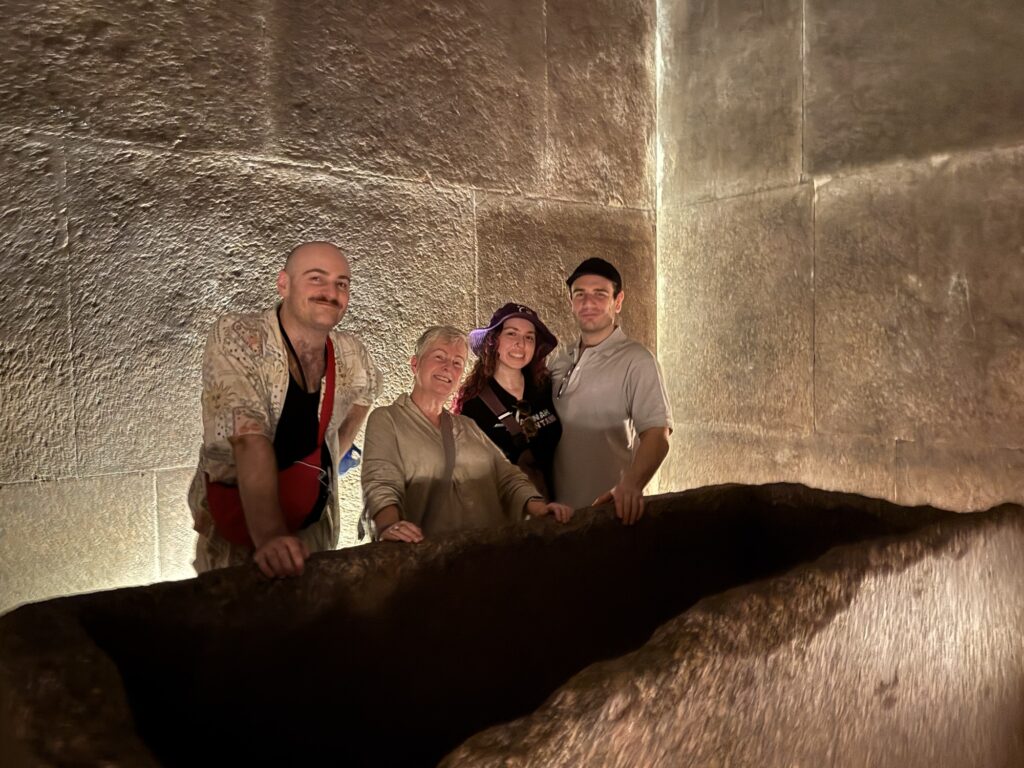
Here we all are, standing behind the sarcophagus.
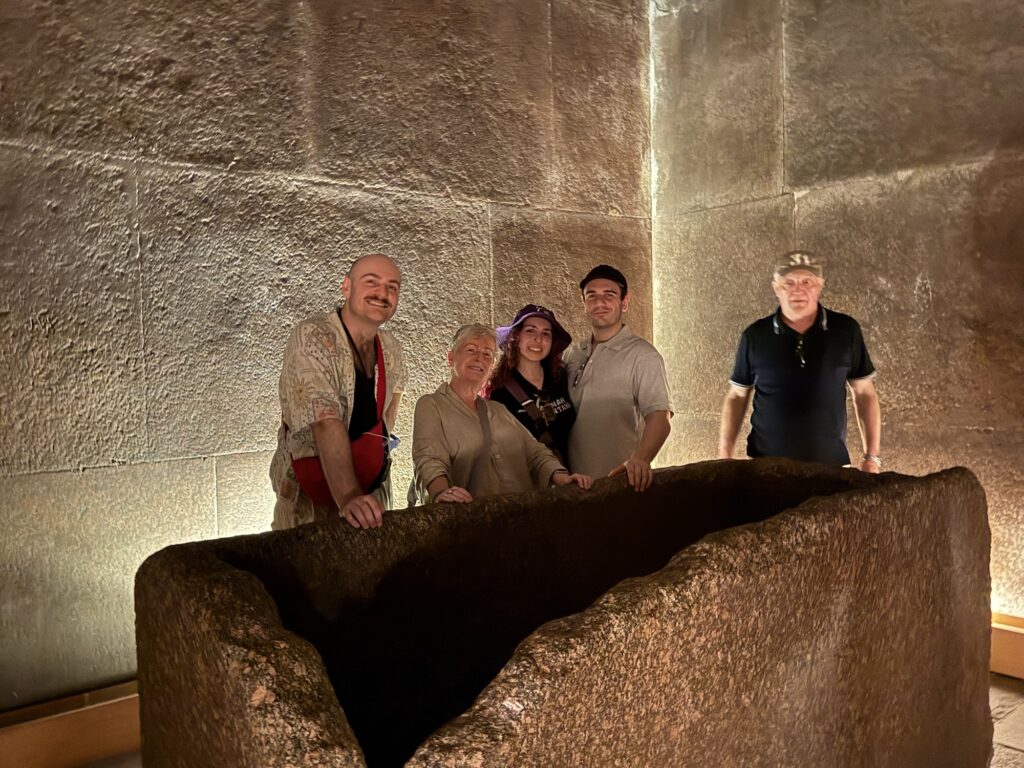
It looks as if I found a husband in there, doesn’t it? 🤣🤣😳😳
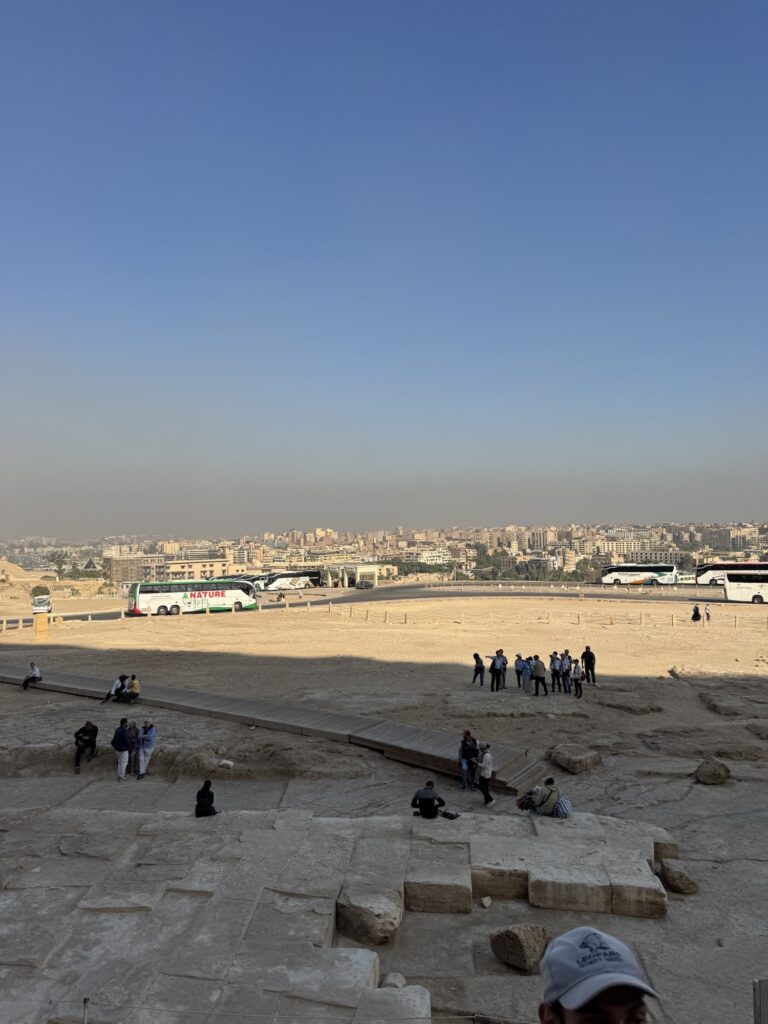
I’m standing on the pyramid here. The city is very close by.
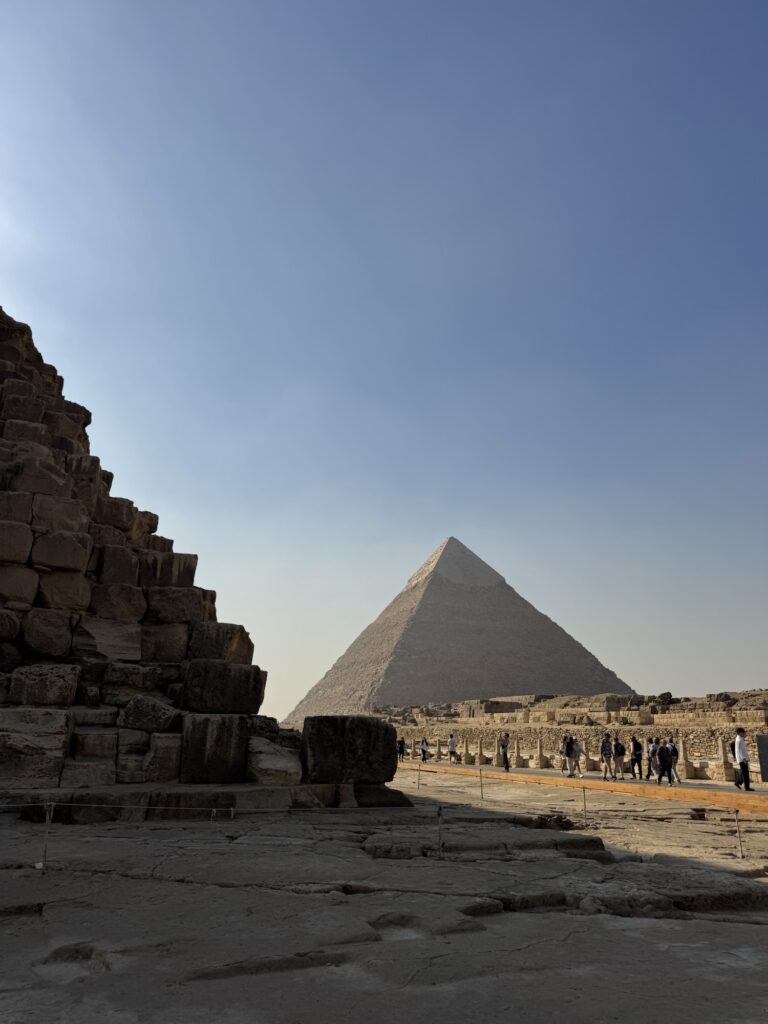
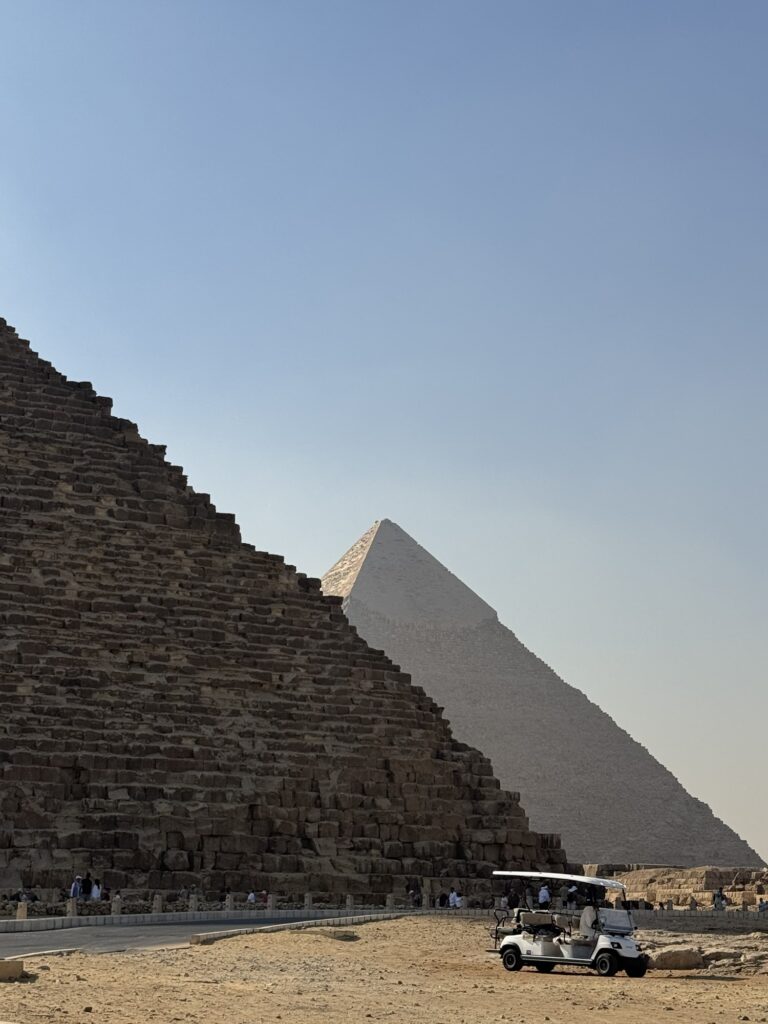
You can see from the top of the pyramid of Khafre at the back, just how straight and perfect the lines of the pyramids once were.
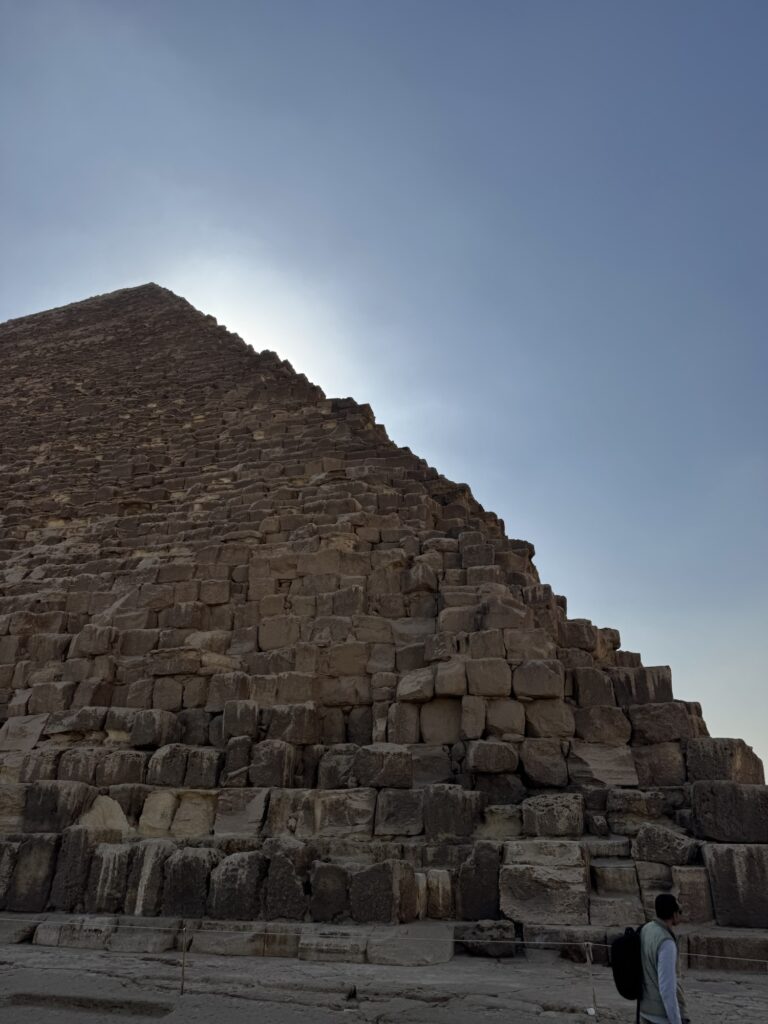
Over time, the limestone blocks that encased the pyramids were stolen to make other buildings. The ones at the top of Khafre’s pyramid only survived because they were too hard to reach.
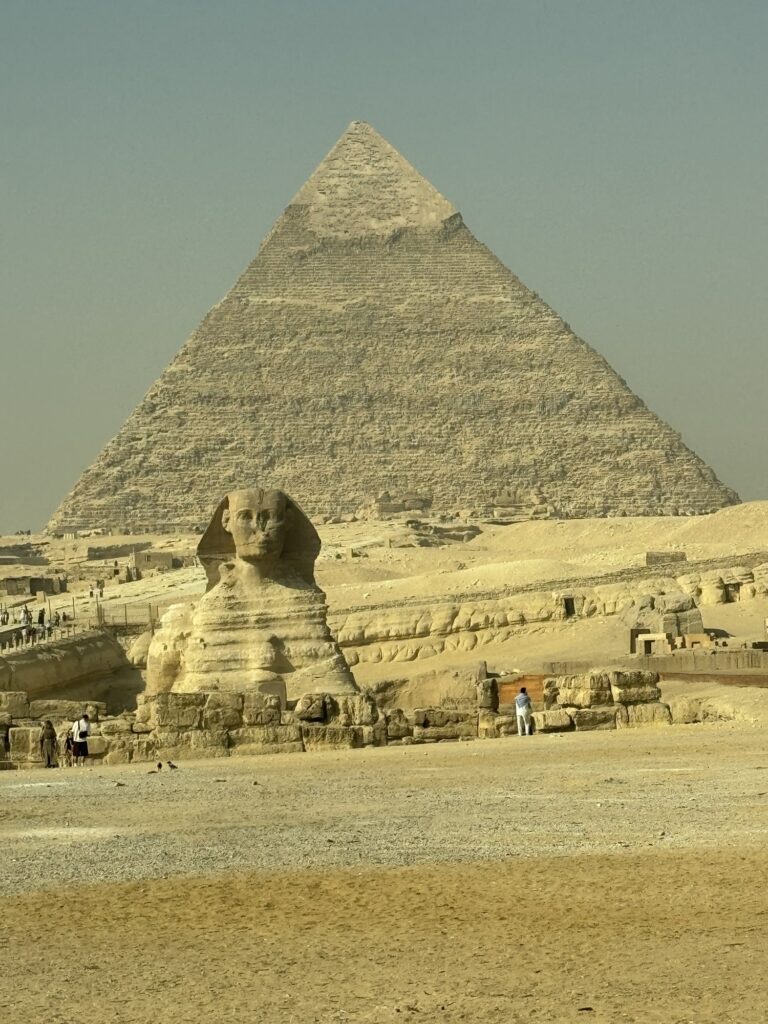
And then, the actual Sphinx. omg.
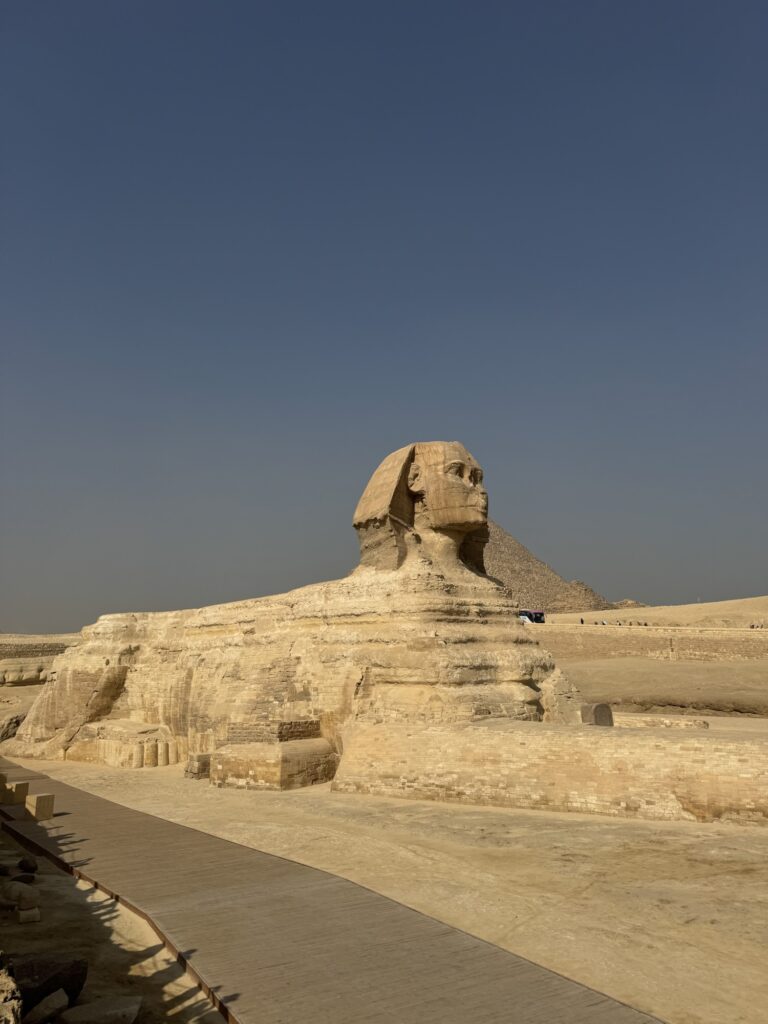
Bucket list item ticked off!!!
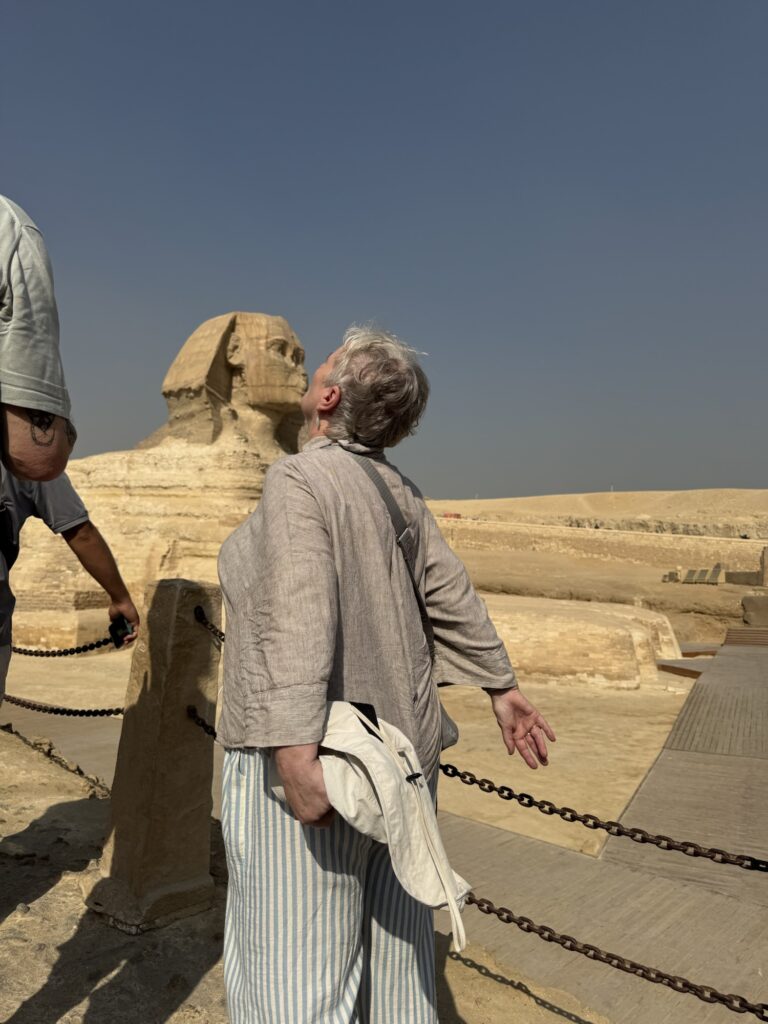
He was very welcoming.
Or maybe I was just throwing myself at him. Thanks to David33 who caught the moment.
The Great Sphinx is carved out of a natural rocky outcrop. Its body stretches 45 metres, and by traditional Egyptian artistic tastes, the head is far too small for the body. One theory suggests that the head was originally carved as that of a lion with a huge mane. Pharaoh Khufu decided to change the lion into a portrait of himself.
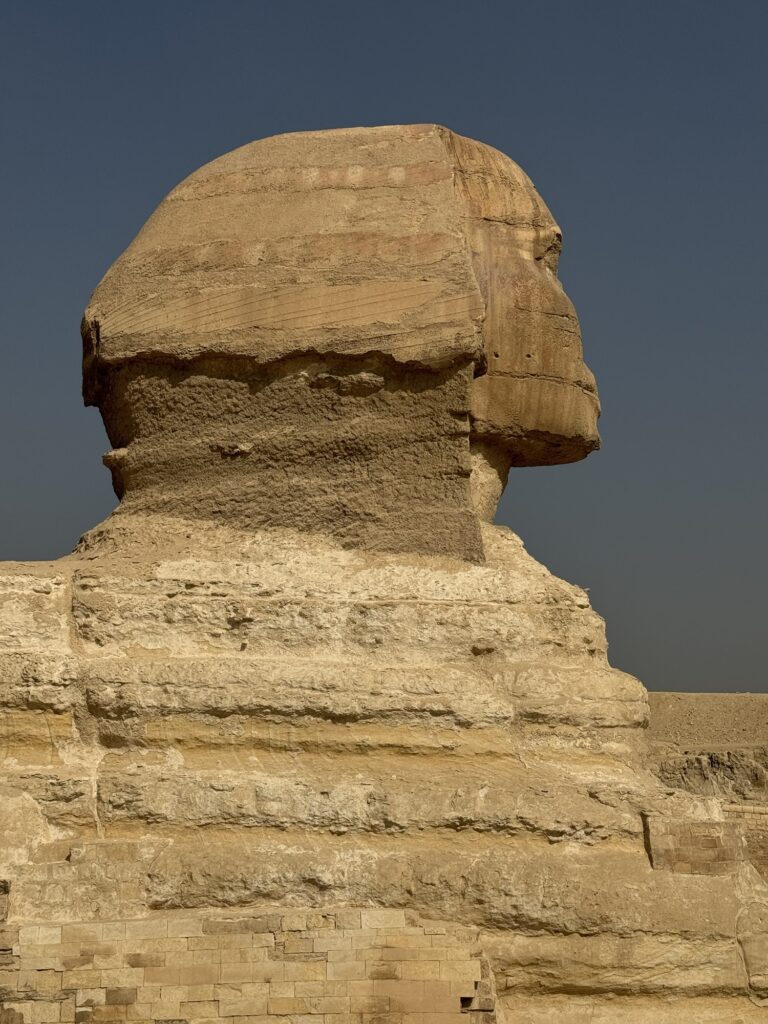
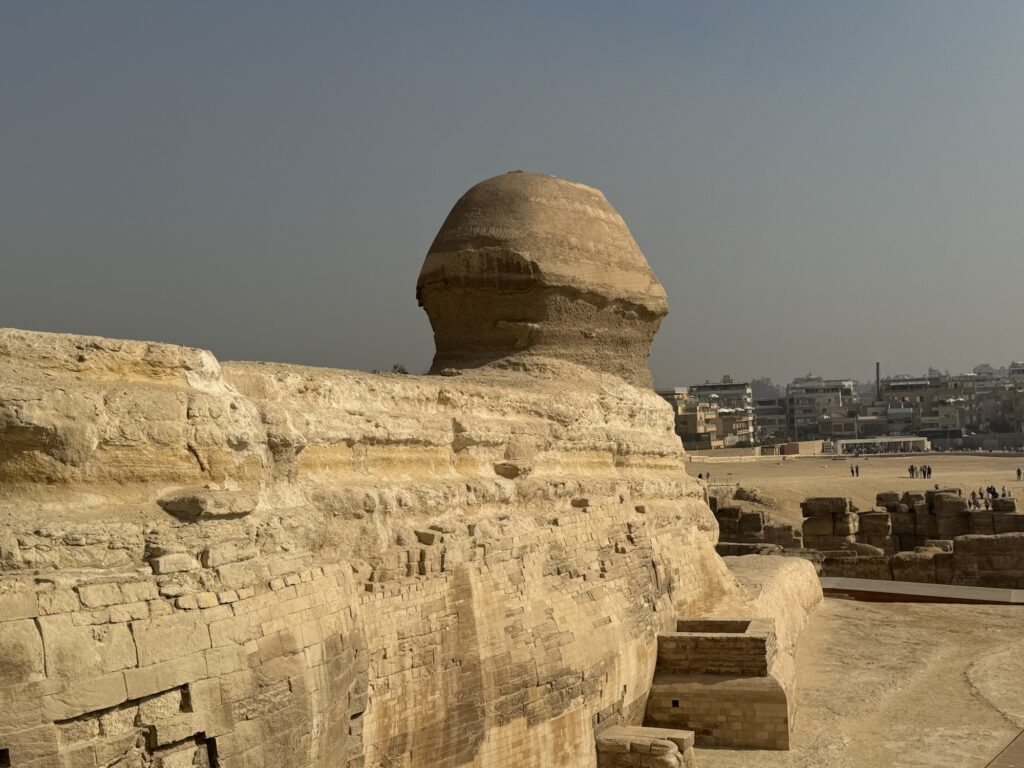
Imagine living in an apartment with a view of the Sphinx from your balcony. It’s hard to comprehend that it’s a reality for a select few.
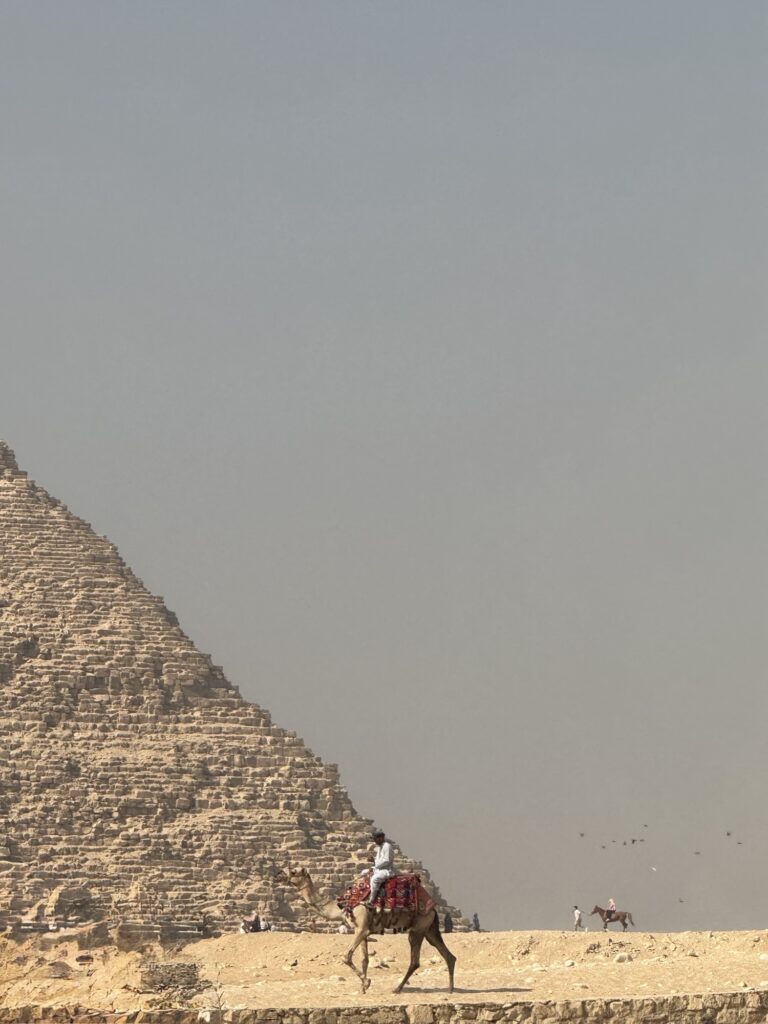
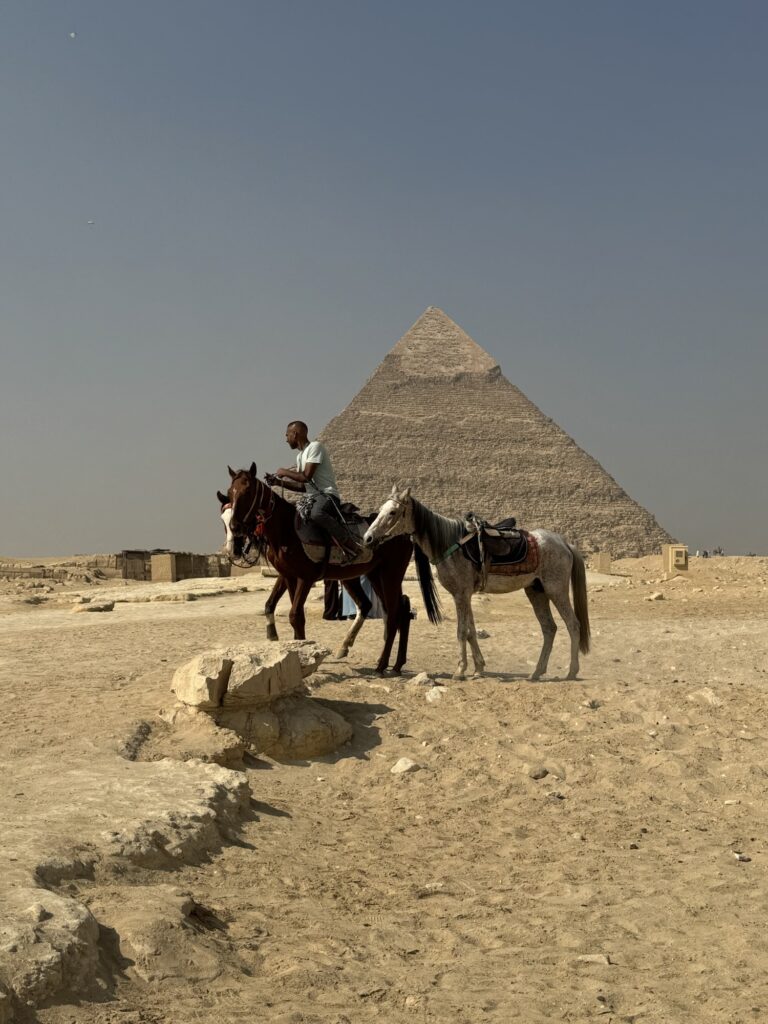
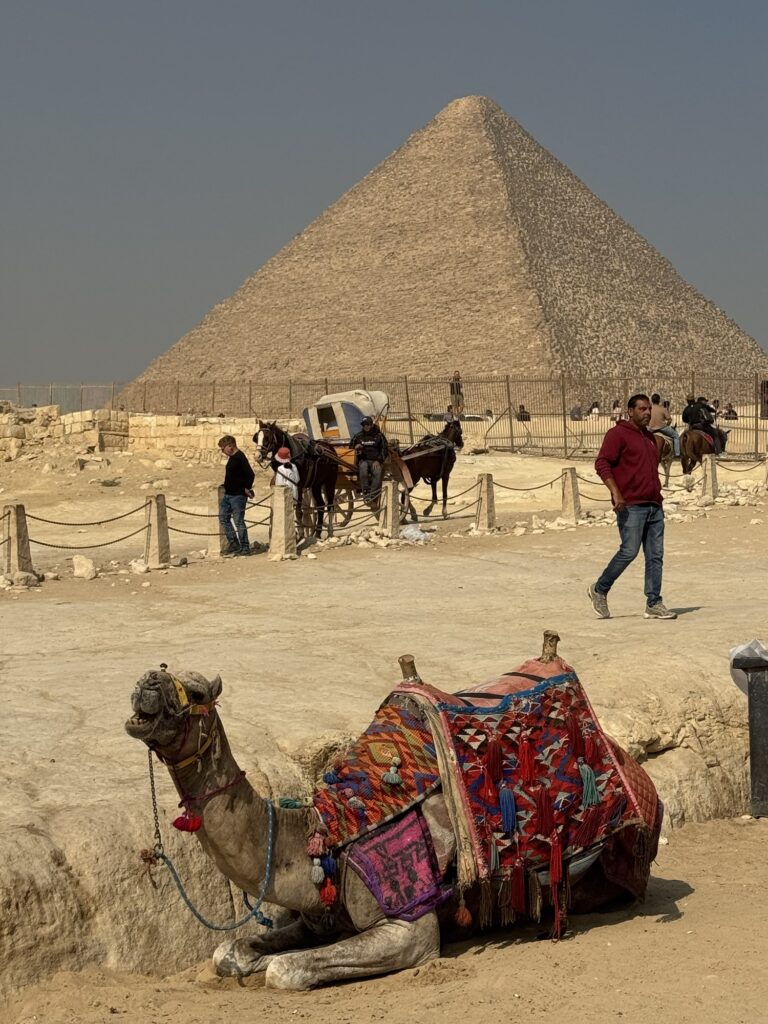
I didn’t ride a camel here. I did it when I was in Central Australia and it was a bit dull. Sometimes you only have to do things once.
I was so happy to finally see these things that I’ve heard about for my entire life. To think – I’ve actually been inside a pyramid! I’ve walked beside the Sphinx and seen it with the naked eye.
And this is the first real day of the trip!
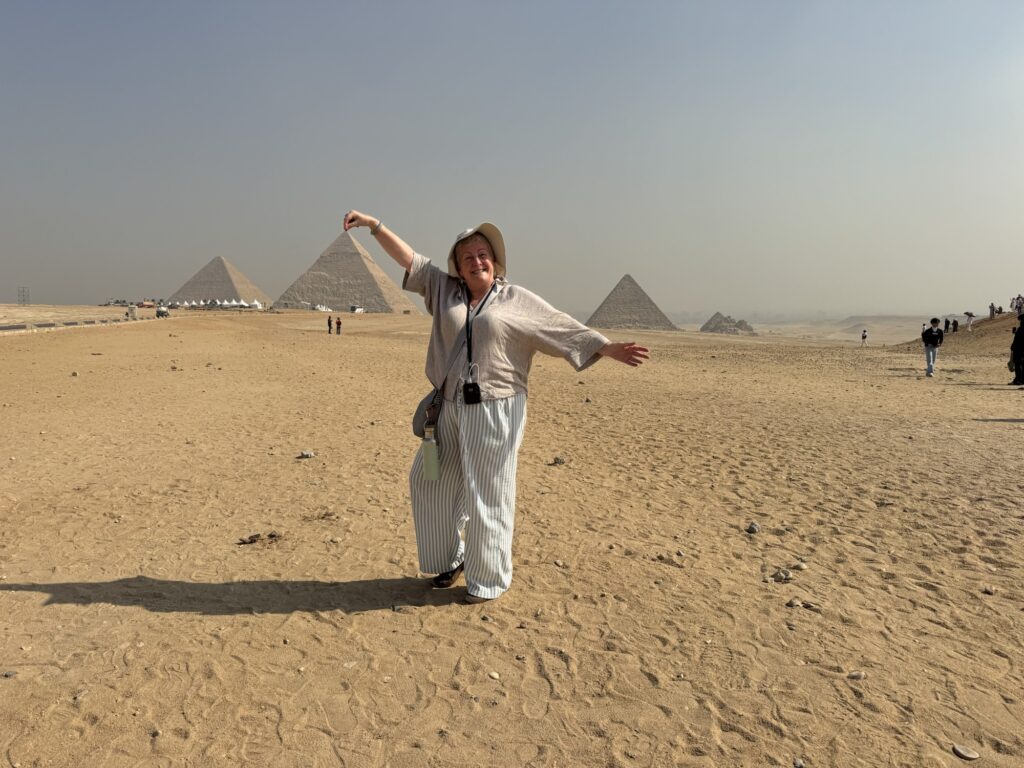
And then we drove to the Panorama to take some photos. Maybe I touched the top of a pyramid… maybe I didn’t.
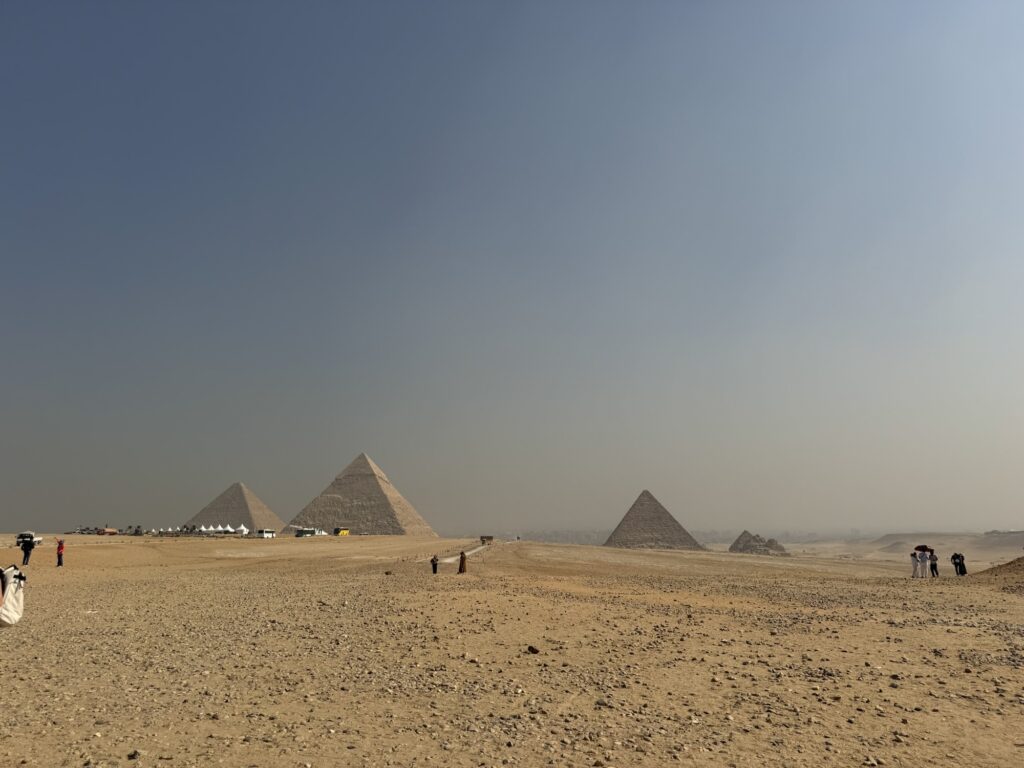
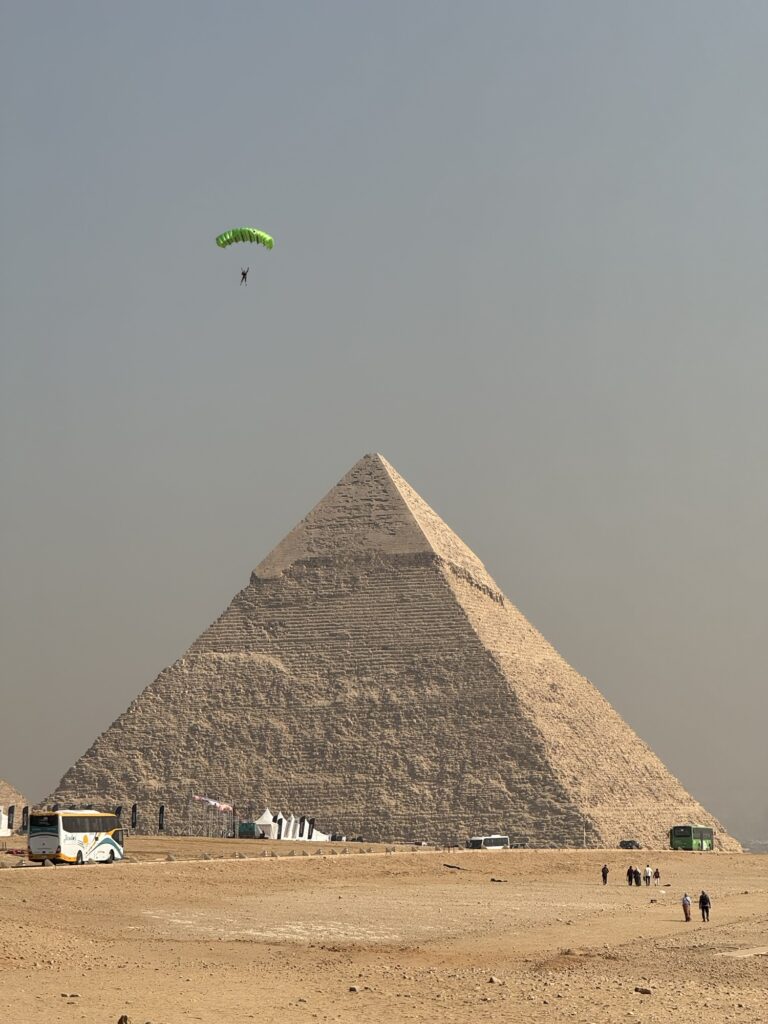
And then, skydivers. Because of course there were.
Mostafa said that the army has a 3 day skydiving course. At the end, they decide if you’re competent enough to land near the pyramids. Turns out, quite a few of them were.
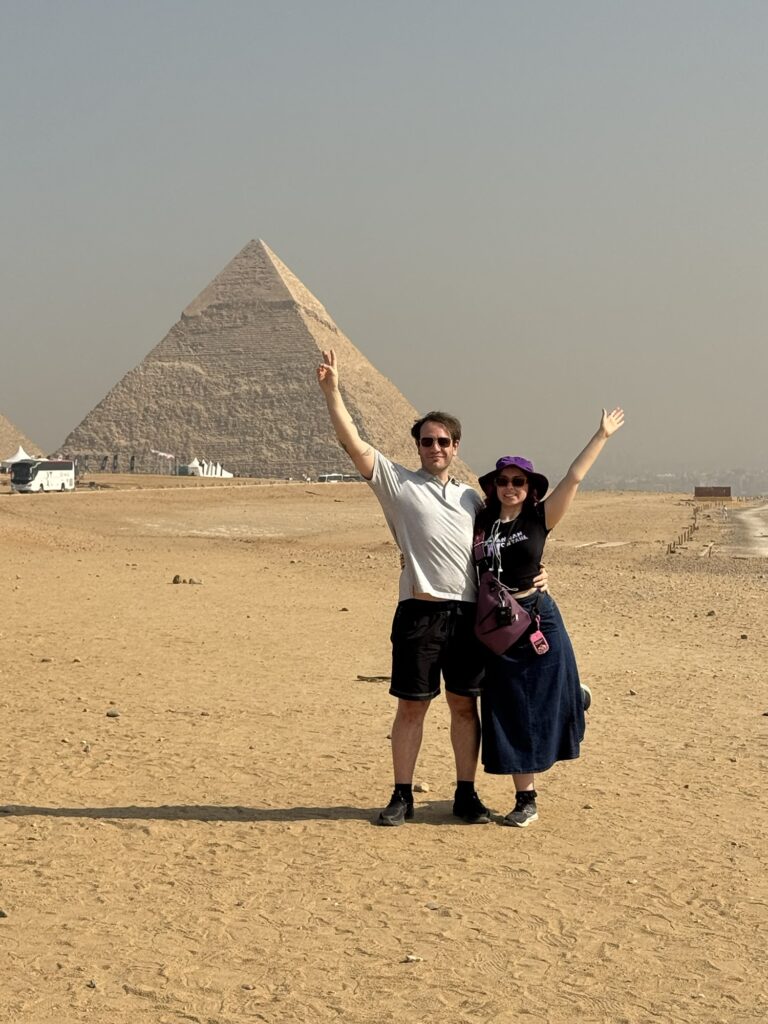
David33 and Izzy.
Then it was back on the bus and off to GEM, or the Grand Egyptian Museum. It was started in 2006 and was meant to be completed by 2011. Instead , it was only opened in November 2025, and it still isn’t finished.
It’s where every single artifact that was found in Tutankhamen’s tomb is exhibited, and it has the largest Solar Boat ever found. This boat carries the soul of the dead pharaoh off into the afterlife.
But I’m getting ahead of myself.
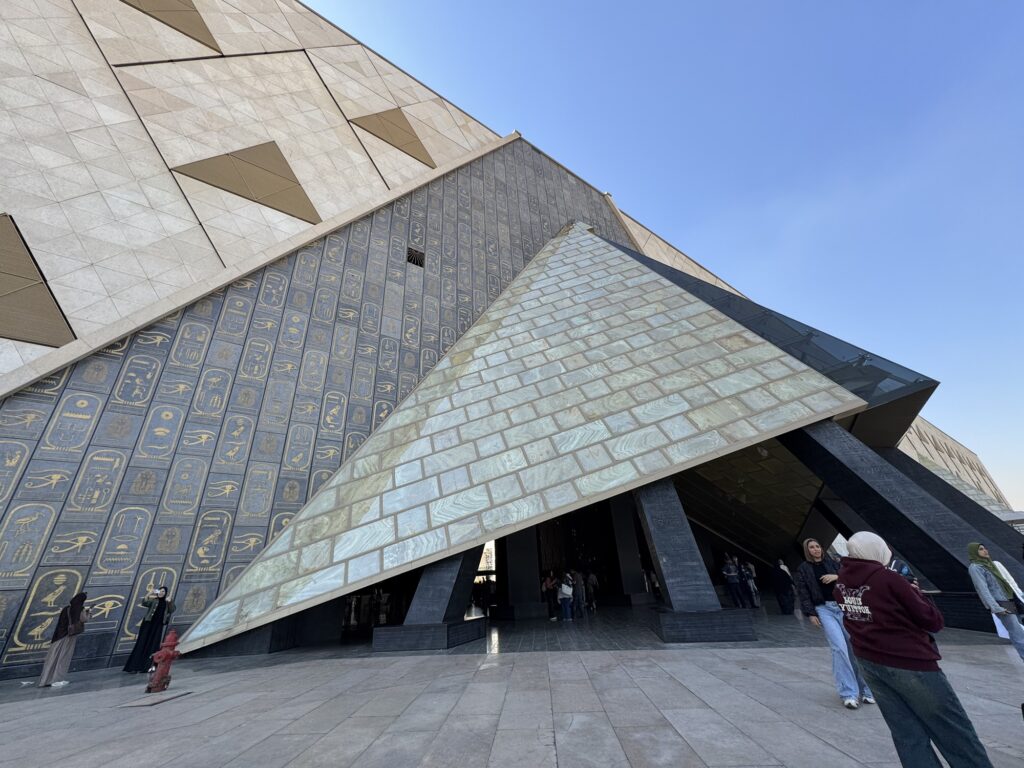
Here’s the entrance. See the missing block?
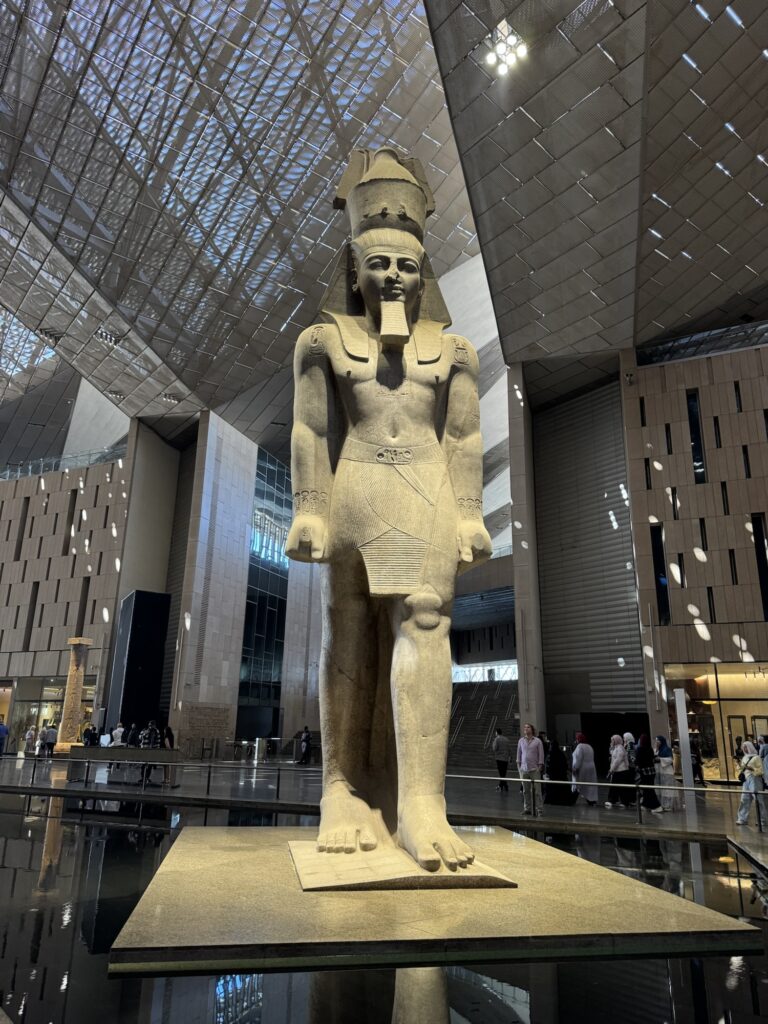
The block is missing because, on February 21, a beam of light shines in and touches the face of Rameses II, one of the greatest rulers of ancient Egypt.
This statue is 10 tons, and when it was moved here, it had to be transported standing up to prevent it from cracking. Mostafa says that later in the trip, we’ll see one that weighs 100 tons. Ten times bigger!!
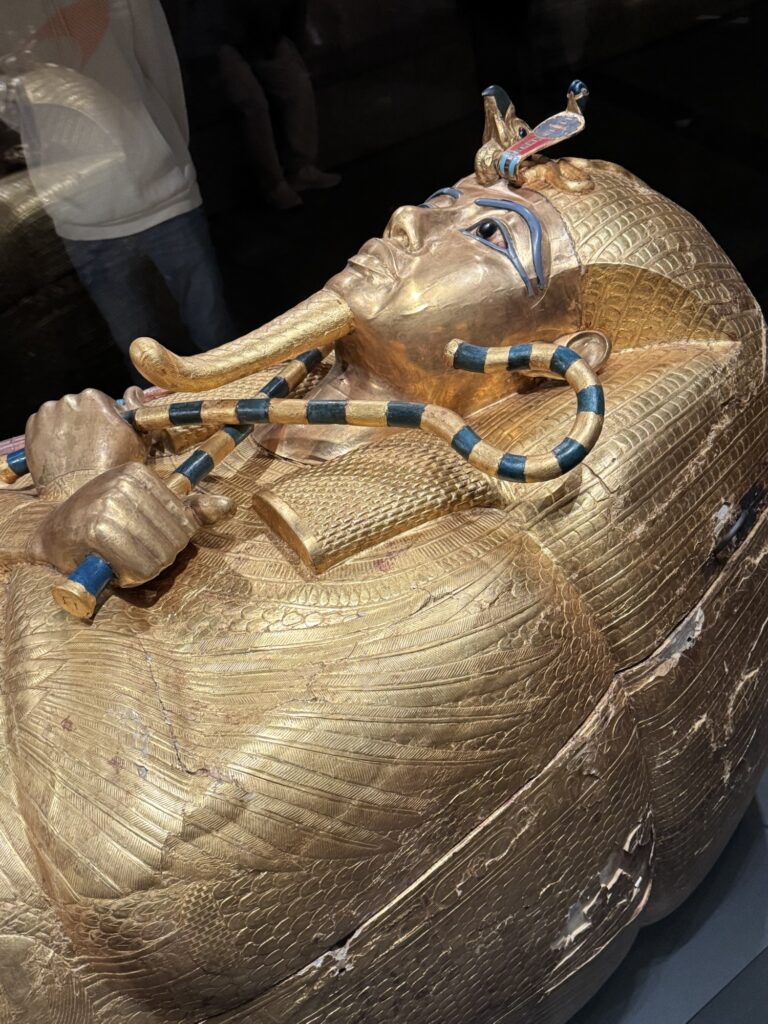
One of 3 sarcophagi. Can’t have too many, I guess.
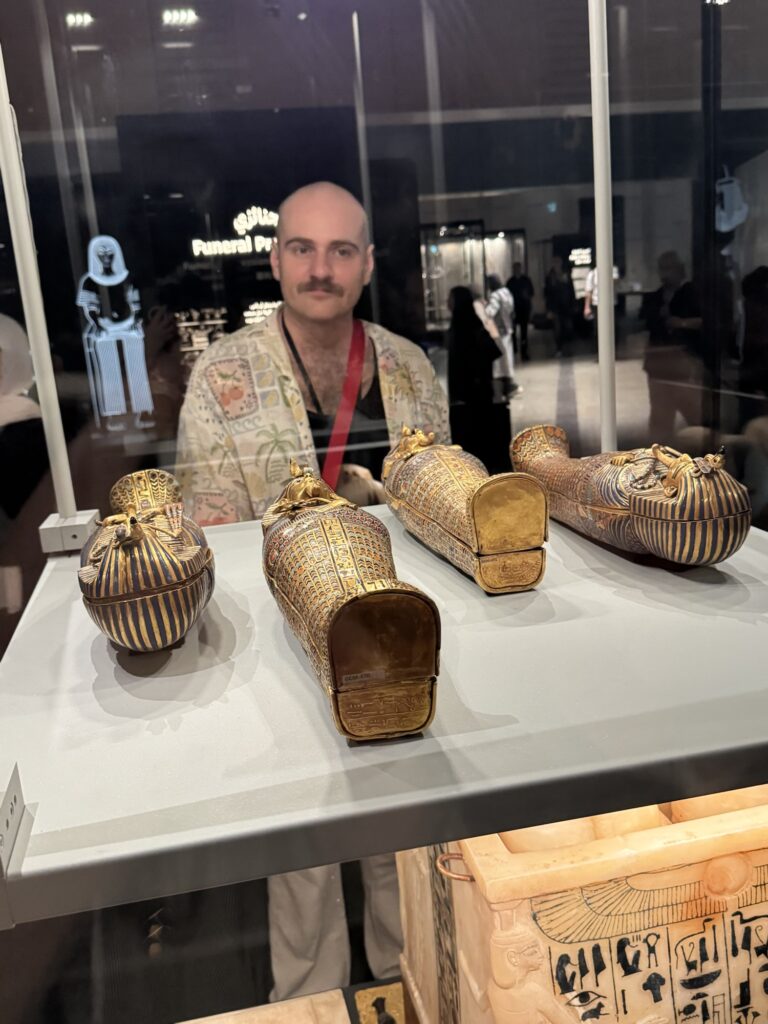
Evan30 contemplating his own mortality as he gazes at Tutankhamen’s boxes containing his liver, intestines, lungs and stomach. The heart was always returned to a mummified body, as they believed that it is weighed against the feather of truth in the afterlife.
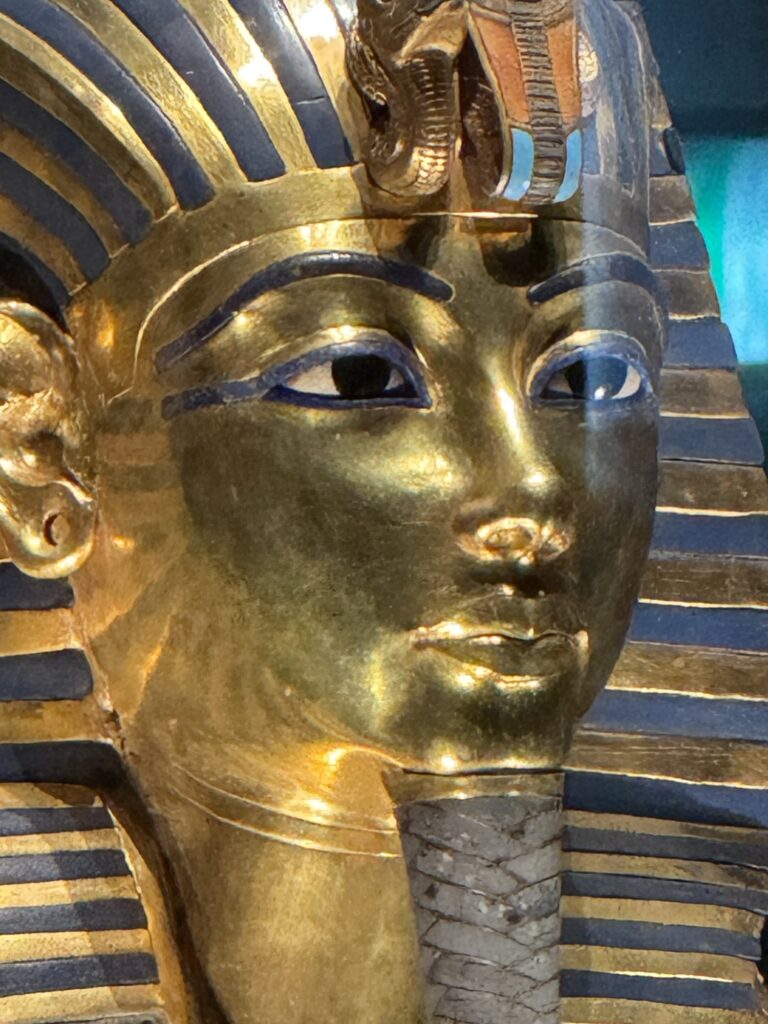
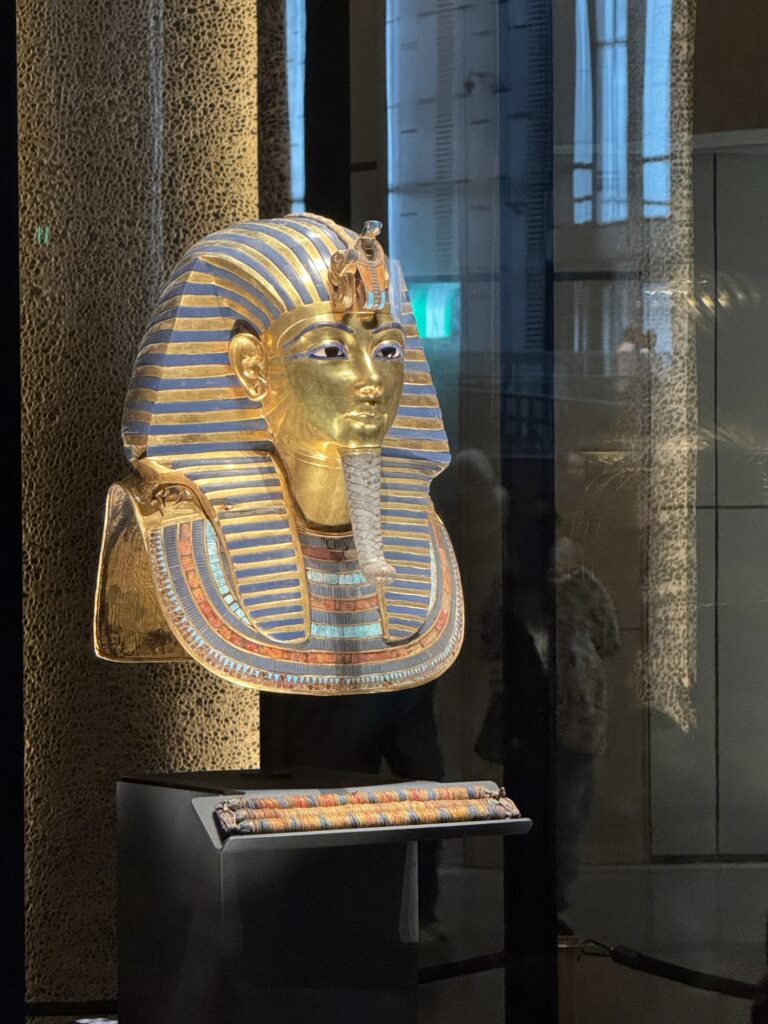
Tutankhamen’s death mask.
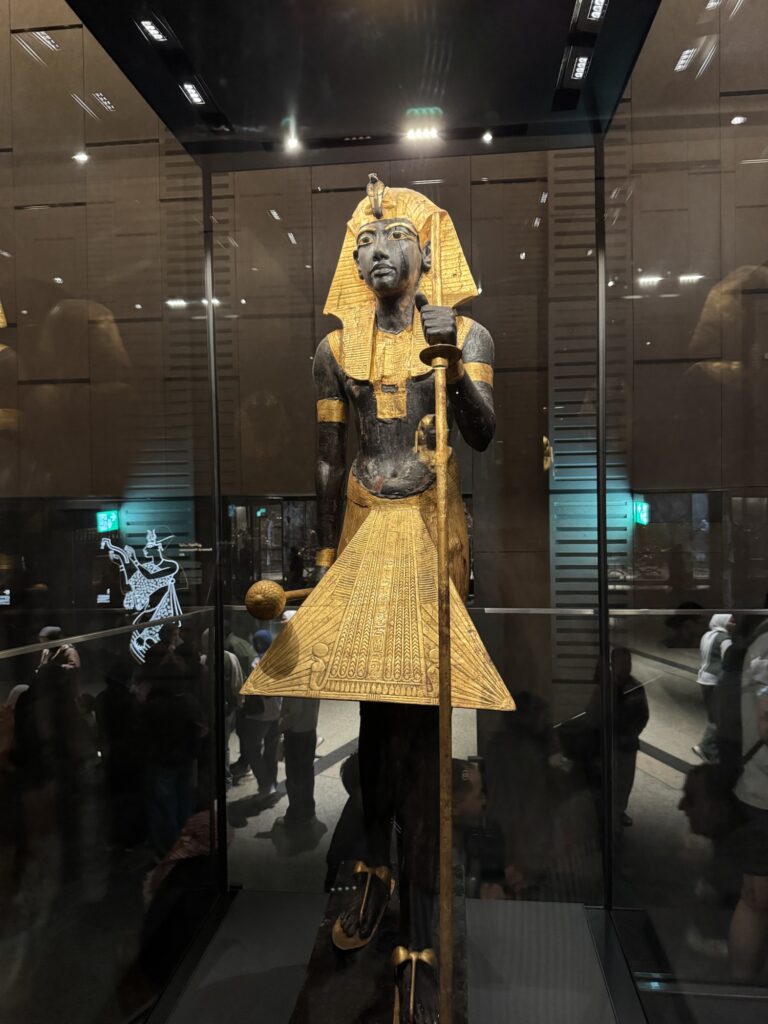
Two images, believed to be his likeness, were positioned on either side of the entrance to the tomb.
He was only 19 when he died. And what did he die of?
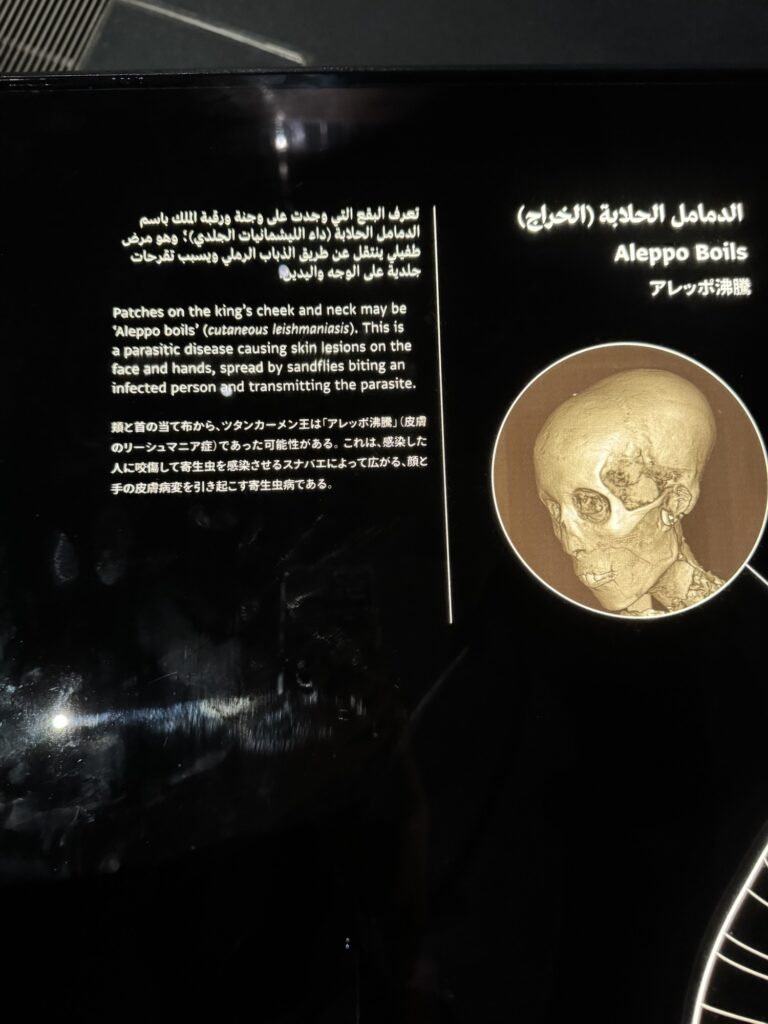
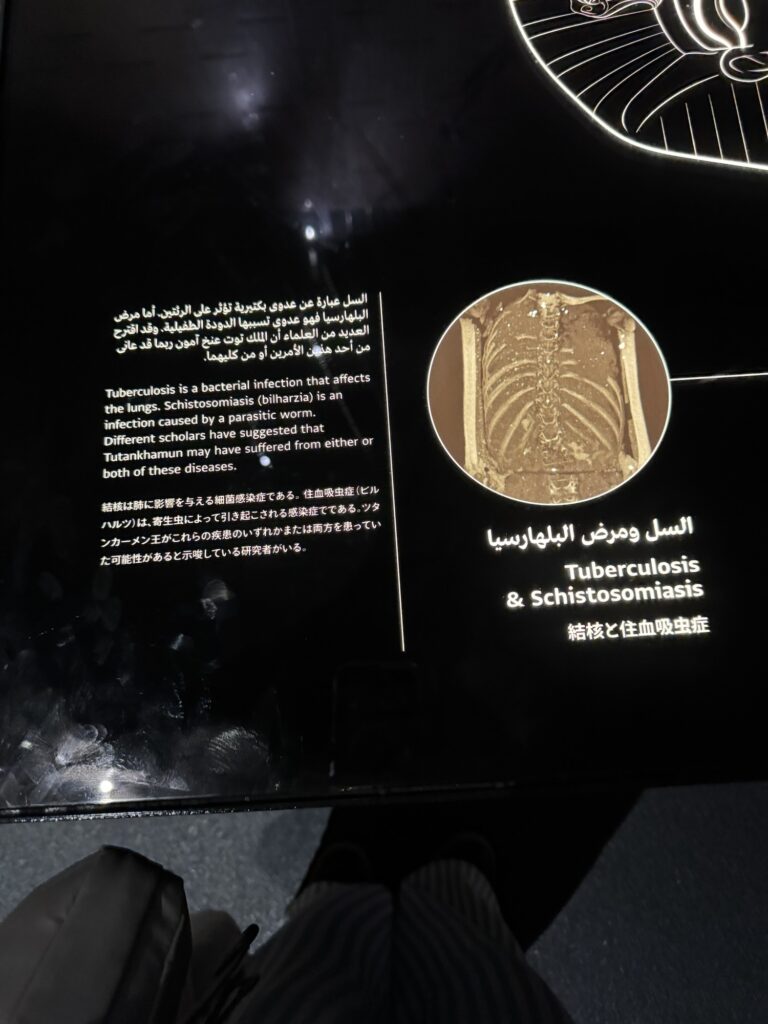
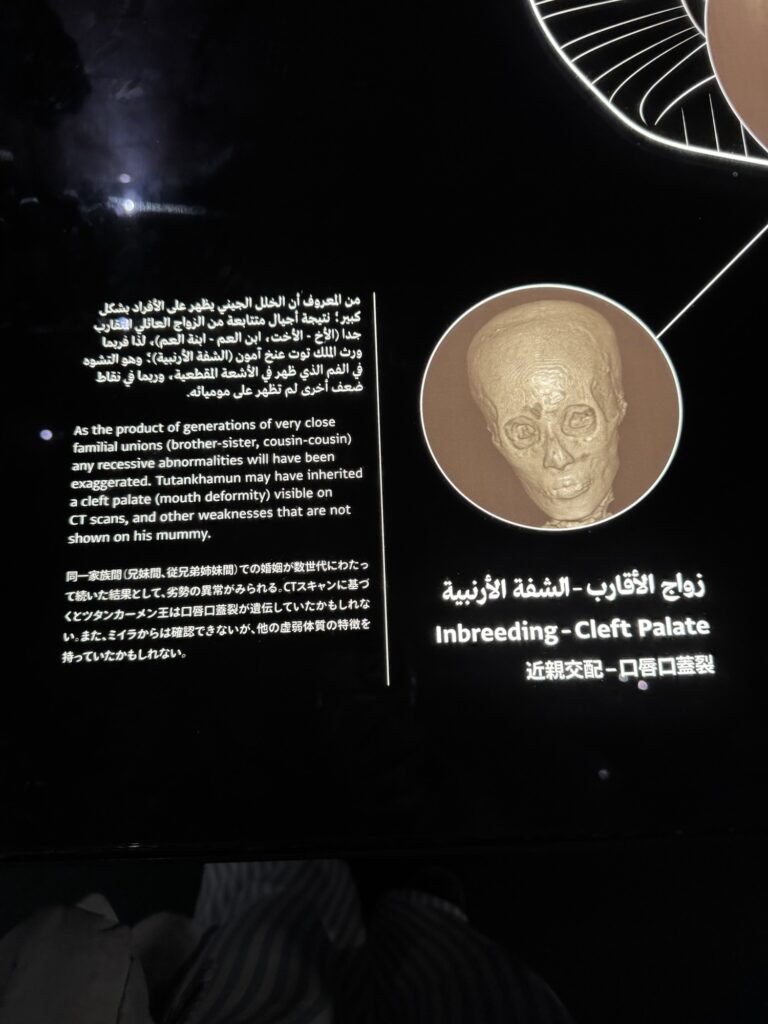
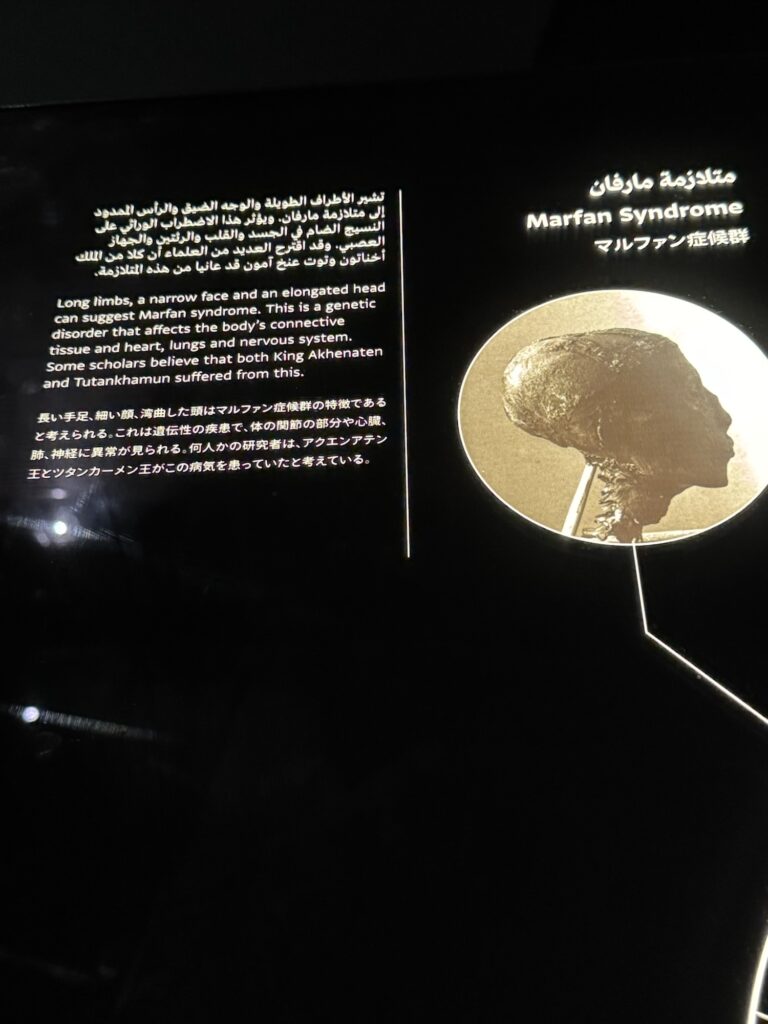
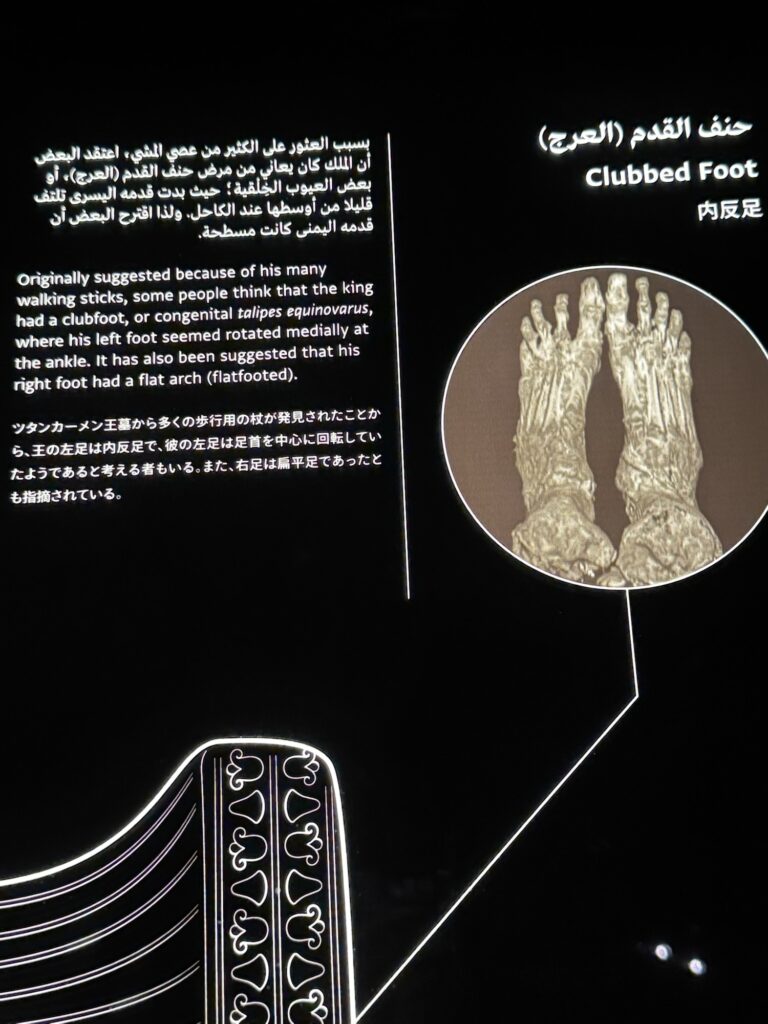
The I read this display, the more amazed I was that he’d actually lived as long as he did. The cards certainly seemed to be stacked against him.
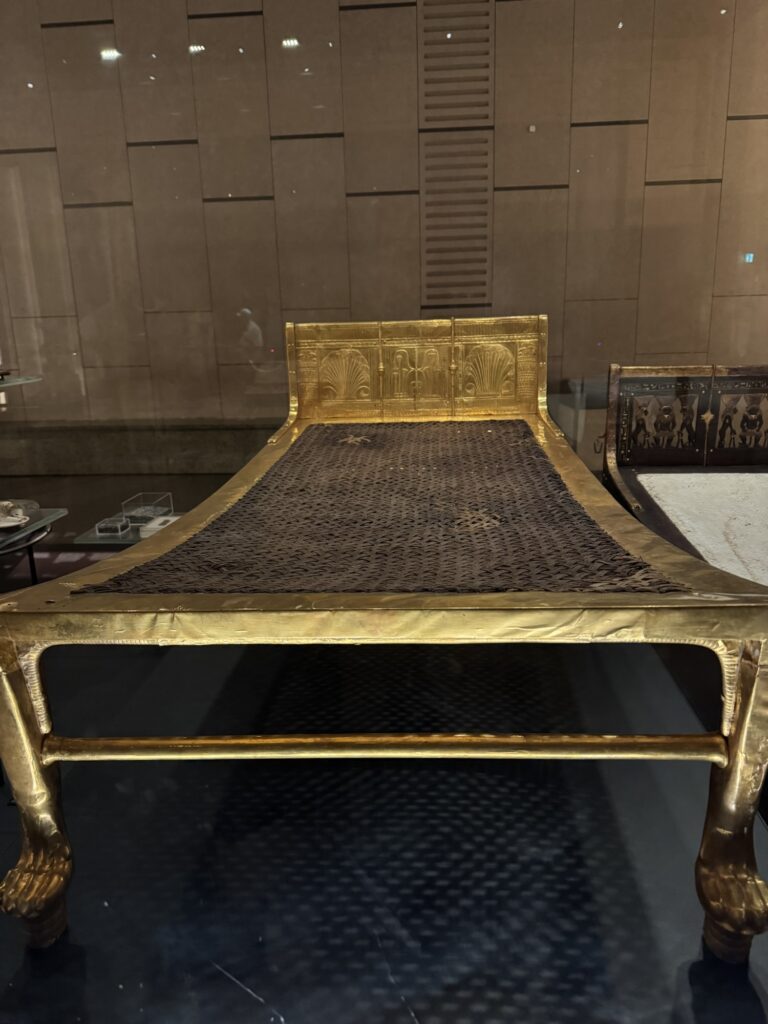
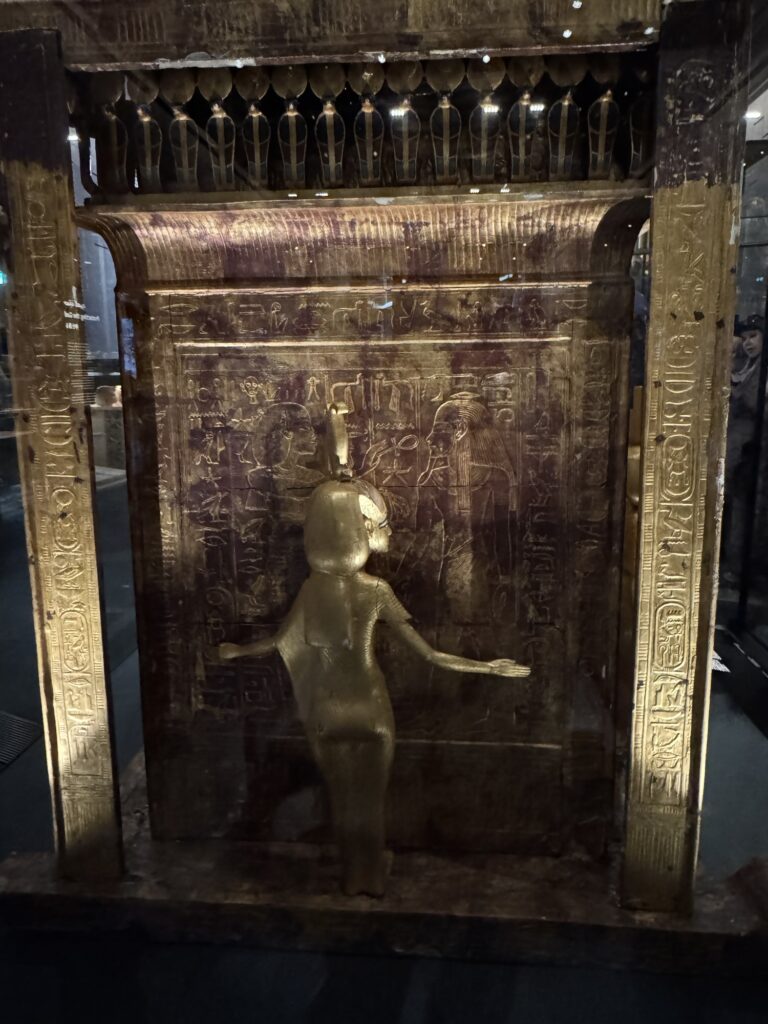
Look at this bed. Gold.
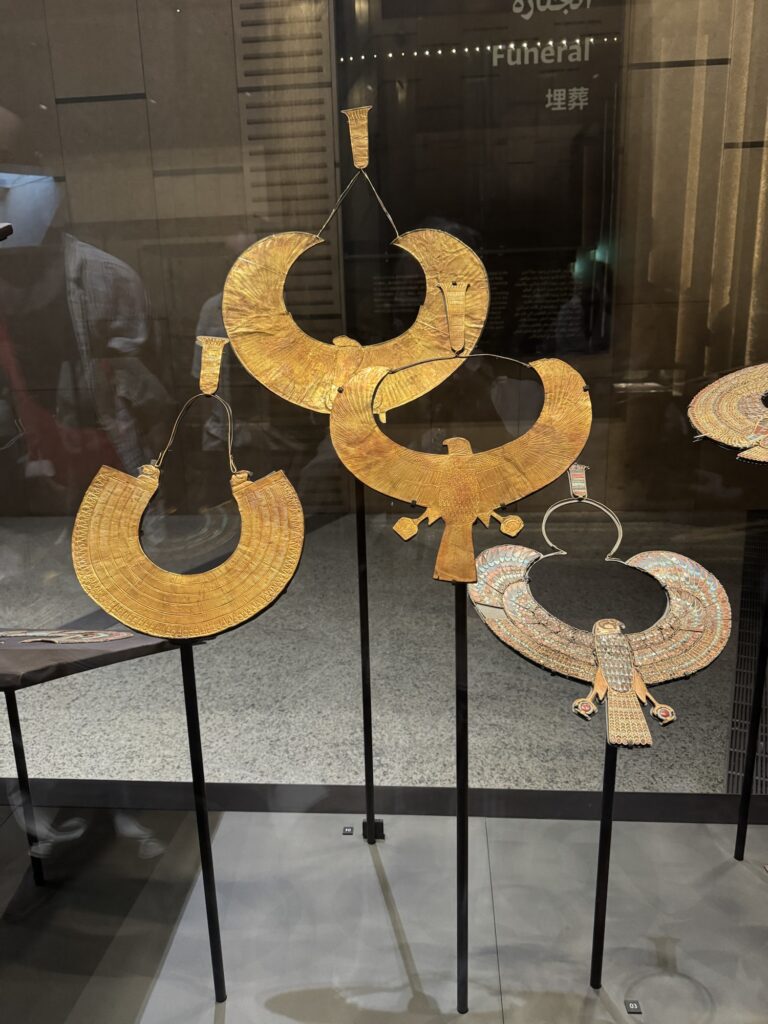
Gold itself wasn’t very valuable to the ancient Egyptians. They had plenty of gold mines. What they didn’t have was silver. They had to import it, so of course that was the highly sought after metal, with all pharaohs using silver in their funeral things.
But poor little Tutankhamun died very suddenly when he was very young. The people working on his tomb had only 60 – 90 days to get everything ready for his burial, so they used gold instead of silver. Everything was done perfectly, but it was by far more rushed than everyone else’s.
Ironic that the smallest, most rushed tomb has ended up being the most famous.
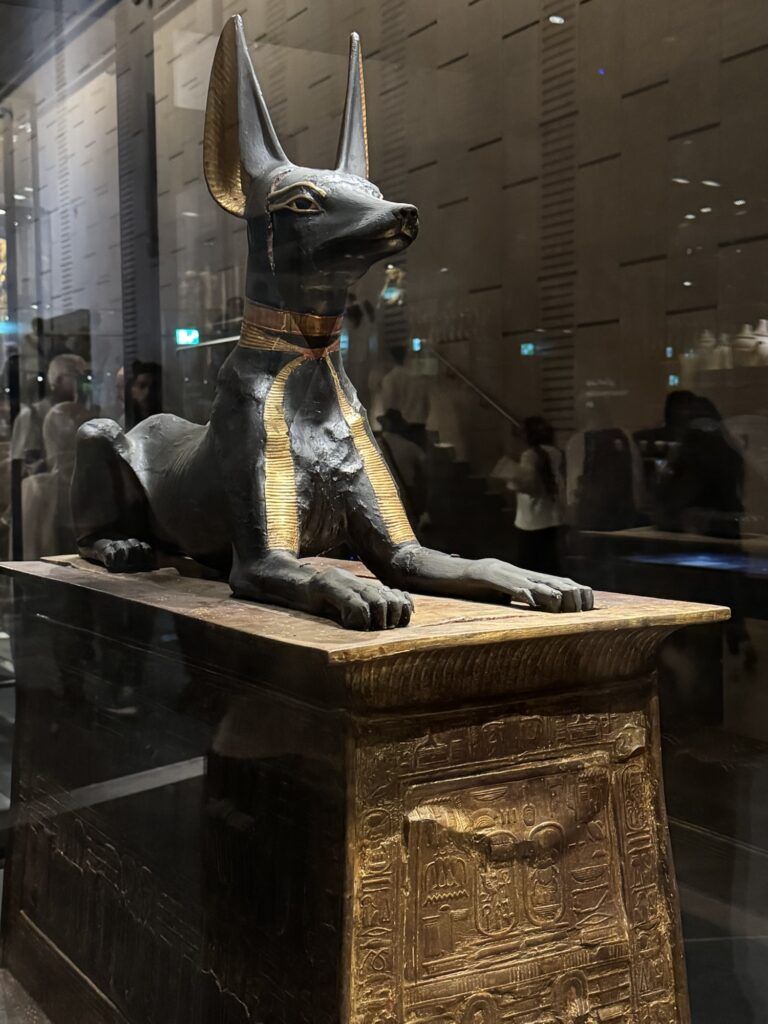
My feet were tired, so we grabbed lunch at a really nice restaurant called BitterSweet.
Then it was off to see the Solar Ship. This is a little like the Mary Rose, which was Henry VIII’s flagship that sank in the 1500’s and was buried in mud, preserving it for 400 years until its discovery.
Except this ship was preserved in a pit by the pyramids, and it’s slightly older. Around 4,000 years older.
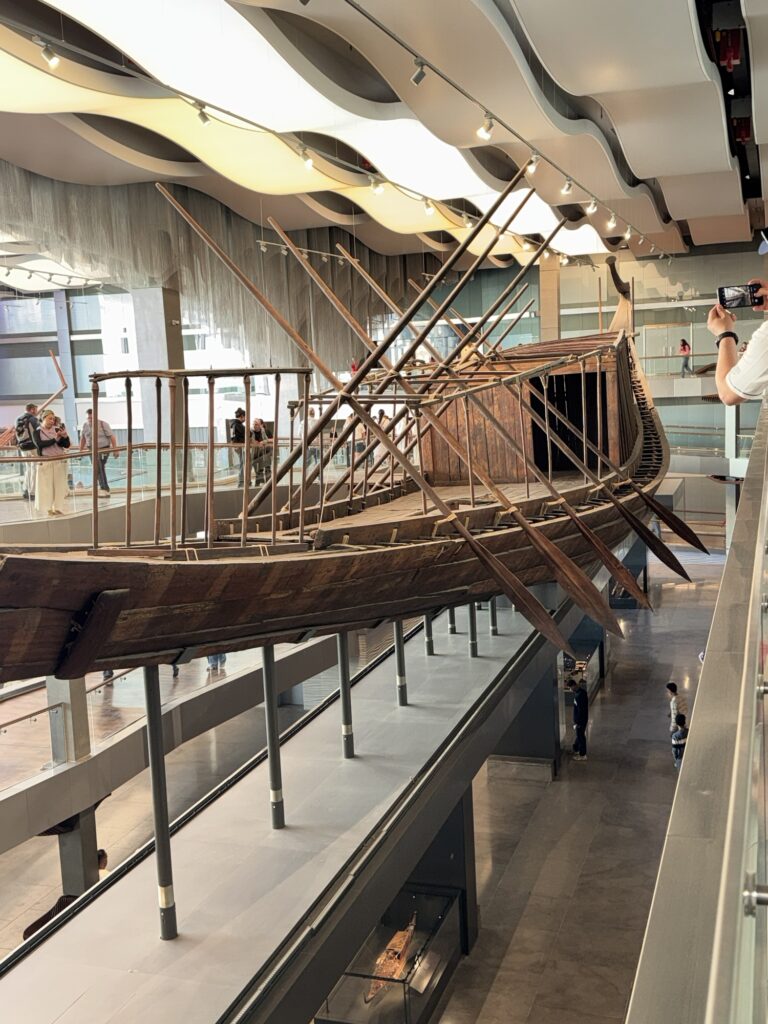
It’s believed it was either used in Pharaoh Khufu’s funeral procession or intended for his afterlife journey with the sun god Ra.
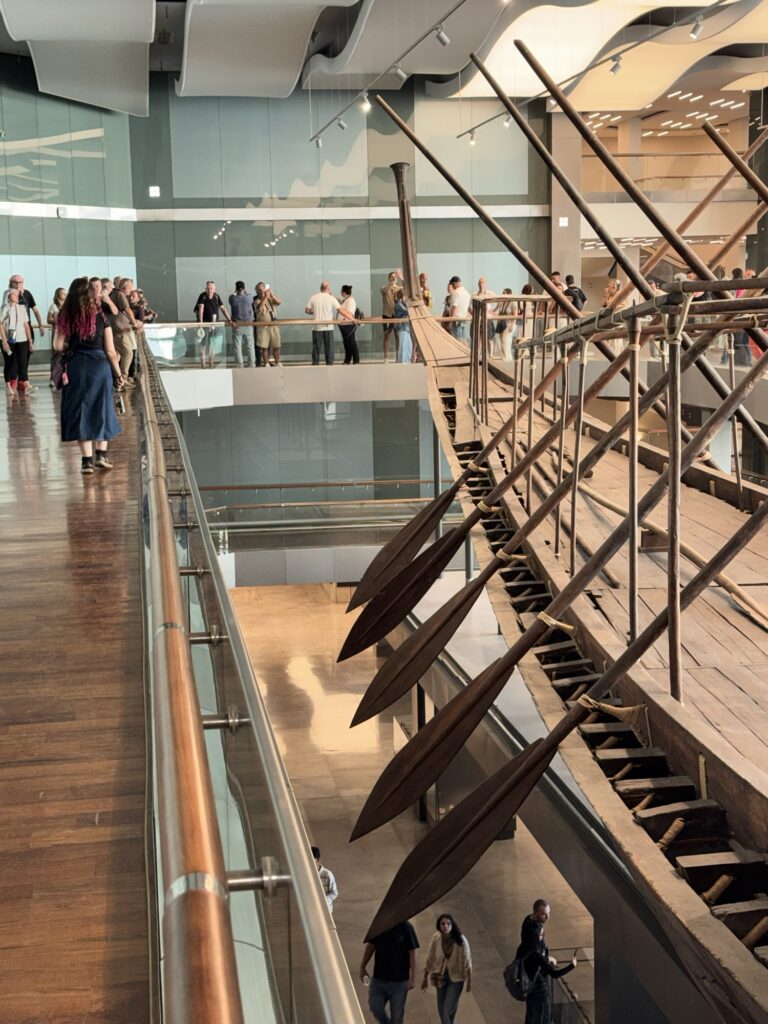
It’s huge, around 43.4 metres/142 ft long, built from Lebanese cedar using joinery and rope binding without metal nails.
Mostafa said that before it was moved to the museum, people were paying 7,000 USD to see it. Now, you can see it, and all of Tutankhamen’s treasures, for the price of a ticket.
I love a bargain.
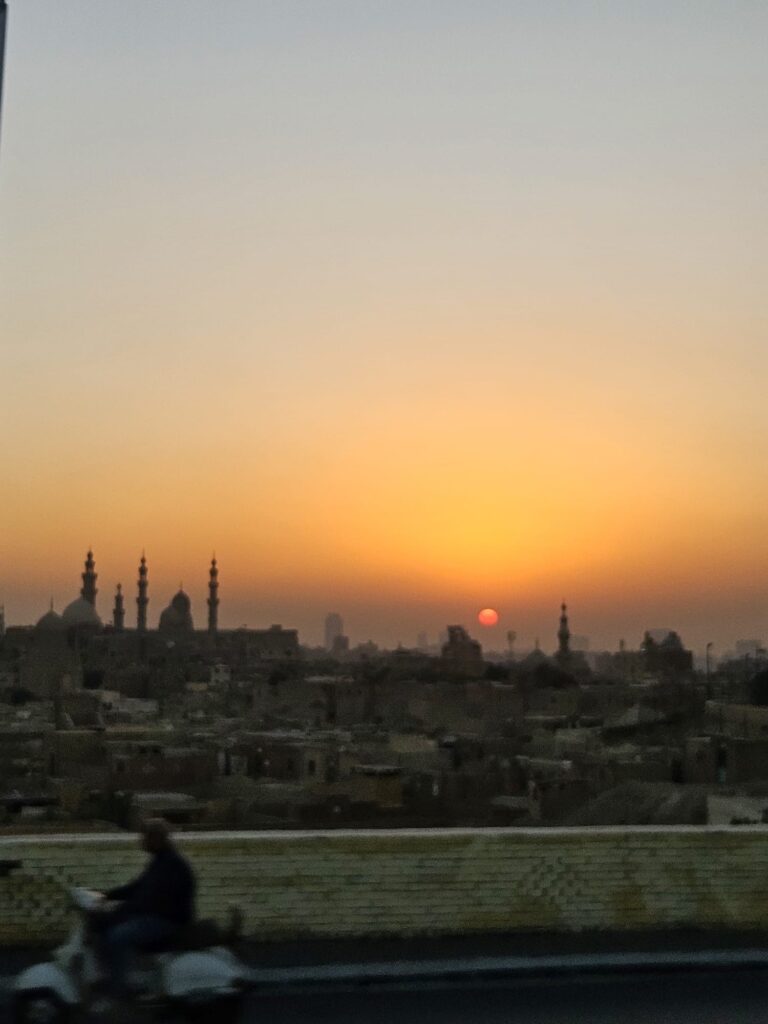
WHAT a day! We packed so much in. Seeing all of this has been fantastic, but spending time with my kids while doing so is killing two birds with the one stone in the best possible way.
I’m happy.
I’m lying in bed, absolutely exhausted, but I wanted to get this post finished before I went to sleep. Tomorrow is another day in Cairo, and there’s sure to be lots of to see and do.
Time to get some shut-eye!
Dad joke of the day:

What an awesome day!! So happy for you xx