The group split up today. A few of us went to see Rainbow Mountain, but most of us chose the more varied tour on offer.
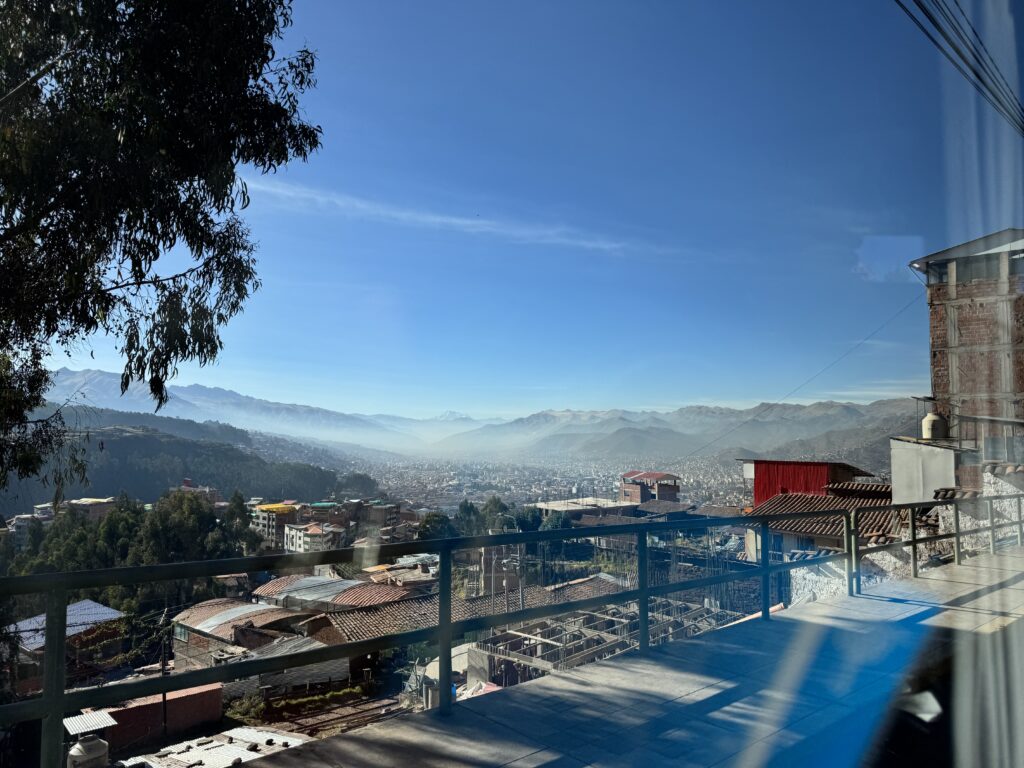
Unfortunately, I was sitting on the wrong side of the van, so there were reflections on the window. I tried my best. Also, it’s really hard to get photos from a van. You have absolutely no warning if something interesting is approaching and then whoosh! It’s gone.
This is low- lying morning cloud over Cusco as we climbed the road out of the city.
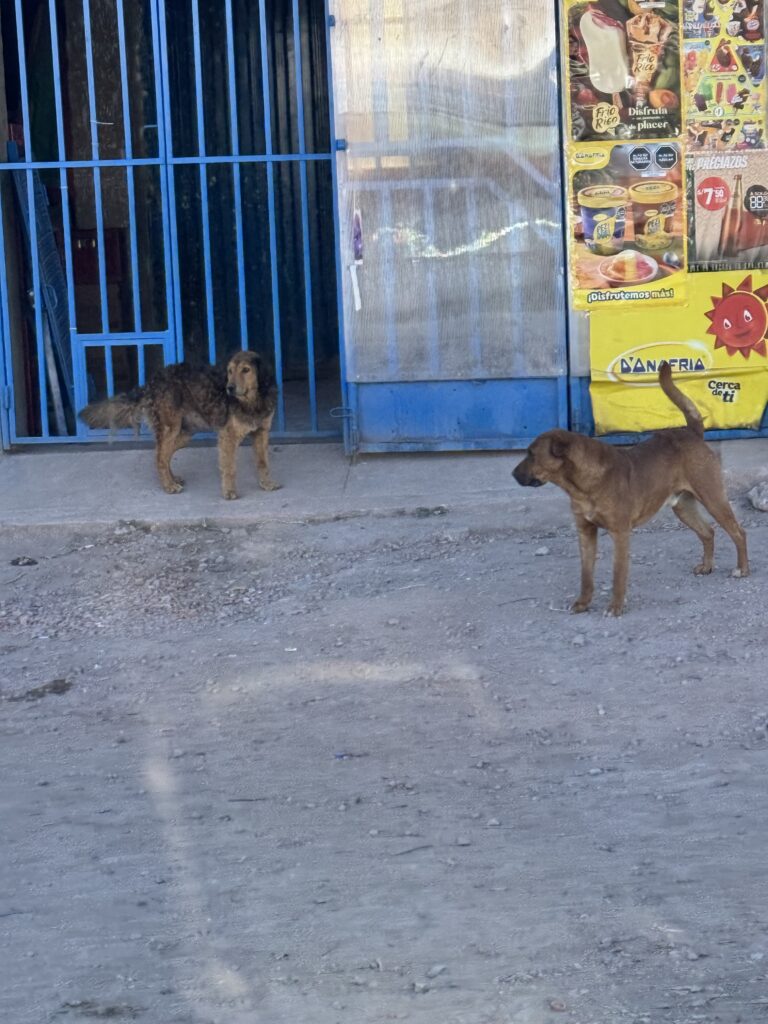
The locals feed the stray dogs and the dogs stay near houses that feed them and protect the houses. “You never see a thin dog in Peru,” said Claudio.
We were talking about this in the taxi coming home from dinner. It’s true. We’ve all seen scrawny dogs around the world, but not in Peru.
The Peruvian people are not fond of Trump. At all.
They used to buy their petrol from Venezuela. Ever since Trump kidnapped the Venezuelan president, the United States has taken all of Venezuela’s oil. Peru doesn’t have its own oil, so now they are buying it from Mexico at vastly higher prices.
People living here in the Andes have a life expectancy between 90 – 100 years old.
People in the cities? 70 – 90 years.
They have a simpler life, their food is pure and organic and they have less stress. They are living the lives their ancestors lived. Arthritis gets them, though.
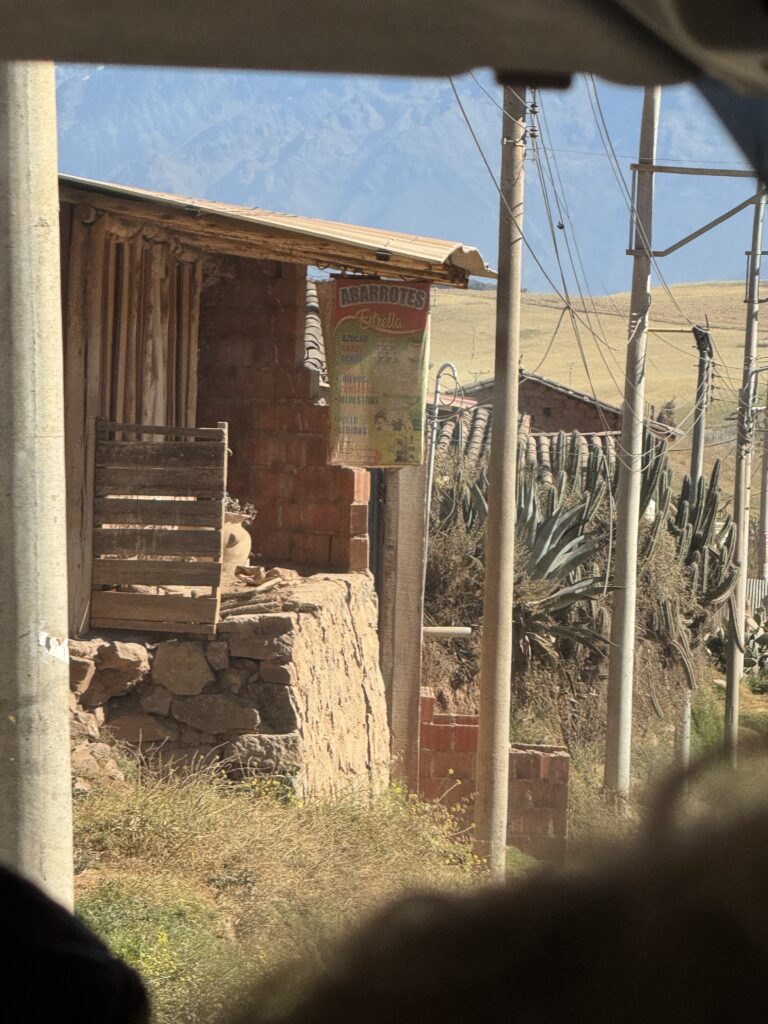
The houses are adobe.
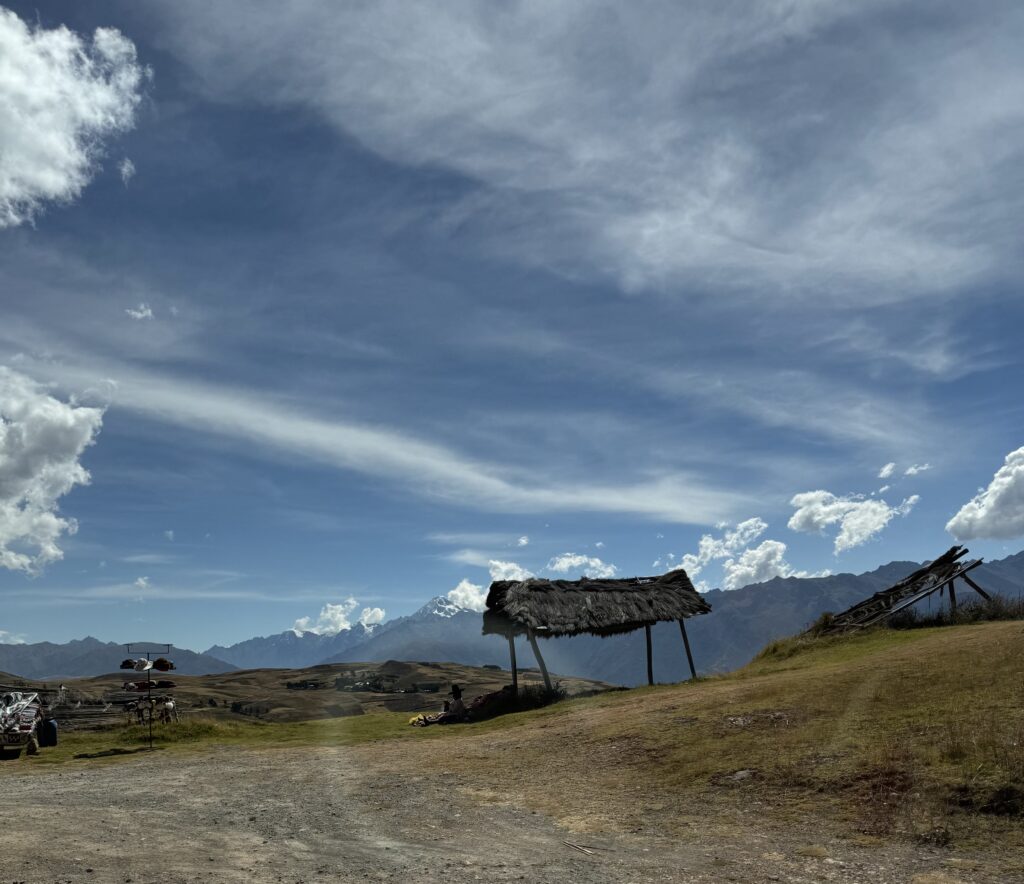
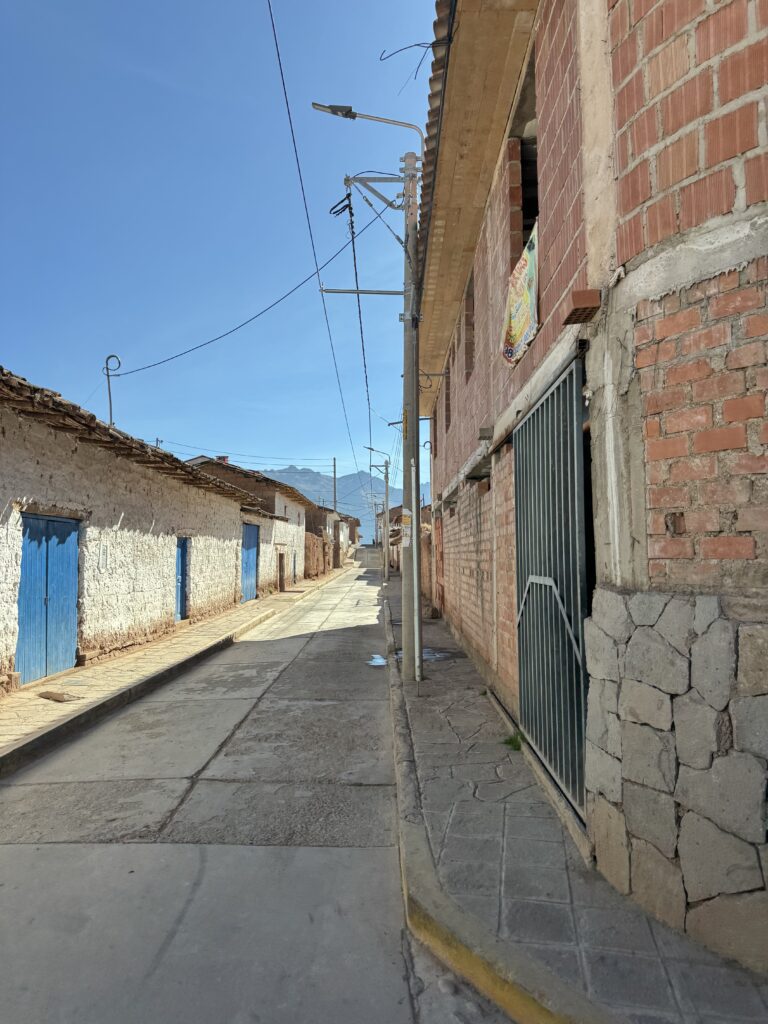
Look at all the blue doors in Maras!
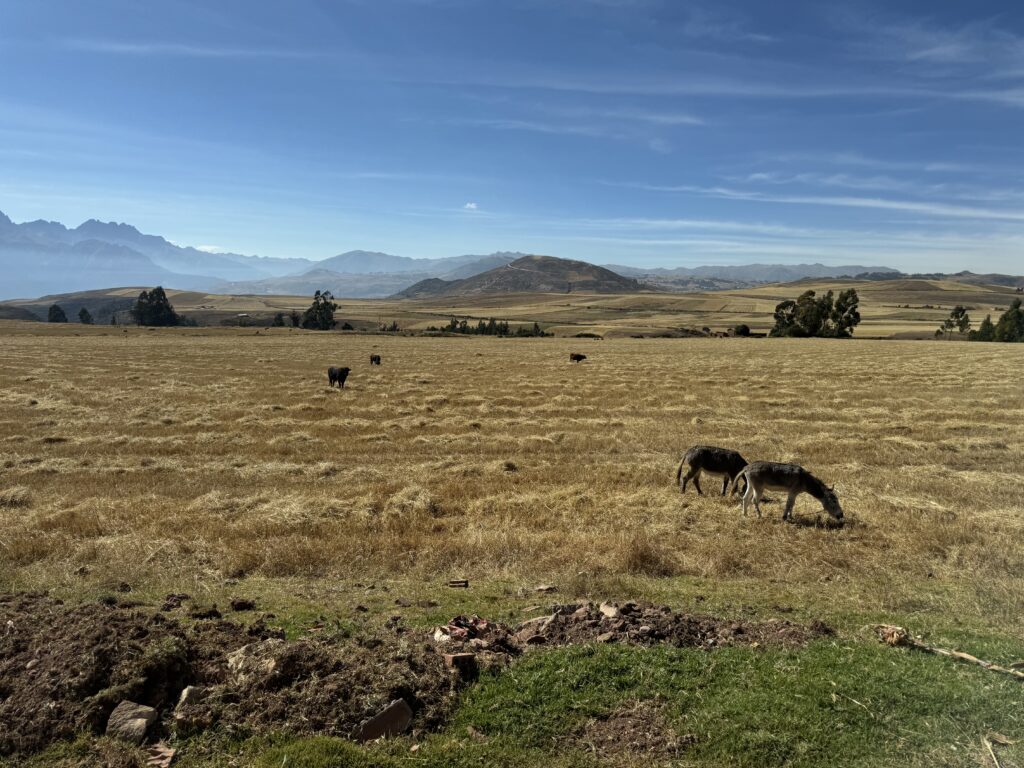
Donkeys! Everyone loves a donkey or two.
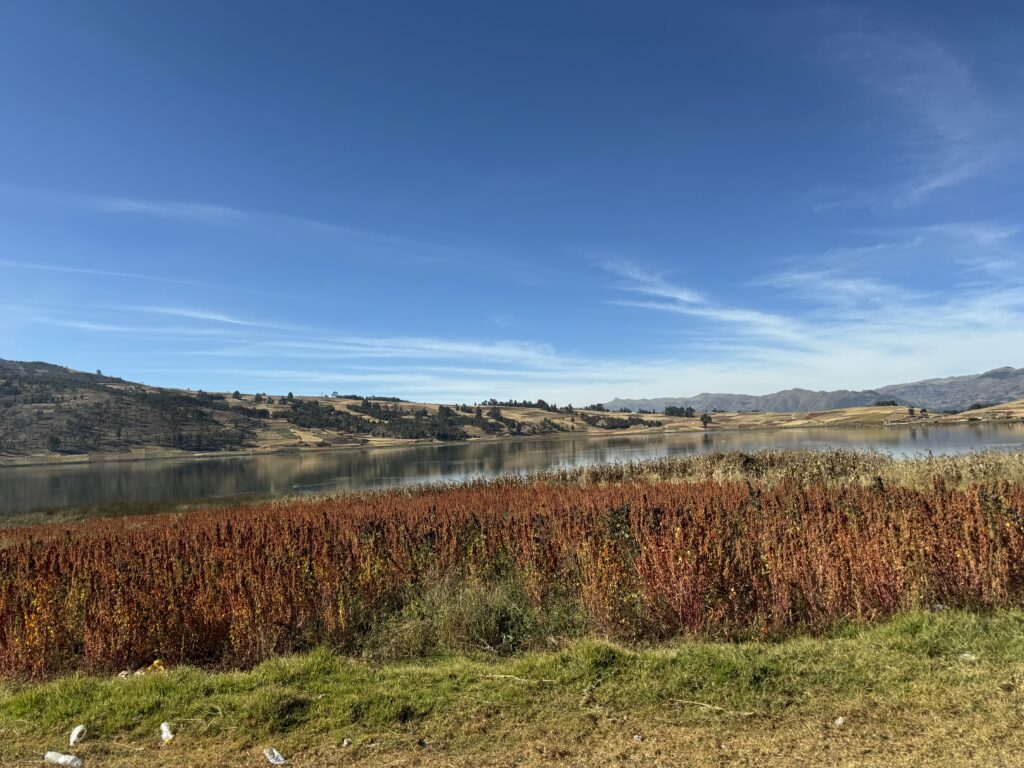
This is quinoa. I could make a quilt out of these colours.
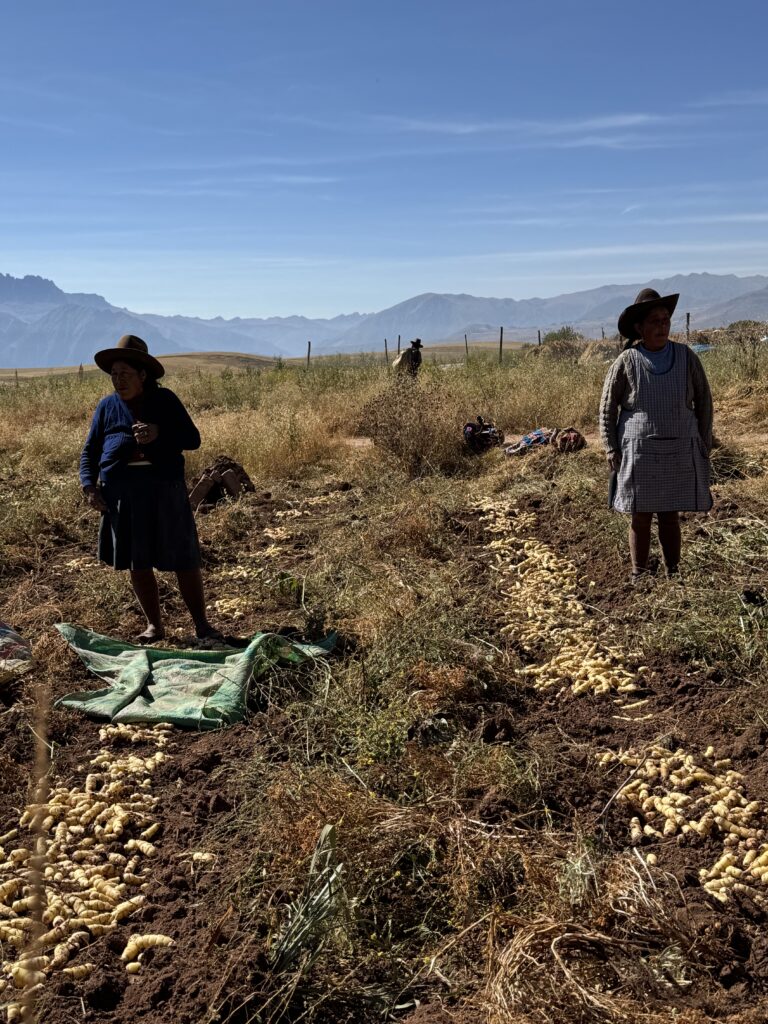
These women are harvesting ocra. I’ve tasted this before, when my friend Bev with the food forest gave me some. It’s crunchy and sweet.
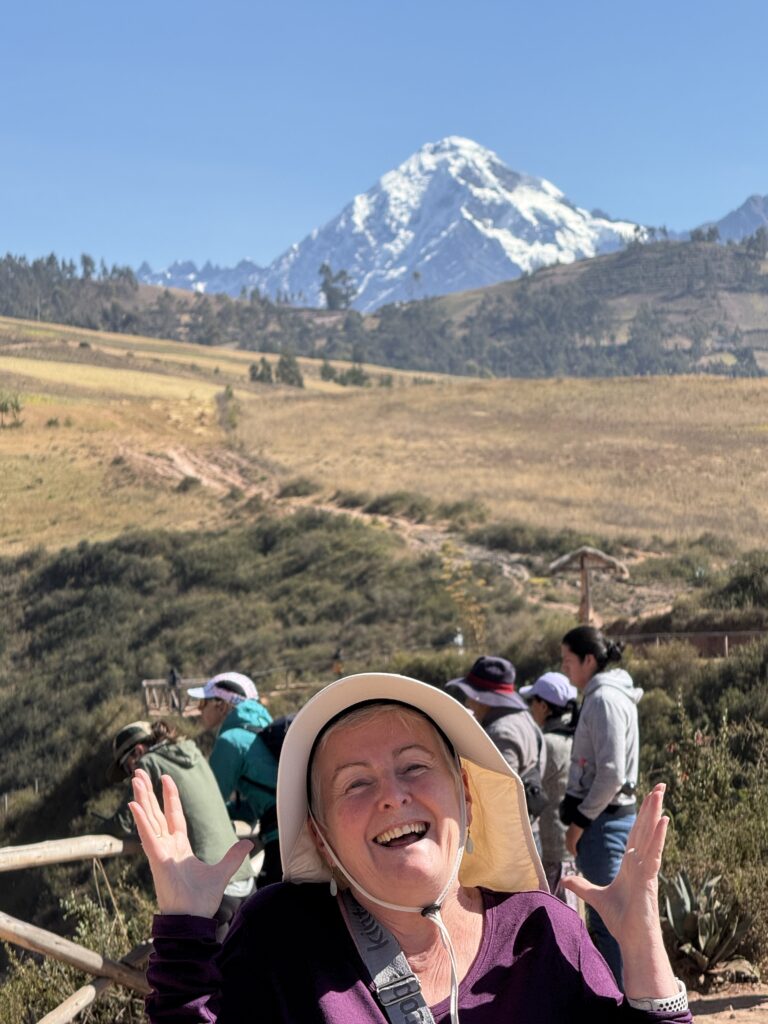
We are at the top of the sacred valley of the Incas. Tomorrow we go down, and the next day we travel by train through the mountain to reach Machu Picchu.
5,680 metres elevation.
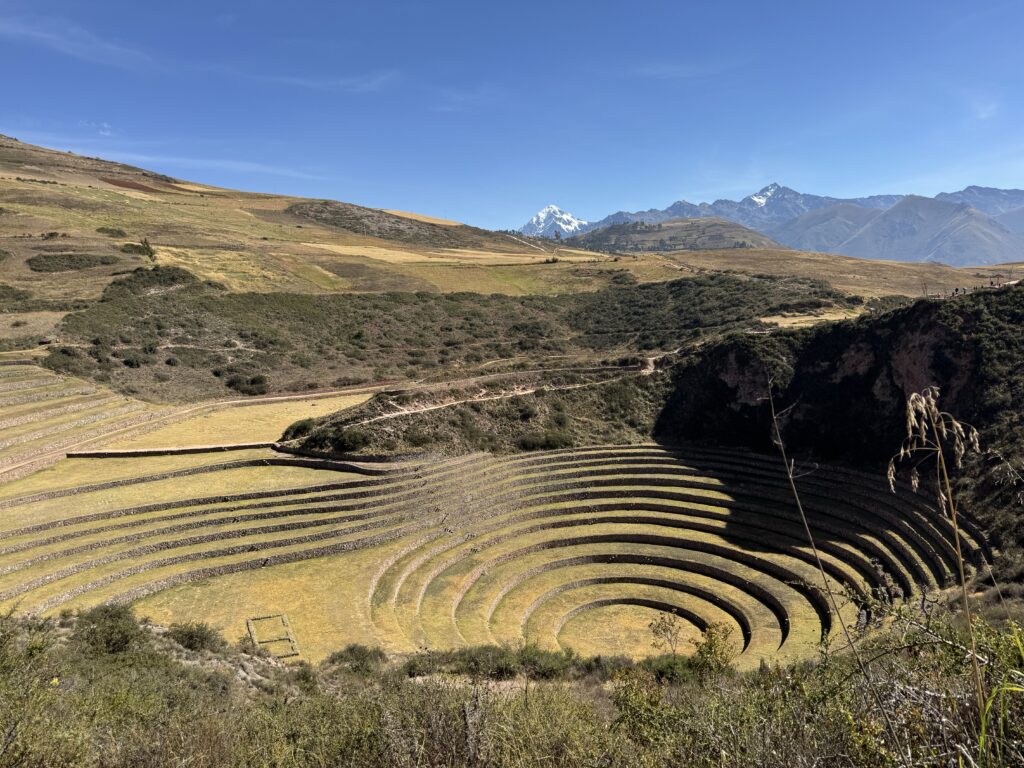
The biggest laboratory. The Incas used this place to experiment with agriculture. There are 23 microclimates in this layered place.
They believe that the Incas found a conical shape in the ground and engineered around it. There are 6 months of rain water here, plus there’s a spring running underneath. Perfect for growing plants, and with a rapidly growing population, the Incas required secure food sources.
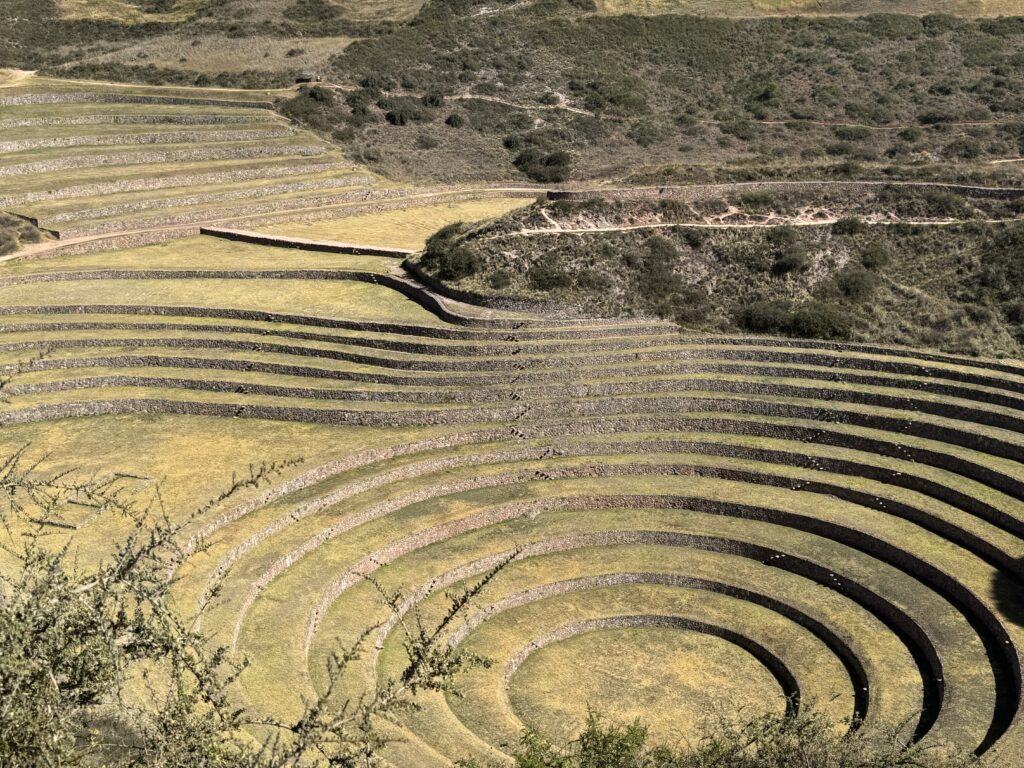
3,600 metres elevation here; higher than Cusco. They brought seed from the coast and the jungle. Planted them from top to bottom and saw what grew where. Cacao, tropical fruit, potato, corn, beans, squash etc.
Tobacco, cotton, and medicine.
They were able to learn how to feed, clothe and nurture 12 million people.
Where we’re sitting, above the laboratory, it’s 16C.
Down below, up to 29C. There’s a different temperature on each terrace. In effect, it’s a greenhouse.
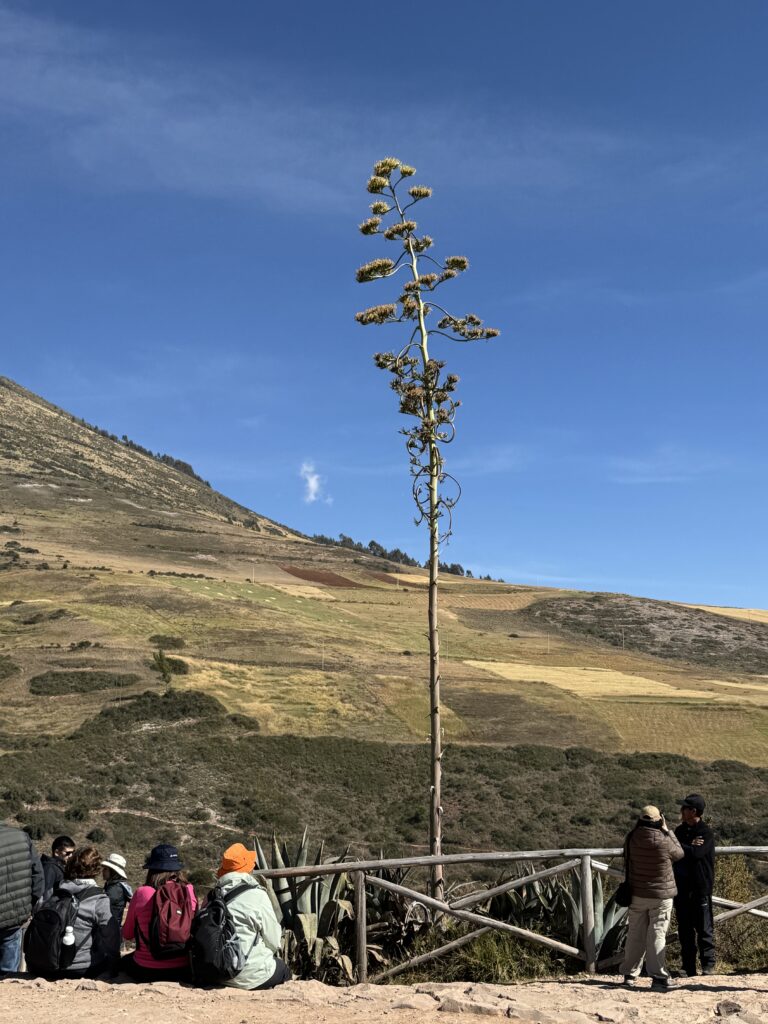
For 300 years, they used this place. The conquistadors came and found thousands of people living and working here.
They grew exotic plants in the Sacred Valley. They were started here and then transplanted in the cities and villages that needed the food.
Machu Picchu has its own Inca greenhouse.
1635, the conquistadors arrived. 4 years later, the Incas decided to escape into the mountains and they took all their knowledge with them.
Those who stayed, became slaves for 300 years.
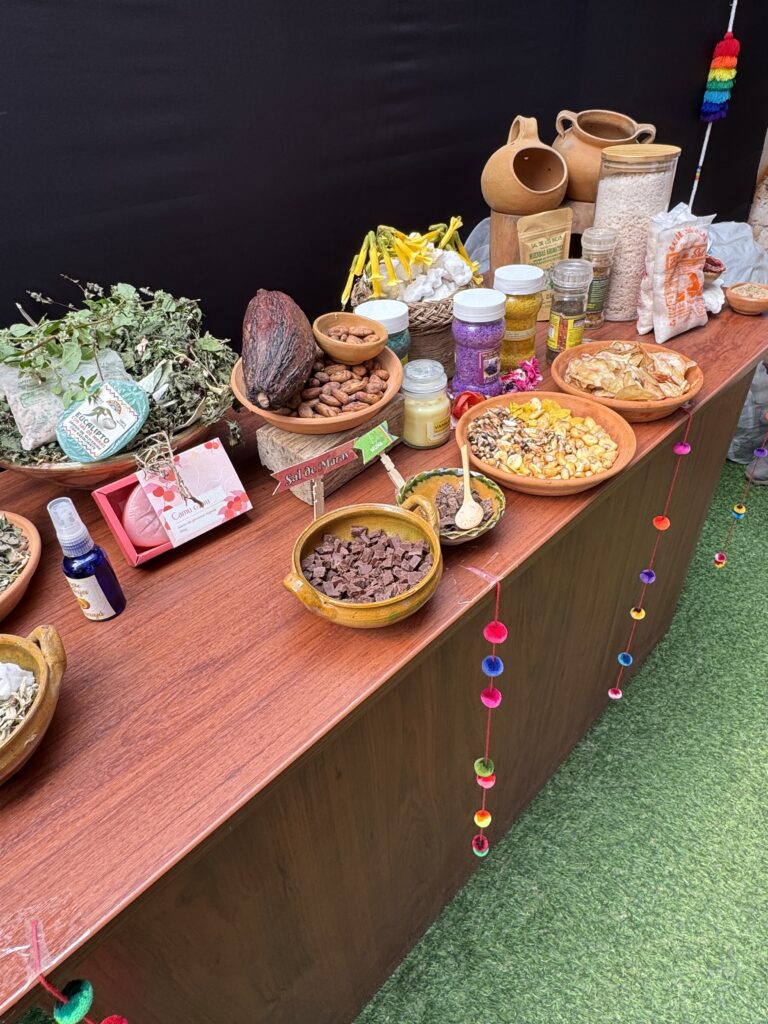
On the way to the salt mines, we stopped at a local place that taught us about the different kinds of salt, and also how the salt was actually produced.
They said they were a small family business, just starting out. I may have bought a present for my nearest and dearest…
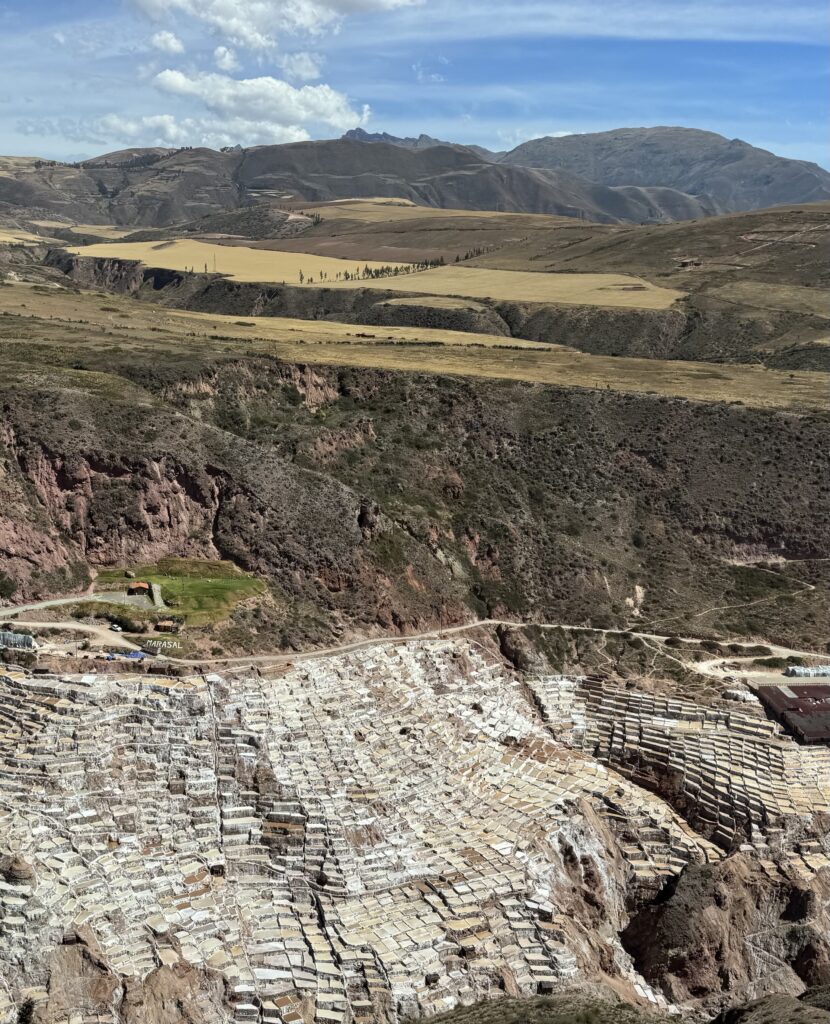
40,500 pools.
The salt crystallises in the dry season. It takes 25 days to crystallises in 3 levels.
- Diabetes, tired etc. Good
- Pink salt. Very good with Guinea pig.
- Medicine salt.
The women dance on the salt and break it down and harvest it.
The men pack and lift the 50kg bags of salt. They take them to the drying sheds where they are emptied out and left for 6 weeks to dry in the sun. Then, the bags are repacked.
The spring water here is saltier than the ocean. This is 3,600 metres high
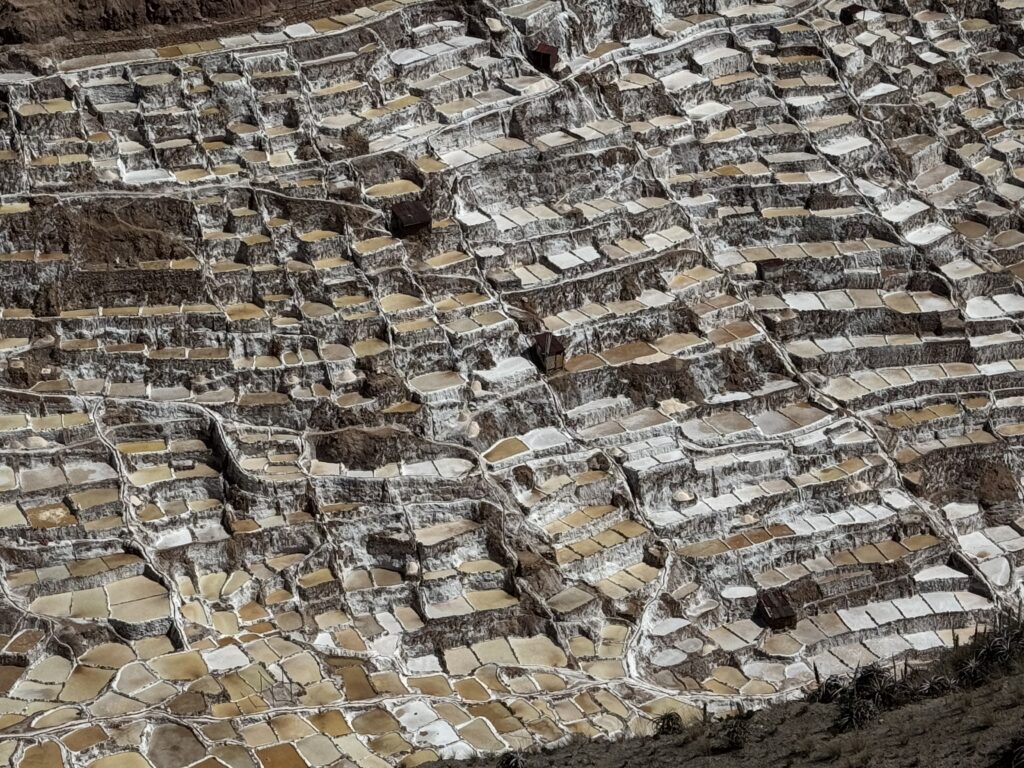
The owners of the salt mine are the people of Maras. The money we spend here stays here.
It was originally discovered by pre-Incas, but when the Incas arrived, they added channels along the walls of the ponds to continually fill with salty water.
The Incas left them alone to make salt.
The Spanish took over control of the salt and introduced currency so the people had to buy their own salt. From 1530 – 1820 the Spanish sent a lot of money to Spain from this place.
Now, after 300 years as slaves, the people now own the salt again.
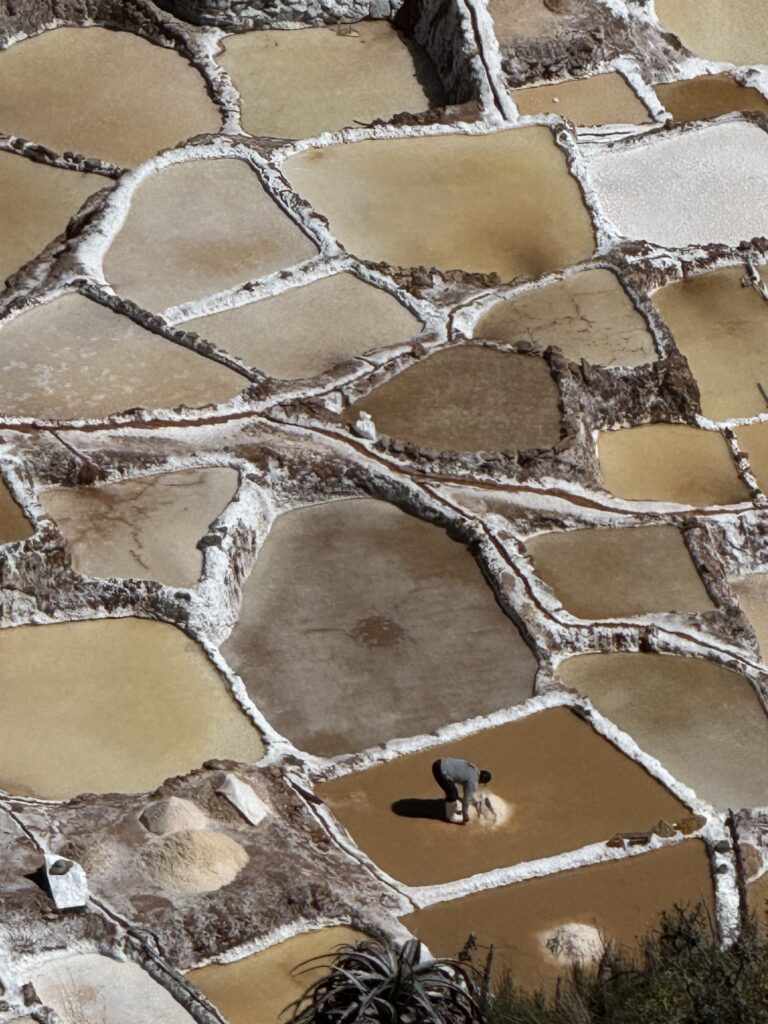
Each pond is about 50 cms. In 3 days, it evaporates. They do this 3 times before they harvest it. They scoop the salt off, just like I did in the salt lake in Dimboola.
The white ponds are almost ready to harvest.
The brown ones have been filled for the first time.
Working with the salt makes you blind. People work early in the morning and late in the afternoon.
They only make salt in the dry season. Rain falling on the salt forming isn’t good for it.
The spring water comes through the roots of a volcano to the left of us. It washes the minerals and salts into these pools.
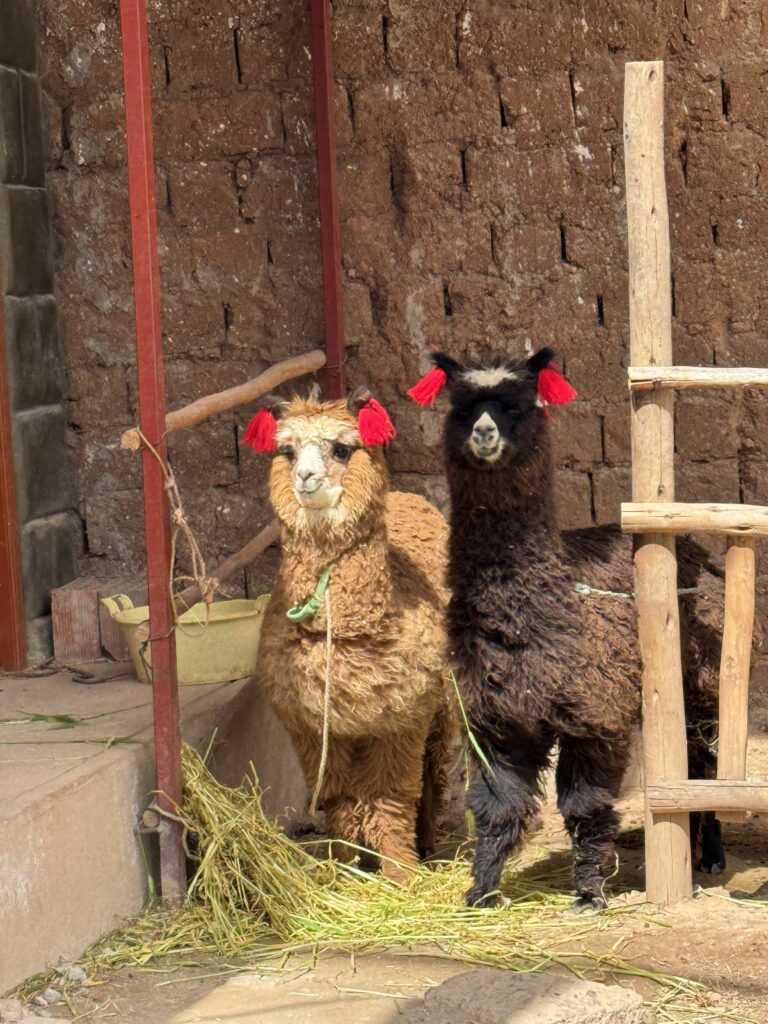
On the way back to Cusco, we stopped at a weaving shop.
They fed us a simple lunch of a fritter and baked potato, which was very welcome at 2:30PM!
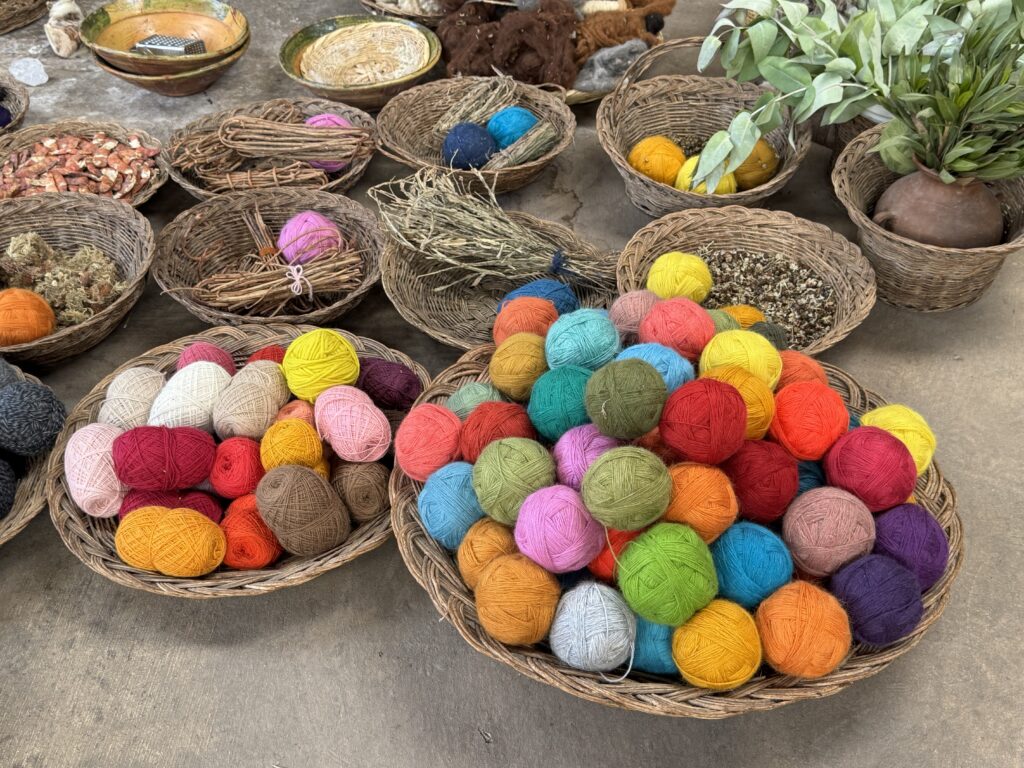
Here are the balls of alpaca wool they’ve ed and spun, placed in with the plants that gave them their colours.
Boil the plants for one hour with the wool and it absorbs the colour. The red was made by cochineal beetles. They are pests that attack the cactuses. Yes, it’s the same cochineal we use in baking.
I bought a hat, some wool and a woven table runner. They’re lovely.
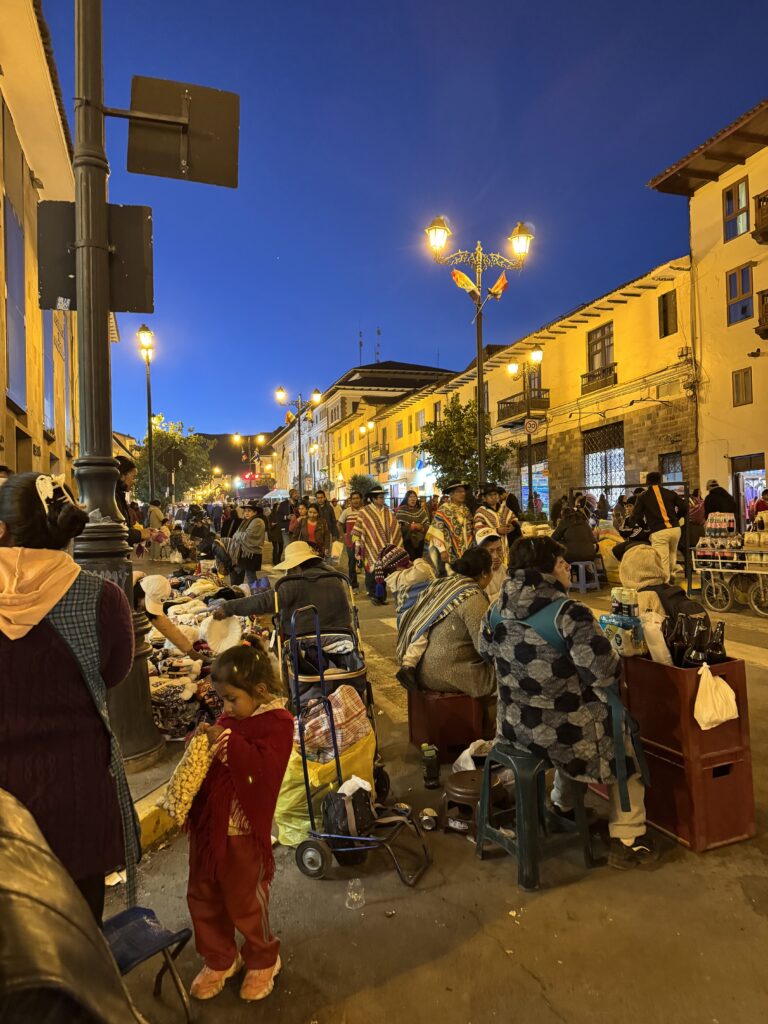
At 5:30 we met up to go to a goldsmith’s shop, and walked through streets crowded with revellers celebrating the last day of the Cusco Festival. It was a long walk, but the experience of walking through the happy crowds was amazing. How lucky we were to experience this!
As we got closer to the city square the crowds grew denser. Claudio asked us to line up one by one behind him and to follow the TripaDeal flag through. Somehow, we formed a conga line and started dancing along to the rhythm of the music. Smiles from everyone around us!
The air was full of the aromas of food cooking, the sound of music and people chattering and singing… it was amazing to be a part of it.
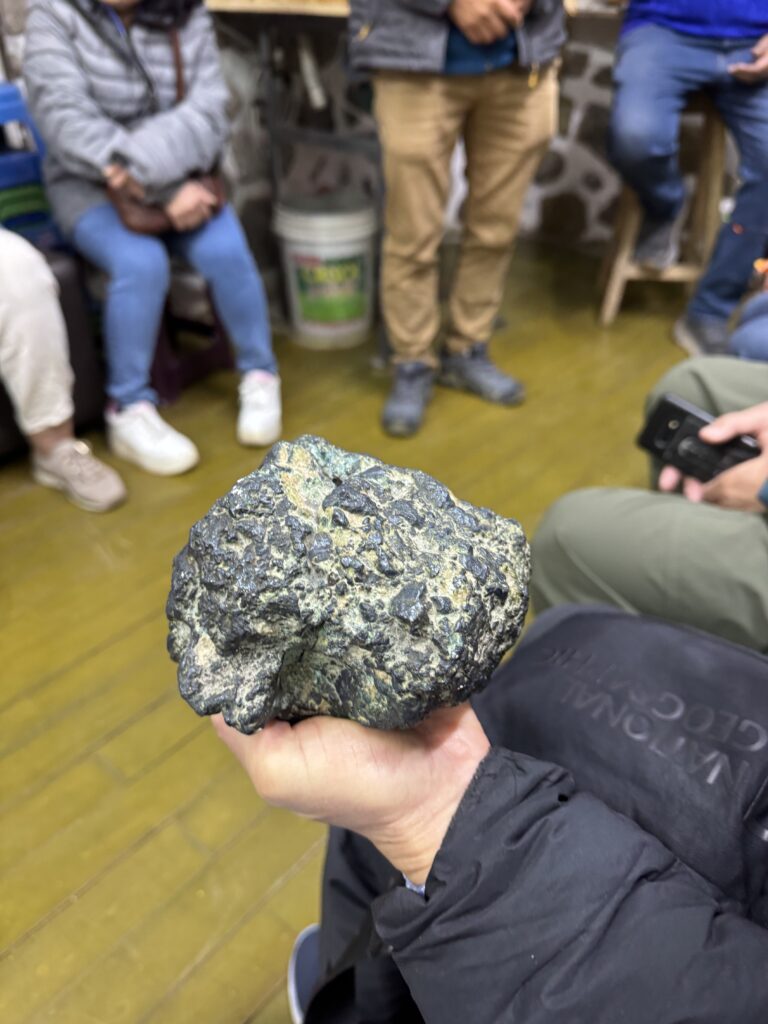
This is how silver looks when it comes out of the ground.
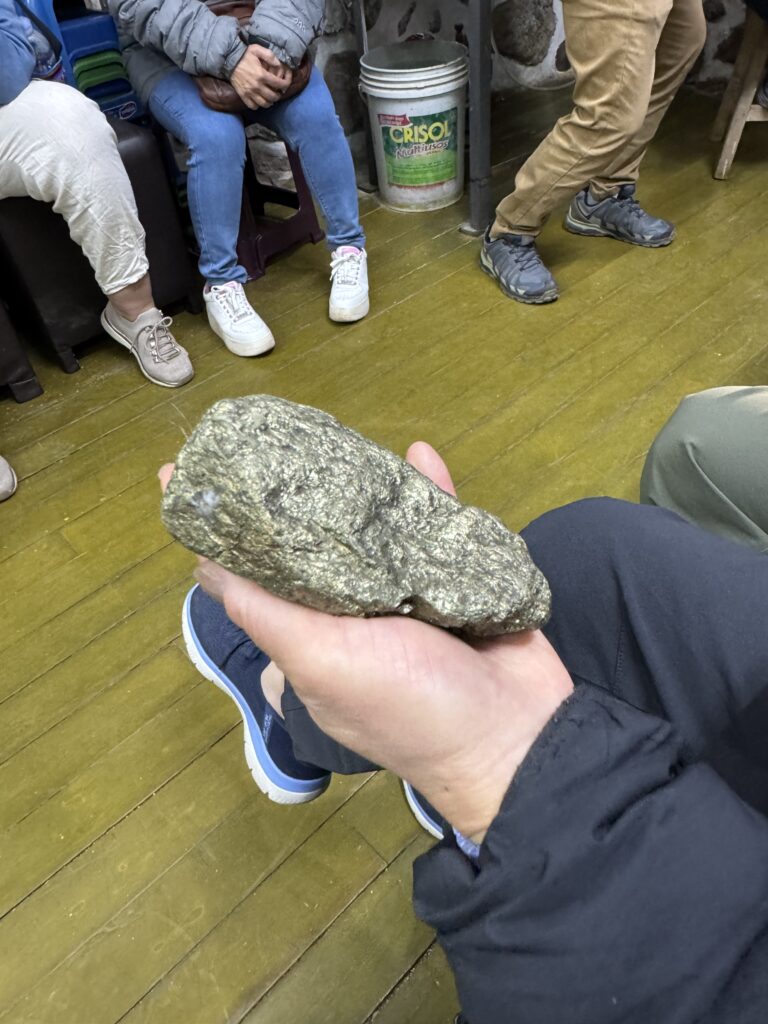
Of course, you need to see gold as well.
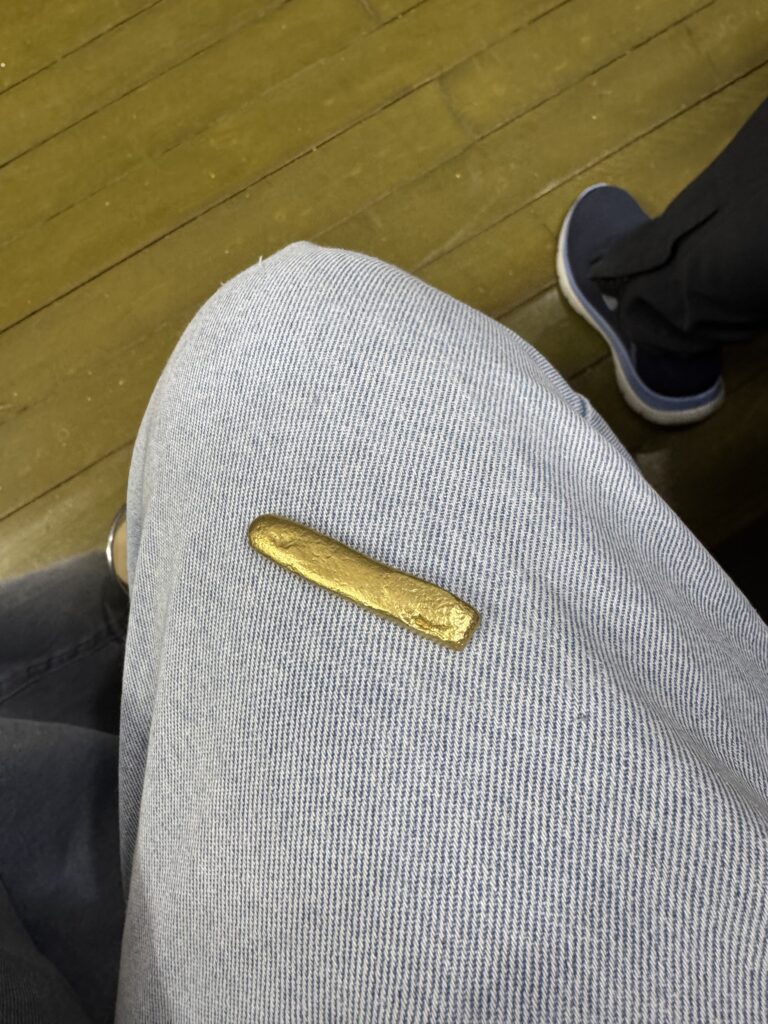
Here’s an ounce of gold, worth just over 4K in today’s market.
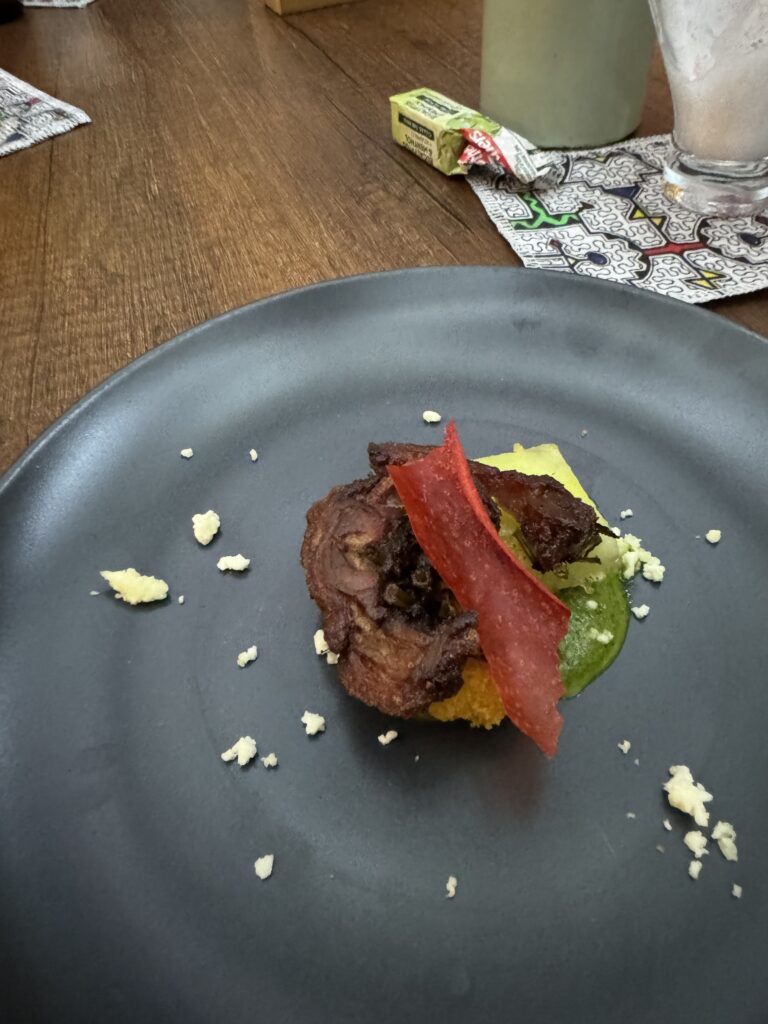
Our group dinner was a real surprise. It was a gourmet degustation menu, with one of the courses being guinea pig. I was rapt, because it saved me from looking for it on every menu in Peru.
I liked it. To be honest, I think guinea pigs are useless pets. You may as well eat them.
The people from Rainbow Mountain had a great time and said it was stunning, but they all struggled with the altitude and a couple of them had to have oxygen.
I’m perfectly happy with our day. We saw so much and learned so much!
Tomorrow, we pack an overnight bag for two nights. Guess what’s coming up in a couple of days???
Dad joke of the day:

Leave a Reply