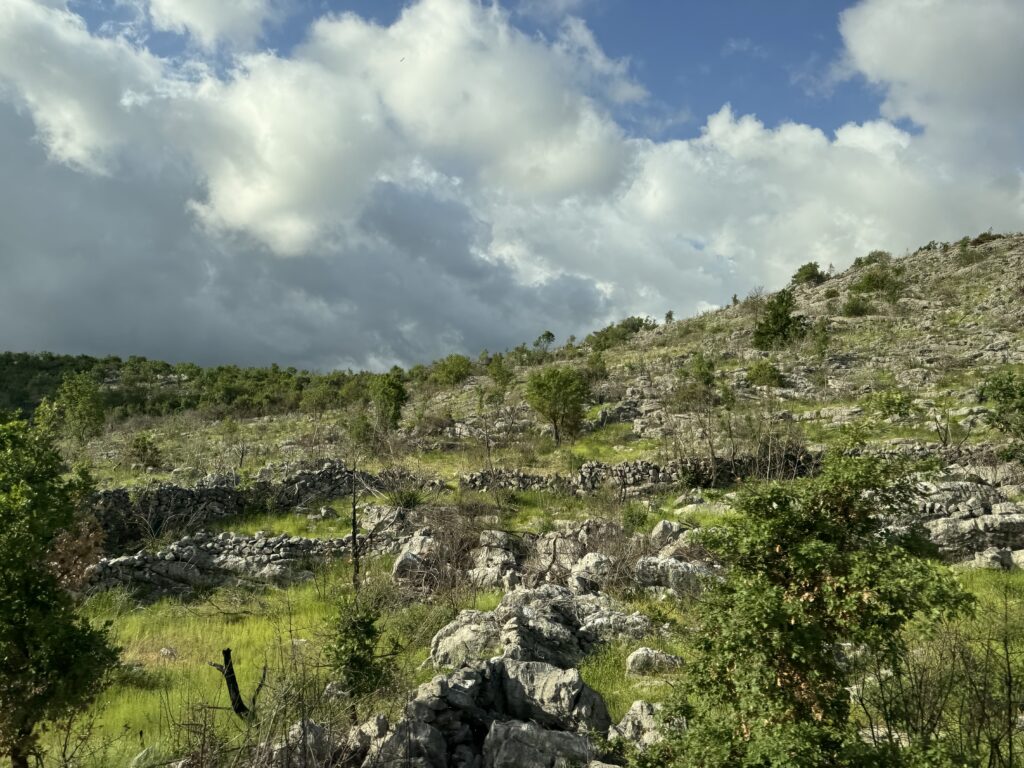
Bosnia and Herzegovina has the same mountainous terrain as the other countries we’ve been in. It’s dotted with little villages, with some obviously being abandoned. Here, old stone walls are left on their own.
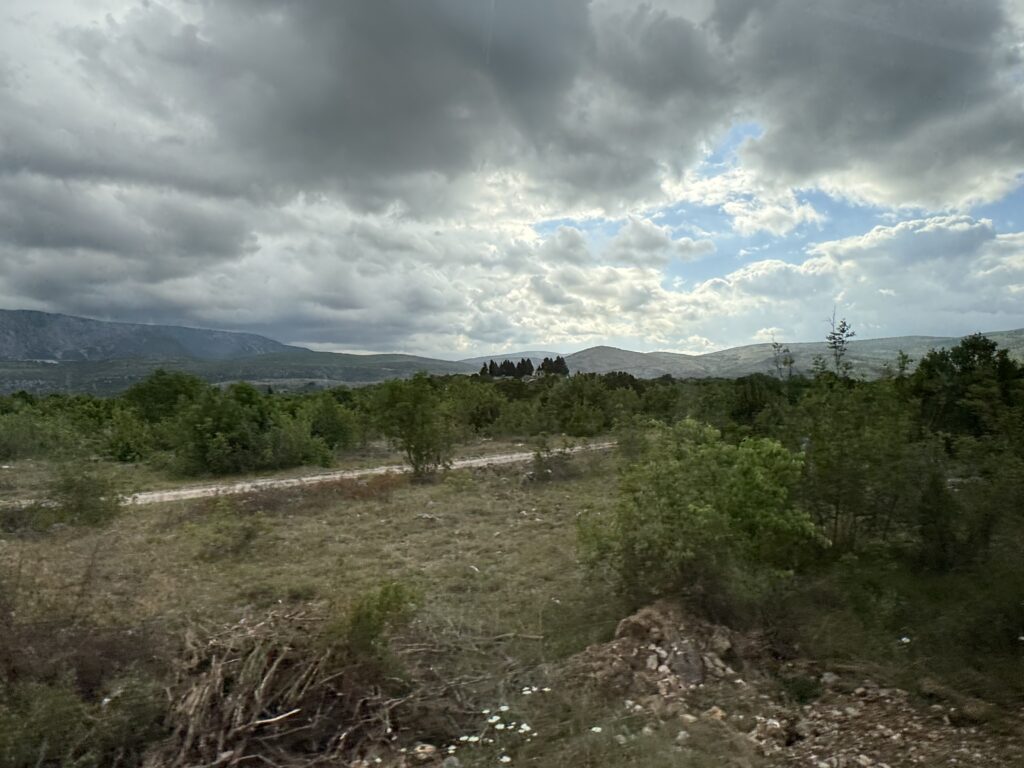
The quick answer as to why this country has such strange name is “politics.” The longer answer is that after the war in the 90’s, Bosnia had 3 major religions. The muslims and orthodox were fine with the name of Bosnia, but the Catholics , who were mainly in the Herzegovina region, wanted recognition.
So “ Bosnia and Herzegovina” it is.
Our local guide was proud to announce that Mostar has 300 sunny days a year.
Not today! Blogless Sandy and I ended up buying umbrellas as useful souvenirs.
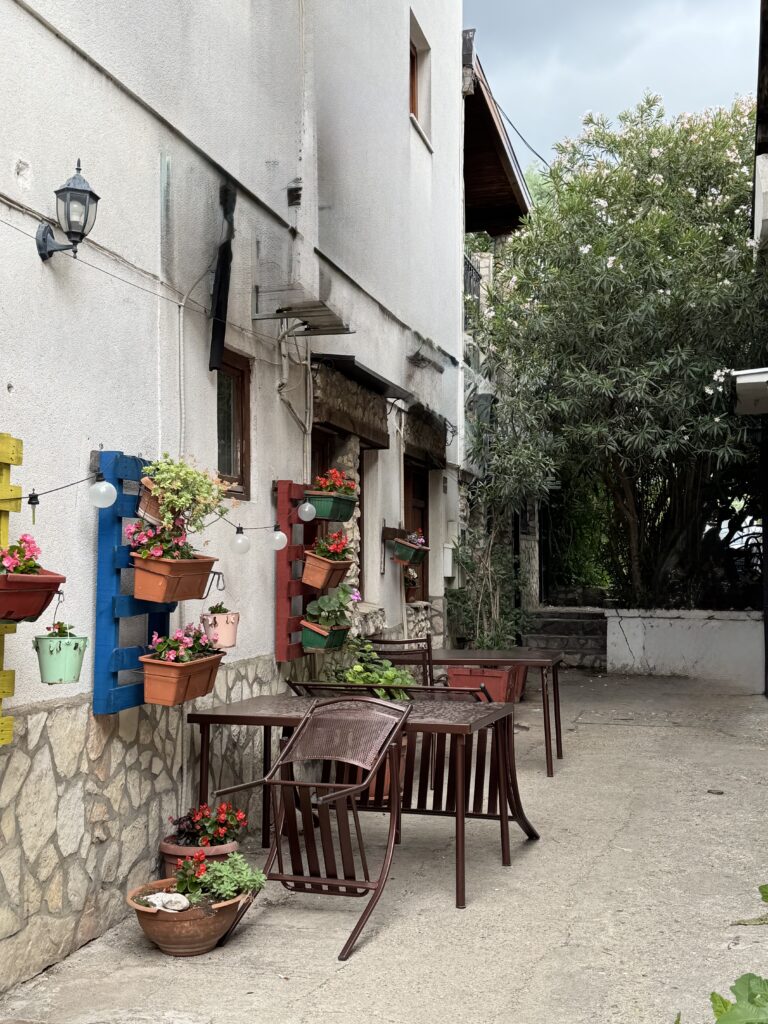
Old Town was built in the Ottoman Empire
WW1 started here in the capital city of Sarajevo.
“We’re not proud of that.”
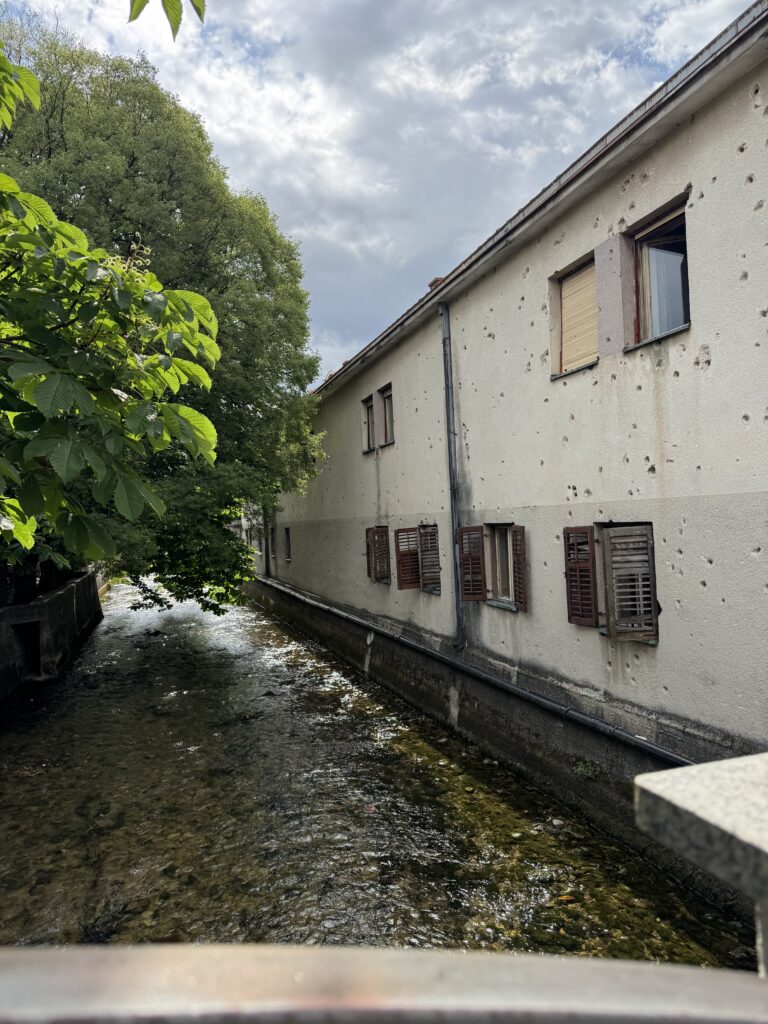
Mostar was heavily affected by the war. The street we crossed was the line between the two sides. If you keep your eyes peeled, many buildings still have pockmarks in them from gunfire during the war.
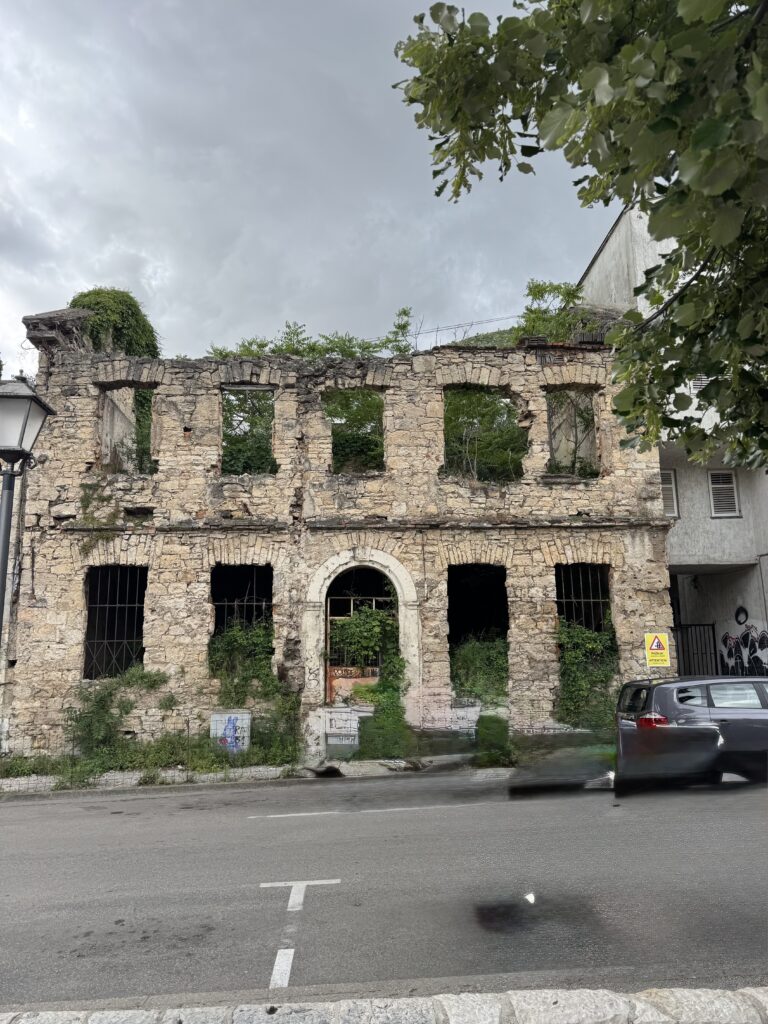
Refugees from the war sometimes own property. They’re understandably reluctant to spend money on buildings they’re now half a world away from. Plus these particular buildings are heritage listed. They were originally in the Austrian- Hungarian style, which would cost a fortune to rebuild.
So they remain like this.
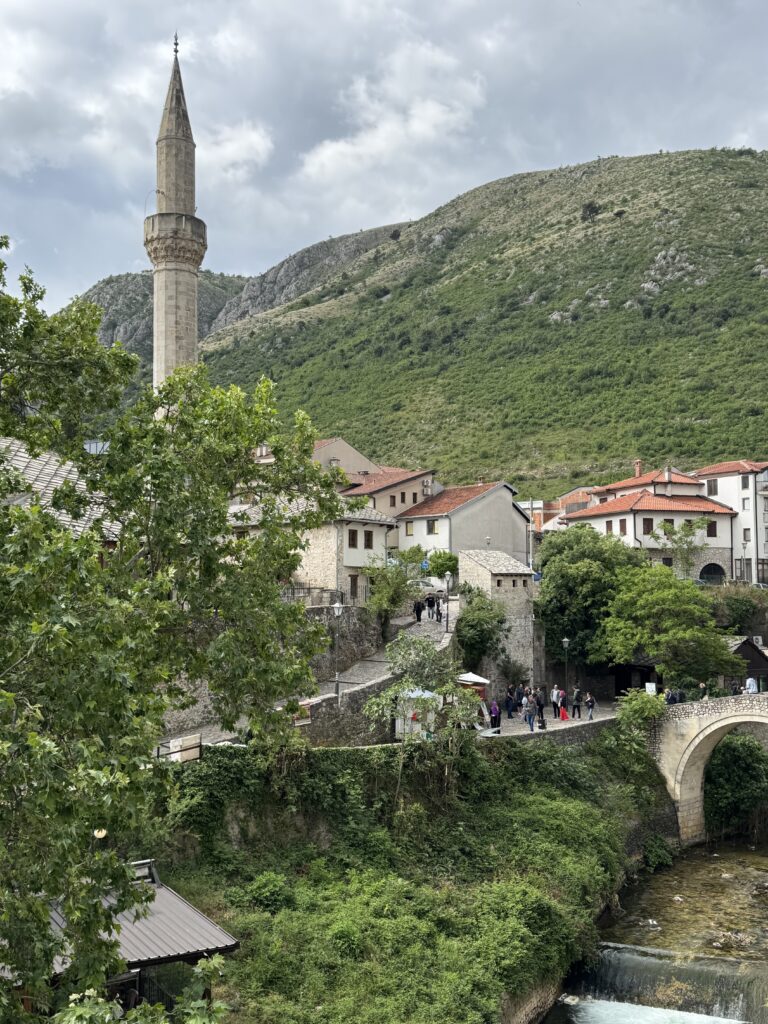
Our local guide said that his family fled the town when the war broke out, and he himself was born in Germany. When they returned, the whole city was filled with rubble. He and his friends, when playing soccer, used to use unexploded grenades for goals.
“We didn’t know it was dangerous.”
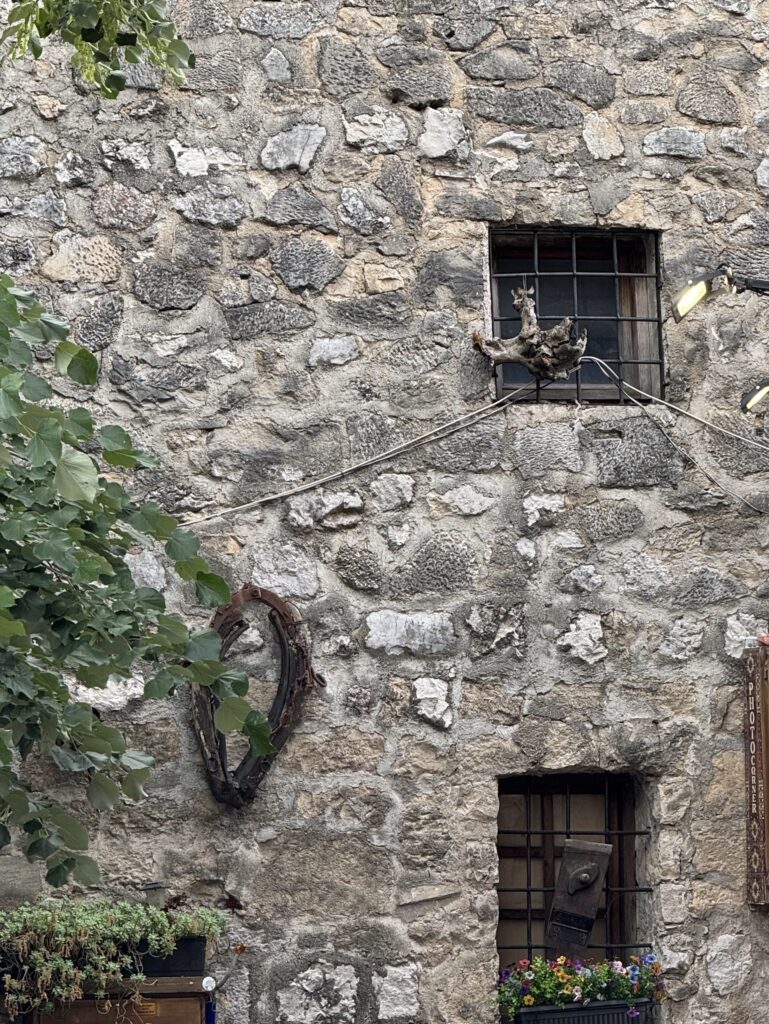
3 presidents here. “3 corrupt presidents.” Between the bickering and corruption, nothing gets accomplished in a timely fashion.
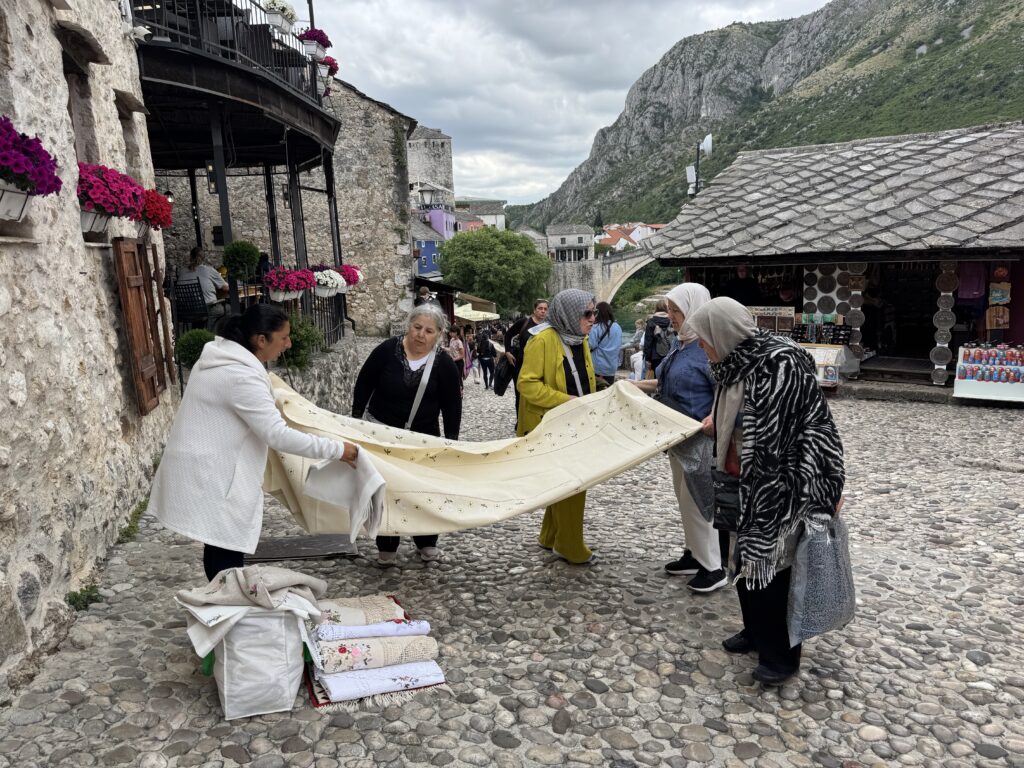
The Old Town is a UNESCO heritage site. Everything looks as it did before the war.
Even the old ladies shopping for tablecloths.
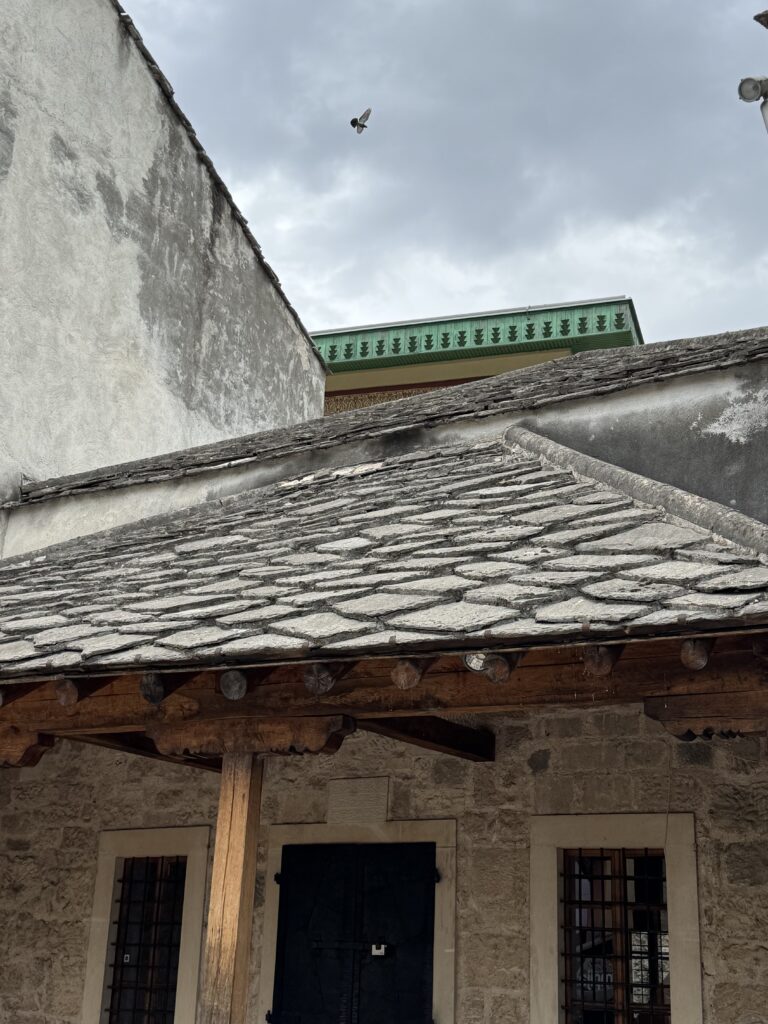
Stone roofs protect from the strong winds here. The town is in a valley set between very steep hills. The wind whips through.
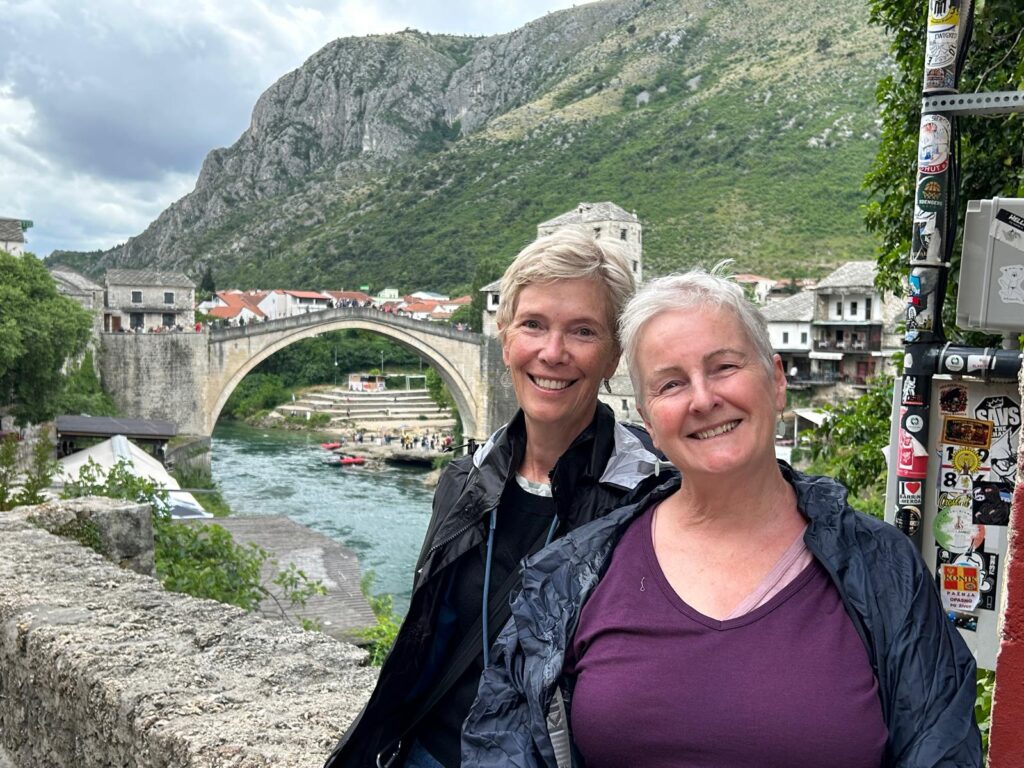
1566 when the old bridge was built.
The original architect used egg shells and stone, so the first 2 bridges collapsed.
Sultan Suleman told the architect “if it collapses again, I’ll have to kill you.”
So the architect, keen to keep breathing, used molten lead and stone for the third time, which worked.
The architect was so nervous that it would collapse again that he ran away just before the bridge was finished, so he never got to see his masterpiece. It stood for 400 years.
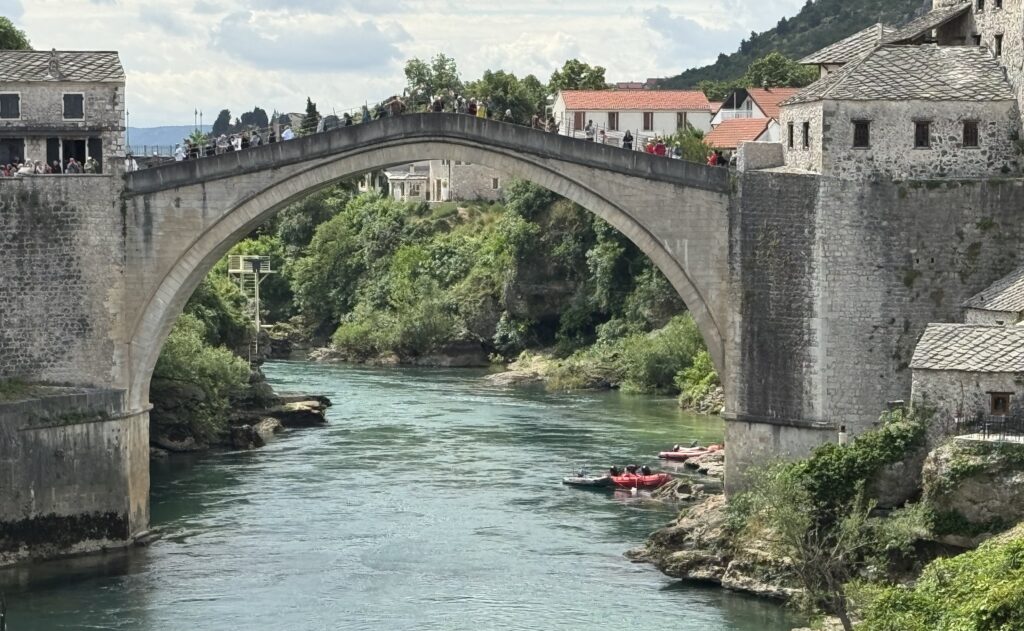
9 November 1995 it was bombed and destroyed by the war. People tried to protect it, but it was the most meaningful structure to the people, so the opposition felt that they had to destroy it.
20% of the original stone was used, and molten lead and stone were used again.
The original plans were used.
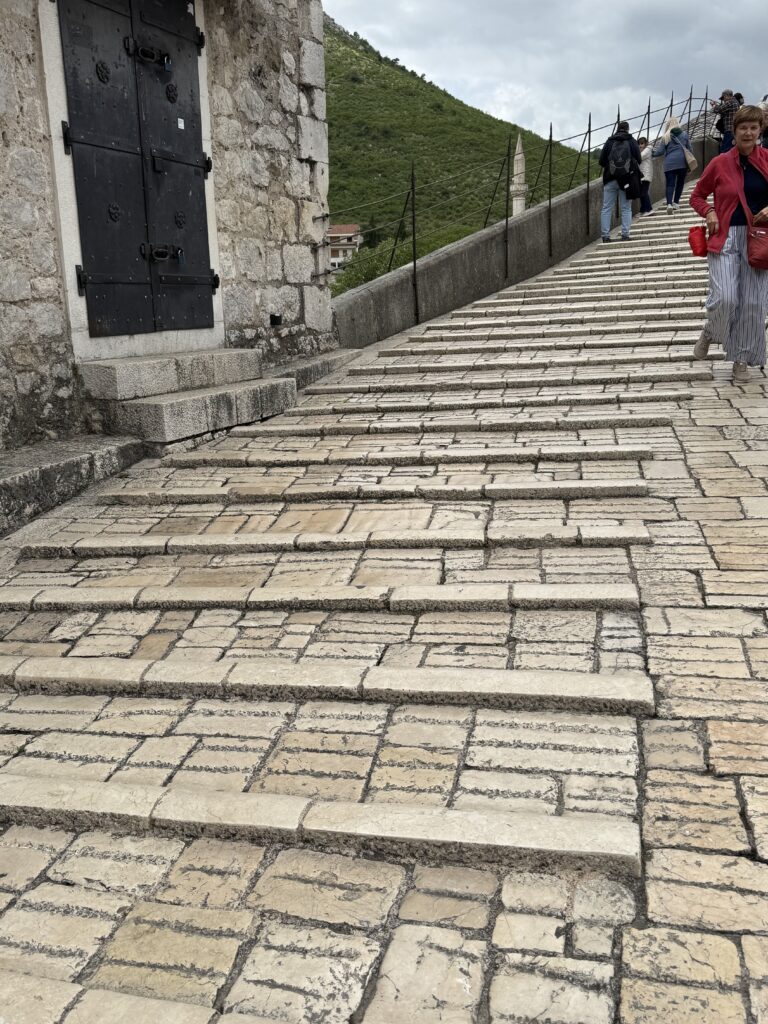
The raised strips on the bridge is for the donkeys. They used to bring everything in on donkeys’ backs, and this stops them slipping.
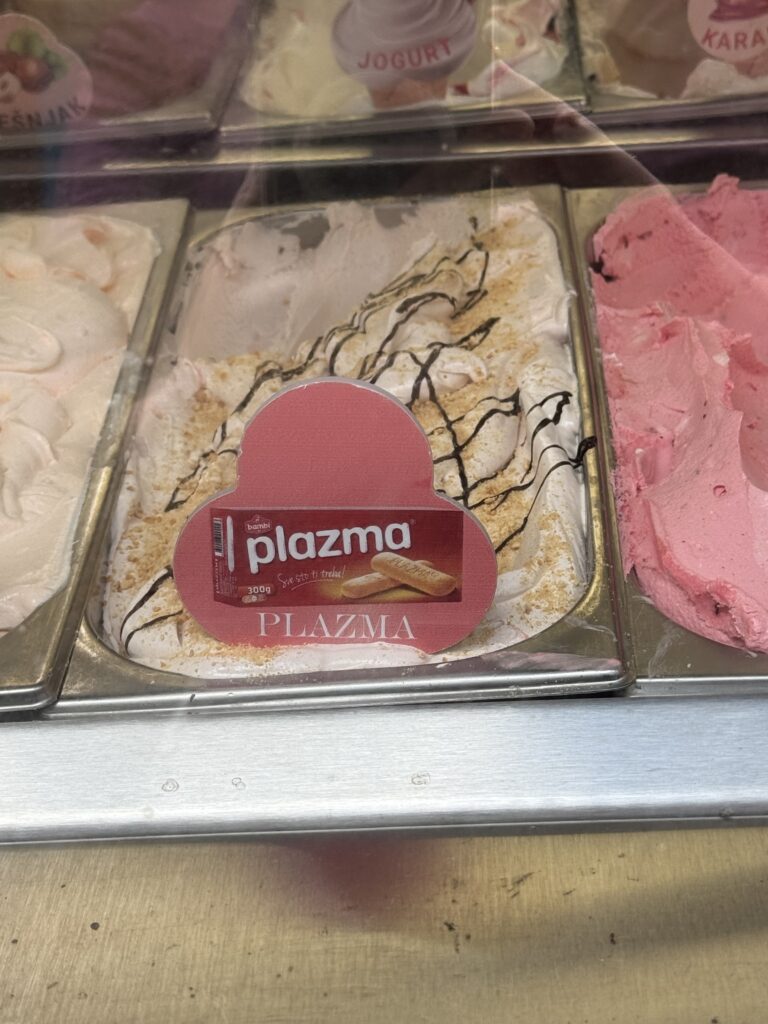
Plasma flavoured ice cream, anyone?
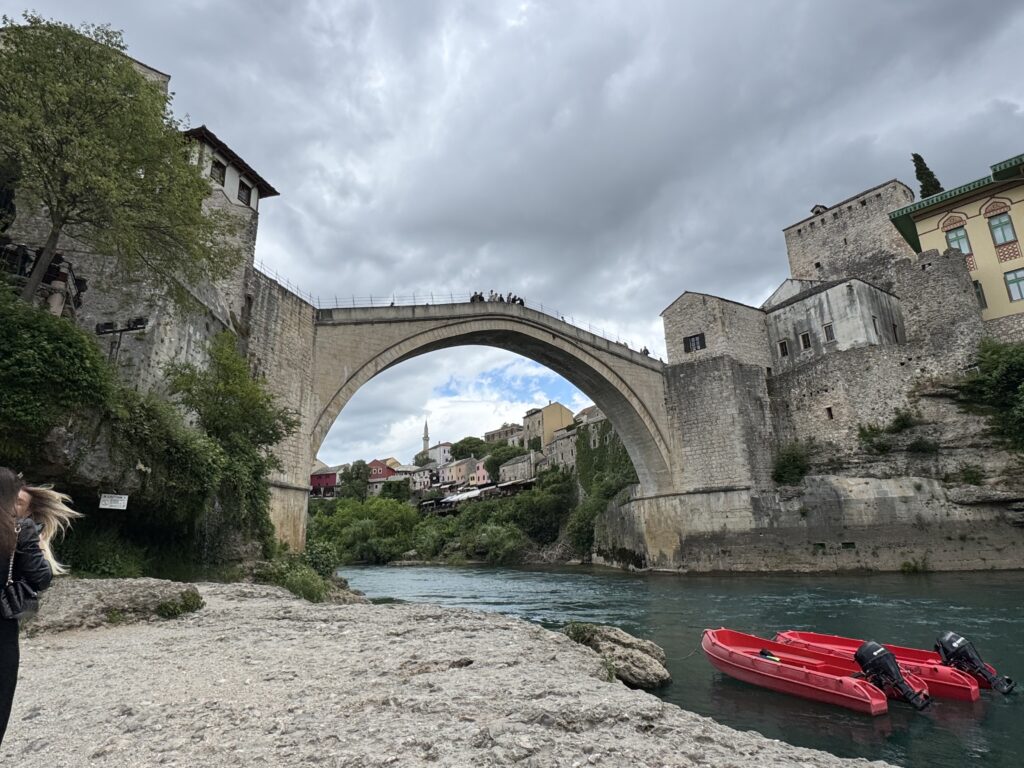
After we wandered around the market for a while, Blogless Sandy and I walked across the bridge and took the steps down to the beach by the riverbank.
There we saw the bridge in all its glory.
After yet another border crossing, we were back in Croatia and heading for Split, with many a nervous glance aimed at the steely grey clouds massing above. We have a nature walk booked in a national park tomorrow, and the weather forecast is pretty dire.
Still, we were afraid we’d get rained on today, but we’ve been lucky.
We made it into Split with a bit of time up our sleeves, so we checked into the hotel before heading down to the harbour to see the Roman palace. It wasn’t what I was expecting…
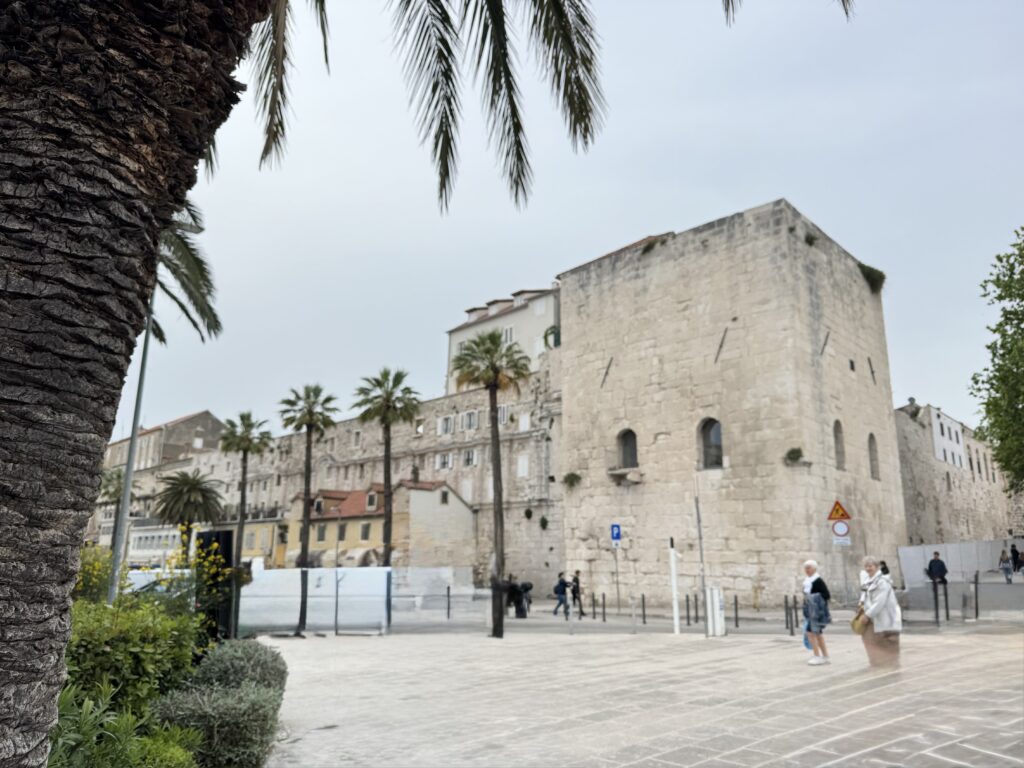
Diocletian’s palace was built in 3 AD to house Diocletian, his wife and daughter, and the servants and soldiers who served them. All up, around 200 people.
He was the last Roman emperor to persecute the Christian’s, and he was reportedly pretty vicious about it.
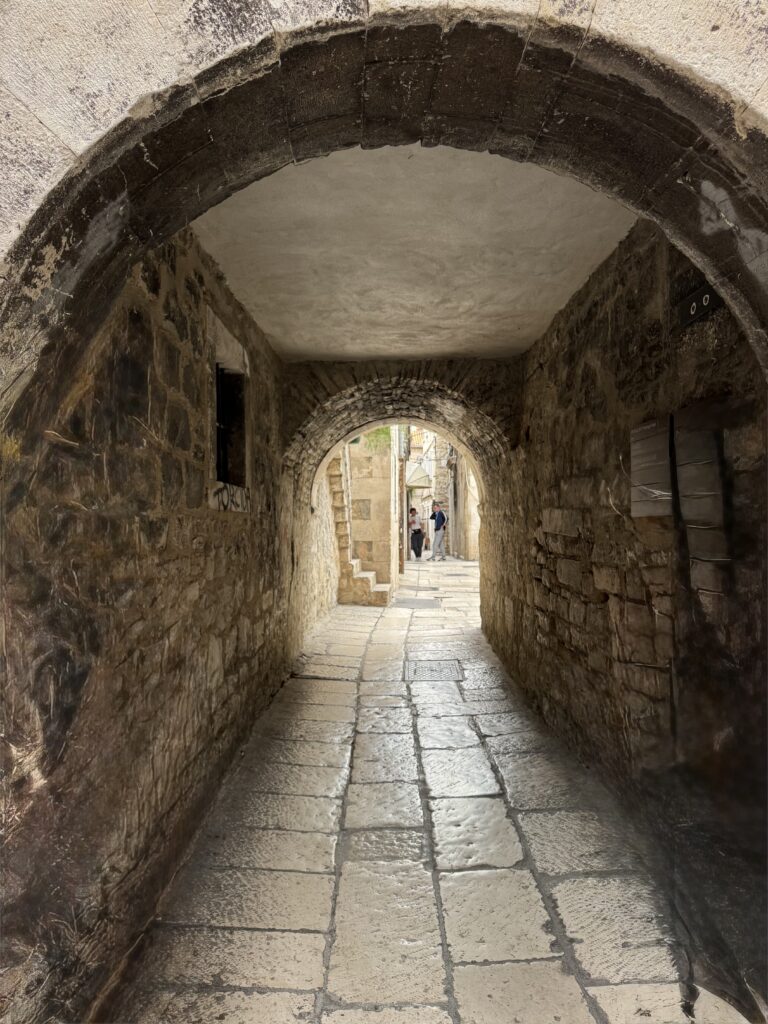
After he died, his palace was gradually taken over by the common folk, who over time moved in and started repurposing the building materials here.
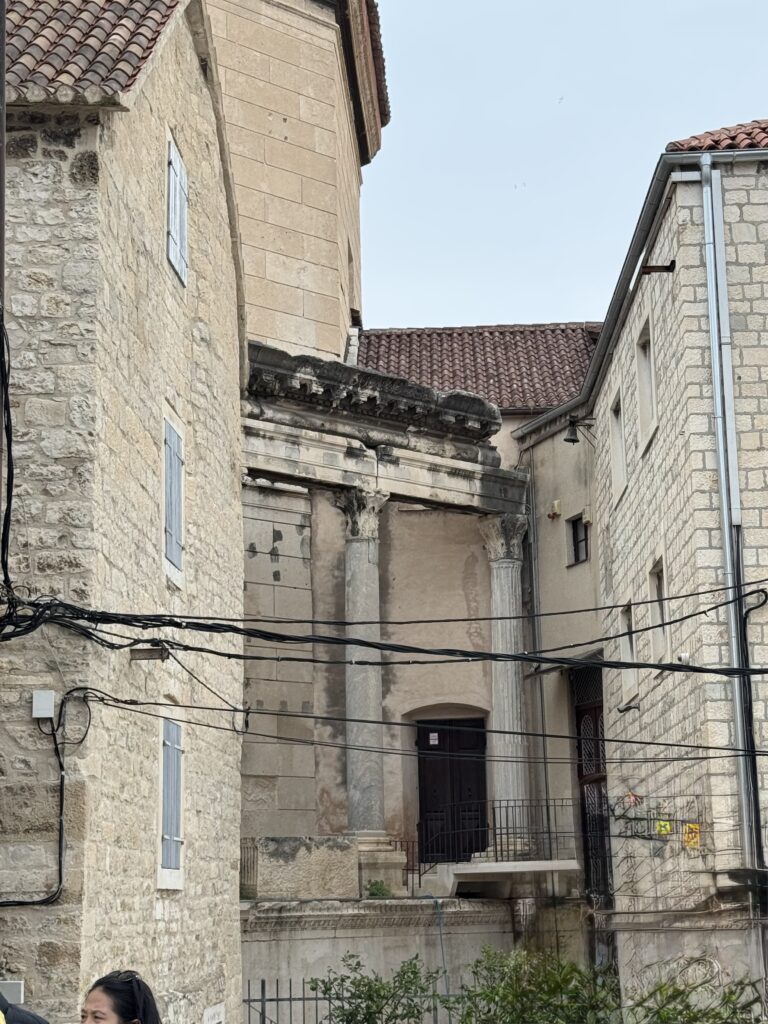
Everywhere you look, you can see modern dwellings next to columns like these that have been moved to help support newer dwellings.
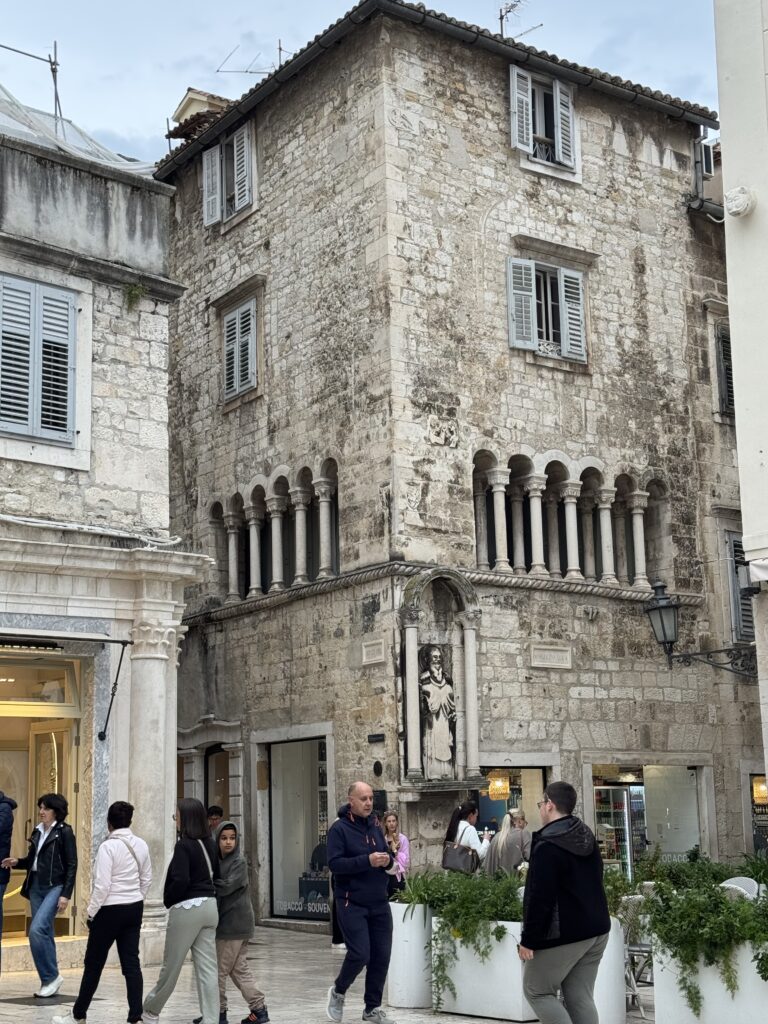
See?
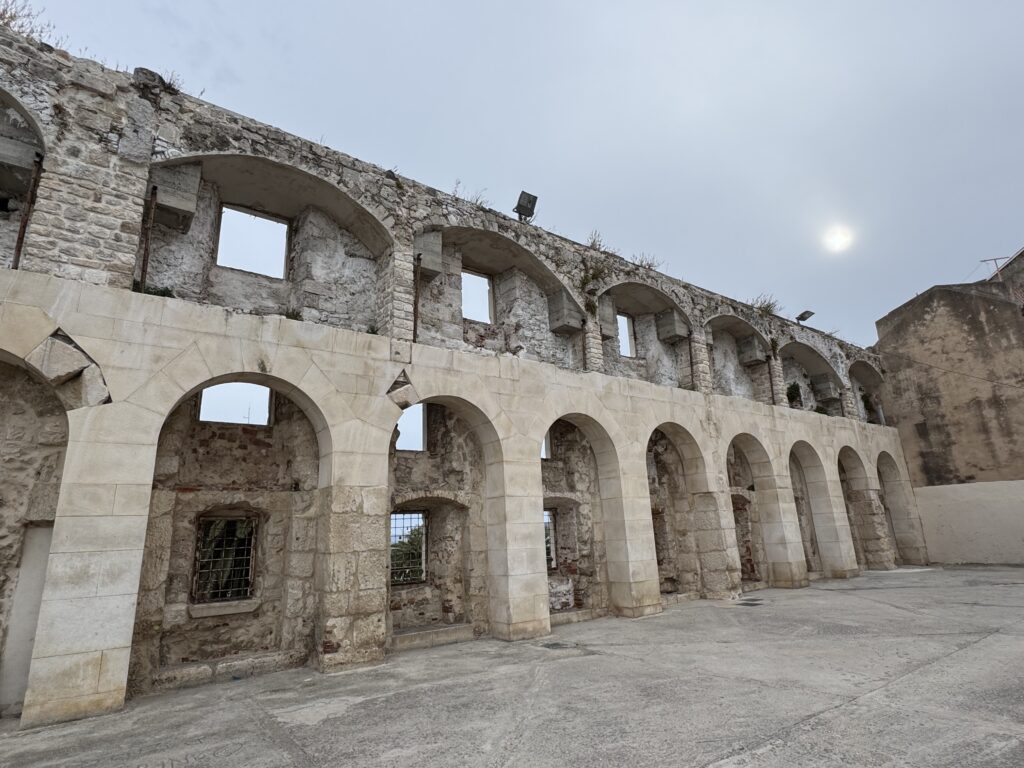
Other things have been left alone for centuries.
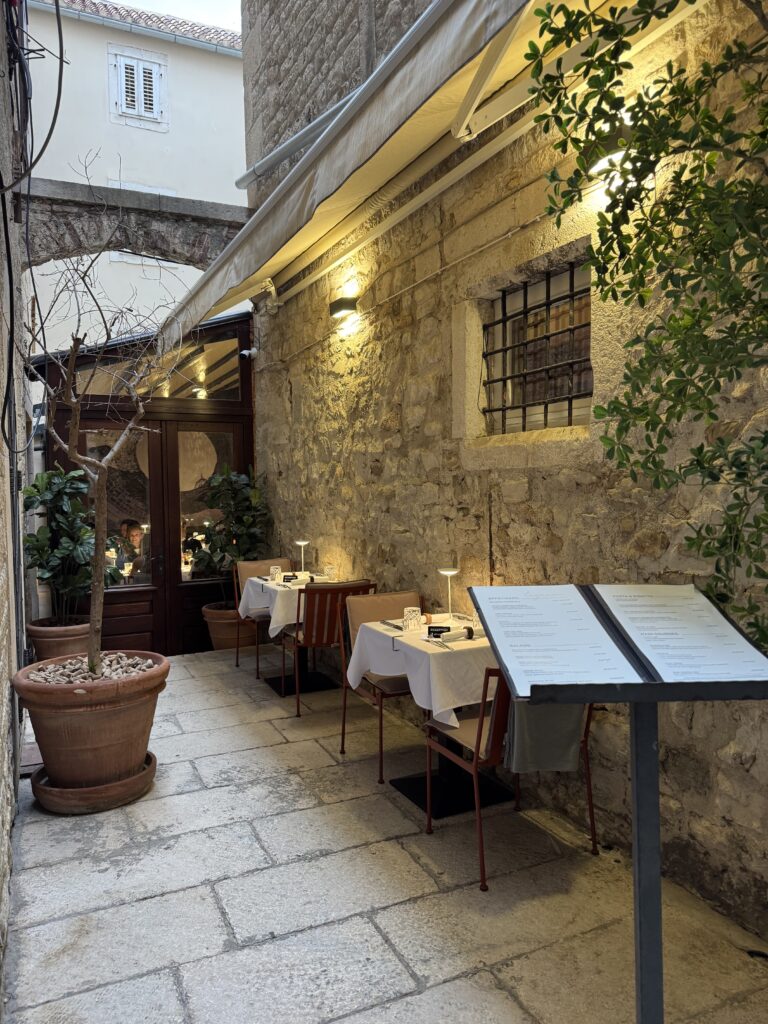
This place has been continuously occupied since the 3rd century. Nowadays, around 3,000 people live here.
We rounded a corner, and there was a wedding! Jake said it was pretty small for a Croatian wedding.
“They tend to go for 36 – 48 hours. They start drinking in the morning and then they don’t stop until it’s over!”
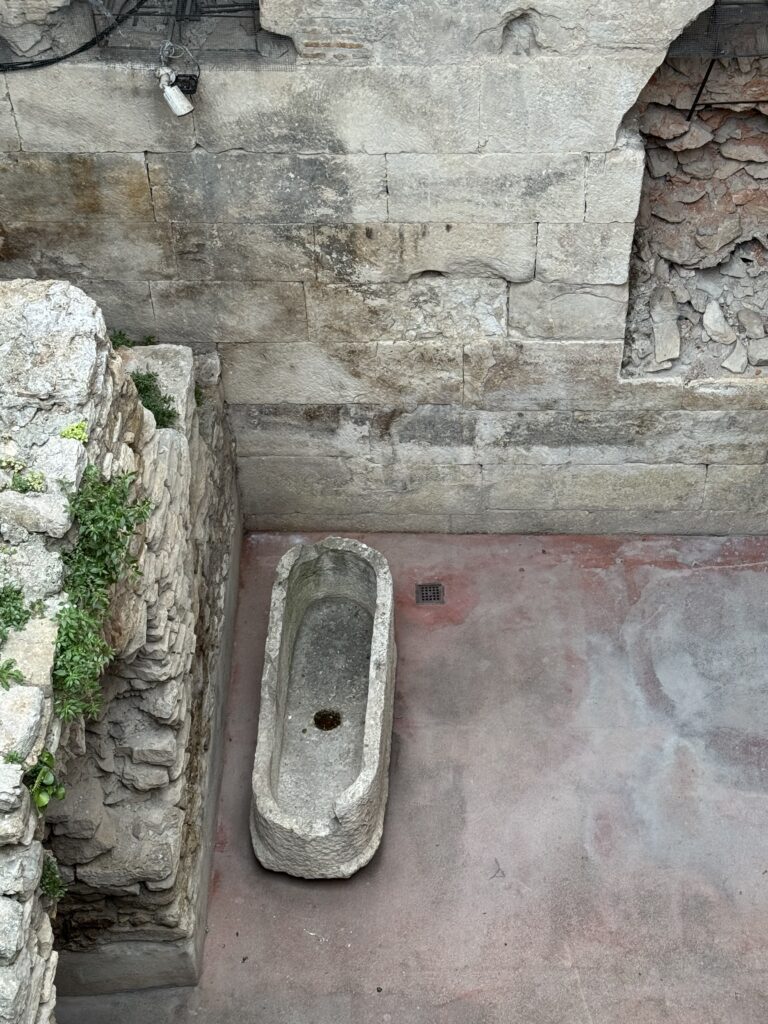
This is reputed to be Diocletian’s bath.
It was found in the basement floor, which ironically is the best preserved part of the whole palace. Unlike the ground floor, which had people all over it for centuries, the basement floor was quickly filled with rubble and rubbish, which made it impassable.
It wasn’t until the 1950’s that it was finally cleared out.
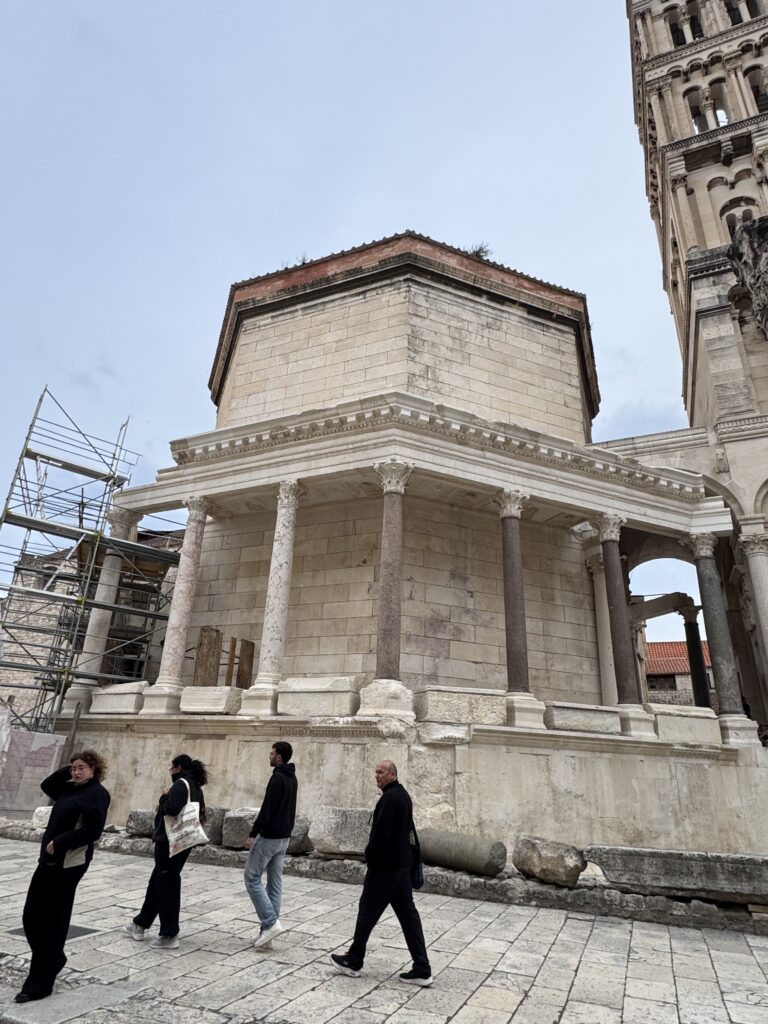
What’s also ironic… or perhaps karmic … is what happened to Diocletian’s tomb.
He was popped into a sarcophagus, as was usual back then, and was laid to rest in this octagonal tomb.
But all too soon, the Christians took the building over and used it as a church. Sometime in the 7th century, they hauled what was left of him out of the coffin and chucked him into the sea.
The sarcophagi you can see around the outside of the building are all Christian clergy.
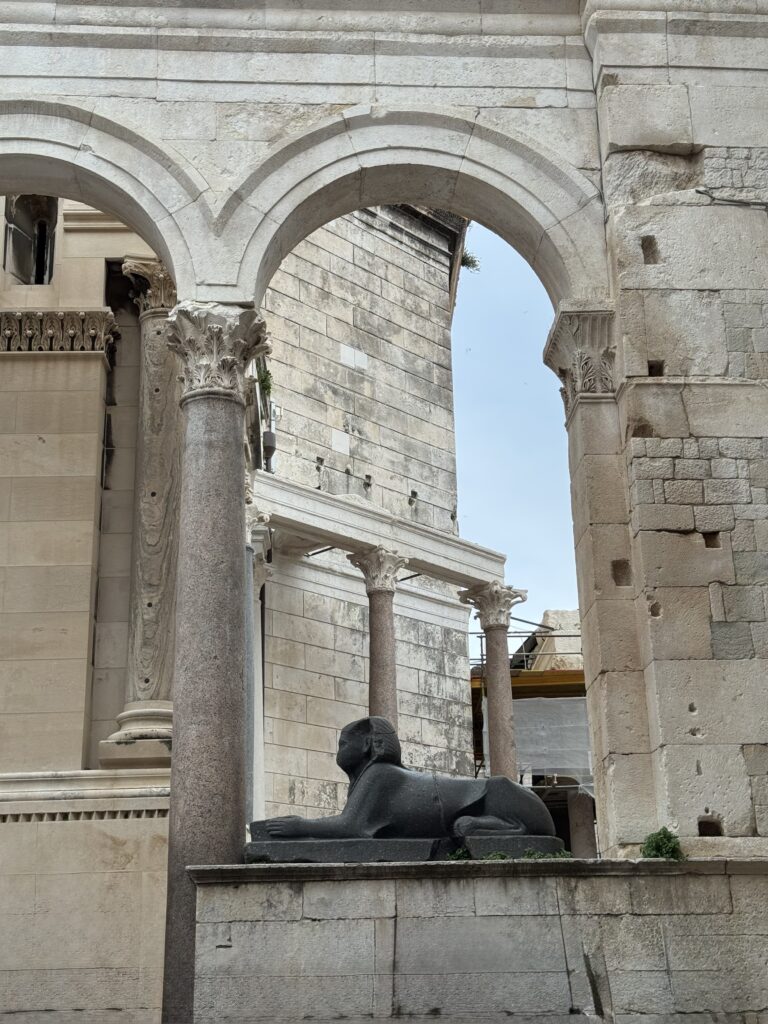
When the Romans were building the palace, they were on a tight time frame, so they went over to Egypt’s Valley of the Kings and stole some columns and sphinxes to hurry the job along. These things were from 3 BC, so when I say there’s a mishmash of styles, I wasn’t overstating.
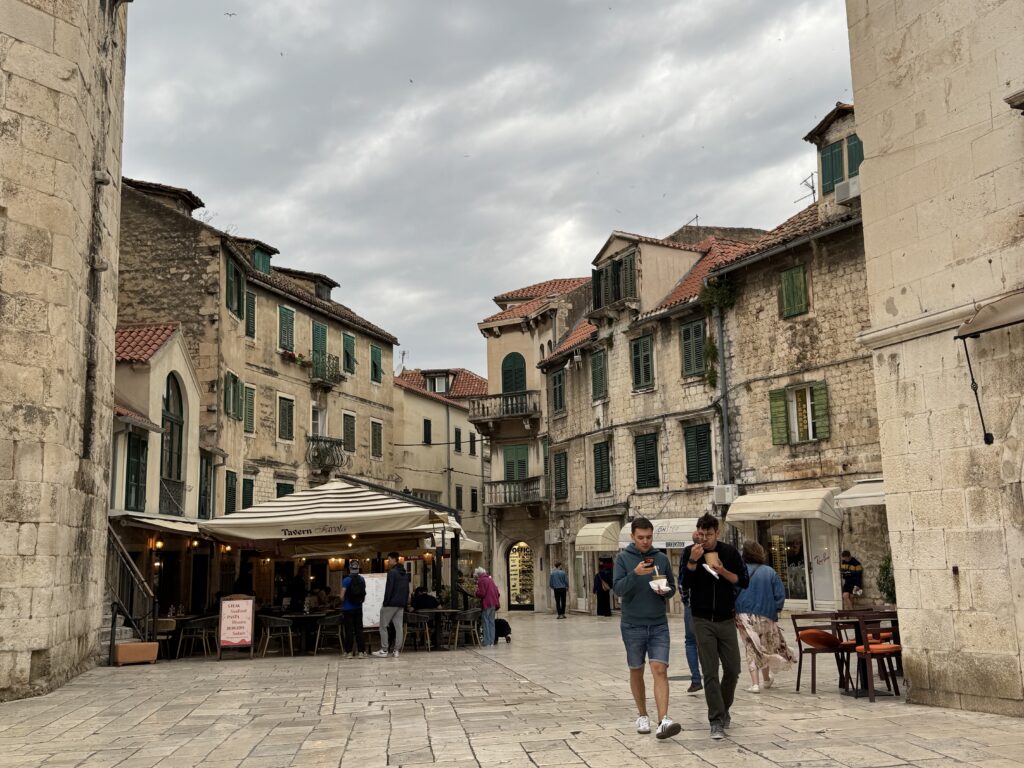
There are many buildings in the Venetian style of the 1500’s. It shouldn’t all work together, but oddly, it does.
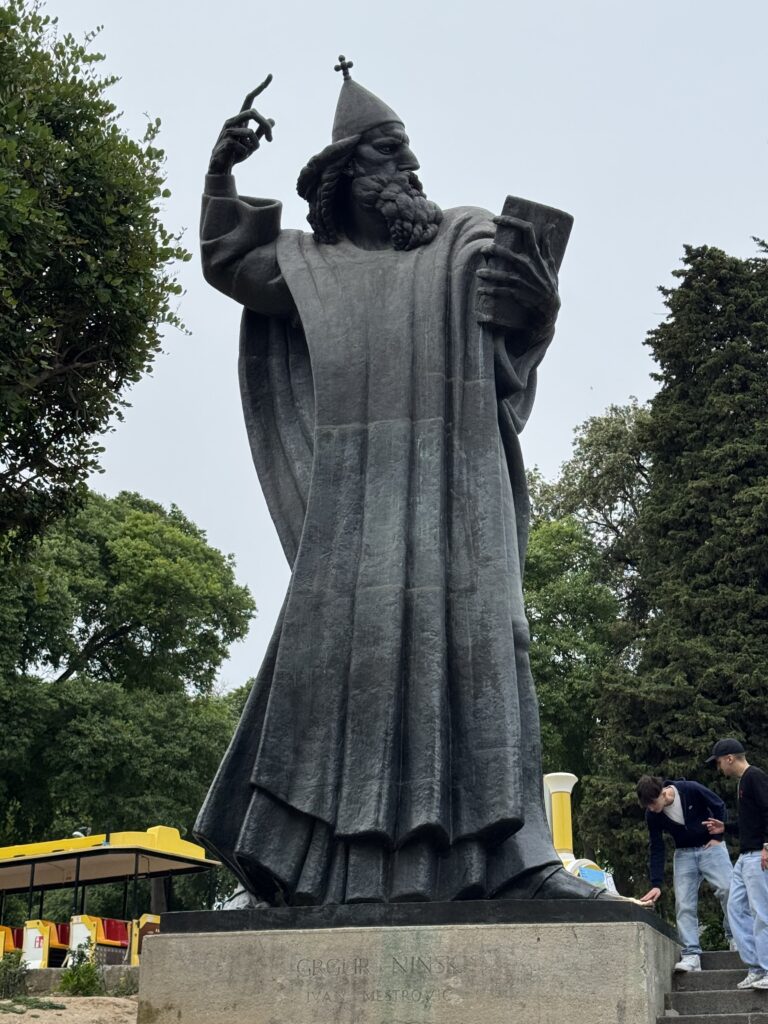
Outside one of the gates is this massive statue of Bishop Gregor, a man who championed for the translation of the Scripture into people’s native languages.
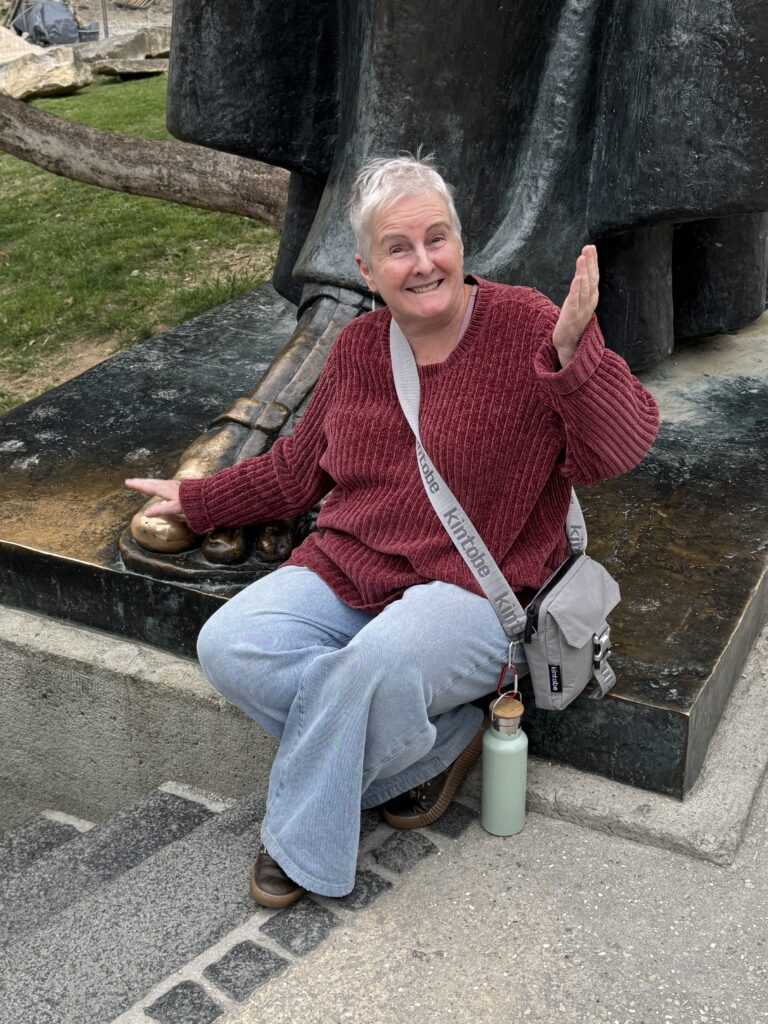
I don’t know if this works, but I’m touching his toe for luck. Between this and touching the statue’s nose yesterday in Dubrovnik, I should be the luckiest woman alive!
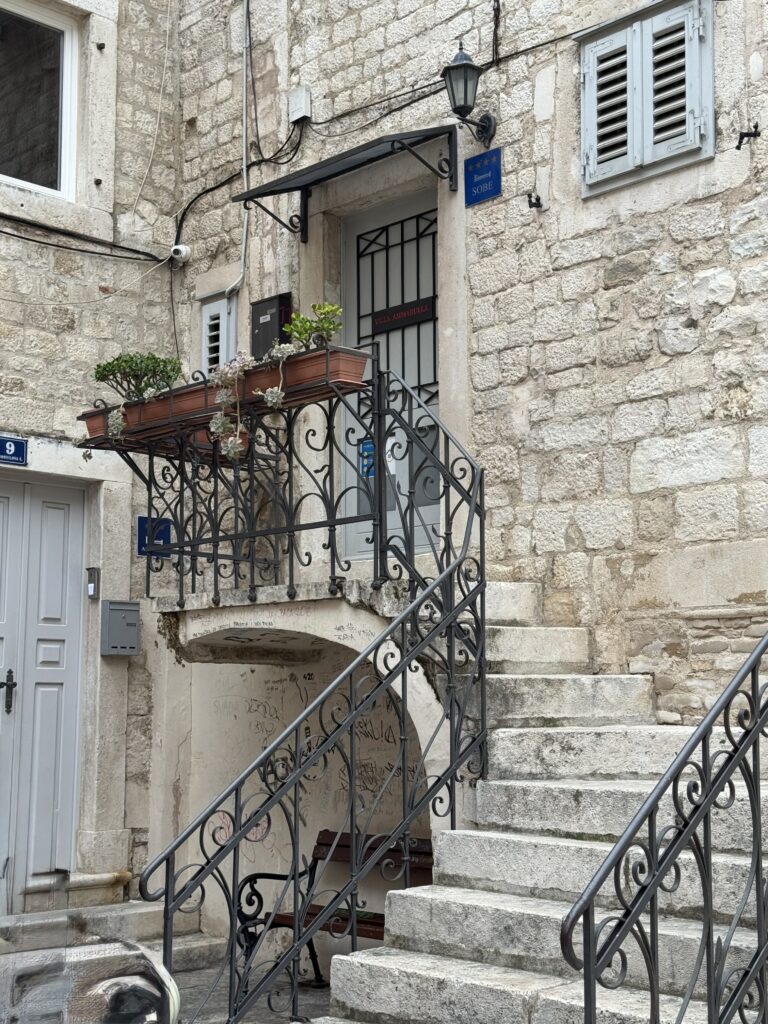
This was an interesting place to visit. Blogless Sandy adored it.
I was torn between wanting the ancient Roman palace to be pristine, yet respecting the people who saw available building supplies and turned them to good use.
Tomorrow, we have a weather forecast of 9 degrees and rain, with a 7 km walk around a lake in the National Park.
Hmmm. Not sure how this is going to go…
Dad joke of the day:

Leave a Reply